Prices shown exclude VAT. (UK tax is not payable for deliveries to United States.) See Terms & Conditions for p&p rates. | |  | Gennadi Rozhdestvensky conducts Mahler
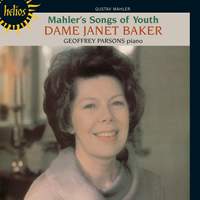
Only the most eminent and respected Russian musicians were allowed extensive foreign tours in the early 1960s, and Gennadi Rozhdestvensky was awarded this status. He appeared several times in Britain, mainly with the London Philharmonic Orchestra, and at Covent Garden. In 1971, he conducted the Leningrad Philharmonic Orchestra at the Proms. Rozhdestvensky became Artistic Director of the Stockholm Philharmonic Orchestra (1974–77 & 1991–95), and principal conductor of the BBC Symphony Orchestra (1978–81) and Vienna Symphony Orchestra (1980–82). He worked with the Berlin Philharmonic Orchestra, Royal Concertgebouw Orchestra, Chicago and Cleveland orchestras. He also is the honorary conductor of the Yomiuri Nippon Symphony Orchestra. Rozhdestvensky was the first Russian-born conductor to perform and record all Mahler’s symphonies in his country. Mahler’s Das klagende Lied is a rarity and here is performed live, complete in the original three-part edition The performance was reviewed by Gramophone magazine as follows: ‘Rozhdestvensky’s highly dramatic account of Mahler’s three-movement drama’. The recording was first issued in 1995 but deleted shortly afterwards with the demise of BBC Radio Classics. The ICA version has been completely remastered, restoring the wide dynamics of Rozhdestvensky’s magnificent performance. The distinguished soloists feature Dame Janet Baker, one of the greatest Mahler interpreters of the twentieth century. The CD also features another rarity – Janácˇek’s The Fiddler’s Child – from the 1979 Prague Festival. This live recording has never been issued before and is Rozdestvensky’s only taping of the work. Rozhdestvensky’s recordings of Tchaikovsky’s Symphony No.4 (ICAC5035) and Holst’s The Planets (ICAC5053) have received great critical acclaim. | | | (also available to download from $9.00) | In stock - usually despatched within 1 working day. |
|
|
| |  | Snape Maltings, Aldeburgh Festival, 19 June 1977
Dame Janet Baker (b.1933) needs no introduction. During her illustrious career, which spanned from the 1950s to the 1980s, she was considered an outstanding singing actress and concert performer, widely admired throughout the world for her dramatic intensity and musical intelligence, notably in the works of Gustav Mahler. John Shirley-Quirk (b.1931) made his operatic debut at the Glyndebourne Festival in 1961, and was prominent in performing and recording the vocal works of Benjamin Britten (as was Janet Baker). He appeared regularly with all the major orchestras and opera companies throughout the world. Steuart Bedford (b.1939) was also associated with the music of Britten, and conducted the world premiere of Death in Venice in 1973. Between 1974 and 1998, he was one of the Artistic Directors of the Aldeburgh Festival. These 46 songs show Wolf at his most captivatingly individual. Many of them are brief fragments of fantasy, which call for the most intense artistry if their meaning is to be fully communicated. Dame Janet Baker expresses the wide range of emotions inspired by love with searching perception. John Shirley-Quirk has a true understanding of the lyrical impulse that fills the wonderful love songs given to the male interpreter. Steuart Bedford has devised his own sequence for the songs and is an equal partner in portraying the conflicting emotions contained in Wolf's work. This BBC recording is in excellent stereo capturing the atmosphere from the Aldeburgh Festival in Snape Maltings in June 1977. The recording has never been issued before. This is Janet Baker’s only recording of the Italienisches Liederbuch in its entirety. “no typical Italianisches Liederbuch, this. Neither Janet Baker nor John Shirley-Quirk was particularly known for this repertoire - though they've both so convincing that one can't guess why...I was continually excited by new insights at every turn...particularly when Baker sets aside her patrician poise and is seized by the music's inner volatility...Why wasn't this recording released decades ago?” Gramophone Magazine, December 2012 | | | (also available to download from $10.50) | In stock - usually despatched within 1 working day. |
|
|
| |  | Donizetti: Mary Stuart
'‘Here are Janet Baker and Rosalind Plowright firing on all cylinders as the rival queens of Scotland and England … Charles Mackerras is the superb conductor; would that he had given us more Donizetti while at the Coliseum.’'
The Times on CHAN 3017 “This revival celebrates the association of Janet Baker and Charles Mackerras within the context of the ENO company and one of its most memorable productions. For those who saw this, the set will call the stage back to mind with wonderful vividness; but the appeal goes well beyond that, preserving a performance stamped with the strong individuality that confers the status of a gramophone classic. This brought a personal triumph for Janet Baker and it impresses afresh by the distinctiveness of her vocal characterisation. It isn't every singer who reflects, or re-creates, the distinctive identities through vocal colour and 'registration'. Everyone who was there will remember the 'Royal bastard!' in confrontation with Elizabeth, but equally powerful, and more regal, is her command – 'Be silent! Leave me!' – to the Lord Chancellor of England who brings to Fotheringay news of her condemnation to death. By contrast, the quieter moments can be immensely moving, as, for instance, in the line in which she acknowledges an unexpected generosity in her great opponent. In that role, Rosalind Plowright gives what surely must have been one of the supreme performances of her career. The writing for Elizabeth makes immense demands of the singer, and in these fearsome opening solos the technical challenges are triumphantly met. John Tomlinson's massive bass commands attention (which it doesn't then always reward with evenness of production). The male soloists have not the most grateful of roles, but Alan Opie's Cecil shows its quality in the duet with Elizabeth, and David Rendall endows the ineffectual Leicester with plenty of Italianate ardour. The chorus has limited opportunities, and has certainly been heard to better advantage on other occasions. A word of warning must be added concerning texts which involve cuts and adaptations. The transpositions are defended as standard practice when an exceptional mezzo-soprano (such as Malibran) took a soprano role, in the present instance merely conforming to the lower orchestral pitch of Donizetti's time. However, it's unlikely that at this date the set would be bought or rejected with this kind of consideration foremost. What remains are the strong positives, most notably the vitality of Mackerras's conducting and the glory of Baker's singing. Also, for those to whom this is a priority, the opera is given in clear English.” Gramophone Classical Music Guide, 2010 | | | (also available to download from $21.00) | In stock - usually despatched within 1 working day. |
|
|
| |  | Britten: The Rape of Lucretia, and Phaedra
Britten: | The Rape of Lucretia Janet Baker (Lucretia), Peter Pears (Male Chorus), Heather Harper (Female Chorus), Benjamin Luxon (Tarquinius), Bryan Drake (Junius), John Shirley-Quirk (Collatinus), Elizabeth Bainbridge (Bianca), Jenny Hill (Lucia) English Chamber Orchestra, Benjamin Britten Phaedra, Op. 93 Janet Baker English Chamber Orchestra, Steuart Bedford |
“two outstanding performances by Dame Janet Baker, recorded at the peak of her career...Luxon makes the selfish Tarquinius into a living character...The seductive beauty of the writing - Britten then at his early peak - is caught splendidly” Penguin Guide, 2010 edition *** | | | (Sorry, download not available in your country) | In stock - usually despatched within 1 working day. |
|
|
| |  | Respighi: Aretusa - Lauda Per La Natività - Il Tramonto - Trittico Botticelliano
| |
|
| |  | Carlo Maria Giulini
Recorded: Royal Festival Hall, London, 30 April 1962 “The Faure is reverentially tender...the chorus eagerly responsive and so perfectly blended.” John Steane, Gramophone Magazine “Giulini responds sympathetically to Faure's emphasis of the word 'requiem' itself in five of the seven movements, and guides the Philharmonia Choir with a strong a sure hand. The very opening prayer is heavy and burdened, with a gravity that is never over-emphatic…Giulini's is a full-bloodedly Romantic performance. It is a characteristic performance, scrupulous, effective but quite without showiness.” John Warrack, International Record Review | |
|
| |  | Janet Baker
| | Janet Baker in Conversation with Marjorie Anderson | Barringcloe: | A Divine Hymn - Jehovah Reigns | Fauré: | Mandoline, Op. 58 No. 1 (Verlaine) En sourdine, Op. 58 No. 2 (Verlaine) Soir Op. 83 No. 2 Fleur jetée, Op. 39 No. 2 Fleur jetée, Op. 39 No. 2 | Gounod: | Vous qui faîtes l'endormie (from Faust) | Gratiani: | Velut palma, velut rosa | Handel: | Joshua: Oh! had I Jubal's lyre | Humfrey: | A Hymne to God the Father | Monteverdi: | Quel sguardo sdegnosetto Libro Nono di Magrigali e Canzonette: Si dolce è'l tormento Maledetto sia l'aspetto | Purcell: | O lead me to some peaceful gloom (from Bonduca or The British Heroine, Z574) Pursuing Beauty (from Sir Anthony Love or The Rambling Lady, Z588) Ah! cruel, bloody fate (from Theodosius or The Force of Love, Z606) | Schubert: | Schwestergruss, D762 (Bruchmann) Liebe schwarmt auf allen Wegen, D239 No. 6 (Goethe) Hin und wieder fliegen Pfeile, D239 No. 3 (Goethe) An die untergehende Sonne, D457 An Herrn Josef von Spaun, Assessor in Linz (Epistel), D749 (Collin) |
Recorded: Aldeburgh Festival, 14 June 1971 / BBC Studios, London, 22 October 1969 (interview) | | | (also available to download from $10.50) | Usually despatched in 2 - 3 working days. (Available now to download.) |
|
|
| |  | Janet BakerBrahms - Lieder
Brahms: | Heimweh, Op. 63 No. 8 O kühler Wald, Op. 72 No. 3 Geheimnis, Op. 71 No. 3 Wir wandelten, wir zwei zusammen Op. 96/2 Meerfahrt, Op. 96 No. 4 Ständchen, Op. 106 No. 1 Ein Wanderer, Op. 106 No. 5 Regenlied (No. 3 from Acht Lieder und Gesänge, Op. 59) Das Mädchen spricht, Op. 107 No. 3 Mädchenlied, Op. 107 No. 5 Mondnacht, WoO 21 Auf dem Kirchhofe, Op. 105 No. 4 Feldeinsamkeit, Op. 86 No. 2 Vergebliches Ständchen, Op. 84 No. 4 An die Nachtigall, Op. 46 No. 4 (Text: L.C.H. Hölty) Meine Liebe ist grün, Op. 63 No. 5 Herbstgefühl, Op. 48 No. 7 Abendregen, Op. 70 No. 4 Verzagen, Op. 72 No. 4 Nachtwandler, Op. 86 No. 3 Komm bald, Op. 97 No. 5 (Groth) Der Tod, das ist die kühle Nacht, Op. 96 No. 1 Von ewiger Liebe, Op. 43 No. 1 |
Recorded: BBC Studios, London, 16 September 1960 / 4 January 1968 / 7 February 1961 “This is an important disc and one that will give great pleasure since it contains so much fine and deeply committed singing. It’s certainly a mandatory purchase for all admirers of Brahms’s lieder or of Dame Janet Baker.” MusicWeb International “what singing: what a voice, what beauty of line, variety of colour, incisive diction and unforced mastery of the whole difficult art of Lieder…the disc is a feast.” The Times “Listening to these Brahms songs culled from BBC broadcasts one realises just why Dame Janet's reputation continues to remain so high and why so many of her successors don't quite match her standards. To every song here, familiar or unfamiliar, she brings her special ability of making it her own and reaching to its heart. It's an almost uncanny gift, and not one easy to explain, but it makes every song in this programme momentous. Wondrous is the sustained half-voice with which she invests Nachtwandler with its intimate, sad feeling. Then there's the outpouring of joy that is Meine Liebe ist grün to which she brings the most lustrous tone and an outgoing manner, and finally the gentle sense of fun, never overdone, which she brings to the very familiar VergeblichesStändchen. If Brahms had written no other songs than Feldeinsamkeit, Der Tod, das ist die kühle Nacht and Von ewiger Liebe, he would surely be hailed as a great Lieder composer. Baker obviously understands their astonishing high quality. The first is sung, as it should be, with a kind of inner wonder, each amazing line given its full due. In the second, a Liebestod avant la lettre, she sings with the proper impassioned feeling, while the last, a happier statement of eternal love, is sung with the rugged conviction that always showed the singer at her very best. Lush and Hamburger, especially the latter, are fully cognisant of what to do with Brahms's intricate writing for the piano. The sound is admirable, catching early Baker in full flow.” Gramophone Classical Music Guide, 2010 | | | (also available to download from $10.50) | Usually despatched in 2 - 3 working days. (Available now to download.) |
|
|
| |  |
Recorded 1972 | | | (also available to download from $10.50) | Usually despatched in 2 - 3 working days. (Available now to download.) |
|
|
| |  | George Szell
Recorded 1968, mono | | | (also available to download from $21.00) | Usually despatched in 2 - 3 working days. (Available now to download.) |
|
|
| |
|