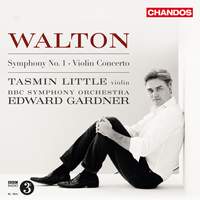
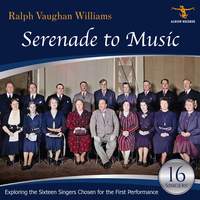
BBC Symphony Orchestra

Orchestra

Prices shown exclude VAT. (UK tax is not payable for deliveries to United States.)
See Terms & Conditions for p&p rates.

Tchaikovsky & Scriabin - Piano Concertos

Tchaikovsky & Scriabin - Piano Concertos


Scriabin:

Piano Concerto in F sharp minor, Op. 20

Tchaikovsky:

Piano Concerto No. 1 in B flat minor, Op. 23


‘It is something of an achievement when one manages to hear afresh such an over-familiar work’ (BBC Music Magazine)

“Demidenko offers a blazing yet superbly-controlled account of the Tchaikovsky No. 1. And this is the best available version of Sciabin's youthful, Chopinesque Concerto.” BBC Music Magazine, January 2008 *****

“The chief attraction here is the unusual coupling which pairs two sharply opposed examples of Russian Romanticism, and although the reasons for the neglect of Scriabin's Piano Concerto aren't hard to fathom (its lyrical and decorative flights are essentially inward-looking), its haunting, bittersweet beauty, particularly in the central Andante, is hard to resist. Demidenko's own comments, quoted in the accompanying booklet, are scarcely less intense and individual than his performance: 'in the ambience, phrasing and cadence of his music we meet with a world almost without skin, a world of nerve-ends where the slightest contact can bring pain.' His playing soars quickly to meet the music's early passion head on, and in the first più mosso scherzando he accelerates to produce a brilliant lightening of mood. His flashing fortes in the Andante's second variation are as volatile as his pianissimos are starry and refined in the finale's period reminiscence, and although he might seem more tight-lipped, less expansive than Ashkenazy on Decca, he's arguably more dramatic and characterful. Demidenko's Tchaikovsky, too, finds him ferreting out and sifting through every texture, forever aiming at optimum clarity. While this is hardly among the greatest Tchaikovsky Firsts on record, it's often gripping and mesmeric. The recorded balance isn't always ideal and the piano sound is sometimes uncomfortably taut.” Gramophone Classical Music Guide, 2010

Helios - CDH55304

(CD)

$8.50

In stock - usually despatched within 1 working day.

Brahms: Piano Concerto No. 2 in B flat major, Op. 83

Brahms: Piano Concerto No. 2 in B flat major, Op. 83


“This majestic performance remains one of the most compelling available, making up for in musical imagination and probing clarity what it may occasionally lack in terms of sheer adrenal flow.” BBC Music Magazine, October 2007 ****

Virgin Virgo - 3913662

(CD)

$7.25

In stock - usually despatched within 1 working day.

Boulez conducts Stravinsky

Boulez conducts Stravinsky


Stravinsky:

The Firebird Suite

BBC Symphony Orchestra

The Rite of Spring

Cleveland Orchestra

Petrushka - suite

New York Philharmonic Orchestra

Pulcinella Suite

New York Philharmonic Orchestra

Suites Nos. 1 & 2 for Small Orchestra

Ensemble Intercontemporain

Scherzo Fantastique, Op. 3

New York Philharmonic Orchestra


Sony Tandem - 82876873892

(CD - 2 discs)

$12.25

In stock - usually despatched within 1 working day.

Elgar: The Dream of Gerontius, Op. 38

Elgar: The Dream of Gerontius, Op. 38


Philip Langridge (Gerontius), Catherine Wyn-Rogers (Angel), Alastair Miles (Priest/Angel of the Agony)

BBC Symphony Orchestra & Chorus, Andrew Davis

Broadcast live from St. Paul's Cathedral, London by the BBC on 26th November 1997 as part of the Cathedral's 300th anniversary celebrations.

“This is a very good Gerontius. Davis's long-standing love of the work is evident at just about every point, but he keeps cool-headed enough to shape the drama convincingly. The solo team is terrific. Langridge is an absorbing Gerontius, bringing extraordinary depth to the minutest details of characterisation. Catherine Wyn Rogers is tonally glorious as the Angel. Miles is more commanding still than in the Colin Davis LSO Live version... In terms of presentation this is an old-fashioned concert film in the best sense: close-ups on players, soloists, conductor and architectural details judiciously chosen.” BBC Music Magazine, September 2006 *****

“[Langridge] is at his very finest as Gerontius...the BBC Chorus [is] especially telling in first accelerating and then pulling back for its climax” Penguin Guide, 2011 edition

Penguin Guide

Rosette Winner

DVD Video

Region: 2,3,4,5

Format: NTSC

Warner Classics Warner Vision - 3984223512

(DVD Video)

$24.00

In stock - usually despatched within 1 working day.

Clifford Curzon

Clifford Curzon


Beethoven:

Fantasia for Piano, Chorus and Orchestra in C minor, Op. 80

Recorded: Royal Festival Hall, London, 28 January 1970

Delius:

Piano Concerto in C minor

Recorded: Royal Festival Hall, London, 3 September 1981

BBC Symphony Orchestra, Sir John Pritchard

Mozart:

Piano Concerto No. 24 in C minor, K491

Recorded: Royal Festival Hall, London, 6 November 1979


BBC Legends - Pianists - BBCL41812

(CD)

$15.25

(also available to download from $10.50)

In stock - usually despatched within 1 working day.

Music of Elliott Carter - Vol 7

Music of Elliott Carter - Vol 7


Carter, E:

Dialogues

Boston Concerto

Cello Concerto

Asko Concerto


“You might expect the tone of these late works to be meditative and autumnal, but in fact they're witty, brightly coloured and full of mental and rhythmic agility. The four big-scale works from the 1990s… are all conducted by Oliver Knussen' and what a marvellous job he makes of projecting the complicated polyrhythmic layers and sudden changes of mood and direction.” BBC Music Magazine, February 2006 ****

“There are composers who get a second wind late in their career – and then there's Elliott Carter.
Late bloomers such as Verdi (to whom he's often compared) usually make a dramatic coda to their careers, but Carter's burst of productivity in his nineties has actually revealed a noticeable change in musical direction. Their respective rate of maturity notwithstanding, a more fitting comparison would be Ginastera, another composer who began in an accessible folkloric style, turned almost excessively complex in middle age, and reconciled the two in his late maturity.
Having these two volumes of Bridge's Elliott Carter series arrive almost concurrently helps put the composer's career in perspective.
Despite the pleasing tonality and unapologetic American-ness of Carter's 1945 HolidayOverture (the connection with Ives's HolidaysSymphony worn handily in its title), the dense counterpoint and rhythmic complexity are nonetheless already in place. The aggressively modernist Carter we usually think of came of age shortly afterward and is still going strong in the Violin Concerto (1990), where musical lines remain unrestrained by tonality or conventional rhythmic pulse.
Those lines may not be as individualistic as in the composer's chamber works but they nonetheless need firm guidance from the podium.
Justin Brown shows a sure sense of each line and its destination, making instrumental outbursts more purposeful and less impulsive than they might otherwise seem. It provides, in fact, a nearly unified orchestral front against Rolf Schulte's fairly lyrical solo playing, with textural contrasts duly marking emotional contrasts.
Four Lauds for solo violin, part of an ongoing series of short virtuoso works, traces Carter's more recent transition, from the assertive Riconoscenza per Goffredo Petrassi (1984) to the more freely 'romantic' (the composer's own description) Rhapsodic Musings (2000). Though hardly as prevalent as his chamber works, the inner musical lines remain surprisingly vital, setting up a palpable internal counterpoint that Schulte deftly navigates.
At first glance, Dialogues (2003) would seem to be in the old Carter model, where different musical lines unfold with such clearly delineated personalities that they're often compared to characters in a play. Carter describes the piece as a conversation between piano and orchestra, but the lively discourse continues with little of his former abrasiveness. This is civilised cocktail chatter rather than a raucous town meeting, with musical points respecting each other's space rather than yelling each other down. The Cello Concerto (2001), by contrast, is more a solo oration with some periodic cheers from the crowd. A full decade away from the Violin Concerto, the piece falls back much more squarely on traditional string phrasing and playing technique, but under soloist Fred Sherry the rhetoric is less of a crutch than a platform to make the main points clear and fresh.
Without the benefit of soloists, the remaining concerto grosso works here, the ASKO Concerto (2000) and the Boston Concerto (2002), indeed confirm a change in Carter's musical approach.
It might be too much of a stretch to blame this new-found clarity on the composer writing his first opera in 1999 (at the age of 90!) but clearly Carter has started letting his musical ideas sing as well as shout.”
Gramophone Classical Music Guide, 2010

“At first glance, Dialogues (2003) would seem to be in the old Carter model… Carter describes the piece as a conversation between piano and orchestra, but the lively discourse continues with little of his former abrasiveness. The Cello Concerto (2001), by contrast, is more a solo oration with some periodic cheers from the crowd. ...under soloist Fred Sherry the rhetoric is less of a crutch than a platform to make the main points clear and fresh. ...the remaining concerto grosso works here... confirm a change in Carter's musical approach. It might be too much of a stretch to blame this new-found clarity on the composer writing his first opera in 1999 (at the age of 90!) but clearly Carter has started letting his musical ideas sing as well as shout.” Gramophone Magazine, April 2006

Bridge - The Music of Elliott Carter - BRIDGE9184

(CD)

$17.75

In stock - usually despatched within 1 working day.

Jacqueline du Pré

Jacqueline du Pré


Bach, J S:

Cello Suite No. 1 in G major, BWV1007

Cello Suite No. 2 in D minor, BWV1008

Elgar:

Cello Concerto in E minor, Op. 85

(recorded live in Prague)


“Jacqueline du Pré was 20 when she recorded Elgar's Cello Concerto with Barbirolli and the LSO August 1965 – an interpretation universally acclaimed for its profound expressiveness (see above). A second recording, taped live in 1970 with Daniel Barenboim and the Philadelphia Orchestra, has proved more controversial; du Pré's radiant intensity remains undimmed but instead of the nobility found in the EMI account one hears desperation, or something close to it.
This new Testament disc makes public another live document, recorded in Prague with Barbirolli and the BBC Symphony Orchestra. The general shape of this performance resembles the EMI recording, not surprisingly given that the studio session had taken place a little more than a year before. But while du Pré was always an electric player, the voltage clearly increased before an audience. One hears the difference immediately as she digs into the opening solo with startling urgency. Tempi, in general, are noticeably faster; and although Barbirolli and the orchestra occasionally fall behind, the phrasing is longer-breathed and the sections flow more smoothly one into the other.
Du Pré (onstage and a year on from the EMI version) finds a greater variety of mood in the score. The dolcissimo Elgar asks for at fig 8 (starting at 3'58" in the first movement) evokes an audible smile in the cellist's sound, for example.
Or try her magical way with the swooping phrase at 3'10" in the Adagio: the high note is floated beautifully in the studio but in concert her tone and timing take one's breath away. Best of all, perhaps, is the finale's Poco più lento (beginning at 6'42"), where du Pré's playing has an emotive force and eloquence akin to the greatest Shakespearian oratory – Barbirolli and the orchestra provide splendid support here.
Youthful (and previously released) interpretations of Bach's first two cello suites round out the disc, but the Elgar here is valuable enough to merit the highest possible recommendation.”
Gramophone Classical Music Guide, 2010

“Jacqueline de Pré was 20 when she recorded Elgar's Cello Concerto with Sir John Barbirolli and the LSO in August 1965… This new Testament disc makes public another live document, recorded in Prague with Barbirolli and the BBC Symphony Orchestra. …while du Pré was always an electric player, the voltage clearly increased before an audience. One hears the difference immediately as she digs into the opening solo with startling urgency. Tempi, in general, are noticeably faster... I would venture to say, too, that du Pré (onstage and a year on) finds a greater variety of mood in the score. Best of all, perhaps, is the finale's Poco più lento (beginning at 6'42"), where du Pré's playing has an emotive force and eloquence akin to the greatest Shakespearian oratory - Barbirolli and the orchestra provide splendid support here.” Gramophone Magazine, February 2006

GGramophone Magazine

Disc of the Month - February 2006

Testament - SBT1388

(CD)

$15.50

In stock - usually despatched within 1 working day.

Elgar: Falstaff - Symphonic Study in C minor, Op. 68, etc.

Elgar:

Falstaff - Symphonic Study in C minor, Op. 68

Froissart Overture, Op. 19

Romance, Op. 62

Grania and Diarmid, Op. 42 - Funeral March

Grania and Diarmid, Op. 42 - Incidental Music


“As digital Falstaffs go, Sir Andrew Davis's 1995 account with the BBC SO remains arguably the front-runner. If both Elgar himself and Barbirolli impart the greater vulnerability and compassion to the illimitably moving closing pages, the irresistible symphonic current coursing through Davis's meticulously observant conception provides ample compensation. The figure. Rodney Macann as the Watergnome tends to steal the show, his dark, incisive bass very characterful. Ann Howard is wonderfully menacing as the Witch, while the fluttering vibrato of Phyllis Cannan as the Foreign Princess adds to the exotic image (in Act 2, when most of the characters are dressed in white, she stands out in a crimson gown). The three Woodsprites are lively, and incidental characters are well taken.
Mark Elder draws warm incisive playing from the orchestra, adding to the dramatic impact and underpinning the moving final scene, when the Prince kisses Rusalka, knowing it will mean his death.”
Gramophone Classical Music Guide, 2010

GGramophone Magazine

Re-issue of the Month - August 2005

Building a Library

Also Recommended - March 2005

Apex - 2564622002

(CD)

$7.50

In stock - usually despatched within 1 working day.

Stravinsky: Le Sacre du printemps & Petrushka

Stravinsky: Le Sacre du printemps & Petrushka


Stravinsky:

The Rite of Spring

Petrushka

The Firebird Suite

Suites Nos. 1 & 2 for Small Orchestra

Scherzo Fantastique, Op. 3

Pulcinella Suite


Sony - 5200212

(CD - 2 discs)

$10.25

In stock - usually despatched within 1 working day.

Boulez: Pli selon pli, etc.

Boulez:

Pli selon pli

Le Visage Nuptial

Le Soleil des Eaux

Figures-doubles-prismes


Phyllis Bryn-Julson & Elizabeth Laurence

BBC Symphony Orchestra & BBC Singers, Pierre Boulez

“Boulez's rollercoaster rides of nerve-jangling sonic juxtapositions and exotic timbres will either take you to a higher plane of existence or merely infuriate. Either way, these are intoxicating performances.” BBC Music Magazine, May 2005 *****

“This is a super-budget-price reissue of four of Boulez's most imposing earlier works. True, the 1981 Pli selon pli doesn't give you his most recent thoughts on his endlessly evolving Mallarmé portrait – for that you need the DG account reviewed above. But this BBC version, a Gramophone award-winner in 1983, remains a very satisfying document of its time. A special strength of the set as a whole is the vividness with which it demonstrates what has been lost in Boulez's complete abandonment of writing for the voice since the 1980s.
The large-scale cantata Le visage nuptial, originally composed in 1946, but performed here in the revised version from 1988-9, has an expressive incandescence and a sustained dramatic power that not only reconcile you to René Char's convoluted verse but provoke the thought that Boulez might, after all, be contemporary music's greatest opera composer manqué.
The BBC Singers have have probably never done anything finer on disc.
More subversive dynamism can be heard in the expansive, eruptive monumentality of the orchestral Figures, Doubles, Prismes, strikingly enigmatic in its commitment to strongly sustained oppositions, and bringing back the composer's own 1985 reading. Add to all this the fascinating feline glitter of Le soleil des eaux and you have a 'portrait de Boulez' of exceptional quality.”
Gramophone Classical Music Guide, 2010

Apex - 2564620832

(CD - 2 discs)

$10.50

In stock - usually despatched within 1 working day.

Page: 

 1   2   3   4   5   6   7   8   9   10   11   12   13   14   15   16   17   18   19   20   21   22   23   24   25   26   27   28   29   30   31   32   33   34 

 Next >>

Copyright © 2002-13 Presto Classical Limited, all rights reserved.