Prices shown exclude VAT. (UK tax is not payable for deliveries to United States.) See Terms & Conditions for p&p rates. | |  | Lutosławski: Orchestral Works 4
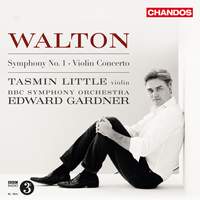
This is the fifth and now final volume in our survey of orchestral works by the Polish composer Witold Lutosławski. Gramophone wrote of a previous volume in the series (CHSA5106) that it ‘offers a broad view of Lutosławski’s creative profile, which the BBC Symphony Orchestra under Edward Gardner fleshes out with playing that is as polished as it is animated, and alert to the individuality of Lutosławski’s musical vocabulary and mode of expression’. Lutosławski wrote his Symphony No. 1 between 1941 and 1947, but interestingly it does not display any obvious signs of his trying to come to terms with the ordeal that befell his people. Quite the opposite, in fact. Lutosławski himself described the symphony as bright and cheerful, ‘because that was the idea of the composition, which was conceived in the period of independence before the war, but brought into being during the terrible wartime and in far from idyllic post-war years’. At the time, one Polish colleague went so far as to call it ‘fauvist’, so wild and vibrant did it appear to the audiences at its first performance in April 1948. Lutosławski was a meticulous collector of folk materials in the first half of the 1950s, but for him, Dance Preludes was a ‘farewell to folklore’, even though he privately still explored folk tunes for several more years. Here the orchestra and conductor are joined by the clarinettist Michael Collins, an exclusive Chandos artist. As his career developed in the more open environment that emerged after the ‘socialist-realist’ period, Lutosławski began to receive international recognition, and with the Partita (1984, orchestrated 1988), for violin and orchestra, he presented a newly relaxed, more melodic compositional style to the public. The soloist is the exclusive Chandos artist Tasmin Little. Chain 2 (1984 – 85) was premiered by Anne-Sophie Mutter on 31 January 1986 with Collegium Musicum, conducted by Paul Sacher to whom it was dedicated. On this recording Tasmin Little leads the orchestra through a succession of ideas, much as the soloist had done in the ‘Episodes’ movement of the Cello Concerto (recorded on CHSA5106 with Paul Watkins). “The BBCSO and Edward Gardner, in the latest of this excellent series, capture the range of moods eloquently.” The Observer, 17th March 2013 “the violin concertos [are] notable for their expressive intensity, a quality matched by Tasmin Little’s performances. Finally, Michael Collins relishes the solo opportunities of Dance Preludes for clarinet and chamber orchestra” Financial Times, 16th March 2013 **** “[Gardner's] ear for detail, a feature of all these Chandos releases, brings out colours and associations which you might have missed in other versions...This is as vibrant and engaging a performance of this symphony as I have ever heard on record...a series of recordings which has to be considered a worthy new reference in some of the best music the 20th century has to offer.” MusicWeb International, 23rd April 2013 “Gardner's interpretative decisions vary from Lutoslawski's, swifter in the fast movements, very slow in the Poco adagio...The composer had the balance between them just right but Gardner is very persuasive...Highly recommended.” Gramophone Magazine, May 2013 “[Little] finds the soft-edged energy of the Partita and traces a broad melodic arc in its central Largo. All the performers show their awareness of the work's indebtedness to Baroque gesture.” BBC Music Magazine, June 2013 **** | 
| | | (also available to download from $10.50) | In stock - usually despatched within 1 working day. |
|
|
| |  | Szymanowski: Symphonies Nos. 2 & 4 & Concert Overture
This recording of orchestral works by Karol Szymanowski form part of the Polish Music series on Chandos, and is performed by the BBC Symphony Orchestra and Edward Gardner. These performers have impressed in their Lutosławski survey, which is part of the same series; in a review of volume 1, Gramophone described them as a veritable ‘dream team’. Symphony No. 2 by Szymanowski is a work of great power and ingenuity, with many passionate and varied contrasts in its use of solo instruments. Composed in 1909 – 10, it is widely considered the greatest orchestral work of the composer’s early period, not to mention one of the most important Polish symphonic compositions to date. Szymanowski himself thought very highly of it, and in August 1911 wrote in a letter to his fellow Polish composer Zdzisław Jachimecki: ‘How happy I am that this Symphony impressed you as I had wanted. I will frankly admit that I feel somewhat proud about its value. In some miraculous way I have managed during my work on it to resist all those garish phantoms which seduce “young and inexperienced” artists and to produce pure and uncompromising beauty in the way I personally understand it.’ The internationally acclaimed pianist Louis Lortie joins the orchestra and conductor in Symphony No. 4 of 1932, which the composer subtitled ‘Symphonie concertante’ in recognition of the near-soloistic role played by the pianist. Whereas Szymanowski’s early and middle works clearly reflect Wagner, Strauss, and Scriabin, this work is strongly influenced by Prokofiev, particularly in the finale, an agitated and daring movement reminiscent of the Russian composer’s Piano Concerto No. 3, composed about a decade earlier. Written in 1904 – 05 in a style recalling Wagner and Strauss, the Concert Overture is characterised by enormous expressiveness and gusto in the way it handles the expanding themes. Szymanowski inscribed the original score with part of the poem Witeź Włast by his friend Tadeusz Miciński: ‘I will not play you sad songs, O Shades! but will give you a triumph proud and fierce…’. This vivid imagery is perfectly in keeping with the music’s exuberant and vivacious character. “[Gardner's] gloriously broad and sweeping account of a work that reflects Szymanowski's seemingly boundless admiration for Richard Strauss's symphonic poems sets the tone for a disc that emphasises the composer's late romantic affiliations rather than his modernist ones, especially with the BBC Symphony Orchestra on opulent form” The Guardian, 24th January 2013 **** “Gardner makes a stronger case for the Polish composer, clarifying textures and tautening musical lines” Financial Times, 26th January 2013 “These performances prove ideal, finding luminosity at the opening, and delivering a taut, energetic fugal finale...In the oberek dance rhythms of the orgiastic finale, Gardner shows how he has become one of the finest non-Polish interpreters of Szymanowski.” BBC Music Magazine, March 2013 ***** “The whole Szymanowski landscape is here...though a single sitting might prove indigestible and is probably not advised, the changing face and manner of this most fascinating and accomplished of composers is richly chronicled here in characterically impressive Chandos sound.” Gramophone Magazine, March 2013 | 
| | | (also available to download from $10.50) | In stock - usually despatched within 1 working day. |
|
|
| |  | Lutosławski: Orchestral Works 3
This is the fourth volume in Chandos’ series devoted to the music of the Polish composer Witold Lutosławski. Edward Gardner and the BBC Symphony Orchestra, described by Gramophone as a ‘veritable dream team’ in a review for Vol. 1, are joined on this recording by the cellist and exclusive Chandos artist Paul Watkins. Lutosławski drew his main thematic material for Little Suite (Mała suita) from folk melodies from the village of Machów in south-east Poland. As such he was following one of the paths recommended by the communist government for connecting to the ‘broad masses’ by creating what today might be called ‘people’s music’. In this work Lutosławski demonstrates his characteristic lightness of touch, excellent ear for orchestral timbre, and ability to transform his material into something highly individual. The Second Symphony (1965 – 67) was Lutosławski’s first large-scale orchestral work since the Concerto for Orchestra (1950 – 54), and a lot had happened in Poland since the premiere of that work. The government had significantly eased its cultural restrictions for music, which meant that Polish composers were becoming increasingly exposed to new ideas from the West. Lutosławski, ever his own man, chartered a distinctive path through this thicket of new music, and by the mid-60s he had developed his own individual and expressive idiom. In the Second Symphony, he creates an atmosphere of tense anticipation in the opening stages, before drawing the listener into the ensuing, more purposefully developed music, which reaches a climactic explosion and resolution. Paul Watkins is the soloist in the Cello Concerto, one of the most original works of recent times. While Lutosławski insisted that this highly dramatic work was a purely musical drama, Mstislav Rostropovich, its dedicatee, considered the music to be a mirror of his own battles with the authorities in the Soviet Union in the late 1960s and ’70s. In Grave, for solo cello and strings, for the first time in his life (not counting folk-inspired pieces), Lutosławski based a work on the music of another composer: the first four notes of Debussy’s Pelléas et Mélisande. He takes Debussy’s motif and transforms it from intense musings into a free-flowing succession of robust and vigorous shapes. “Gardner's control of [the Second], not least its eventual disintegration, is highly compelling...the Cello Concerto receives a superbly concentrated performance here from the soloists Paul Watkins...[Grave] forms a fitting counterbalance to everything else on this disc.” BBC Music Magazine, February 2013 **** “a broad view of Lutoslawki's creative profile, which the BBC Symphony Orchestra under Edward Gardner fleshes out with playing that is as polished as it is animated and alert to the individuality of Lutoslawski's musical vocabulary and mode of expression. Gardner keeps the overall structural span of the Symphony in view...while giving close attention to the localised instrumental combinations and conflicts that lend the music its vibrant personality.” Gramophone Magazine, December 2012 “The performances continue the highly favourable impression of this series to date, with Gardner securing playing of real immediacy and finesse from a BBC Symphony Orchestra that sounds as fully engaged in the lighter aspects of the composer's music as in its more searching utterances.” International Record Review, December 2012 “With my ideas about the Cello Concerto completely transfixed by Paul Watkins and the BBC Symphony Orchestra...I feel pretty secure in being able to put forward this Chandos version against and above all others.” MusicWeb International, January 2013 “The characteristic formal diptych of the symphony is superbly enacted.” Sunday Times, 25th November 2012 “This is a wonderful disc, brilliantly delivered by Edward Gardner’s BBC Symphony forces. Few orchestras play this repertoire so well.” The Arts Desk, 8th December 2012 | | | (also available to download from $10.50) | In stock - usually despatched within 1 working day. |
|
|
| |  | Josef Suk: Orchestral Works
Two symphonic poems by Suk are performed here by the BBC Symphony Orchestra and Jiří Bělohlávek, who also brought us the highly acclaimed recording of the composer’s First Symphony and Ripening, which was Disc of the Month in the magazine BBC Music. A Summer’s Tale is a highly personal work, rich and imaginative, not to mention brilliantly orchestrated in late romantic style. The work followed the heartfelt and sorrowful outpouring of the Asrael Symphony of 1905 – 06, composed in memory of his father-in-law, Antonín Dvořák, and wife, Otilka. In the words of the composer: ‘After wild fleeing I find consolation in nature’. The jubilation of the opening ‘Voices of Life and Consolation’ is thought to emphasise nature’s healing powers and the composer’s putting a positive face to the world after the bleakness of Asrael. ‘Midday’ depicts the all-embracing heat of noon, while the Intermezzo, ‘Blind Musicians’, expresses compassion for those who can never appreciate the beauty that surrounds us. The storm and wild longing of ‘In the Power of Phantoms’ give way finally to the mystical calm of ‘Night’. The Symphonic Poem Prague is likewise strongly personal and atmospheric, speaking of the history and mystery of Suk’s home city, its troubles and its triumphs. The opening section conjures up a picture of the early morning mists rising from the Vltava, the river flowing through the city. The mists begin to lift and the ancient fortress of Vyšehrad emerges high above on its rock. Gradually the mists disperse and Prague appears in all its glory in the sunlight. The mood then darkens, now speaking of past troubled times; but the work ends on a jubilant note, in a triumphant blaze of glory. “Belohlavek's pacing enhances Suk's abundant inspiration, often with intoxicating results. Throughout, the BBC Symphony Orchestra responds magnificently as an ensemble, bringing an almost operatic excitement to Prague...Both performances stand very high measured against the exacting tradition of some great Czech performances and are well served by this excellent recording.” BBC Music Magazine, October 2012 ***** “The language is highly wrought – late-romantic, with just occasional hints that Suk may have been aware of the musical world that Debussy had revealed – and Suk's models were presumably were Dvor˘ák's late symphonic poems. But Suk's efforts lack the conciseness and the dramatic instincts of his mentor's.” The Guardian, 29th August 2012 *** “Excellent performances: Belohlávek has done wonders to acquaint us with the lesser-known Czech repertoire.” Financial Times, 15th September 2012 **** “The orchestral sound may not be distinctively Czech, but the vibrant playing is full of character and brings the work ['Prague'] alive brilliantly...They bring the same dedication to A Summer's Tale...Bělohlávek and the BBC SO make a powerful and impassioned case for this intense work, one that deserves to be much wider known.” bbc.co.uk, 11th September 2012 “the Czech woodwinds are inimitably individual...Belohlavek holds the tension in both pieces from the first bar to the last. Wonderful.” Gramophone Magazine, Awards Issue 2012 “in this superb performance, it is the introspective passages [of 'Prague'] that impress and move.” Sunday Times, 14th October 2012 BBC Music Magazine
Disc of the month - October 2012 |
| | | (also available to download from $10.50) | In stock - usually despatched within 1 working day. |
|
|
| |  | Lutosławski: Orchestral Works 2
This is the third volume in the Chandos series devoted to the music of the Polish composer Witold Lutosławski. It brings together his first surviving orchestral piece (The Symphonic Variations) and his last symphony, as well as two works for piano and orchestra – an early work originally written for two pianos (The ‘Paganini’ Variations), and his very last concerto. The works are performed by the BBC Symphony Orchestra under Edward Gardner, described by Gramophone as a veritable ‘Dream Team’ in Vol. 1. They are joined in this recording by Louis Lortie, the award-winning pianist and exclusive Chandos artist. Lutosławski composed his Symphonic Variations while he was studying with Witold Maliszewski at the Warsaw Conservatory. When he showed the work to his teacher, he was told in no uncertain terms: ‘For me your work is ugly.’ A rather disheartening response to be sure, but perhaps also proof that here was a work that was well ahead of its time. Today it fits in easily with the European tradition of variation form, and is considered a prime example of the lush, but edgy harmonies of the composer, and of his vivid ear for instrumental colour and virtuosity. Less than three years later, Poland was invaded by Germany, and normal music life disappeared. In its place, musical cafés emerged as places where light music as well as mainstream repertoire was performed. Lutosławski made his living in these cafés by playing a repertoire of light music, arranged by himself and his piano-duet partner, Andrzej Panufnik. All but one of these works were destroyed during the Warsaw Uprising in 1944. The sole survivor was the Variations on a Theme of Paganini. The version recorded here is Lutosławski’s orchestration for piano and orchestra, of the original version for two pianos. Also on this disc is the Piano Concerto, the last of Lutosławski’s concertante works, as well as Symphony No. 4, which Lutosławski composed over four years (1988 – 92), conducting its premiere in Los Angeles, with the Los Angeles Philharmonic, in 1993, just a year before his death. The Polish series is supported by the Adam Mickiewicz Institute. “[the Symphony Variations] now sound lush and exuberant...Louis Lortie makes the most of the slightly underwhelming Piano Concerto (1987-88). The jaunty Variations on a Theme of Paganini (1978) – written within a year of Andrew Lloyd Webber's better-known version – and the Fourth Symphony (1988-92) give far more sense of this discreetly quixotic composer.” The Observer, 8th January 2012 “Gardner and the BBC Symphony, backed up by glittering sound, do [the Symphonic Variations] proud, from the folk-like opening flute theme, through its varied treatments...Lortie is an ideal soloist [in the Concerto], with a clarity of touch familiar from his recordings of the French repertoire, but also the power for the bigger gestures...Again, Gardner leads a detailed, musically sure-paced orchestral contribution.” BBC Music Magazine, March 2012 **** “in a performance as vivacious and committed as this one, [the Symphonic Variations] comprises a veritable treat...Gardner's conception of the riveting Fourth Symphony (1988-92)...has both infectious involvement and considerable expressive ardour to commend it...Throughout, Gardner secures some first-class playing from the BBC SO; Ralph Couzens's engineering is, needless to say, state of the art.” Gramophone Magazine, April 2012 | | | (also available to download from $10.50) | In stock - usually despatched within 1 working day. |
|
|
| |  | Delius: Violin Concerto, Double Concerto & Cello Concerto
These three major concertos by Frederick Delius involving solos string instruments are here brought together on the same disc for the first time. The Violin Concerto, Double Concerto, and Cello Concerto are performed by exclusive Chandos artists strongly associated with British repertoire. Sir Andrew Davis and the BBC Symphony Orchestra have already released one Delius disc this year (CHSA5088 – Appalachia and The Song of the High Hills), of which International Record Review (IRR) said: ‘I am absolutely certain that this is the greatest performance and recording of Delius’ Appalachia which has ever been put on disc... it would be hard if not impossible to imagine a more magnificent performance of this masterpiece... the playing is unfailingly beautiful and infused with sensitivity, brilliance of technique and vividness of colour’. Tasmin Little, who won the Critics’ Choice Award at this year’s Classic BRIT Awards, is the soloist in the Violin Concerto. This is not a virtuosic showpiece in the ordinary sense; instead the solo part stays harmonically connected with the orchestra throughout; in fact, it seems to grow out of its textures. The work is composed in a single long span, divided into three clear sections in which different moods succeed one another, sometimes passionately spontaneous, sometimes dreamlike, sometimes fiery. Paul Watkins is the soloist in the Cello Concerto, which Delius regarded as his personal favourite among his concertos. It was the last work that he was able to complete in his own hand before experiencing the onset of the devastating effects of syphilis: paralysis and blindness. Tasmin Little and Paul Watkins join forces in the rarely performed and recorded Double Concerto, which represents Delius at his most inspired: the work is warmly evocative as well as strong and memorable. The soloists get to showcase their abilities in music that is both passionate and tranquil. “a magical, sensuous flow is the presiding quality of this superior performance by Little. Watkins is no less captivating in the Cello Concerto, and they are superb together in the Double Concerto, with its heart-easing slow second section.” Sunday Times, 2nd October 2011 “These studio performances, with two committed soloists accompanied by the BBC Symphony under Andrew Davis, do not put a foot wrong. Paul Watkins invigorates the ‘Cello Concerto’; Tasmin Little captures a strain of lyrical introspection in the ‘Violin Concerto’. But the music meanders – the ‘Double Concerto’ especially.” Financial Times, 8th October 2011 *** “if ever a disc was going to make a case for any of these pieces, it's this one. There is wonderfully idiomatic support from Andrew Davis and the BBC Symphony, as both Tasmin Little's account of the Violin Concerto and Paul Watkins's of the cello work seize every opportunity to inject incisiveness and dramatic shape into the music.” The Guardian, 27th October 2011 *** “Little is every bit as persuasively expressive as on her earlier recordings with Charles Mackerras. Paul Watkins provides the partnership you'd expect from such a fine chamber musician in the Double, and copes effortlessly with the problems of the original version of the Cello Concerto. Andrew Davis paces everything magisterially, always allowing enough space at moments of hushed stillness.” BBC Music Magazine, December 2011 ***** “Not only does she surmount every technical hurdle with ease, her tone remains wonderfully pure and heart-warmingly expressive. Little's partnership wioth Paul Watkins strikes me as an especial success; indeed, theirs is the most tenderly lyrical and raptly spontaneous performance of the Double Concerto to have yet my way...No self-respecting Delian can afford to be without this indispensable issue.” Gramophone Magazine, December 2011 | | | (also available to download from $10.50) | In stock - usually despatched within 1 working day. |
|
|
| |  | Delius: Appalachia & The Song of the High Hills
This recording presents two comparatively rarely heard but striking works by Frederick Delius, performed by the BBC Symphony Orchestra under Sir Andrew Davis with entirely idiomatic results. Both works are prime examples of Delius’s highly individual and ground-breaking use of voices in predominantly orchestral works. In Appalachia, the sombre mood reflects the fate that overcame many black slaves along the Mississippi River, who were sold by one cotton planter to another, simply uprooted from loved ones, and transported to a different place – the practice is the origin of the expression ‘being sold down the river’. The inspiration for the work came to Delius when he was working on an orange plantation in Florida as a young man, and from across the water in the distance heard the singing of black farm labourers. Many year later, Delius recollected: ‘they showed a truly wonderful sense of musicianship and harmonic resource in which they treated a melody, and hearing their singing in such romantic surroundings it was then and there that I first felt the urge to express myself in music.’ Setting an anonymous slave song, Delius expresses the human tragedy that unfolds in it initially through the full chorus in unaccompanied song. The orchestra steals in to reflect on the suffering before the baritone sings and the chorus responds. Rising to its climax, the music suggests hope and human dignity triumphing over adversity; the music of the introduction returns and the vision poignantly fades as the ship with its dispossessed slaves sails downstream and disappears from sight. The inspiration for The Song of the High Hills was the mountains of Norway, which Delius regarded as his spiritual home. In 1911, he started composing the tone poem in which he sought to capture the impression created by a still summer night in the Norwegian mountains. It was completed the following year, written for large orchestra and chorus which, as in Appalachia, plays an integral part in the work, although the singers here are wordless. To emphasise their role in providing colour to the texture, they were directed to be seated throughout, and to ‘sing on the vowel only which will produce the richest tone possible’. In the words of Delius, the work ‘expresses the joy and exhilaration one feels in the mountains and also the loneliness and melancholy of the high solitudes and the grandeur of the wide far distances. The human voices represent man in nature; an episode which becomes fainter and then disappears altogether’. Delius considered this not only one of his best works, but one of the works in which he had expressed himself most completely. “The BBC forces and Andrew Davis conjure exactly the rich transcendence Delius would have enjoyed. The Song of the High Hills, suggested by a visit to the mountains of Norway, is performed with equal lustre.” The Observer, 27th March 2011 *** The Guardian, 31st March 2011 “Both works, in their different ways, conjure up an evocative atmosphere, harnessing a mastery of orchestral and wordless vocal colour that Andrew Davis and his BBC forces translate into musical pictures, rich in texture and poignant in emotion.” The Telegraph, 1st April 2011 **** “With the excellent BBC Symphony Orchestra and Chorus, Davis uncovers original turns of phrase in Appalachia, Delius’s heat-haze of variations inspired by the Mississippi swamps. Here, as in the austere choral-symphonic Song of the High Hills, Davis conjures an authentic Delian atmosphere – and brings joy to the heart.” Financial Times, 7th May 2011 **** “This is a magnificent, clear-edged recording of two challenging, problematic works, performed here with vibrancy and confidence...Davis's diligent control of this extraordinary material makes for compelling listening.” Gramophone Magazine, June 2011 “[Davis] guides the BBC Symphony Orchestra through two beautifully expressive performances that challenge accusations [that] Delius is boring...Credit must also go to the chorus, which tackles its integral role with great subtlety and skill, from the stirring final song of the first piece to the transcendent, wordless choral work of the second.” Classic FM Magazine, June 2011 **** “Davis combines a sensitive feeling for tempo and shape with superfine detail of phrasing and balancing...The BBC Symphony Orchestra plays for its former chief conductor with precision and spirit, the solo voices make an excellent contribution, and the BBC Symphony Orchestra achieves miracles of quiet singing and climactic exultation.” BBC Music Magazine, June 2011 ***** “this new Chandos issue is such that it would be hard, if not impossible, to imagine a more magnificent performance of this masterpiece: Davis's tempos are absolutely ideal and his sense of structure is astonishingly impressive. The orchestral playing is unfailingly beautiful and is infused with the demanding combination of sensitivity, brilliance of technique and vividness of colour the score demands. The singing of the choir (and of the brief solo parts) is faultless.” International Record Review, July 2011 | | | (also available to download from $10.50) | In stock - usually despatched within 1 working day. |
|
|
| |  | Jean-Efflam Bavouzet plays Ravel, Debussy & Massenet
The exclusive Chandos artist Jean-Efflam Bavouzet is a master of this repertoire. This is his second concerto recording for the label, after his survey of the complete piano concertos by Bartók (CHAN10610) which was released in September to high acclaim and voted ‘Orchestral Choice of the Month’ by the magazine BBC Music. Bavouzet’s complete recording of the piano music by Debussy also scooped awards from BBC Music and Gramophone, which wrote: ‘This could well be the finest and most challenging of all Debussy piano cycles.’ On this new release, Bavouzet is accompanied by the BBC Symphony Orchestra and Yan Pascal Tortelier, a conductor steeped in the French tradition and utterly at home in this repertoire. The result is a totally idiomatic performance of these French masterpieces for piano and orchestra. Ravel’s light and brilliant Piano Concerto in G major is the intriguing result of a merging of classical models with the idioms and harmonies found in the popular jazz music of his day. At the time of composing this concerto, Ravel had just returned from his travels in the USA and the work is heavily influenced by the jazz music that he encountered there. However, in the second movement Mozart takes precedence, the piano’s theme closely modelled on the slow movement of his Clarinet Quintet; and Saint-Saëns’s sparkling semi-quavers fill the finale. The first performance of this work, given by Marguerite Long in Paris, was a great success, as was the European tour that followed. Another central piece is Ravel’s Piano Concerto for the Left Hand. The work was commissioned by Paul Wittgenstein, a concert pianist who had lost his right arm during the First World War. Although at first Wittgenstein did not take to its jazz-influenced rhythms and harmonies, he grew to like the piece. Speaking of the Concerto, Ravel said that he had been determined to make it sound ‘no thinner’ than one for both hands and noted that in the middle of the piece ‘innumerable rhythmic patterns are introduced which become increasingly compact’ and that ‘this pulsation increases in intensity and frequency’ before the various elements ‘contend with one another until they are brusquely interrupted by a brutal conclusion’. Also featured on this disc is Debussy’s Fantaisie for Piano and Orchestra. Debussy was a highly self-critical composer and disowned or withdrew several of his early works; this piece was one of them. It was composed in 1889 – 90, and its premiere was scheduled, under Vincent d’Indy, almost as soon as the score was completed, but withdrawn by Debussy just as it was being put into rehearsal. The first performance did not take place until after Debussy’s death in 1918. Although the Fantaisie is the lone piano concerto by a composer regarded as one of the greatest among those who wrote for the piano, it remains one of Debussy's least frequently performed works even now. The work shows the influences of Fauré and Franck, and the piano does not figure as a solo instrument in the conventional concerto sense but rather as an equal partner with the orchestra, although the conventional three movements are still present. Completing the disc in a unique manner are six pieces for solo piano by Massenet. Most famous for his operas and suites for orchestra, Massenet wrote a quantity of very charming piano pieces, of which Jean-Efflam Bavouzet has selected some of the best. The music is typical of its composer – highly tuneful, richly textured, and utterly compelling – and conjures an atmosphere which only a Frenchman could achieve. “As he did in his performance of the Concerto for the Left Hand at the Proms in the summer, Bavouzet undervalues its growling intensity...He's much more at home in the glitter of the G major concerto, with his elegant, delicately tinted playing and Tortelier's deft accompaniments” The Guardian, 28th October 2010 *** “It is the particular mix that makes this disc so appealing...Albeit that the Fantaisie is an early work that Debussy himself seems to have shunned, this performance relishes its colour and élan.” The Telegraph, 5th November 2010 **** “The ebullient French pianist Bavouzet scales the heights in this splendid and generous CD with the BBC Symphony Orchestra...The G major bounces along, though, with reflective asides not forgotten. In the Concerto for Left Hand, Bavouzet winningly balances the grandiose and jazzy.” The Times, 13th November 2010 **** “the interpretations catch the ear with their blend of subtle phrasing, polish and unanimous zest...A group of charming solo piano miniatures by Massenet complements and at times connects with the styles of Debussy and Ravel, and Bavouzet plays them beautifully.” Gramophone Magazine, December 2010 “[Bavouzet] turns in a performance of the Fantaisie that illuminates this uneven yet magical work like no other. As to the Ravel concertos, I have no hesitation in saying these are the greatest performances I have ever heard. The G major is a sharp as a razor, achingly lyrical when required and, above all, fun...The 'Left Hand', helped by Tortelier's incisive conducting is simply awe-inspiring.” Classic FM Magazine, January 2011 ***** “Bavouzet’s G major concerto is the best since Michelangeli’s 50 years ago: it has style, verve, poetry and balance...they pull off a wonderfully propulsive Left Hand Concerto, full of pizzazz, spontaneity and arresting insights.” Financial Times, 14th January 2011 **** “Bavouzet's accounts of the two Ravel Piano Concertos are very special, quite wonderfully atmospheric, indeed magical; the delicacy and finesse of the pianism are dazzling...This is simply one of the finest records of French piano music in the catalogue.” Penguin Guide, 2011 edition | | | (also available to download from $10.50) | In stock - usually despatched within 1 working day. |
|
|
| | .jpg) |
‘It went deeper down and reached higher up, it was bigger, broader, nobler and reached out more into the eternal than music as it is commonly understood and interpreted, or as any music than that heard by the great masters, has ever done. It is indeed a world heritage.’ Thus wrote the Labour MP Frederick Pethick-Lawrence after attending the premiere of A World Requiem on Armistice Night 1923, and his statement was typical of the audience reaction on that night. Live concert recording “Anyone looking for the blazing, crazy brilliance of Foulds's Mantras, April-England or Dynamic Triptych is likely to come away with a very negative impression. There are occasional sparks of fire… But there's barely a hint of the visionary daring of the best Foulds.” BBC Music Magazine, February 2008 *** “Foulds conducted A World Requiem's 1923 premiere at the Festival of Remembrance, using 1250 performers. This present performance, the first in more than 70 years, was given on Remembrance Day last year, and aside from a rather unwieldy soprano, is a triumph, with special praise due to baritone Gerald Finley and conductor Leon Botstein.” Gramophone Magazine, February 2008 “Foulds conducted A World Requiem's 1923 premiere at the Festival of Remembrance, using 1250 performers. This present performance, the first in more than 70 years, was given on Remembrance Day 2007, and, aside from a rather unwieldy soprano, is a triumph, with special praise due to baritone Gerald Finley and conductor Leon Botstein. A World Requiem is the kind of piece that could only have grown from wholehearted sincerity, in this case a very personal and inspired response to the devastating losses and suffering in the First World War. Cast in 20 interlinking sections, much of the work's musical style emerges off the backs of Requiems by Verdi and Berlioz but what we actually hear is more reminiscent of Busoni, the sombre tread of the opening Requiem, the ethereal, half-lit solos and duets, and the searing climaxes, not to mention the spooky use of quarter-tones. The fifth movement 'Audite' includes a stirring summons to 'you men of all the continents', an impressive roll call of nations (individually named) and a plea for universal peace. The contrast between the sombre-hued close of the first part and the day-bright opening of the second – a celebration of deliverance – could hardly be more telling. From here on, the mood and language become more esoteric and the scoring is often extremely delicate. Sections based on texts from Revelation and the Gospel of St John lead to an affirmation of Christ's spirit and the work ends in ecstatic joy. Foulds's work is as ambitiously all-embracing as Mahler's Third or Eighth symphonies, and in its way almost as moving as Britten's WarRequiem – though these are spontaneous reactions forged in the light of a first encounter. Posterity's work starts here but her ultimate verdict could well be pretty favourable. Calum MacDonald's booklet-notes serve as an invaluable listening aid.” Gramophone Classical Music Guide, 2010 “this performance exerts a gripping hold on the listener. The recording is very much in the demonstration bracket.” Penguin Guide, 2011 edition | | | (also available to download from $20.75) | In stock - usually despatched within 1 working day. |
|
|
| |  | Haydn: Symphonies Nos. 88 & 99
Remastered Quadro Recording (RQR) “Recorded in modern stereo sound, Colin Davis and the magnificent Royal Concertgebouw are equally moving in the Largo (Haydn Symphony No. 89), keeping the music poised between hymn and celestial dance...With
its warmth, exuberance and pungency of detail, this is a modern-instrument Haydn at its finest.” The Telegraph | | | In stock - usually despatched within 1 working day. |
|
|
| |
|