Prices shown exclude VAT. (UK tax is not payable for deliveries to United States.) See Terms & Conditions for p&p rates. | |  |
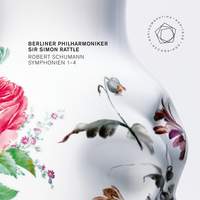
This prediction Schumann about the young Brahms is performed beautifully with A German Requiem, which shines in the center of the work Brahms and even dominates without being subject to any comparison. A historical record with Fisher-Dieskau and especially Elisabeth Grümmer whose " Ihr habt nun Traurigkeit ", accompanied by a very slow Rudolf Kempe, is quite simply one of the most sublime pieces recorded. | 
| | | In stock - usually despatched within 1 working day. |
|
|
| |  |
2013 sees a series of Wagner reissues on Eloquence from complete operas and highlights to Wagner singer portraits and even an audiobook! Reissued for the Wagner Year are highlights from Herbert von Karajan’s mighty ‘Ring’ cycle. The disc includes extended highlights from the four ‘Ring’ operas and allows us to sample Karajan’s choice of different singers for the same character in different operas – Fischer-Dieskau’s Wotan in Das Rheingold and Thomas Stewart’s in Siegfried. There are notes on the music as well as an essay by Karajan expert Richard Osborne on the background to Karajan’s Ring, as well as a photo gallery of many of the key singers. There were and will always be many competitive Ring cycles on the market, but, as Martin Baker sums up ‘[Karajan] creates […] a transparent aural stage where the light and shade in the music has an almost forensic quality. Musically the Karajan Ring cycle has a visceral intensity that, especially in the subterranean scenes, hints at the sinister mythologies that informed Germany’s recent history and is probably closer to the heart of the narrative’s darkness than any other recording.’ | 
| | | (Sorry, download not available in your country) | In stock - usually despatched within 1 working day. |
|
|
| |  | The Art of Magdalena Kozena
Auber: | Le Domino noir: 'Je suis sauvée enfin - Ah! quelle nuit - Flamme vengeresse' Mahler Chamber Orchestra, Marc Minkowski | Bach, J C: | Lamento 'Ach daß ich Wassers gnug hätte' Musica antiqua Köln, Reinhard Goebel | Bach, J S: | Cantata BWV208 'Was mir behagt, ist nur die muntre Jagd!' Musica Florea, Marek Stryncl Mass in B minor, BWV232: Laudamus Te Musica Florea, Marek Stryncl | Bizet: | Les tringles des sistres tintaient (from Carmen) Mahler Chamber Orchestra, Marc Minkowski | Dvorak: | Biblical Songs, Op. 99: Slýs, ó, Boze Berliner Philharmoniker, Simon Rattle Biblical Songs, Op. 99: Hospodin Jest muj Pastýr Berliner Philharmoniker, Simon Rattle Biblical Songs, Op. 99: Boze, boze, pisen novou Berliner Philharmoniker, Simon Rattle Zajatá from Moravské dvojzpevy (Moravian Duets) with Dorothea Röschmann & Malcolm Martineau (piano) Prsten from Moravské dvojzpevy (Moravian Duets) with Dorothea Röschmann & Malcolm Martineau (piano) | Gounod: | Nuit resplendissante (from Cinq-Mars) Mahler Chamber Orchestra, Marc Minkowski | Handel: | Lascia ch'io pianga (from Rinaldo) Venice Baroque Orchestra, Andrea Marcon Dopo notte (from Ariodante) Venice Baroque Orchestra, Andrea Marcon Scherza, infida (from Ariodante) Venice Baroque Orchestra, Andrea Marcon | Janacek: | Lavecka (Bench) with Malcolm Martineau (piano) Moravian Folk Poetry: 12. Jabúcko with Malcolm Martineau (piano) Muzikanti [Musicians] with Malcolm Martineau (piano) | Kapsberger: | Felici gl'animi Private Musicke, Pierre Pitzl | Mahler: | Rheinlegendchen (Des Knaben Wunderhorn) Cleveland Orchestra, Pierre Boulez Lob des hohen Verstandes (Des Knaben Wunderhorn) Cleveland Orchestra, Pierre Boulez Um Mitternacht (Rückert-Lieder) Berliner Philharmoniker, Simon Rattle | Monteverdi: | Libro Nono di Magrigali e Canzonette: Si dolce è'l tormento Private Musicke, Pierre Pitzl | Mozart: | Non so più cosa son, cosa faccio (from Le nozze di Figaro) Orchestra of the Age of Enlightenment, Simon Rattle Voi che sapete (from Le nozze di Figaro) Orchestra of the Age of Enlightenment, Simon Rattle | Ravel: | Shéhérazade: Asie Berliner Philharmoniker, Simon Rattle | Rösler: | An die Entfernte with Malcolm Martineau (piano) | Strozzi: | L'Eraclito amoroso 'Udite amanti' Private Musicke, Pierre Pitzl | trad.: | Kebych bola jahodú | Vitali, F: | Bei lumi Private Musicke, Pierre Pitzl | Vivaldi: | Anderò, volerò, griderò (from Orlando finto pazzo) Venice Baroque Orchestra, Andrea Marcon Armatae face et anguibus (from Juditha Triumphans) Venice Baroque Orchestra, Andrea Marcon Gelido in ogni vena (from Il Farnace, RV711) Venice Baroque Orchestra, Andrea Marcon |
The Art of Magdalena Kožená is an anthology of her finest performances, documenting both the range of her voice and the breadth of repertoire to which she can bring authority, from early baroque of Monteverdi and Strozzi to sacred arias by Bach, opera arias by Handel, Vivaldi, Mozart, Gounod, Bizet and Auber, as well as orchestral songs by Mahler. To all she brings an absorbing emotional depth and maturity of her interpretative abilities. Unique to Kožená are the songs rooted in Bohemia and Moravia by Dvořak and Janáček. She still feels closely connected to her Czech roots. “It’s music that stays in your body forever”. This is Magdalena’s own selection of her favourite songs and arias, sung in French, Italian and German as well as in her mother tongue. 28-page Booklet, including new liner notes from Nick Kimberley. | 
| | | (Sorry, download not available in your country) | In stock - usually despatched within 1 working day. |
|
|
| |  | Stravinsky: Le sacre du printemps
Sir Simon Rattle and the Berliner Philharmoniker, whose Grammy® award-winning accounts of Stravinsky’s Symphony in C and Symphony of Psalms are among Gramophone magazine’s Top 10 Stravinsky Recordings (2011), return to the composer with a recording of the ground-breaking ballet Le Sacre du printemps, whose premiere a century ago marked a turning point in 20th century music history. The programme on this release also includes new recordings of Stravinsky’s Symphonies of Wind Instruments and Apollon Musagète, another of the Russian master’s breathtaking ballets. Although the premiere of Igor Stravinsky’s Le Sacre du printemps in Paris on 29th May 1913 famously set off a near-riot, the work quickly became recognised as one of the most influential musical works of the 20th century. The 100th anniversary of the premiere will be commemorated with performances all over the world in 2013 and, no doubt, with some new recordings. On record and in performance, Simon Rattle has championed the orchestral works of Stravinsky with insight and dedication over many years and this latest recording is an important addition to his Stravinsky discography. “The performances all have the sense of utter security, tonal depth and fabulous dynamic range that are characteristic of the Berlin Philharmonic in Rattle's era...The Berliners are so much on top of their parts that there is something almost too secure about the result...It's a superbly judged performance, with just the right balance between individuality in the wind playing and immaculate ensemble” The Guardian, 21st March 2013 **** “Stravinsky famously disliked Karajan’s supersmooth 1960s account with this orchestra, but he surely would have responded more positively to Rattle, who never allows sheer beauty of sound to undermine the rhythmic pulsing...The Berliners’ strings may be plusher than Birmingham’s, and the woodwind soloists are instrumental royalty, but Rattle preserves the visceral barbarism of this ever-astonishing score.” Sunday Times, 31st March 2013 “it is the suavity of the score that startles, especially in Rattle's subtle use of rubato (stolen time) and the cool sensuality of the woodwind solos. Those woodwind players – currently vying with the principals of the Concertgebouw for the title of world's finest – shine again in Stravinsky's Symphonies of Wind Instruments.” The Independent, 30th March 2013 ***** “Beautiful, all beautiful. But beauty is not enough. We also need the primitive and rude: ingredients that Rattle and the suave Berliners tend to deliver wearing kid gloves...If you’re after an interpretation in love with the score’s quieter corners, go for Rattle with confidence; if you want Stravinsky red in tooth and claw, he’s often hard to find.” The Times, 5th April 2013 *** “You could be forgiven for thinking this was still Herbert von Karajan’s orchestra, such is the depth of colour in The Rite of Spring and weight of string sonority in Apollon Musagète.” Financial Times, 6th April 2013 *** “the physical impact here of maximum Berlin Philharmonic firepower is part of what the music itself calls for...Compared to the clotted cream sonorities in evidence here, Rattle's CBSO recording is far truer to the music's poised incisiveness and grace. But his new reading of The Rite of Spring with the Berlin Philharmonic is a formidable achievement.” BBC Music Magazine, May 2013 ***** “It’s indecently luxuriant and played with a confidence which almost borders on complacency...This recording is full of...sounds which will have you dusting down your miniature score in disbelief. Rarely has the second half’s intro sounded so decadent and sweaty, and I whooped for joy at hearing a normally inaudible low horn rasp a few minutes near the close.” The Arts Desk, 6th April 2013 “This is a pretty considerable account of Le Sacre. I think there is, at times, a degree of greater urgency than was the case in 1987 - perhaps the presence of an audience helped; perhaps it’s the fact that an even more experienced Rattle is now at the helm of a virtuoso orchestra...a refined and excellent performance of Apollon Musagète which benefits not only from the virtuosity of the Berlin string players but also from the fastidious ear of their conductor.” MusicWeb International, April 2013 “[Stravinsky] would surely have warmed to this new version. Rattle’s sense of pacing and proportion is unerring, and the sound has a startling vividness that makes this familiar piece seem new. One hears thickets of ticking, twittering inner parts that normally stay in the background.” The Telegraph, 19th April 2013 **** BBC Music Magazine
Orchestral Choice - May 2013 |
| 
| | | In stock - usually despatched within 1 working day. |
|
|
| |  | Evgeny Svetlanov conducts Tchaikovsky, Beethoven & HaydnRecorded live at the Philharmonie Berlin, in March 1989
It is astonishing and hard to explain why it was that Yevgeny Svetlanov found his way to the Berlin Philharmonic only quite late in his career, at the age of sixty. It was 1989, a year so very eventful for the orchestra (Herbert von Karajan resigned and died in the summer; the orchestra chose Claudio Abbado as its new principal conductor; its members first officially guested in East Berlin with James Levine; and, after the fall of the Berlin Wall, when Daniel Barenboim performed a moving concert for the citizens of the German Democratic Republic) that the Russian first came to the Philharmonic in March: it would remain his only encounter with this ensemble. Svetlanov’s widow Nina wrote the following recollections of the Berlin performance. They show the outstanding importance that the conductor’s sole encounter with the Berlin Philharmonic had for him: Evgeny Svetlanov toured Germany a lot with his orchestra, The Russian State Symphony Orchestra (ex USSR Academic State Symphony Orchestra). But he would stubbornly refuse to accept invitations from German orchestras such as the Bayerischer Rundfunk, Hamburg, Cologne and Berlin Radio orchestras among others. His motivation was very clear – “as long as I am not invited to the Berlin Philharmonic, no matter the quality of all the others, I will not go”. There was nothing to be done. Each great artist has his own principals and it was totally impossible to convince him to do otherwise. Then, finally, the invitation came. Evgeny Svetlanov was very pleased with the choice of repertoire, especially with Tchaikovsky’s Manfred. Usually promoters asked him to perform Tchaikovsky’s Symphonies Nos.4, 5 or 6 when he was on tour abroad. The concert was a big success and was followed by long applause from both orchestra and public. He was very happy. Back in the artists’ room he welcomed all those who wanted to greet him. After which he quietly said to me – “I am so tired, let’s go back to the hotel”. After a while, when I closed the door and the Maestro started changing, we heard a persistent knock on the door. He did not wish to be disturbed. Someone kept on knocking. When I opened the door, we saw the director of the Berlin Philharmonic who looked pre-occupied and who explained to us that the public was still there, the hall was still full and there was a standing ovation that would not end. Evgeny Svetlanov, who was already dressed in his coat with an umbrella in his hands, came out on the stage immediately. He saw the audience standing and screaming, greeting him with endless applause. He deeply bowed and stretched out his arms asking the public to calm down. And when the commotion died down he said, in German, that he was extremely happy to get this kind of welcome. “As long as I live, I will never forget this evening”. | 
| | | In stock - usually despatched within 1 working day. |
|
|
| |  |
José van Dam (Falstaff), Luciana Serra (Alice Ford), Luca Canonici (Fenton), Paolo Coni (Ford), Kim Begley (Dr. Cajus), Pierre Lefèbre (Bardolfo), Mario Luperi (Pistola), Elizabeth Norberg-Schulz (Nannetta), Susan Graham (Meg Page), Marjana Lipovsek (Mistress Quickly) Rundfunkchor Berlin & Berliner Philharmoniker, Sir Georg Solti The reissue of this recording marks a double celebration – the bicentenary of Verdi’s birth and the centenary of Solti’s. Solti’s second recording of Verdi’s Falstaff returns to the catalogue. Recorded ‘live’ at the Philharmonie in Berlin, it boasts a thoroughly imaginative cast and magnificent recorded sound. | 
| | | (Sorry, download not available in your country) | In stock - usually despatched within 1 working day. |
|
|
| |  |
| 
| | | In stock - usually despatched within 1 working day. |
|
|
| |  | Karajan Adagio: Music To Free Your Mind
Albinoni: | Adagio for Strings and Organ in G minor | Bach, J S: | Orchestral Suite No. 3 in D major, BWV1068: Air ('Air on a G String') | Bizet: | L'Arlesienne Suite No. 1: III. Adagietto Carmen: Entr'acte to Act III (Intermezzo) | Chopin: | Les Sylphides - Nocturne Arr. Roy Douglas | Debussy: | Prélude à l'après-midi d'un faune | Gluck: | Orfeo ed Euridice (Orphée et Euridice): Dance of the Blessed Spirits | Grieg: | Peer Gynt: Solveig's Song Peer Gynt: Ase's Death | Handel: | Concerto grosso, Op. 6 No. 12 in B minor, HWV330: III - Aria | Mahler: | Symphony No. 5 in C sharp minor - Adagietto | Mascagni: | Cavalleria Rusticana: Intermezzo | Massenet: | Meditation (from Thaïs) | Mozart: | Serenade No. 13 in G major, K525 'Eine kleine Nachtmusik': Romance (Andante) | Offenbach: | Barcarolle (from Les Contes d'Hoffmann ) Arranged by M. Rosenthal | Pachelbel: | Canon | Puccini: | Humming Chorus (from Madama Butterfly) | Ravel: | Pavane pour une infante défunte | Respighi: | Ancient Airs and Dances, Suite No. 3, P. 172: III. Siciliana | Sibelius: | Valse Triste, Op. 44 No. 1 Lemminkäinen Suite, Op. 22: The Swan of Tuonela (No. 2) | Tchaikovsky: | Romeo & Juliet - Love Theme Serenade for strings in C major, Op. 48: III. Élégie | Verdi: | La traviata: Prelude to Act 3 | Vivaldi: | Winter from The Four Seasons (extract) Rain Concerto in A minor for Two Violins, RV 523: Largo | Wagner: | Mild und leise 'Isolde's Liebestod' (from Tristan und Isolde): orchestral version |
Karajan Adagio is the most successful classical collection of all time with nearly 4 million units sold since 1993. It has now been re-engineered, re-titled, and newly compiled for the 21st century. “Adagio Karajan” was the ORIGINAL CLASSICAL CHILL-OUT ALBUM. Over two-and-a-half hours of the world’s most relaxing music – from the most accomplished conductor of all time. Emphasizing classical music’s unique power in transporting the listener away from the stresses and strains of modern-day living - All over the world, consumers are searching for an escape, and the soothing sounds of “Karajan Adagio” can provide that. “Adagio” – the literal translation is “at ease”, with a slowness, with a tranquillity, and with a longing – the perfect antidote to the relentless pace of modern global living. | 
| | | In stock - usually despatched within 1 working day. |
|
|
| |  | Dvorak: Slavonic Dances opp. 46 & 72
| | | In stock - usually despatched within 1 working day. |
|
|
| |  | Herbert von Karajan conducts Strauss and MozartRecorded at the Salzburg Festival, August 1970
| | | In stock - usually despatched within 1 working day. |
|
|
| |
|