Kate Royal

Soprano

Kate Royal

Prices shown exclude VAT. (UK tax is not payable for deliveries to United States.)
See Terms & Conditions for p&p rates.

Britten: A Midsummer Night's Dream

Britten: A Midsummer Night's Dream


Bejun Mehta (Oberon), Íride Martínez (Tytania), Jack Morlen (Puck), Timothy Robinson (Lysander), Jared Holt (Demetrius), Tove Dahlberg (Hermia), Kate Royal (Helena) & Matthew Rose (Bottom)

London Philharmonic Orchestra & Trinity Boys Choir, Ilan Volkov

Glyndebourne staged the premiere of The Rape of Lucretia with Kathleen Ferrier cast as Lucretia and the following year premiered Albert Herring. Thirty four years then elapsed before another of Britten’s operas was staged. In 1981, Glyndebourne presented A Midsummer Night’s Dream. An acclaimed staging by director Peter Hall which has enjoyed 4 revivals since, it has frequently been described by critics, and the press alike, as the ‘perfect realisation of a fairy tale’.

Britten employed disparate musical styles and devices to depict the interaction of the fairy kingdom; the quartet of lovers, the Mechanicals and town tradesmen determined to make it in showbiz. He juxtaposes a wide variety of styles to create the various worlds in the play. Brash trombones clash with Elizabethan flourishes, tormented string sounds and tuned percussion evoke the mood of the dark forests. With the challenging vocal writing a combination of singing, sprechstimme and spoken word cleverly intertwine.

This recording from Glyndebourne’s 2006 Festival, and the most recent revival, is a remarkable production cleverly capturing both the callousness of Oberon’s trickery on Tytania, as well as beautifully conveying the sense of sexual freedom that Bottom experiences when encountering Tytania. The stars in this recording are numerous but without doubt Bejun Mehta’s Oberon is one of the greatest on record. Iride Martinez makes a notable UK debut as Tytania. The lovers’ quartet sing almost all of their scenes as an ensemble, and beautifully at that, with Kate Royal (as Helena) and Jared Holt (as Demetrius) making the most harmonious of couples. Matthew Rose is both a wonderful and beguiling Bottom and is at the very heart of this recording whilst not forgetting the perfect performance from the well drilled Trinity Boys Choir, and show stealer, the 11 year-old Jack Morlen as Puck.

“Ilan Volkov’s lushly romantic conducting of Britten’s inventive score is exhilaratingly hot-blooded, but occasionally his enthusiasm runs away with him, leaving some of the singers overwhelmed. Bejun Mehta makes a commanding Oberon and Matthew Rose an endearing Bottom” The Telegraph, 18th November 2011

“Even if the Sussex opera house missed a trick by not filming the last revival in 2006, the smell of the theatre still irradiates this audio recording from the same year. It picks up the stage noise but also the vibrancy of live performance and the superb quality of Glyndebourne’s ensemble: you can “watch” the opera in your mind’s eye, such is its perfumed potency.” Financial Times, 10th December 2011 ****

“this live [Dream]...will certainly transport even the most distracted listener over hill and over dale to the realm of the Fairy Queen....Mehta's Oberon is one of the main reasons for choosing this disc: his is by far the most powerful casting in this role since James Bowman...His Tytania is impressive too: Iride Martinez is a nightingale one moment, a true Queen of the Night the next...a delectable Dream.” BBC Music Magazine, January 2012 ****

“Its number one strength is the imposingly sung Bottom of Matthew Rose. No mere buffo bass, he brings a proto-Wagnerian grandeur of voice to the role, together with a very un-Wagnerian sense of humour...The fairy kingdom is less memorably represented...Ilan Volkov proves a conductor in the best Britten tradition...Other CD recordings have better casts...but this one enjoys a rude energy of its own.” Gramophone Magazine, February 2012

“the performance boasts some fine singing. Bejun Mehta is a silky yet seductively threatening Oberon, Iride Martinex (Tytania) floats her high notes ravishingly, and Matthew Rose is an amusing Bottom...11-year-old Jack Morlen is a terrifically elfin-sounding Puck, and Ilan Volkov conducts with a fine sense of the score's strange charm.” Classic FM Magazine, March 2012 ****

“Mehta's Oberon is the collectors' item...he sounds quite unlike any previously recorded Oberon, but his rich dark timbre does recall that of the role's creator at Covent Garden [Russell Oberlin]...If the occasional hint of an American accent intrudes, it serves only to underline Oberon's 'otherness'...a fascinating glimpse at another Glyndebourne classic which proclaims the festival's ethos while presenting unmissable contributions from Mehta, Rose and Volkov.” International Record Review, December 2011

Glyndebourne - GFOCD01306

(CD - 2 discs)

$28.50

In stock - usually despatched within 1 working day.

Mozart: Don Giovanni, K527

Mozart: Don Giovanni, K527


Gerald Finley (Don Giovanni), Luca Pisaroni (Leporello), Kate Royal (Donna Elvira), Anna Samuil (Donna Anna), William Burden (Ottavio), Anna Virovlansky (Zerlina), Guido Loconsolo (Masetto), Alastair Miles (Commendatore)

The Orchestra of the Age of Enlightenment & Glyndebourne Chorus, Vladimir Jurowski (conductor) & Jonathan Kent (director)

“Amazing production of Don Giovanni at Glyndebourne, a work of art in itself… Magnificent as the set is, this will also be a Don Giovanni to listen to for the orchestra. The Orchestra of the Age of Enlightenment are so good that they can generate almost demonic energy from the lighter timbres of period instruments. Vladimir Jurowski has rarely sounded more inspired”. Opera Today

“The graceful purity of Kate Royal as Elvira ... gave lustre to Mozart's kaleidoscopic masterpiece”. The Scotsman

“Suavely ruthless, Finley was both steely monster and molten charmer, singing with a firmness, clarity and stylistic elegance that I can’t easily imagine surpassed”. The Telegraph

For this 2010 production, the first new staging of the opera in 10 years, Glyndebourne welcome back the winning team of director Jonathan Kent and designer Paul Brown with Festival Music Director, Vladimir Jurowski conducting the Orchestra of the Age of Enlightenment.

Set at a time of seismic social and cultural change - in a Fellini-esque vision of post-war life - Jonathan Kent's urgently propulsive production offers a 'white-knuckle rollercoaster ride' through the events of the Don's last day as they unfold in and around Paul Brown's magical 'box of tricks' set.

In the title role we also welcome back the great bass-baritone Gerald Finley. He has sung Don Giovanni to worldwide acclaim in New York, London, Paris, Vienna, Rome, Budapest and Prague. Finley is joined by Luca Pisaroni (Guglielmo in the 2006 Festival’s Così fan tutte) as Leporello, Kate Royal (the Governess in Jonathan Kent’s 2006 staging of The Turn of the Screw) as Donna Elvira, and the young Russian soprano Anna Samuil making her UK opera debut as Donna Anna.

Bonus features include rehearsal and backstage footage, interviews with the production staff and cast as well as a glimpse into the costume, design and technical departments at Glyndebourne.

The DVD will feature English, French and German subtitles.

The production will be revived next summer at the 2011 Glyndebourne Festival.

Kate Royal is an exclusive EMI Classics artist since 2006. She has made two solo recordings: Kate Royal with the Academy of St. Martin in the Fields/Edward Gardner and Midsummer Night with the Orchestra of English National Opera/Edward Gardner. As a guest artist, she has recorded discs for the label with the Choir of King’s College, Cambridge, Le Concert d’Astrée/Emmanuelle Haïm and Paul McCartney. Kate Royal's new album ‘A Lesson in Love’ (released in 2011), is an intimate recital with pianist Malcolm Martineau charting a young girl’s journey of love and loss through a combination of German lieder, English and American songs and French melodies. Kate Royal returns to Glyndebourne in Summer 2011.

Designer Paul Brown

“this Don, played by Gerald Finley, is a master of self-control: hands in tailored pockets and operating with a steely indifference to all...And Finley give this vision vocal assurance matching the clarity of Jurowski's conducting and the momentum generated by Kent within the ever-shifting Pandora's box of a design...Kate Royal is a deeply serious, thrillingly sung Donna Elvira, Anna Samuil an equally classy, flaring soprano of a Donna Anna.” BBC Music Magazine, July 2011 ****

“Gerald Finley is vocally and theatrically mesmerising as a dashing Giovanni, and he's matched by Kate Royal on splendid form as the abandoned Elvira and Anna Virovlansky a charming and fresh-voiced Zerlina. Vladimir Jurowski takes the orchestra at quite a lick, adding energy and fizz to proceedings.” Classic FM Magazine, August 2011 ***

“[Finley's] assumption is completely convincing...his fear before the confrontation with the Commendatore in the supper scene is palpable. Finley sings as well as he acts, apart from an oddly unhoneyed serenade...The singing is fine and the OAE play like angels.” Gramophone Magazine, August 2011

“Finley is a Don of remarkable self-assurance and narcissism, his impeccable diction and technically flawless singing an extension of this monstrous character...Pisaroni's great acting occasionally makes his singing imperfect, but the voice is grand and there will be few complaints...[Samuil's] singing is big-boned, fearless and has a nice unpredictability to it...The [OAE] plays with fire and passion...[Jurowski's] reading keeps the listeners on the edge of their seats.” International Record Review, July 2011

GGramophone Magazine

DVD of the Month - August 2011

DVD Video

Region: 0

Format: NTSC

EMI - 0720179

(DVD Video - 2 discs)

$24.50

In stock - usually despatched within 1 working day.

OPERA 2011

OPERA 2011


Arne:

Rise, Glory, Rise (Rosamond)

Ian Bostridge (tenor)

Bellini:

Casta Diva (from Norma)

Cheryl Studer (soprano)

Caldara:

Lo seguitai felice (L'Olimpiade)

Philippe Jaroussky (countertenor)

Catalani:

Ebben? Ne andrò lontana (from La Wally)

Maria Callas (soprano)

Cilea:

Ecco: respiro appena. Io son l'umile ancella (from Adriana Lecouvreur)

Kiri te Kanawa (soprano)

Dvorak:

Mesícku na nebi hlubokém 'Song to the Moon' (from Rusalka)

Kate Royal (soprano)

Gershwin:

Bess, you is my woman now (from Porgy and Bess)

Lesley Garrett (soprano), Bryn Terfel (bass-baritone)

Gluck:

Che faro' senza Euridice? (from Orfeo ed Euridice)

David Daniels (countertenor)

Handel:

Se pietà di me non senti (from Giulio Cesare)

Natalie Dessay (soprano)

Poro: D'un Barbaro scortese

Ian Bostridge (tenor)

Ombra mai fu (from Serse)

Gerard Lesne (countertenor)

Leoncavallo:

Vesti la giubba (from I Pagliacci)

Jose Carreras (tenor)

Mascagni:

Ed anchè Beppe amò (from L'amico Fritz)

Luciano Pavarotti (tenor)

Monteverdi:

Pur ti miro (I gaze upon you) from L'Incoronazione di Poppea

Nuria Rial (soprano), Philippe Jaroussky (countertenor)

Mozart:

Der Hölle Rache kocht in meinem Herzen (from Die Zauberflöte)

Diana Damrau (soprano)

Voi che sapete (from Le nozze di Figaro)

Teresa Berganza (mezzo)

La ci darem la mano (from Don Giovanni)

Susan Graham (mezzo), Placido Domingo (tenor)

Dove sono i bei momenti (from Le nozze di Figaro)

Barbara Hendricks (soprano)

Or sai chi l'onore (from Don Giovanni)

Joan Sutherland (soprano)

Puccini:

Recondita armonia (from Tosca)

Placido Domingo (tenor)

O mio babbino caro (from Gianni Schicchi)

Maria Callas (soprano)

Nessun dorma (from Turandot)

Franco Corelli (tenor)

Dovunque al mondo (from Madama Butterfly)

Jonas Kaufmann (tenor)

Che gelida manina (from La Bohème)

Rolando Villazon (tenor)

E lucevan le stelle (from Tosca)

Roberto Alagna (tenor)

Purcell:

When I am laid in earth (from Dido and Aeneas)

Susan Graham (mezzo)

Rossini:

Contro un cor (from Il barbiere di Siviglia)

Joyce diDonato (mezzo)

Stabat Mater: Inflammatus

Anna Netrebko (soprano)

Una voce poco fa (from Il barbiere di Siviglia)

Vivica Genaux (mezzo)

Strauss, R:

Mir ist die Ehre widerfahren (from Der Rosenkavalier)

Angelika Kirchschlager (mezzo), Natalie Dessay (soprano)

Vivaldi:

Non fia della vittoria (from Ercole sul Termodonte)

Rolando Villazon (tenor)

Certo pensier ch'ho in petto (from Ercole sul termodonte)

Diana Damrau (soprano)

Non saria pena la mia (from Ercole sul Termodonte)

Joyce diDonato (mezzo)

Wagner:

Winterstürme wichen dem Wonnemond (from Die Walküre)

Simon O'Neill (tenor)

Nur eine Waffe taugt (from Parsifal)

Simon O'Neill (tenor)


EMI - 0966662

(CD - 2 discs)

$11.25

In stock - usually despatched within 1 working day.

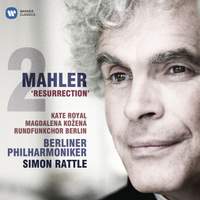
Mahler: Symphony No.  2 in C minor 'Resurrection'

Mahler: Symphony No. 2 in C minor 'Resurrection'


Kate Royal (soprano), Magdalena Kožená (mezzo)

Berliner Philharmoniker & Rundfunkchor Berlin, Sir Simon Rattle

Gustav Mahler’s epic Symphony No. 2 ‘Resurrection’ with Simon Rattle and the Berliner Philharmoniker, the Rundfunkchor Berlin and star soloists Kate Royal and Magdalena Kožená was recorded in concert at Berlin’s Philharmonie in late October 2010 and will be released on CD by EMI Classics in February 2011.

The Symphony, scored for orchestra, soloists and chorus, tackles the great mysteries of life and death and was already among the most successful and popular of Mahler’s symphonies during his lifetime. Not only was the work premiered by the Berliner Philharmoniker (in 1895) but it is an important work in Simon Rattle’s musical trajectory. The partnership of Sir Simon and the BPO in Mahler’s Symphony No. 2 portends a ground-breaking new recording.

The concerts on October 28-30 form part of a Mahlerthon of sorts, in which the Berliner Philharmoniker will perform all the symphonies between August 2010 and the end of 2011 in commemoration of two Mahler anniversaries: the 150th anniversary of his birth (7 July 2010) and the centenary of his death (18 May 2011).

The symphonies of Gustav Mahler have been a central theme in Simon Rattle’s career. “[Mahler’s Symphony No 2] was the piece that made me take up conducting in the first place when I heard it in a live performance when I was 12. Mahler aimed to put the entire world into a symphony and this world goes from the death rights of some unnamed hero through a memory of what life was in both its beauty and its horror and final resurrection and redemption. It’s on a vast canvas with many, many performers and, for me, it is one of the most moving of all orchestral works.”

Whilst still a student at the Royal Academy of Music in the 1970s, Rattle organised and conducted a performance of the Second Symphony. Since then, he has performed all of the Mahler symphonies on many occasions, principally with the City of Birmingham Symphony Orchestra, the Berliner Philharmoniker and the Wiener Philharmoniker. At his Berlin debut in 1987, Rattle led the Berliner Philharmoniker in the Symphony No. 6, and his inaugural concert as the Orchestra’s Principal Conductor in September 2002 featured the Symphony No. 5.

Simon Rattle’s Mahler symphony performances on disc have won enthusiastic critical praise over the years: “Where Simon Rattle's interpretation is concerned, we must go into the realm of such giant Mahlerians as Walter and Klemperer, dissimilar as they were. For we are dealing here with conducting akin to genius, with insights and instincts that cannot be measured with any old yardstick.” (Gramophone on the 1987 recording of the Symphony No. 2 with the CBSO, Arleen Auger and Dame Janet Baker); “A triumph…It can safely be ranked among the finest performances on record.” (Gramophone on the 2002 recording of Symphony No. 5 with the BPO); “The final ascent to the big blue yonder is surely unsurpassable - on both the sonic and interpretative fronts… There's no doubt, then, that Rattle has inspired all concerned to an achievement which joins his groundbreaking readings of the Third, Seventh and Tenth Symphonies in the Mahlerian heaven.” (BBC Music Magazine on the 2005 recording of the Symphony No. 8 ‘Symphony of a Thousand’ with the CBSO); “One of the finest interpretations on record of Mahler’s great unfinished symphony… Rattle supremely allies mesmerising detail to awesome scale in an intense, award-winning live account” (Classic FM Magazine on the 2000 recording of the Symphony No. 10 with the BPO).

“The opening bars certainly make you sit bolt upright. Upper strings tremble; lower strings thrust: Rattle starts the symphony’s journey in a flourish of power and mystery...In the nostalgic second movement Rattle remains winningly light-footed. We also enjoy the benefits of deeper feelings. Listen to the sweetly lyrical strings once the opening hurly-burly is done” The Times, 4th February 2011

“Rattle represents its quasi-Expressionist leanings, its wilfulness and Weltschmerz: Mahler as modernist...Rattle’s micromanagement underlines Mahler’s glaring colours and edginess...Magdalena Kozena (Rattle’s wife) handles the Urlicht movement with chaste refinement, and the Berlin Philharmonic plays with phenomenal commitment and finesse.” Financial Times, 5th February 2011 ****

“Kožená brings her customary depth of feeling to the still maternal voice of "Urlicht"...Rattle's famous piano-pianissimos are deployed to breathtaking effect, the choral passages (radiantly illuminated at the top by Kate Royal) sound pure, mysterious and very Bachian, and the returning resurrection hymn is tremendous” Gramophone Magazine, March 2011

“Countless surface details and fleeting shades emerge as Rattle's vision unfolds, delivered not as wilful impostors but according to the score's letter. Beyond breathtaking playing, peerless choral singing and the supernatural beauty of Magdalena Kožená's Urlicht solo, this performance spans Mahler's infinitely complex universe with compelling intellectual insight and expressive force” Classic FM Magazine, March 2011 ****

“Rattle places considerable weight on this audacious conflation of tone-poem...and sonata-form...his is undoubtedly a reading of as well as for the present.” International Record Review, March 2011

“the post-holocaust enchantments are magically coloured. For anyone who cares about this symphony Rattle's new recording is essential listening, if not necessarily a first port of call...[he] sets new standards with the light, shade and shock of his Berlin funeral rites which open the symphony.” BBC Music Magazine, March 2011 ****

“the sound is almost miraculously analytical, and the combination of Rattle's attention to detail and the superlative playing of his great orchestra ensures that every morsel of Mahler's scoring makes its point.” The Guardian, 24th February 2011 ****

“Of course there’s much to admire. The BPO are on fantastic form, the recorded sound is sumptuous but clear and Rattle brings some new thoughts to the piece. The first movement is striking for its deliberate, almost stealthy beginning, and there’s a slow, almost dreamlike delicacy about the music.” The Telegraph, 25th February 2011 ***

“Throughout [the opening], Rattle marshals his players enough to let the schizophrenic terror of the movement have its effect...Exultantly we are drawn onward, though, toward the inevitable choral closing section, which is positively heaven-sent when it finally arrives... in Rattle's hands it is supremely thrilling.” Daniel Ross, bbc.co.uk, 22/02/2011

GGramophone Magazine

Editor's Choice - March 2011

EMI - 6473632

(CD - 2 discs)

$16.75

In stock - usually despatched within 1 working day.

Kate Royal: A Lesson in Love

Kate Royal: A Lesson in Love


Beach:

Ah, Love, but a day! Op. 44, No. 2

Bolcom:

Waitin'

Brahms:

Am Sonntag Morgen Op. 49 No. 1

Bridge:

Love went a-riding

Britten:

O Waly, Waly

Canteloube:

Songs of the Auvergne: Chut, chut

Copland:

Pastorale

Heart we will forget him

Debussy:

Apparition - song (1884)

Duparc:

Extase

Fauré:

Donc ce sera par un clair jour d’été

Hughes, H:

I will walk with my love

Liszt:

Es muss ein Wunderbares sein, S. 314

Ravel:

Chanson de la mariée

Schubert:

Gretchen am Spinnrade, D118

Rastlose Liebe, D138

Die Männer sind méchant, D866 No. 3

Du liebst mich nicht D756 (Platen)

Schumann:

Jemand

Lied der Braut II, Op. 25 No. 12

Lied der Braut I, Op. 25 No. 11

Strauss, R:

Hochzeitlich Lied Op. 37 No. 6

Tosti:

Pour un baiser

trad.:

Londonderry Air

Wolf, H:

Die Kleine

O wär dein Haus durchsichtig wie ein Glas

Erstes Liebeslied eines Mädchens (No. 42 from Mörike-Lieder)

Verschling der Abgrund meines Liebsten Hütte


Kate Royal (soprano) & Malcolm Martineau (piano)

A Lesson in Love tells the universal story of a love won and lost, and contains some beautiful and emotional German lieder, English and American songs and French mélodies.

Kate Royal’s first two orchestral discs for EMI have been critically acclaimed. Here she turns her attention towards a more intimate recital disc with piano.

A Lesson in Love charts the journey of a young girl’s relationship: from the first kiss and thrill of a blossoming love and initial intimacy through to the joy of a love fulfilled, to the disappointment and anger when the relationship breaks down - it ends with the girl’s acceptance and a cheeky sense of optimism about what her future love life might hold… Kate here creates her own unique song cycle, a thematic journey through the highs and lows of love, of young naivety lost and emotional maturity gained, feelings and experiences everyone can relate.

Kate leads us through her own personal choice of song, and her innate sense of drama and her passion for musical storytelling brings a fresh and youthful interpretation of the disc repertoire. A Lesson in Love contains a mixture of well-known songs as well as some surprising rarities, with a range of song styles and languages to appeal to a broad audience. She is joined by the most esteemed and respected accompanists, Malcolm Martineau.

“Kate Royal's beautifully sung new album, with finely characterised piano-playing from Malcolm Martineau, ranges imaginatively across a spectrum of composers who have captured the first pangs, the heartaches and the dashed hopes that can make life such a maelstrom of emotion.” Gramophone Magazine, March 2011

“Royal, with Malcolm Martineau at the piano, finds a character and colour for each of her 28 songs...William Bolcom’s gentle “Wait in” at the start and finish is well justified, and her Bridge and Britten are heartfelt, but the gem is Amy Beach’s winsome “Ah, Love but a day!”.” Financial Times, 11th February 2011 ****

“Royal's idea of combining songs of disparate eras and styles to tell a single love story works beautifully...[She] sings with radiant beauty and powerful emotional immediacy. If the golden warmth of her voice shows a hint of tightening when pushed on her high notes, it doesn't detract from the overall impact.” Classic FM Magazine, April 2011 ****

“An intriguingly fresh and unhackneyed programme...Kate Royal proves herself a compelling recitalist, colouring words with feeling and creating vivid atmosphere and character.” The Telegraph, 6th March 2011 ****

“Royal is generally in fine voice...luscious warmth is much in evidence. Royal is an exception among the majority of lyric sopranos these days in boasting an especially substantial middle range, which really glows throughout this disc.” International Record Review, March 2011

“Royal is on fine form in the Schumann and Schubert Lieder, with Malcolm Martineau at the piano stage-managing the show admirably, as indeed he does throughout.” BBC Music Magazine, April 2011 ****

EMI - 9485362

(CD)

$16.75

In stock - usually despatched within 1 working day.

The World of Castrati: The Voices of Angels

The World of Castrati: The Voices of Angels


Bach, J C:

Ebben si vada...lo ti lascio: Ebben si vada

Adriano in Siria: Cara, la dolce fiamma

Broschi, R:

Qual guerriero in campo armato (from Idaspe)

Caldara:

Giacché mi tremi in seno (from La Passione di Gesù Cristo Signor Nostro)

Gluck:

Se mai senti spirarti sul volto (from La clemenza di Tito)

Handel:

Crude furie degli orridi abissi (from Serse)

Scherza, infida (from Ariodante)

Frondi tenere e belle ... Ombra mai fù (from Serse)

Mi lusinga il dolce affetto (from Alcina)

Dall'ondoso periglio (from Giulio Cesare)

Dolci chiodi, amate spine (from La Resurrezione)

Ho un non so che nel cor (from La resurrezione)

Se l'arco avessi (from Admeto)

Quivi, tra questi soltari orr

In mille dolci modi (from Sosarme)

Ritorna pur, ritorna...Voglio che sia l'indegno (from Faramondo)

Lunga serie d'alti eroi (from Parnasso in festa)

Hasse, J A:

Spesso tra vaghe rose (from Il Siroe Re di Persia)

Monteverdi:

Hor mentre i canti alterno (from L'Orfeo)

Mozart:

Deh, per questo istante solo (from La Clemenza di Tito)

Venga pur, minacci e frema (from Mitridate, rè di Ponto)

Rossini:

Dolci silvestri... Perché mai le luci apprimo Arsace (from Aureliano in Palmira)

Vivaldi:

Sposa son disprezzata (from Bajazet)

Il Bajazet (Il Tamerlano) : Anch'il mar par che sommerga

Destin nemico...Destin avaro (from La fida ninfa)


In this double album, the greatest vocal artists of the present day offer their own vision of the singing of their legendary predecessors.

The extraordinary adulation accorded to castrati during the seventeenth and eighteenth centuries is still today one of the most fascinating phenomena in the history of music. During this golden age of the castrato, these male singers endowed with high voices that combined incredible refinement, amazing power and superhuman virtuosity took the musical world by storm. The whole of Europe was overcome by infatuation for these vocal prodigies. In the absence of the castrati themselves, the singers of today face the formidable challenge of reviving their repertoire. Both male and female singers now undertake the task of bringing back to life the wondrous voices of their androgynous forebears, in music that is by turns unsettling, deeply moving and of a dizzying virtuosity.

A 2CD-Compilation for the Price of 1 + 1 Bonus DVD - Digipack Format

Virgin - 6487912

(CD - 2 discs)

$26.00

In stock - usually despatched within 1 working day.

Karl Jenkins - Stella Natalis

Karl Jenkins - Stella Natalis


Jenkins, K:

Stella Natalis

Joy to the World


Kate Royal (soprano), Alison Balsom (trumpet) & Alice Halstead (soprano)

Ethic Percussion Orchestra, Tenebrae Choir & Members of Adiemus, Karl Jenkins

"As a composer, he recognises no boundaries - musical, commercial, geographical or cultural. His is a way of thinking and composing that is perfectly in tune with the spirit of the times." Classic FM Magazine

Karl Jenkins, the classically trained master of global ‘crossover,’ has composed a new work for choir and orchestra, Stella natalis, as a gift to music lovers of all stylistic and spiritual backgrounds for the 2009 holiday season. Its coupling, Joy to the world, features arrangements by Jenkins of carols from around the globe in keeping with the composer’s inclusive and universal approach to the message of music.

The performers represent a mixture of classical and popular artistry. “It has been a privilege,” said Karl Jenkins recently, “to feature the astounding talents of fellow EMI artists Kate Royal [soprano] and Alison Balsom [trumpet] and to introduce BBC Radio 2 Young Chorister of the year 2008, Alice Halstead. The choir is Tenebrae, whilst as a counterpoint to their ‘classical’ sound, I have revisited my past and re-introduced the ethnic sound of Adiemus, featuring Mary Carewe, who sang on the first Adiemus album Songs of Sanctuary, and Mae McKenna. My orchestration has the usual classical and ethnic percussion mix, the latter played by Jody K Jenkins and Zands. The orchestra is the Marylebone Camerata, a hand-picked group of the finest young players in London, assembled by cellist Jonathan Byers.”

“Stella natalis means ‘star of birth’ or ‘star of origin,’ continues Jenkins, “and the music conveys the Christmas message of peace, goodwill, compassion and a new beginning whilst using a wider palette of inspiration than is usual in such treatments: Zulu text, reference to Hindu gods, as well as the Old Testament, all make an appearance! The libretto, for the most part, is by Carol Barratt together with some established text in Latin and English.”

Joy to the world consists of a set of idiosyncratic arrangements by Karl Jenkins to carols from England, Germany, France, Spain, the West Indies and the African-American Go tell it on the mountain.

Alison Balsom (www.alisonbalsom.com), the highly acclaimed trumpeter, is one of music's great ambassadors. She studied at the Guildhall School of Music, at the Paris Conservatoire and with Håkan Hardenberger. While under the aegis of the Young Concert Artists Trust, she caught the eye of EMI Classics with whom she records exclusively. Alison has also participated in BBC Radio 3’s New Generation Artists scheme, through which she has performed at the Wigmore Hall and with all of the BBC Orchestras. For EMI, Alison Balsom has recorded a Bach Trumpet and Organ disc, which was enthusiastically received internationally; Caprice, which also won great critical acclaim, and a CD featuring the Haydn and Hummel Trumpet Concertos, which was named among the “24 records of 2008” by The New York Times. Alison Balsom won the Classic FM Listener’s Award at the 2006 Gramophone Awards and was hailed as “Rising Artist of the Year” the following year at the Echo Klassik Awards. In 2009 she became the first Briton ever to be crowned Female Artist of the Year at the Classical BRITs. As a featured performer at the 2009 Last Night of the Proms at the Royal Albert Hall, she played the Haydn Concerto with the BBC Symphony Orchestra and David Robertson and works by Gershwin and Piazzola.

“A natural communicator, [endowed with] musicality, a lyric soprano of rare loveliness, a poised and dignified manner and [gorgeous] looks,” (The Sunday Times), Kate Royal signed an exclusive contract with EMI Classics in 2006. Since then, the Guildhall and National Opera Studio graduate and winner of Kathleen Ferrier, John Christie and Royal Philharmonic Society awards has recorded two critically acclaimed solo albums: the eponymous Kate Royal and Midsummer Night, an atmospheric recital collection focusing on female characters in 20th century opera and operetta. She has also been featured in albums with the Choir of King’s College, Cambridge, Ian Bostridge and Sir Paul McCartney. Equally at home in opera and recital, classical and ‘crossover,’ Kate has wowed audiences and critics alike with her appearances at Glyndebourne, the Wigmore Hall, Edinburgh Festival and Royal Opera House. Upcoming appearances include the Berlin Philharmonic and the Orchestra of Bavarian Radio under Simon Rattle, Le Concert d’Astrée with Emanuelle Haïm, the Los Angeles Philharmonic and Les Musiciens du Louvre. She has sung Donna Elvira at Glyndebourne, Pamina and Micaëla at the Bavarian State Opera and Pamina and Anne Trulove at the Royal Opera House. (www.royalmidsummer.com)

Soprano Alice Halstead (www.alicehalstead.com), a choir girl at St Alphege Church, Solihull and a pupil at King Edward VI High School for Girls, Birmingham, won the coveted title of “BBC Radio 2 Young Chorister of the Year 2008” award at St. Paul's Cathedral, London. From the age of four she has attended the Birmingham Junior Conservatoire where she studies singing, cello and piano. She is also a member of the National Youth Choir of Great Britain (Training North). Alice has appeared several times on BBC One’s “Songs of Praise” and has featured in many national radio broadcasts including Good Morning Sunday with Aled Jones and Friday Night Is Music Night with the BBC Concert Orchestra on BBC Radio 2, In Tune on BBC Radio 3 and Sunday Worship on BBC Radio 4.

The chief librettist for Stella natalis Carol Barratt is a composer, pianist, lyricist and music educator with over 70 publications in print. She has written text for many works by Karl Jenkins, to whom she has been married for 34 years.

Karl Jenkins is one of the most prolific and performed composers in the world today – his anti-war work alone, The Armed Man: A Mass for Peace, commissioned by the Royal Armouries Museum in Leeds for the Millennium celebrations and premiered at the Royal Albert Hall in London in April 2000, has been performed nearly four hundred times in recent years.

Born in Wales and a graduate of Cardiff University followed by post-graduate studies at London’s Royal College of Music, Jenkins was originally an oboist. It was a passion for jazz – he was a member of the bands Nucleus and Soft Machine – that led him to composition. Classically trained, but drawing on a diverse range of global influences, his composing style has transcended musical boundaries, including memorable ad jingles for Delta Air Lines, the Cheltenham and Gloucester Building Society, De Beers diamonds, British Airways and Levi’s Jeans, the global ‘crossover’ phenomenon Adiemus, more ‘classical’ commissions such as Requiem, Stabat Mater, Quirk and The Armed Man: A Mass for Peace and television and feature film soundtracks.

Recent recordings include Kiri Sings Karl with Dame Kiri Te Kanawa; Requiem and Stabat Mater, which was premiered and released in March 2008, with the Royal Liverpool Philharmonic Orchestra & Chorus and the EMO ensemble from Helsinki.

The highest placed living composer in Classic FM’s “Hall of Fame,” Karl Jenkins’s recordings have won seventeen gold or platinum disc awards. Jenkins holds Fellowships or Professorships at five universities/conservatoires, including the Royal Academy of Music. He was awarded an OBE by Her Majesty the Queen in the 2005 New Years Honours List and a ‘Red f’ from Classic FM for ‘outstanding service to classical music.” He has been a castaway on BBC Radio 3’s Desert Island Discs and featured on ITV’s The South Bank Show.

“Karl Jenkins is a rarity among contemporary composers, balancing popularity with innovation.” (The Independent)

EMI - 6886482

(CD)

$15.50

In stock - usually despatched within 1 working day.

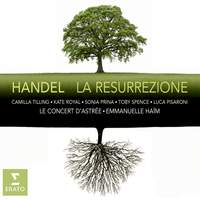
Handel: La Resurrezione, HWV47

Handel: La Resurrezione, HWV47


Continuing the Handel series from Le Concert d’Astrée and Emmanuelle Haïm is La resurrezione, composed during the young Handel’s period in Rome and first performed there in 1708. The work recounts the events of Easter and the solo singers portray Lucifer, Mary Magdalene, an Angel, St John the Evangelist, and St Mary Cleophas.

It calls upon a large orchestra, led and directed at the first performance by the master violinist Arcangelo Corelli. The role of Mary Magdalene, here performed by the lush-voiced young British soprano (and EMI Classics artist) Kate Royal, was sung at the first performance by the celebrated Margherita Durastanti, even though the Pope had forbidden female singers to perform in public.

In April 2009, Emmanuelle Haïm led a performance of La resurrezione at London’s Barbican Centre, part of a tour which also covered Paris, Dijon, Aix-en-Provence, Lille, Pamplona, Valladolid and Salzburg. The Guardian reported that: “Emmanuelle Haïm's understanding of the relationship between sense and sensuality in Handel has marked her out as one of his finest interpreters, and her performance with her own Concert d'Astrée was notable for its immediacy and expression. The playing had touches of magic as recorders and flutes comforted the uncomprehending saints, and flaring brass heralded the arrival of a new dawn … Camilla Tilling's joyous Angel let fly volleys of flamboyant coloratura … while the great Sonia Prina was vocally spectacular and immensely moving as Mary Cleophas.”

The Salzburg performance led the Salzburger Nachrichten to describe the “springy mastery” of the ensemble, “with sparkling accents from the trumpets, lute and gamba … A Baroque highpoint in an Easter Festival dominated by Romanticism.” Drehpunkt Kultur described Luca Pisaroni’s Lucifer as “dangerously honed” and Toby Spence as “a master of subtle ornamentation”. Overall, the ensemble of singers was “technically and stylistically at the peak of today’s Handel interpretation”, while Haïm herself “knows how to ignite her ensemble to such powerful effect and then to restrain the emotion once more, so that the force of expression never runs wild.”

This complements the judgement of Forum Opéra on Haïm's Virgin Classics recording of another Italian work by Handel, Il trionfo del tempo e del disinganno: “Emmanuelle Haïm favours the chamber dimension of the work in an interpretation that is balanced, vivid, refined – but not precious – lively, but never aggressive. She prefers the power of suggestion and this puts the music at an advantage: she breathes and lets things run their natural course. Isn’t that the apogee of art? This Trionfo could become a classic.”

“…a performance of breath-taking clarity. …Haïm maintains the warmth and delicacy of the chamber sensibility for which this work was conceived.” BBC Music Magazine, Christmas 2009 *****

“Handel's early Resurrection oratorio… is characterised by a freshness and vitality that he seldom matched in more mature works. That spirit shines through in Emmanuelle Haïm's excellent new recording with her Concert d'Astrée, played with all the expressive flair one has come to expect of her. Luca Pisaroni makes a suitably villainous Lucifer and his virile bass-baritone is well up to the wide tessitura of the part... Sonia Prina's contralto is heard to lovely effect in Mary Cleophas's pastoral music. The work's striking opening aria belongs to the Angel, taken here with plenty of presence by Swedish soprano Camilla Tilling. Two British singers complete... both give of their very best. Toby Spence is elegant in St John the Evangelist's music, and Kate Royal find sumptuous beauty and emotional depth in the part of Mary Magdalene.” Gramophone Magazine, February 2010

Virgin - 6945670

(CD - 2 discs)

$19.00

In stock - usually despatched within 1 working day.

Adès: The Tempest

Adès: The Tempest


Simon Keenlyside (Prospero), Kate Royal (Miranda), Toby Spence (Ferdinand), Ian Bostridge (Caliban), Cyndia Sieden (Ariel), Philip Langridge (Alonso), Donald Kaasch (Antonio), Jonathan Summers (Sebastian), David Condier (Trinculo), Stephen Richardson (Stefano), Graeme Danby (Gonzalo)

The Chorus and Orchestra of the Royal Opera House Covent Garden, Thomas Adès

2CD Multipack with libretto and slipcase

When Thomas Adès conducted his opera The Tempest at the Royal Opera House, Covent Garden in 2007, EMI Classics microphones were on hand to record this “masterpiece of airy beauty and eerie power.” (Alex Ross, The New Yorker). The cast included Simon Keenlyside, Cynthia Sieden, Ian Bostridge, Toby Spence, Kate Royal, Philip Langridge, and Stephen Richardson, many of whom took part in the critically acclaimed world premiere three years earlier.

“there are moments in all three acts which are by any standards sheerly, heartstoppingly beautiful; passages in which the music seems to be mined from an unfathomable depth of feeling …” Andrew Clements, The Guardian

“It’s probably the first new opera I’ve experienced in 20 years that left me feeling not just intellectually aroused but deeply moved … A coming-of-age piece. And, yes, momentous.” Michael White, The Independent

“Adès does not shirk the traditional big operatic moments. There is a thrilling and moving quintet of reconciliation and he gives each of his main characters an imposing and impressive aria…these are expressed in music of extraordinary imaginative power.” Michael Kennedy, The Sunday Telegraph

"The evening deservedly belongs to Adès, who himself conducts a score as orchestrally lush and evocative as vocally varied and articulate. The cumulative effect is by turns ethereal, witty, incandescent, often ravishing". The Guardian 2004

“(Adès’s The Tempest) has the potential to be one of the most enduring new operas of the decade. (…) If you need proof that the hype surrounding Adès is more than just hope and expectation, you will find it here” The Guardian on the Royal Opera House revival in March 07.

“Adès has provided Covent Garden and British opera in general with one of its great moments. The cheering from every corner of the theatre on Tuesday - orchestra pit included - felt like what it was: British opera’s equivalent of the England World Cup rugby win.” The Guardian

“Out-Brittening Britten’s Grimes storm music in the prelude, and the eerily beguiling tintinnabulations of the Magic Banquet music that make the recording so rewarding” Sunday Times, 21st June 2009

“Performances are almost all first rate. It's a measure of the strength of the mostly British casting that singers of the quality of Stephen Richardson and Jonathan Summers take some of the smallest roles. Simon Keenlyside's no-nonsense Prospero, a force to be reckoned with from the very start of the opera, is outstanding, and it's hard to think of another singer who could manage the stratospheric writing for Ariel more effortlessly than Cyndia Sieden. Ian Bostridge's Caliban, Philip Langridge's King of Naples, Kate Royal's Miranda and Toby Spence's Ferdinand are excellent, too. It's a fine production, which does full justice to Adès's sometimes remarkable work.” The Guardian, 19th June 2009 ****

“Simon Keenlyside makes an authoritative Prospero, Ian Bostridge’s Caliban tugs at the heartstrings in his radiant Act 2 aria and Cyndia Sieden is phenomenal as a stratospherically high coloratura soprano Ariel.” The Telegraph, 10th June 2009 ****

“From the tornado-like prelude to Ariel's stratospheric yet ethereal "Five fathoms deep" the music illuminates rather than merely illustrates the drama. …Kate Royal as Miranda, is fully inside her part and sings alluringly… For many, the most memorable writing in The Tempest comes attached to Ariel's vocal high-wire act. Few coloratura sopranos are able to dispatch it like Cyndia Sieden, whose sound lends special colour to the performance... Simon Keenlyside, on the young side as Prospero, mixes brain and baritonal brawn in his characteristically charismatic way. Ian Bostridge sings unstintingly as a wonderfully weird Caliban... The playing of the Covent Garden orchestra is another luxury - no, a necessity, given the brilliantly conceived and demanding orchestral aspect of this piece.” Gramophone Magazine, August 2009

“…everyone reaches out to the purple passages when Adès touches something rich and strange. Those include the evolution of the young lovers' music from homages to midsummer Britten and Tippett to the heights of Act II, Ariel's banquet and masque in Act III, and the ensemble-passacaglia which takes the ultimate centre of gravity from Prospero's perfunctorily written farewells.” BBC Music Magazine, August 2009 ****

“It may not be a flawless masterpiece ... but it is one of the most viable and stageworthy of modern British operas...The playing of the Covent Garden orchestra is another luxury no, a necessity, given the brilliantly conceived and demanding orchestral aspect of this piece.” Gramophone Classical Music Guide, 2010

“well constructed and dramatically effective in its clever timing and contrasted textures...The late Philip Langridge in one of his last performances at Covent Garden...makes a memorable King of Naples, while Ades's evocative orchestration with its percussion effects vividly conjures up the atmosphere of the magic island of Prospero...A strong and memorable opera” Penguin Guide, 2011 edition

GGramophone Awards 2010

Best of Category - Contemporary

GGramophone Magazine

Disc of the Month - August 2009

EMI - 6952342

(CD - 2 discs)

$12.50

In stock - usually despatched within 1 working day.

Kate Royal – Midsummer Night

Kate Royal – Midsummer Night


Alwyn:

Midsummer night (Miss Julie)

Barber, S:

Do not utter a word (from Vanessa)

Britten:

Embroidery in childhood (from Peter Grimes)

Thomas Allen (baritone)

Tiny's song (Paul Bunyan)

How Beautiful It Is (from The Turn of the Screw)

Dvorak:

Mesícku na nebi hlubokém 'Song to the Moon' (from Rusalka)

Floyd:

The trees on the mountains (Susannah)

Herrmann, B:

I Have Dreamt

Korngold:

Glück, das mir verbleib 'Marietta's Lied' (from Die Tote Stadt)

Lehár:

Viljalied (from Die lustige Witwe)

Messager:

Philomel from Monsieur Beaucaire

Stravinsky:

Le Chant du Rossignol

Andrew Staples (tenor)

Walton:

At the haunted end of the day (Troilus and Cressida)


Kate Royal (soprano)

Orchestra of the English National Opera & Crouch End Festival Chorus, Edward Gardner

Kate Royal’s second recording for EMI Classics is Midsummer Night, an atmospheric recital collection focusing on female characters in 20th century opera and operetta, reflecting their pain and ecstasy in love. The programme ranges from well known turn-of-the-century works by Dvorák (Song to the Moon from Rusalka) and Lehár (Vilja from The Merry Widow) to Midsummer Night, from the English composer William Alwyn’s opera Miss Julie. Edward Gardner conducts the English National Opera Orchestra with guest appearances by Thomas Allen, Andrew Staples and the Crouch End Festival Chorus.

"[My] Inspiration for this album began with Benjamin Britten's The Turn of the Screw and the Governess - my first major role in a 20th century opera,” said Kate Royal. “The music got under my skin in a way I had not experienced before. Britten's vocal writing is immediate and naturally dramatic. His harmonic world seeps into the subconscious underpinning the character as a fully formed human being rather than a romantic stereotype. So, with the Governess’s Tower Scene as a starting point, I went in search of other arias that shared this combination of intensity and abandon. These are worlds in which the heroines are laid bare, vulnerable in their journey towards emotional fulfilment … women lost in love [or] trapped in a deeper trance-like state as they wrestle with their unsated desires. … Alongside some of the century's seminal works I [was] also delighted to discover what I believe to be some hidden gems for the soprano voice."

Stephen Johns, Vice President of A&R, EMI Classics, has also commented on the choice of repertoire, "The selection of songs for this recital is illuminated by their composers’ reactions to the changing musical scenes of the 20th century. All the arias were written after 1900, but each composer has found a different and unique way of coping with the transition into the century. Some are still firmly rooted in the lush harmonies of the 19th century like Dvorák and Korngold; some even clinging onto the innocence of the past world, such as Léhar. Others are experimenting with newer harmonies - the exoticism of early Stravinsky, and the aching beauty of Walton and Alwyn's music. Still others find new life in the old harmonic structures - Britten and Floyd. What binds them together, in a programme that coincidentally emphasises the nocturnal, the close of the day, is a desire to allow the soprano voice fully to express beauty in melody ….”

Among the lesser known arias on Kate Royal’s CD are those from operas by the English composer William Alwyn and American composers Bernard Herrmann and Carlisle Floyd: William Alwyn (1905-1985) based his only major opera, Miss Julie, on August Strindberg’s tense and intimate drama of class and sexual relations from 1888. Composed between 1973 and 1976, Miss Julie was premiered on BBC Radio in 1977, but has had only one semi-professional stage production, in Copenhagen in 1991; Bernard Herrmann’s many film scores, notably his collaborations with Orson Welles (Citizen Kane), Alfred Hitchcock (Psycho) and Martin Scorsese (Taxi Driver), have diverted attention from his other musical achievements. He was particularly proud of Wuthering Heights, his major opera to a libretto by Lucille Fletcher (his first wife), based on Emily Brontë’s novel. Herrmann (1911-1975) composed it between 1943 and 1951, but the opera was not staged until 1982, seven years after his death; The American composer Carlisle Floyd (b 1926), whose own version of Wuthering Heights was premiered in 1958, has produced a steady stream of operas over a period of fifty years, a couple of which have become staples of the American repertoire. His greatest success has been Susannah, based on the story in the Apocrypha of Susannah and the Elders translated to a contemporary Bible-belt setting. First staged at Florida University in 1955, the opera has been performed predominantly by American companies, notably the Metropolitan Opera in 1999.

"She is a natural communicator, has all the ingredients for an important career – musicality, a lyric soprano of rare loveliness, a poised and dignified manner and looks gorgeous too" The Sunday Times

“…Kate Royal's lustrous soprano has invited comparisons with that of Elisabeth Schwarzkopf, and so it does in this imaginative programme, conducted by fellow wunderkind Edward Gardner.” BBC Music Magazine, June 2009 ****

“Dramatically, she and the orchestra capture the early evening atmosphere with its unsettling undercurrents. Vocally, her voice is so lusciously rich there is a mezzo quality to it; her diction is crystal clear, and her top register effortless, pure and true...Royal seems to have a particular gift for getting to the heart of any text, becoming the character and making it her own.” Charlotte Gardner, bbc.co.uk, 4th June 2009

“Listening to Royal is like being thrown back to a bygone age when singers didn't merely perform roles, they became indivisible from them.” Classic FM Magazine, April 2011 ****

“All the extracts from English and American works go extremely well; the aria that gives the disc its title, "Midsummer Night" from William Alwyn's Miss Julie, is a rarity. The Tower scene from the Turn of the Screw, with its spooky woodwind and harp accompaniment, is as good as the Grimes scene - Royal comes into her own in the Britten roles.” Gramophone Magazine, July 2009

“Solos from Britten’s Paul Bunyan, Peter Grimes and The Turn of the Screw are dotted among extracts from Alwyn’s Miss Julie, Carlisle Floyd’s Susannah, Walton’s Troilus and Bernard Herrmann’s Wuthering Heights. If Royal’s voice sounds squeezed at the top of her range, she revels in this lush music.” Sunday Times, 24th May 2009 ***

“Much of the music is pensive, decorated with birdlike flutes and piccolos or the plink of a refined harp — details brightly supplied by the Orchestra of English National Opera and their conductor Edward Gardner. But Royal’s voice is the best instrument of all: a voice of strong, liquid beauty, unfaltering in any register, never more thrilling than when pealing or gliding in long breaths.” The Times, 1st May 2009 ****

EMI - 2681922

(CD)

$13.00

In stock - usually despatched within 1 working day.

Page: 

 1   2 

 Next >>

Copyright © 2002-13 Presto Classical Limited, all rights reserved.