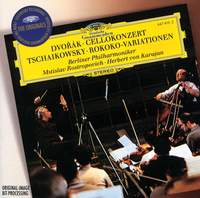
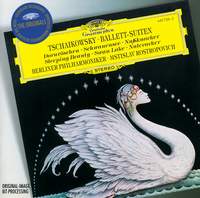
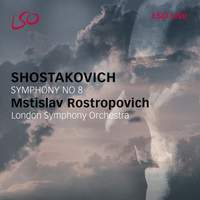
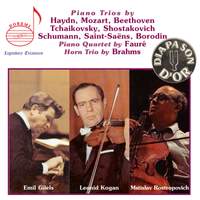
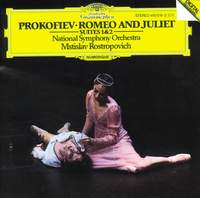
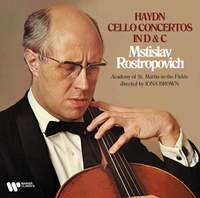
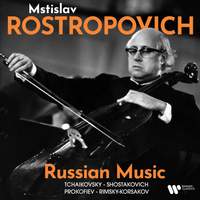
Known throughout the classical music world as Slava - the Russian diminutive meaning "glory" - Mstislav Rostropovich was not only a maestro but also a courageous defender of human rights. He remained loyal to the composers Prokofiev and Shostakovich, when they fell out of favour with the Soviet authorities, and went into exile from the Soviet Union in 1974 after his refusal to dissociate himself from the dissident novelist, Alexander Solzhenitsyn.
Mstislav Rostropovich was regarded as the greatest cellist since Pablo Casals. He was born in 1927 in Baku, by the Caspian Sea, with music in his blood. His mother was a pianist and his father a cellist, pianist and composer. Young Mstislav's ability was evident by the age of five. But when the family moved to Moscow to nurture his talent, they were reduced to begging for a room. With help, they survived, and Rostropovich's musical education continued apace.
He was already composing before he was given some early instruction in conducting, when he accompanied his father to an orchestra rehearsal. But Rostropovich was not always a willing pupil. And when his father died, the pupil became a teacher and the family breadwinner. By now an accomplished pianist and cellist, he took over his father's orchestral and teaching commitments until he and his sister, a violinist, secured places at the Moscow Conservatoire.
There, Mstislav joined Class Number 35 and was taught composition by Dmitri Shostakovich, who became a life-long friend. He dedicated two cello concertos to Rostropovich. From 1956, Rostropovich was a frequent visitor to Britain and formed a bond with Benjamin Britten and the Aldeburgh Festival. On his first appearance there, he accompanied his wife, the acclaimed soprano Galina Vishnevskaya, on piano. But the highlight was when Rostropovich, with Britten at the piano, played the Cello Sonata which Britten had composed specially for him.
It was not just the genius of Rostropovich that earned him universal admiration, but his refusal to be cowed by the Soviet authorities. When Rostropovich demonstrated his support for the Nobel Prize-winning novelist, Alexander Solzhenitsyn, by allowing him to live in his dacha outside Moscow, his defiance proved too much for the authorities. He and his wife were prevented from working abroad and after they were allowed to leave, were shocked in 1978 to learn at their home in Paris that they had been deprived of their Soviet citizenship - two more victims of cultural repression.
But there was a warm welcome in the West, even if artistic merit was reinforced by political considerations. Rostropovich became permanent conductor of the National Symphony Orchestra in Washington. He also performed with the London Philharmonic; and each time he arrived in Aldeburgh, went straight to the cemetery to hug Benjamin Britten's tomb. A bear hug was his normal greeting for his many friends.
He inspired composers to write dozens of major works for him and was himself inspired by events, playing JS Bach in the rubble of the Berlin Wall and rushing to help Boris Yeltsin resist the attempted coup in Moscow in 1991. For his outstanding services to British music, Rostropovich was given an honorary knighthood in 1987.
As a conductor and performer, Rostropovich was flamboyant and individualistic. The music of Tchaikovsky was well-suited to his energy. His emotional power also made his interpretations of Dvorak widely acclaimed. For Mstislav Rostropovich, the cello was an extension of the man. |
Ex. VAT prices will be applied automatically for non-EU delivery addresses. See Terms & Conditions for p&p rates. | |  | Mstislav Rostropovich
Mstislav Rostropovich (cello) A rarity from the British Library Sound Archive - Mstislav Rostropovich in a dramatic live account of Richard Strauss's Don Quixote given during an early visit to the London Proms at the Royal Albert Hall in 1964. Rostropovich only recorded the work eleven years later in 1975 in a studio version. Haydn's Cello Concerto in D from 1965 follows on Rostropovich's account of the earlier Concerto in C (BBCL 4198-2) which was given excellent reviews at the time of it's release. | 
| | | In stock - usually despatched within 1 working day. |
|
|
| |  | Marcel Landowski - The Complete Erato Recordings
Annie d’Arco, Jeanne Loriod, Maurice André, Mstislav Rostropovich, Galina Vishnevskaya, Catherine Dubosc, Michel Sénéchal & José Van Dam Orchestre Philharmonique de Strasbourg, Orchestre National de l’O.R.T.F, Orchestre Philharmonique des Pays De Loire & Orchestre Colonne, Jean Martinon, Alain Lombard, Georges Prêtre, Marc Soustrot, Pierre Cao & Jacques Bondon One of the great post-war figures in French musical life, Landowski
was not only a very fine composer, but an administrator non-pareil,
restructuring musical institutions, reforming French opera and
founding many musical groups, including the Orchestre de Paris. His
music eschews the more outré developments of the Twentieth
Century, instead relying on traditional forms, key centres and
an individual lyricism spiced with recognisably modern flavours such
as the use of magnetic tape, the Ondes martenot and various
electro-acoustic instruments. This selection of symphonies,
concertos, opera, dramatic, choral and chamber works presents a
superb guide to this brilliantly imaginative and immediately
accessible composer's fascinating output. Currently somewhat
neglected on CD, this collection brings together the complete
Landowski recordings on the Erato label and features stellar
performers including Barenboim, Jean Martinon, George Pretre,
Maurice Andre, Rostropovich, Galina Vishnevskaya and Jeanne
Loriod. | 
| | | In stock - usually despatched within 1 working day. |
|
|
| |  | Dutilleux - Concertos & Orchestral Works
Mstislav Rostropovich & Renaud Capuçon Orchestre du Capitole de Toulouse, Orchestre Symphonique de Radio France, Orchestre de la Société des Concerts du Conservatoire & Orchestre de Paris, Georges Prêtre, Serge Baudo, Myung-Whun Chung & Michel Plasson | 
| | | In stock - usually despatched within 1 working day. |
|
|
| |  | Mstislav Rostropovich plays Cello Concertos
| | Music for Cello & Organ by Frescobaldi, Marcello, J.S.Bach, Handel, Caix d’Herelois, Rheinberger & Saints-Saën | Bach, C P E: | Cello Concerto No. 2 in B flat major, Wq 171 The Saint Paul Chamber Orchestra, Hugh Wolff | Dvorak: | Cello Concerto in B minor, Op. 104 Boston Symphony Orchestra, Seiji Ozawa | Gagneux: | Triptyque pour violoncelle et orchestre Seiji Ozawa | Halffter, R: | Cello Concerto No. 2 Orchestre National de France, Crist¢bal Halffter | Hoddinott: | Noctis Equi, Scena for cello and orchestra London Symphony Orchestra, Kent Nagano | Honegger: | Cello Concerto London Symphony Orchestra, Kent Nagano | Jolivet: | Cello Concerto No. 2 (1966) André Jolivet | Knaifel: | Chapter Eight (live recording) | Milhaud: | Concerto for Cello and Orchestra No. 1 Op. 136 London Symphony Orchestra, Kent Nagano | Moret: | Cello Concerto Collegium Musicum de Zurich, Paul Sacher | Penderecki: | Cello Concerto No. 2 London Symphony Orchestra, Kent Nagano | Prokofiev: | Cello Concerto in E minor, Op. 58 Boston Symphony Orchestra, Seiji Ozawa | Shchedrin: | Cello Concerto "sotto voce concerto" (1994) Seiji Ozawa | Shostakovich: | Cello Concerto No. 1 in E flat major, Op. 107 London Symphony Orchestra, Seiji Ozawa | Tartini: | Cello Concerto in D major The Saint Paul Chamber Orchestra, Hugh Wolff | Tchaikovsky: | Variations on a Rococo Theme in A, Op. 33 Boston Symphony Orchestra, Seiji Ozawa | Vivaldi: | Concerto for cello, strings & continuo in D minor RV 406 The Saint Paul Chamber Orchestra, Hugh Wolff |
Mstislav Rostropovich (cello) ‘Rostropovich, however, does have the true measure of these works and plays to an appropriate scale with a
beauty of tone unimaginable from a period instrument. His eloquence has a style of its own, beyond the usual
constraints of period and convention. The lyrical slow movements are imbued with a wistfulness and intimacy reflecting a well-known side of his musical personality; the brooding rhetorical quality of the C.P.E. Bach Adagio is especially compelling’ Gramophone on Vivaldi & CPE Bach | 
| | | In stock - usually despatched within 1 working day. |
|
|
| |  |
Mstislav Rostropovich (cello) | | | In stock - usually despatched within 1 working day. |
|
|
| |  | Karajan Master Recordings - 10 CD set
Bartók: | Concerto for Orchestra, Sz.116 | Beethoven: | Violin Concerto in D major, Op. 61 Cadenzas: Fritz Kreisler Anne-Sophie Mutter (violin) Symphony No. 3 in E flat major, Op. 55 'Eroica' Symphony No. 4 in B flat major, Op. 60 | Brahms: | Symphony No. 2 in D major, Op. 73 Symphony No. 3 in F major, Op. 90 | Cilea: | Intermezzo, Act II from Adriana Lecuouvreur | Debussy: | La Mer Prélude à l'après-midi d'un faune Karlheinz Zoeller (flute) | Giordano, U: | Intermezzo, Act II from Fedora | Leoncavallo: | Pagliacci: Intermezzo | Mascagni: | Cavalleria Rusticana: Intermezzo Wolfgang Mexer (organ) L'Amico Fritz: Intermezzo | Massenet: | Meditation (from Thais) Michel Schwalbé | Mozart: | Requiem in D minor, K626 Anna Tomowa-Sintow (soprano), Agnes Baltsa (contralto), Werner Krenn (tenor), José Van Dam (bass) & Rudolf Scholz (organ) Wiener Singverein & Berliner Philharmoniker Mass in C major, K317 'Coronation Mass' Anna Tomowa-Sintow (soprano), Agnes Baltsa (contralto), Werner Krenn (tenor), José Van Dam (bass) & Rudolf Scholz (organ) Wiener Singverein & Berliner Philharmoniker | Mussorgsky: | Khovancina - Intermezzo from Act 4 | Puccini: | Suor Angelica - Intermezzo Manon Lescaut: Intermezzo Act III | Ravel: | Daphnis et Chloé - Suite No. 2 Boléro | Schmidt, F: | Notre Dame - Intermezzo | Schubert: | Symphony No. 8 in B minor, D759 'Unfinished' Symphony No. 9 in C major, D944 'The Great' | Strauss, R: | Till Eulenspiegels lustige Streiche, Op. 28 Ein Heldenleben, Op. 40 Ein Heldenleben, Op. 40
Michel Schwalbé (solo violin) | Stravinsky: | The Rite of Spring | Tchaikovsky: | Piano Concerto No. 1 in B flat minor, Op. 23 Sviatoslav Richter (piano) Wiener Symphoniker Variations on a Rococo Theme in A, Op. 33 Mstislav Rostropovich (cello) | Verdi: | La traviata: Prelude to Act 3 | Wolf-Ferrari: | The Jewels of the Madonna - Act III Intermezzo |
Berliner Philharmoniker, Herbert von Karajan Selected recordings from 1959 to 1979 “In recording you can get to a point of perfection and precision not possible elsewhere, and, more important than anything, of real untrammelled music-making.” – Herbert von Karajan | | | In stock - usually despatched within 1 working day. |
|
|
| |  | Talich Special Edition 17
Mstislav Rostropovich (cello) & Ludmila Dvoráková (soprano) Czech Philharmonic Orchestra & Prague Radio Symphony Orchestra, Václav Talich | | | In stock - usually despatched within 1 working day. |
|
|
| |  | Rostropovich - Early Recordings
Borodin: | Prince Igor: Dance of the Polovtsian Maidens | Chopin: | Introduction and Polonaise Brillante in C, Op. 3 | Glazunov: | Chant du Ménestrel, Op. 71 | Granados: | Goyescas | Handel: | Vouchsafe, O Lord from Dettingen Te Deum | Paganini: | Moto perpetuo, Op. 11 | Popper: | Dance of the Elves, Op. 39 | Prokofiev: | Cinderella, Op. 87 | Saint-Saëns: | Cello Concerto No. 1 in A minor, Op. 33 | Schumann: | Cello Concerto in A minor, Op. 129 5 Stücke im Volkston, Op. 102 | Strauss, R: | Stimmungsbilder Op. 9, No. 2 |
Mstislav Rostropovich (cello) & Samuel Samosud Symphony Orchestra of the All Union Radio & Moscow Symphony Orchestra, Kyril Kondrashin & Gregory Stolyarov | | | In stock - usually despatched within 1 working day. |
|
|
| |  |
Mstislav Rostropovich & Alexander Dedyukhin Royal Philharmonic & Philharmonia Orchestras, Malcolm Sargent ‘An indispensable and self-recommending disc. The lovely Miaskovsky could not be played with greater eloquence and the first Western recording of the Prokofiev (also from the 1950s) sounds as if it was made yesterday.’ (Gramophone) | | | In stock - usually despatched within 1 working day. |
|
|
| |  | Cello Concertos
Mstislav Rostropovich (cello) Orchestra of the Collegium Musicum, Paul Sacher | | | In stock - usually despatched within 1 working day. |
|
|
| |
|