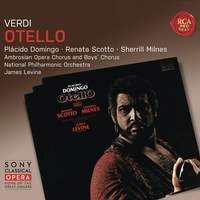
Prices shown exclude VAT. (UK tax is not payable for deliveries to United States.) See Terms & Conditions for p&p rates. | |  |
“If having the organ and orchestra recorded separately does not bother you, allow yourself to be seduced by James Levine and Simon Preston's sensual and at times theatrical reading.” BBC Music Magazine, March 2008 “Levine's account of Dukas' masterpiece is still the best in the catalogue. Levine chooses a fast basic tempo, but justifies his speed by the lightness of his touch and the clean articulation and rhythmic bounce of the Berlin Phil playing help considerably. The climax is thrilling, but Levine reserves something for the moment when the sorcerer returns to quell the flood. In all, it provides a marvellous finish to an exhilarating listening experience. Levine's performance of Saint-Saëns' Third Symphony is also among the best available. The balance between the orchestra and organ, here played powerfully by Simon Preston, is well judged and the overall acoustic very convincing. Levine directs a grippingly individual reading, full of drama and with a consistently imaginative response to the score's detail. The organ entry in the finale is quite magnificent, the excitement of Preston thundering out the main theme physical in its impact. The music expands and blossoms magnificently, helped by the spectacular dynamic range of the recording.” Gramophone Classical Music Guide, 2010 | | | Usually despatched in 2 - 3 working days. |
|
|
| |  | The Three Tenors, Paris 1998Works by Bixio, Fedora, Lara & Maristella
| | (Sorry, download not available in your country) | |
|
|
| |  |
| | | Usually despatched in 2 - 3 working days. |
|
|
| |  |
James Morris (Wotan), Siegfried Jerusalem (Loge), Ekkehard Wlaschiha (Alberich), Christa Ludwig (Fricka), Mari Anne Häggander (Freia), Birgitta Svendén (Erda), Heinz Zednik (Mime), Matti Salminen (Fafner), Jan-Hendrik Rootering (Fasolt), Mark Baker (Froh), Alan Held (Donner), Kaaren Erickson (Woglinde), Diane Kesling (Wellgunde), Meredith Parsons (Flosshilde) Metropolitan Opera Orchestra, James Levine Subtitles in German, English, French, Spanish, Chinese “None of the four video-recorded versions can be called ideal; but this Met cycle has plenty of strong points. It's the only one Wagner would have recognised – no small consideration. It's frequently assumed these days that he chose myth primarily to convey political allegory, but this is misleading. Myth inspired Wagner as directly as it did, say, Sibelius; and producers who ignore or mock this, like Patrice Chéreau on Pierre Boulez's rival set, miss a vital dimension. Here, Otto Schenk and designer Gunther Schneider-Siemssen preserve the Romantic imagery, often beautifully, as Brian Large's cameras reveal; but also unimaginatively, with too many tired compromises. Some, such as the Rhinemaidens' non-swimming contortions and the feeble dragon, are embarrassing, and the costumes often look poor on screen. Individual performances, too, sometimes don't fit into a satisfactory ensemble. This set can also claim musical superiority; but again, not conclusively. Boulez mistakes speed for energy, drying out the richness of the score; Levine, with the magnificent Met orchestra, tends to wallow in it, especially in a disappointing Rheingold. Matters improve from Walküre onward, but he's prone to sudden wheelspinning accelerations, sometimes wrongfooting his singers. Boulez remains invisible at Bayreuth; Levine is too much with us, to the detriment of atmosphere. Nevertheless, his monumental approach does bring out The Ring's sheer beauty and grandeur, where Boulez simply seems glib. Levine's cast is superior, too, although the pivotal roles are the closest. Both Brünnhildes are splendid, spirited and deeply moving, but Boulez's Gwyneth Jones has the fuller voice; Hildegard Behrens, lithe and nervy, must force an essentially lyric instrument – quite successfully, but the effort shows. James Morris, aspiring to be a bel canto Wotan, has a richer voice Wagner Opera 1279 than Boulez's Donald MacIntyre, but his diction and his acting are less incisive – partly the producer's fault in Rheingold; he improves thereafter. Siegfried Jerusalem, though, eclipses Boulez's inadequate Manfred Jung. More lyrical and vocally more heroic, he's a finer musician, less liable to strain and distort the line, and an impressive stage figure. Jerusalem's surprisingly characterful Loge, despite his galia melon headgear, is probably the best thing in Rheingold. It's rewarding to hear the 'Narration' in this kind of voice. Otherwise this is lacklustre. A superb Rhinemaiden trio is left earthbound, writhing unconvincingly round Ekkehard Wlaschiha's buffoonish Alberich, short on menace until the final curse. Christa Ludwig's once definitive Fricka looks and sounds tired. Levine's tempi in Rheingold rival those of Reginald Goodall, but without his structure and pacing; the Giants' entrance is marked molto pesante, not funereal. They, the Rhinemaidens and the lesser gods – especially Birgitta Svendén's keenvoiced Erda – outclass their betters. Levine handles Walküre more successfully. Act 1, though, isn't a success. Gary Lakes' massive but rather lean-toned Siegmund is ill-matched with Jessye Norman, whose vocally searing Sieglinde is subverted by her grande dame manner, robbing the love scenes of any real involvement. Behrens, however, injects Act 2 with life, and though Ludwig's Fricka still sounds tired, Morris begins to make an impact, singing rather than declaiming the Narration. With a ringingly athletic Valkyrie band, Levine rushes the Ride, but brings the act to a moving Farewell. Siegfried is visually and musically the best, with Levine at his liveliest, and a Romantic forest out of Altdorfer or von Schwind. Jerusalem's ardent hero may lack Heldentenor heft, and suffer some constraint at the top, but he carries off the forging and lyrical scenes with credit. The Wanderer often suits basses' range and personae, and Morris's commanding, world-weary god dominates Zednik's veteran Mime (mercifully not Chéreau's cute victim), Wlaschiha's now mordant Alberich; and Svendén's eerie Erda. Levine's protracted 'Awakening' stretches Behrens, but she and Jerusalem infuse the love duet with appealing life. Levine's expansiveness suits Götterdämmerung, which opens with a powerful trio of Norns and a radiant Dawn duet. Chez Gibichung, though, the temperature drops, with Anthony Raffell (a fine Wotan) a miscast, bumbling Gunther, and Gutrune sadly unseductive. Matti Salminen's brutish Hagen, though richly sung, lacks the essential supernatural undertones. Ludwig is much better as Waltraute, but Jerusalem and especially Behrens carry the performance with involving intensity. The Immolation strains her voice, but remains satisfyingly cathartic, aided by appropriate stage spectacle, though Valhalla's downfall is disappointing. All told, while this set may be less stimulating than the Boulez, it's also less distracting – without, as an eminent colleague once remarked, someone forever shouting in your ear. As well as the original digital stereo, remixed surroundsound tracks convincingly evoke extra ambiance and detail. The image also remasters well, although you may want to turn up the colour.” Gramophone Classical Music Guide, 2010 | | | Usually despatched in 8 - 10 working days. |
|
|
| |  |
Subtitles in German, English, French, Spanish, Chinese “None of the four video-recorded versions can be called ideal; but this Met cycle has plenty of strong points. It's the only one Wagner would have recognised – no small consideration. It's frequently assumed these days that he chose myth primarily to convey political allegory, but this is misleading. Myth inspired Wagner as directly as it did, say, Sibelius; and producers who ignore or mock this, like Patrice Chéreau on Pierre Boulez's rival set, miss a vital dimension. Here, Otto Schenk and designer Gunther Schneider-Siemssen preserve the Romantic imagery, often beautifully, as Brian Large's cameras reveal; but also unimaginatively, with too many tired compromises. Some, such as the Rhinemaidens' non-swimming contortions and the feeble dragon, are embarrassing, and the costumes often look poor on screen. Individual performances, too, sometimes don't fit into a satisfactory ensemble. This set can also claim musical superiority; but again, not conclusively. Boulez mistakes speed for energy, drying out the richness of the score; Levine, with the magnificent Met orchestra, tends to wallow in it, especially in a disappointing Rheingold. Matters improve from Walküre onward, but he's prone to sudden wheelspinning accelerations, sometimes wrongfooting his singers. Boulez remains invisible at Bayreuth; Levine is too much with us, to the detriment of atmosphere. Nevertheless, his monumental approach does bring out The Ring's sheer beauty and grandeur, where Boulez simply seems glib. Levine's cast is superior, too, although the pivotal roles are the closest. Both Brünnhildes are splendid, spirited and deeply moving, but Boulez's Gwyneth Jones has the fuller voice; Hildegard Behrens, lithe and nervy, must force an essentially lyric instrument – quite successfully, but the effort shows. James Morris, aspiring to be a bel canto Wotan, has a richer voice than Boulez's Donald MacIntyre, but his diction and his acting are less incisive – partly the producer's fault in Rheingold; he improves thereafter. Siegfried Jerusalem, though, eclipses Boulez's inadequate Manfred Jung. More lyrical and vocally more heroic, he's a finer musician, less liable to strain and distort the line, and an impressive stage figure. Jerusalem's surprisingly characterful Loge, despite his galia melon headgear, is probably the best thing in Rheingold. It's rewarding to hear the 'Narration' in this kind of voice. Otherwise this is lacklustre. A superb Rhinemaiden trio is left earthbound, writhing unconvincingly round Ekkehard Wlaschiha's buffoonish Alberich, short on menace until the final curse. Christa Ludwig's once definitive Fricka looks and sounds tired. Levine's tempi in Rheingold rival those of Reginald Goodall, but without his structure and pacing; the Giants' entrance is marked molto pesante, not funereal. They, the Rhinemaidens and the lesser gods – especially Birgitta Svendén's keenvoiced Erda – outclass their betters. Levine handles Walküre more successfully. Act 1, though, isn't a success. Gary Lakes' massive but rather lean-toned Siegmund is ill-matched with Jessye Norman, whose vocally searing Sieglinde is subverted by her grande dame manner, robbing the love scenes of any real involvement. Behrens, however, injects Act 2 with life, and though Ludwig's Fricka still sounds tired, Morris begins to make an impact, singing rather than declaiming the Narration. With a ringingly athletic Valkyrie band, Levine rushes the Ride, but brings the act to a moving Farewell. Siegfried is visually and musically the best, with Levine at his liveliest, and a Romantic forest out of Altdorfer or von Schwind. Jerusalem's ardent hero may lack Heldentenor heft, and suffer some constraint at the top, but he carries off the forging and lyrical scenes with credit. The Wanderer often suits basses' range and personae, and Morris's commanding, world-weary god dominates Zednik's veteran Mime (mercifully not Chéreau's cute victim), Wlaschiha's now mordant Alberich; and Svendén's eerie Erda. Levine's protracted 'Awakening' stretches Behrens, but she and Jerusalem infuse the love duet with appealing life. Levine's expansiveness suits Götterdämmerung, which opens with a powerful trio of Norns and a radiant Dawn duet. Chez Gibichung, though, the temperature drops, with Anthony Raffell (a fine Wotan) a miscast, bumbling Gunther, and Gutrune sadly unseductive. Matti Salminen's brutish Hagen, though richly sung, lacks the essential supernatural undertones. Ludwig is much better as Waltraute, but Jerusalem and especially Behrens carry the performance with involving intensity. The Immolation strains her voice, but remains satisfyingly cathartic, aided by appropriate stage spectacle, though Valhalla's downfall is disappointing. All told, while this set may be less stimulating than the Boulez, it's also less distracting – without, as an eminent colleague once remarked, someone forever shouting in your ear. As well as the original digital stereo, remixed surroundsound tracks convincingly evoke extra ambiance and detail. The image also remasters well, although you may want to turn up the colour.” Gramophone Classical Music Guide, 2010 | | | Usually despatched in 8 - 10 working days. |
|
|
| |  |
Hildegard Behrens (Brünnhilde), Siegfried Jerusalem (Siegfried), Matti Salminen (Hagen), Christa Ludwig (Waltraute), Hanna Lisowska (Gutrune), Anthony Raffell (Gunther), Ekkehard Wlaschiha (Alberich), Kaaren Erickson (Woglinde), Diane Kesling (Wellgunde), Meredith Parsons (Flosshilde), Gweneth Bean (Erste Norn), Joyce Castle (Zweite Norn), Andrea Gruber (Dritte Norn) Metropolitan Opera Orchestra & Chorus, James Levine Subtitles in German, English, French, Spanish, Chinese “None of the four video-recorded versions can be called ideal; but this Met cycle has plenty of strong points. It's the only one Wagner would have recognised – no small consideration. It's frequently assumed these days that he chose myth primarily to convey political allegory, but this is misleading. Myth inspired Wagner as directly as it did, say, Sibelius; and producers who ignore or mock this, like Patrice Chéreau on Pierre Boulez's rival set, miss a vital dimension. Here, Otto Schenk and designer Gunther Schneider-Siemssen preserve the Romantic imagery, often beautifully, as Brian Large's cameras reveal; but also unimaginatively, with too many tired compromises. Some, such as the Rhinemaidens' non-swimming contortions and the feeble dragon, are embarrassing, and the costumes often look poor on screen. Individual performances, too, sometimes don't fit into a satisfactory ensemble. This set can also claim musical superiority; but again, not conclusively. Boulez mistakes speed for energy, drying out the richness of the score; Levine, with the magnificent Met orchestra, tends to wallow in it, especially in a disappointing Rheingold. Matters improve from Walküre onward, but he's prone to sudden wheelspinning accelerations, sometimes wrongfooting his singers. Boulez remains invisible at Bayreuth; Levine is too much with us, to the detriment of atmosphere. Nevertheless, his monumental approach does bring out The Ring's sheer beauty and grandeur, where Boulez simply seems glib. Levine's cast is superior, too, although the pivotal roles are the closest. Both Brünnhildes are splendid, spirited and deeply moving, but Boulez's Gwyneth Jones has the fuller voice; Hildegard Behrens, lithe and nervy, must force an essentially lyric instrument – quite successfully, but the effort shows. James Morris, aspiring to be a bel canto Wotan, has a richer voice than Boulez's Donald MacIntyre, but his diction and his acting are less incisive – partly the producer's fault in Rheingold; he improves thereafter. Siegfried Jerusalem, though, eclipses Boulez's inadequate Manfred Jung. More lyrical and vocally more heroic, he's a finer musician, less liable to strain and distort the line, and an impressive stage figure. Jerusalem's surprisingly characterful Loge, despite his galia melon headgear, is probably the best thing in Rheingold. It's rewarding to hear the 'Narration' in this kind of voice. Otherwise this is lacklustre. A superb Rhinemaiden trio is left earthbound, writhing unconvincingly round Ekkehard Wlaschiha's buffoonish Alberich, short on menace until the final curse. Christa Ludwig's once definitive Fricka looks and sounds tired. Levine's tempi in Rheingold rival those of Reginald Goodall, but without his structure and pacing; the Giants' entrance is marked molto pesante, not funereal. They, the Rhinemaidens and the lesser gods – especially Birgitta Svendén's keenvoiced Erda – outclass their betters. Levine handles Walküre more successfully. Act 1, though, isn't a success. Gary Lakes' massive but rather lean-toned Siegmund is ill-matched with Jessye Norman, whose vocally searing Sieglinde is subverted by her grande dame manner, robbing the love scenes of any real involvement. Behrens, however, injects Act 2 with life, and though Ludwig's Fricka still sounds tired, Morris begins to make an impact, singing rather than declaiming the Narration. With a ringingly athletic Valkyrie band, Levine rushes the Ride, but brings the act to a moving Farewell. Siegfried is visually and musically the best, with Levine at his liveliest, and a Romantic forest out of Altdorfer or von Schwind. Jerusalem's ardent hero may lack Heldentenor heft, and suffer some constraint at the top, but he carries off the forging and lyrical scenes with credit. The Wanderer often suits basses' range and personae, and Morris's commanding, world-weary god dominates Zednik's veteran Mime (mercifully not Chéreau's cute victim), Wlaschiha's now mordant Alberich; and Svendén's eerie Erda. Levine's protracted 'Awakening' stretches Behrens, but she and Jerusalem infuse the love duet with appealing life. Levine's expansiveness suits Götterdämmerung, which opens with a powerful trio of Norns and a radiant Dawn duet. Chez Gibichung, though, the temperature drops, with Anthony Raffell (a fine Wotan) a miscast, bumbling Gunther, and Gutrune sadly unseductive. Matti Salminen's brutish Hagen, though richly sung, lacks the essential supernatural undertones. Ludwig is much better as Waltraute, but Jerusalem and especially Behrens carry the performance with involving intensity. The Immolation strains her voice, but remains satisfyingly cathartic, aided by appropriate stage spectacle, though Valhalla's downfall is disappointing. All told, while this set may be less stimulating than the Boulez, it's also less distracting – without, as an eminent colleague once remarked, someone forever shouting in your ear. As well as the original digital stereo, remixed surroundsound tracks convincingly evoke extra ambiance and detail. The image also remasters well, although you may want to turn up the colour.” Gramophone Classical Music Guide, 2010 | | | Usually despatched in 2 - 3 working days. |
|
|
| |  |
Subtitles in German, English, French, Spanish, Chinese “None of the four video-recorded versions can be called ideal; but this Met cycle has plenty of strong points. It's the only one Wagner would have recognised – no small consideration. It's frequently assumed these days that he chose myth primarily to convey political allegory, but this is misleading. Myth inspired Wagner as directly as it did, say, Sibelius; and producers who ignore or mock this, like Patrice Chéreau on Pierre Boulez's rival set, miss a vital dimension. Here, Otto Schenk and designer Gunther Schneider-Siemssen preserve the Romantic imagery, often beautifully, as Brian Large's cameras reveal; but also unimaginatively, with too many tired compromises. Some, such as the Rhinemaidens' non-swimming contortions and the feeble dragon, are embarrassing, and the costumes often look poor on screen. Individual performances, too, sometimes don't fit into a satisfactory ensemble. This set can also claim musical superiority; but again, not conclusively. Boulez mistakes speed for energy, drying out the richness of the score; Levine, with the magnificent Met orchestra, tends to wallow in it, especially in a disappointing Rheingold. Matters improve from Walküre onward, but he's prone to sudden wheelspinning accelerations, sometimes wrongfooting his singers. Boulez remains invisible at Bayreuth; Levine is too much with us, to the detriment of atmosphere. Nevertheless, his monumental approach does bring out The Ring's sheer beauty and grandeur, where Boulez simply seems glib. Levine's cast is superior, too, although the pivotal roles are the closest. Both Brünnhildes are splendid, spirited and deeply moving, but Boulez's Gwyneth Jones has the fuller voice; Hildegard Behrens, lithe and nervy, must force an essentially lyric instrument – quite successfully, but the effort shows. James Morris, aspiring to be a bel canto Wotan, has a richer voice Wagner Opera 1279 than Boulez's Donald MacIntyre, but his diction and his acting are less incisive – partly the producer's fault in Rheingold; he improves thereafter. Siegfried Jerusalem, though, eclipses Boulez's inadequate Manfred Jung. More lyrical and vocally more heroic, he's a finer musician, less liable to strain and distort the line, and an impressive stage figure. Jerusalem's surprisingly characterful Loge, despite his galia melon headgear, is probably the best thing in Rheingold. It's rewarding to hear the 'Narration' in this kind of voice. Otherwise this is lacklustre. A superb Rhinemaiden trio is left earthbound, writhing unconvincingly round Ekkehard Wlaschiha's buffoonish Alberich, short on menace until the final curse. Christa Ludwig's once definitive Fricka looks and sounds tired. Levine's tempi in Rheingold rival those of Reginald Goodall, but without his structure and pacing; the Giants' entrance is marked molto pesante, not funereal. They, the Rhinemaidens and the lesser gods – especially Birgitta Svendén's keenvoiced Erda – outclass their betters. Levine handles Walküre more successfully. Act 1, though, isn't a success. Gary Lakes' massive but rather lean-toned Siegmund is ill-matched with Jessye Norman, whose vocally searing Sieglinde is subverted by her grande dame manner, robbing the love scenes of any real involvement. Behrens, however, injects Act 2 with life, and though Ludwig's Fricka still sounds tired, Morris begins to make an impact, singing rather than declaiming the Narration. With a ringingly athletic Valkyrie band, Levine rushes the Ride, but brings the act to a moving Farewell. Siegfried is visually and musically the best, with Levine at his liveliest, and a Romantic forest out of Altdorfer or von Schwind. Jerusalem's ardent hero may lack Heldentenor heft, and suffer some constraint at the top, but he carries off the forging and lyrical scenes with credit. The Wanderer often suits basses' range and personae, and Morris's commanding, world-weary god dominates Zednik's veteran Mime (mercifully not Chéreau's cute victim), Wlaschiha's now mordant Alberich; and Svendén's eerie Erda. Levine's protracted 'Awakening' stretches Behrens, but she and Jerusalem infuse the love duet with appealing life. Levine's expansiveness suits Götterdämmerung, which opens with a powerful trio of Norns and a radiant Dawn duet. Chez Gibichung, though, the temperature drops, with Anthony Raffell (a fine Wotan) a miscast, bumbling Gunther, and Gutrune sadly unseductive. Matti Salminen's brutish Hagen, though richly sung, lacks the essential supernatural undertones. Ludwig is much better as Waltraute, but Jerusalem and especially Behrens carry the performance with involving intensity. The Immolation strains her voice, but remains satisfyingly cathartic, aided by appropriate stage spectacle, though Valhalla's downfall is disappointing. All told, while this set may be less stimulating than the Boulez, it's also less distracting – without, as an eminent colleague once remarked, someone forever shouting in your ear. As well as the original digital stereo, remixed surroundsound tracks convincingly evoke extra ambiance and detail. The image also remasters well, although you may want to turn up the colour.” Gramophone Classical Music Guide, 2010 | | | Usually despatched in 8 - 10 working days. |
|
|
| |  |
| | | Usually despatched in 8 - 10 working days. |
|
|
| |  |
Estes, Salminen, Sotin, Hofmann, Meier, Sasson, Roberts, Schmitt, Browner, Leidland Chor und Orchester der Bayreuther Festspiele, James Levine | | (Sorry, download not available in your country) | |
|
|
| |  | Kathleen Battle & Jessye Norman - Spirituals in Concertincludes Great Day, Oh, what a beautiful City, Swing low, sweet Chariot, He's got the whole World in His Hand, Gospel Train, Balm in Gilead & In that great Getting up Morning
| | (Sorry, download not available in your country) | |
|
|
| |
|