Prices shown exclude VAT. (UK tax is not payable for deliveries to United States.) See Terms & Conditions for p&p rates. | |  | The English Song Collection
The Times states, '...as an interpreter of English song, Gilchrist is often in a class by himself'; James’ hugely popular series of works by Finzi, Vaughan Williams, Gurney and Britten have proved this is the case. This special 3-disc collection brings together his finest recordings to date. This collection includes the premiere recording of Gurney’s masterpiece Ludlow & Teme using the composer’s revised and corrected version which the composer declared to be his favourite. It also includes the first modern recording of Leighton’s Earth, Sweet Earth since the original recording by Neil Mackie for whom the work was written. All of Gilchrist’s recordings with Linn have been highly acclaimed; ‘On Wenlock Edge’ was a Finalist in the ‘Solo Vocal Album of the Year’ category at the 2008 Gramophone Awards and ‘Oh Fair to See’ was named a ‘Benchmark Recording’ by BBC Music. James Gilchrist is a sought-after recitalist whose voice has been described as pure and sensitive with an even and beautiful tone. Pianist Anna Tilbrook (‘an eloquent partner’ Daily Telegraph) displays her substantial talents as an accompanist providing flawless support to long-term performing partner James. Also featured in this collection are Michael Cox (flute), Gareth Hulse (cor anglais) and The Fitzwilliam String Quartet. | | | In stock - usually despatched within 1 working day. |
|
|
| |  | The Sons of the MorningPiano Music of Ralph Vaughan Williams & Ivor Gurney
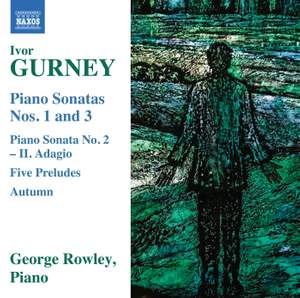
Ivor Gurney’s The Five Preludes for piano date from the second half of 1919 written during a period of remarkable and unexpected creativity from the 29 year old composer and published war poet, with over 40 songs composed and 80 poems written. Gurney was taught by Ralph Vaughan Williams in 1919 at the RCM. In 1922 ill health got the better of Gurney and he was sent to the City of London Mental Hospital where he remained until his death in 1937. Ralph Vaughan Williams was not renowned for his piano playing and as such wrote few works for the piano. The Lake in the Mountains was his last piano work and was composed for Phyllis Sellick in 1947. This piano version of Job A Masque for Dancing was arranged for piano by Vally Lasker, made in the summer of 1930 to support the dancers’ rehearsals for a production. The piano arrangement was considered significant enough to be published by Oxford University Press in 1931. Award winning piano accompanist, Iain Burnside makes his first full solo recording with this disc of rare repertoire. “Iain Burnside presents impressive solo credentials: the serious technical demands of the Job arrangement cause him no problems, while his flair for conjuring orchestra-like colours from the keyboard is of the very highest standard of play.” BBC Music Magazine, January 2013 **** | | | In stock - usually despatched within 1 working day. |
|
|
| |  | Most Grand to Die
James Rutherford, with Eugene Asti at the piano, here records his first disc for BIS, presenting a programme of works from composers all influenced greatly by the First World War. George Butterworth’s A Shropshire Lad takes texts from A.E. Housman’s poems of young men facing death. Vaughan Williams turned to poems by Robert Louis Stevenson, for his Songs of Travel, a set of nine songs in which the wanderer-narrator philosophically accepts the mixture of joys and sorrows offered to him along the road. Gurney – the youngest of the three composers – was also a poet, and in Severn Meadows expressed his longing for home in both text and music. Severn Meadows was composed during Gurney’s time in the trenches. “A hefty bass-baritone in every sense, he's inevitably compared with Bryn Terfel, but his voice seems darker and somewhat smoother, less given to pianissimi but still expressive...Songs of Travel has a notably virile energy, reinforced by veteran accompanist Eugene Asti's unusually driven reading...A very worthwhile recital.” BBC Music Magazine, December 2012 ***** “Rutherford brings his Wagnerian bass-baritone to bear on the song repertoire with uncommon skill and sensitivity...The only serious drawback comes at the top of the voice, where Wagnerian bluster and a slow vibrato sometimes detract from the beauty of his singing...but Rutherford has given notice of a very appreciable talent for song. With accompaniments of exemplary precision, this disc is highly recommended.” Gramophone Magazine, November 2012 “Rutherford's full tone, dark, possibly bass-baritone rather than BIS's designation of baritone, is released with the vigour to resemble somebody, here the vagabond, striding purposefully along the lane...Asti's playing gels with Rutherford's singing in these Gurney songs, as it does in the other pieces...Rutherford's enunciation is all one could wish for.” International Record Review, September 2012 “The quality of the Gurney songs may be a bit uneven, but Rutherford handles them all with great tact, his tone fined down, his diction immaculate, and without a hint of extraneous pathos. In the authentically great Butterworth sets Rutherford's approach is exemplary.” The Guardian, 15th August 2012 **** | | | (also available to download from $10.50) | In stock - usually despatched within 1 working day. |
|
|
| |  | Very Best of English Song
anon.: | Willow song Alfred Deller (countertenor), Desmond Dupré (lute) | Balfe: | Come into the garden, Maud Robert Tear (tenor), André Previn (piano) | Bishop, H R: | Home, Sweet Home Robert Tear (tenor), André Previn (piano) | Brahe: | Bless this house Dame Janet Baker (mezzo), Sir Philip Ledger (piano) | Britten: | The foggy, foggy dew Robert Tear (tenor), André Previn (piano) The Plough Boy Robert Tear (tenor), André Previn (piano) Serenade for Tenor, Horn & Strings, Op. 31 Robert Tear (tenor), Alan Civil (horn) Northern Sinfonia, Sir Neville Marriner Les illuminations, Op. 18 John Mark Ainsley (tenor), Pauline Lowbury (violin) Britten Sinfonia, Nicholas Cleobury | Butterworth, G: | Loveliest of Trees Anthony Rolfe Johnson (tenor), David Willison (piano) Love Blows As The Wind Blows Robert Tear (tenor) Vernon Handley | Byrd: | Lullaby, my sweet little baby Michael Chance (countertenor) Fretwork Elegy on the death of Thomas Tallis Michael Chance (countertenor), Christopher Wilson (lute) | Carter, S: | Down Below Ian Wallace (bass-baritone), Donald Swann (piano) | Delius: | Sea Drift John Noble (baritone) Liverpool Philharmonic Choir, Royal Liverpool Philharmonic Orchestra, Sir Charles Groves | Dibdin: | Tom Bowling Robert Tear (tenor), André Previn (piano) | Dowland: | Sorrow, stay Dame Emma Kirkby (soprano), Anthony Rooley (lute) Can she excuse my wrongs? (First Booke of Songes, 1597) Dame Emma Kirkby (soprano), Anthony Rooley (lute) Awake, sweet love Dame Emma Kirkby (soprano), Anthony Rooley (lute) Woeful heart Dame Emma Kirkby (soprano), Anthony Rooley (lute) Shall I sue? Charles Daniels (tenor), David Miller (lute) Me, me, and none but me Charles Daniels (tenor), David Miller (lute) Flow my teares (Lacrimæ) Charles Daniels (tenor), David Miller (lute) | Elgar: | Sea Pictures, Op. 37 Dame Janet Baker (mezzo) London Symphony Orchestra, Sir John Barbirolli Two Songs Op. 60 (The Torch; The River) Robert Tear (tenor) City of Birmingham Symphony Orchestra, Vernon Handley | Finzi: | Since we loved Ian Bostridge (tenor), Julius Drake (piano) Rollicum-rorum Jonathan Lemalu (bass-baritone), Roger Vignoles (piano) Dies natalis, Op. 8 Wilfred Brown (tenor) English Chamber Orchestra, Christopher Finzi | Gurney: | Down by the Salley Gardens Anthony Rolfe Johnson (tenor), David Willison (piano) Black Stitchel Anthony Rolfe Johnson (tenor), David Willison (piano) | Ireland: | The Salley Gardens Dame Janet Baker (mezzo), Gerald Moore (piano) Sea Fever Jonathan Lemalu (bass-baritone), Roger Vignoles (piano) | Johnson, R: | Where the bee sucks Alfred Deller (countertenor), Desmond Dupré (lute) Full fathom five Alfred Deller (countertenor), Desmond Dupré (lute) | Keel: | Trade Winds (No. 2 from Three Salt-Water Ballads) Jonathan Lemalu (bass-baritone), Roger Vignoles (piano) | Morley: | It was a lover and his lass Alfred Deller (countertenor), Desmond Dupré (lute) O mistress mine Alfred Deller (countertenor), Desmond Dupré (lute) | Mortimer: | The Smuggler's Song Owen Brannigan (bass), Gerald Moore (piano) | Parry: | O Mistress Mine Dame Janet Baker (mezzo), Gerald Moore (piano) | Peel: | Bredon Hill Sir Thomas Allen (baritone), Geoffrey Parsons (piano) In Summertime on Bredon orchestral version Frederick Harvey (baritone) George Weldon | Purcell: | Fairest Isle (from King Arthur) Nancy Argenta (soprano), Nigel North (lute) Music for a while, Z583 Nancy Argenta (soprano), John Toll (harpsichord) I attempt from love's sickness to fly in vain (from The Indian Queen) Nancy Argenta (soprano), Paul Nicholson (harpsichord) If music be the food of love, Z379 Nancy Argenta (soprano), Richard Boothby (lute), John Toll (harpsichord) An Evening Hymn 'Now that the sun hath veiled his light', Z193 Nancy Argenta (soprano), Paul Nicholson (harpsichord) | Quilter: | Love's Philosophy, Op. 3 No. 1 (Shelley) Dame Janet Baker (mezzo), Gerald Moore (piano) Now sleeps the crimson petal, Op. 3 No. 2 (Tennyson) Sir Thomas Allen (baritone), Geoffrey Parsons (piano) Come away, death Ian Bostridge (tenor), Julius Drake (piano) | Sanderson, W: | Devonshire Cream and Cider orchestral version Frederick Harvey (baritone) Philharmonia Orchestra, George Weldon | Stanford: | Drake's Drum Robert Lloyd (bass), Nina Walker (piano) The Old Superb Robert Lloyd (bass), Nina Walker (piano) Songs of the Sea, Op. 91 Benjamin Luxon (bass-baritone) Bournemouth Symphony Orchestra, Norman Del Mar | Swann, D: | A Transport of Delight (The Omnibus) Ian Wallace (bass-baritone), Donald Swann (piano) The Wart Hog Ian Wallace (bass-baritone), Donald Swann (piano) The Hippopotamus Song (Mud, mud, glorious mud) Michael Flanders & Donald Swann | trad.: | Greensleeves Alfred Deller (countertenor), Desmond Dupré (lute) | Vaughan Williams: | Linden Lea Dame Janet Baker (mezzo), Gerald Moore (piano) The Lamb Ian Partridge (tenor), Janet Craxton (piano) The Shepherd Ian Partridge (tenor) Silent Noon Ian Bostridge (tenor), Julius Drake (piano) Songs of Travel Sir Thomas Allen (baritone) Sir Simon Rattle Five Mystical Songs John Shirley-Quirk (bass-baritone) Choir of King's College Cambridge, English Chamber Orchestra, Sir David Willcocks On Wenlock Edge orchestral version Ian Bostridge (tenor) London Philharmonic Orchestra, Bernard Haitink | Walton: | Popular Song from 'Façade' Fenella Fielding, Michael Flanders Academy of St Martin-in-the-Fields, Sir Neville Marriner | Warlock: | My Own Country Anthony Rolfe Johnson (tenor), David Willison (piano) Passing By Anthony Rolfe Johnson (tenor), David Willison (piano) Pretty Ring Time Anthony Rolfe Johnson (tenor), David Willison (piano) Balulalow Dame Janet Baker (mezzo), Sir Philip Ledger (piano) Yarmouth Fair Owen Brannigan (bass), Ernest Lush (piano) | Woodforde-Finden: | Kashmiri Song Frederick Harvey (baritone), Jack Byfield (piano) |
Ranging from Shakespeare’s contemporaries to the Victorian school and beyond, this fine box set calls on some of the greatest artists—including a wealth of British talent—to celebrate the diversity and longevity of English song. From simple melodic expression to the textural sophistication of orchestral settings, with the sea and landscape assuming a prominent role throughout, the songs included here comprise a fitting tribute, simultaneously revealing the rich cultural legacy of English poetry. | | | In stock - usually despatched within 1 working day. |
|
|
| |  | Simon Keenlyside: Songs of War
Songs of War is a very personal selection of songs about war, carefully chosen by Simon Keenlyside. The songs contemplate the innermost thoughts of soldiers on the front lines, concentrating on themes of homesickness, longing, fear and love. Simon Keenlyside has provided the sleeve notes himself for this album, displaying his own personal thoughts on the compositions, poetry and subject matter. The album’s cover image, provided by the Imperial War Museum, is a photograph of a soldier from WW1 writing a letter home, reflecting the album’s themes of longing and homesickness. Full song texts are included in the booklet. “The title is deceptive, for these songs exude anything but a warlike mood. Almost all are English: the idiom is winsome, romantic and often quite innocent, as in Vaughan Williams’s “Youth and Love” and Bridge’s “Thy hand in mine”. At the heart of the recital – beautifully vocalised and artlessly characterised by Keenlyside – is Butterworth’s cycle of songs under the title “A Shropshire Lad”.” Financial Times, 5th November 2011 **** “Despite the title, most of the songs in this admirable collection are anything but warlike. There is no place for patriotic bombast here; instead, these polished miniatures yearn for a vanished pastoral England...a beautifully judged recording, exquisitely sung; poignant but never sentimental.” The Observer, 13th November 2011 “At 52, the British baritone is in peak vocal health, and certainly young-sounding enough to portray the men in their late teens and twenties who leave their homes and loves...I can’t think of another baritone who can match him for beautiful tone, nuance of expression and immaculate diction...Keenlyside is incomparable here, in one of the song records of the year.” Sunday Times, 13th November 2011 “it’s not damning with faint praise to say that you don’t really notice the music at all – it’s Simon Keenlyside’s impeccable delivery that registers. Housman’s bittersweet musings are heartbreaking, notably in the penultimate poem; just listen to Keenlyside's mention of "the lads that will die in their glory and never be old"...A sober, intelligent CD, beautifully sung, immaculately accompanied. Keenlyside's sleeve notes are intelligent, insightful and touching.” The Arts Desk, 26th November 2011 “A sense of the mannered or precious can debase these songs; Keenlyside's sweeping, robust lyricism is deceptively effortless and exactly right...Dr Johnson once said that every man thinks worse of himself for never having been a soldier; Keenlyside has evidently thought deeply about this, making for a robust and involving recital.” BBC Music Magazine, January 2012 ***** “Keenlyside's mark is everywhere apparent and full marks to him for persuading Sony to indulge his choices...He is indeed a remarkable singer. He can encompass tragedy and irony, heroic and tender, he has magical half-tones, introduces a thrilling touch of head voice in Warlock's The Night, he can tell a story...Keenlyside's impassioned, almost overwhelming rendering of Frank Bridge's Thy Hand in Mine is, I think, the core and key to this compelling collection” International Record Review, January 2012 “One can imagine a more poignant account of the ghostly voices in 'Is my team ploughing?' but 'The lads in their hundreds' is all the more moving for Keenlyside's robustness...The rest of the programme is equally rewarding and Keenlyside's diction is perfect.” Gramophone Magazine, February 2012 | | | In stock - usually despatched within 1 working day. |
|
|
| |  | Down by the Salley GardensWorks by Vaughan Williams, Finzi, Howells & Quilter
Berkeley, L: | The Horseman | Finzi: | Since we loved The sigh At Middle-Field Gate in February (from I Said to Love) | Gurney: | Down by the Salley Gardens | Hely-Hutchinson: | et in the manner of Händel | Howells: | King David The Widow Bird The Little Boy Lost | Purcell: | Music for a while, Z583 arr. Tippett Lord, what is man?, Z192 arr. Britten Let the night perish (Job's Curse), Z191 arr. Britten | Quilter: | It was a lover and his lass Three Shakespeare Songs, Op. 6 Hey, ho, the wind and the rain (No. 5 from Five Shakespeare Songs, Op. 23) Take, O take those lips away | Stanford: | La Belle Dame sans merci (John Keats) (1877) | Vaughan Williams: | Linden Lea Bright is the Ring of Words (No. 8 from Songs of Travel) | Warlock: | Jillian of Berry |
This programme offers a vivid and varied cross-section of English song, ranging from the Edwardian aesthetic of Quilter and early Vaughan Williams to the intensely expressive style of Howells and Finzi. The Purcell realisations by Britten and Tippett, meanwhile, are products of two great 20th-century composers engaging with their musical heritage. In all these different styles, Bejun Mehta shows the same verbal and vocal mastery that won such acclaim for his debut Handel recital on harmonia mundi. “Bejun Mehta certainly can't be faulted on his eclecticism in his whistle-stop tour of English song...Mehta's singing is so heart-stoppingly beautiful and musically perceptive that you wish he had recorded whole cycles rather than just representative songs.” The Guardian, 1st September 2011 **** “Mehta's gift for mood and atmosphere is heard in the light beauty of Quilter's "It was a lover and his lass", the sweet melancholy of Gurney's "Down by the Salley Gardens" or the veiled mystery of Lennox Berkeley's "The Horseman". Pianist Julius Drake provides customary alert, expressive accompaniment.” The Observer, 11th September 2011 “Mehta is a technically excellent singer; with a firm well-supported line; an unusually resonant lower range; and fine expressive diction, well equal to Julius Drake's sturdy accompaniment. And he's hardly more bloodless than genteel English tenors of the era...he exploits his thinner tone deftly for unusual, even eerie effects, especially in Stanford's chilling La belle dame snas merci” BBC Music Magazine, November 2011 ***** “Any suspicion that these songs might sound lukewarm or tentative in the hands of a countertenor is soon dispelled by Mehta's invigorating singing of Quilter's 'Blow, blow, thou winter wind' and the keen way he dramatises Stanford's 'La Belle Dame sans merci'. The verbal point he brings to a handful of Purcell songs in arrangements by Britten and Tippett is also appreciated.” Gramophone Magazine, November 2011 “Mehta may not possess the most extensive of vocal paintboxes but he does gradate the shades at his disposal to good effect: pastels rather than oils. In Drake he has a partner who draws suitable sounds from the piano.” International Record Review, November 2011 | | | In stock - usually despatched within 1 working day. |
|
|
| |  | The English Song Series Volume 19 - Ivor Gurney Songs
Described by his teacher, Stanford, as “the one who most fulfilled the accepted ideas of genius”, the poet and composer Ivor Gurney composed more than 300 songs despite suffering from bipolar disorder and tuberculosis. The Five Elizabethan Songs show the young composer’s astonishing limpid fluency, while Tears and Sleep rank among his most exquisite creations. Comedy, heavenly rapture, tender urgency and lovelorn longing all touch the music of this ‘lover and maker of beauty’, whose songs find ideal interpreters in Susan Bickley and Iain Burnside. “Susan Bickley’s sensitivity and vocal allure confirming her among the finest mezzos of her generation” Classical Source “…Susan Bickley shares with Gurney a direct and instinctive response to the inflections, metres and emotional colours of the English language.” BBC Music Magazine, Christmas 2009 **** “…the settings of John Masefield are especially memorable, notably "By a Bierside" with a wonderful final climax, superbly conveyed here by Susan Bickley. Wherever you turn, these songs offer illumination and refreshment, splendidly captured not only by Susan Bickley but by her ever-sensitive accompanist, Iain Burnside.” Gramophone Magazine, November 2009 “Bickley’s attractive mezzo is the perfect interpreter for Gurney, gutsy one moment, restrained the next, whilst textual clarity is always given paramount importance. Iain Burnside accompanies her superbly on the piano, with real passion for the music.” Opera Britannia, 26th August 2009 *** “...as Susan Bickley's beautifully understated performances with pianist Iain Burnside show, Gurney was not only an important figure in early 20th-century English song, but also a distinctive one detached from its folksy mainstream. Gurney's style is much more European, much more conscious of the German Lieder tradition, and Schumann especially; this is a well-conceived and important disc for all English music enthusiasts.” The Guardian, 7th August 2009 **** | | | (also available to download from $6.00) | In stock - usually despatched within 1 working day. |
|
|
| |  | The Dark Pastoral
English tenor Andrew Kennedy has chosen to record, with the aid of the Borletti-Buitoni Trust, a project that explores new territory and perspectives within the music and poetry of WWI. He has chosen previously unheard or unpublished songs by three composers – Ivor Gurney, William Denis Browne and Eugene Goosens – and juxtaposed them with works from poets and writers such as Housman, Sassoon, Blunden, Vera Brittain, Charlotte Maw and Gurney himself. “…a fine if distinctly gloom-laden recital, cleverly put together and sensitively performed.” BBC Music Magazine, November 2008 **** “Andrew Kennedy sings devotedly and with skill, Julius Drake's playing is always responsive, and together they often perform memorably: Goossens's Hardy settings are fine, and contrasted, examples.” Gramophone Magazine, October 2008 | | | In stock - usually despatched within 1 working day. |
|
|
| |  | On Wenlock Edge
“…Kennedy… proves himself a rising start with performances keenly sung if occasionally rather mannered, supported by Simon Crawford Philips and the Dante players.” BBC Music Magazine, January 2008 **** “Kennedy's young tenor sounds utterly at ease in this CD of Housman settings by VW, Ivor Gurney and Ian Venables … his musicianship is appealing, and the Dante Quartet accompany with gusto” The Times “Kennedy has a big, bright, expressive tenor voice and uses it with fervour, delicacy and imagination ... A thoughtfully realised recital” The Independent on Sunday “Venables' songs are sharply responsive to the weight and meaning of every word, and his style ... around Kennedy's voice like a glove ... The tenor handles the texts superbly, making every word perfectly clear” The Guardian | | | In stock - usually despatched within 1 working day. |
|
|
| |  | On Wenlock Edge
“Gilchrist's bright, ringing tenor voice is compelling from the first note, but it's the range of expression and unaffected musicality that leave the lasting impression” BBC Music Magazine “...invigorating stuff from the off, and far from the pastoral legato of some other interpretations...Gilchrist’s no-nonsense vocal style meets the folk-based contours of the music with a convincing respect – his vowels more fluid and natural than some in the English tenor tradition, and his delivery all the more vivid for it.” Andrew Mellor, bbc.co.uk, 5th July 2007 “…a wonderfully imaginative account of On Wenlock Edge and The Curlew. The developing tale of Bredon Hill has never been more vividly told on records, and the desolation of Warlock's masterpiece becomes more poignant still because of the beauty evoked. ...Gurney's Housman cycle has also its finest performance on record. Strongly recommended.” Gramophone Magazine, September 2007 | | | In stock - usually despatched within 1 working day. |
|
|
| |
|