Editor's ChoicePrices shown exclude VAT. (UK tax is not payable for deliveries to United States.) See Terms & Conditions for p&p rates. | |  | Russian Violin Concertos
“As Julia Fischer explains in the booklet-notes to this, her first CD, she has an abiding love of the Khachaturian Concerto, a work she found impossible to sell to concert-promoters. The freshness of her way with the Khachaturian is immediately striking in the chattering figuration of the opening, and she brings a rare tenderness to the lyrical second subject. The orchestral sound is impressive, too. Though Itzhak Perlman and Lydia Mordkovitch produce a beefier sound, the refinement of Fischer's performance makes it equally compelling. This concerto has claims to be the composer's finest work, claims which the yearning tenderness of the slow movement support. The clarity of Fischer's performance in the finale brings lightness and sparkle. In the Glazunov, too, it's the clarity and subtlety of Fischer's playing that marks out her reading. She finds the tenderness of the slow middle section of this one-movement work, and gives an easy swing to the bouncy rhythms of the final section. In the Prokofiev she takes a meditative view of the wistful melodies, the element, she says, that most attracts her, even if she does not quite reach the depths of Kyung-Wha Chung's version. A unique coupling, superbly recorded, that could hardly be more recommendable.” Gramophone Classical Music Guide, 2010 “...could hardly be more recommendable, with warmly compelling performances from the brilliant young German virtuoso, superbly recorded in full, bright, clear sound...The clarity and freshness of her performance are what immediately strike home” Penguin Guide, 2011 edition | | | (also available to download from $10.50) | In stock - usually despatched within 1 working day. |
|
|
| |  | Barber: Orchestral Works Volume 6
| | | (also available to download from $6.00) | Usually despatched in 2 - 3 working days. (Available now to download.) |
|
|
| |  |
“Here's something quite unusual! Andreas Staier is playing a Steinway model-D dating from 1901; not exactly contemporary with the Quintet (1865), but producing a noticeably lighter sound than its modern counterpart, and taking us closer to what would have been familiar to Brahms. On this excellent recording we're aware that the dominating resonance of the present-day concert grand is missing; the balance shifts in favour of the strings, making the work seem more colourful, less sombre. The first movement and the Scherzo are especially successful, with full, resonant tuttis contrasting dramatically with the more tenuous, atmospheric music. The Leipzig Quartet maintain a notably pure sound, without excessive vibrato, adding to the feeling of transparency. Other performers, such as Peter Serkin and the Guarneri Quartet, have delved more searchingly into the Quintet's emotional content, bringing out the moments of deep pathos or soaring lyricism. But Staier and the Leipzigers will expand your view of this great work.” Gramophone Classical Music Guide, 2010 | | | Usually despatched in 2 - 3 working days. |
|
|
| |  | Handel - Opera SeriaArias
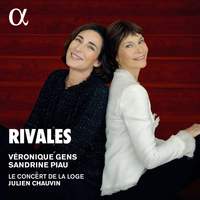
“Sandrine Piau and Christophe Rousset have been consistently stylish and perceptive Handelians together. Their musical flair and dramatic intelligence is marvellously captured here, and they have chosen arias that explore the full range of Handel's genius. The experience starts with the spectacular 'Scoglio d'immota fronte', and the subsequent sequence weaves through wonderful contrasts. It's hard to capture the full dramatic sense and vivid personality of Handel's opera characters in a studio recital, yet they hit the bullseye every time, bringing out Cleopatra's despair, Rodelinda's eloquent grief for her apparently deceased husband, the heartbroken sorceress Melissa in Amadigi di Gaula, Deidamia's distress at losing Achilles to the Trojan war, and Partenope's gorgeous charisma. Although some da capo sections stray a little too far from Handel's notation for the comfort of scholars, they all enhance the drama of the text, and each cadenza, showing panache and taste, is a breath of fresh air. The playing of Les Talens Lyriques is a model of clarity, vitality and theatrical wit. It was an inspired decision to close the recital with the sublime understatement of 'Son qual stanco', featuring a heartbreaking cello solo by Atsushi Sakaï. Rousset and Piau achieve the perfect synthesis of elegance, extravagance and emotion. This is may be the finest recital of Handel arias ever recorded.” Gramophone Classical Music Guide, 2010 | | | (also available to download from $10.50) | Usually despatched in 3 - 4 working days. (Available now to download.) |
|
|
| |  | Einojuhani Rautavaara - The Journey
| | | (also available to download from $10.50) | Usually despatched in 2 - 3 working days. (Available now to download.) |
|
|
| |  |
“By tailoring his solo sonatas to fit the styles of six very different violinists Eugène Ysaÿe may have been acting as the ultimate critic, describing his subjects with musical illustrations rather than mere words. For example, there are the winking appoggiaturas in the finale of No 4, dedicated to Kreisler, which Thomas Zehetmair throws off with a mere flick of the wrist, or the rich chord structures of No 1, whose dedicatee, Joseph Szigeti, was a great Bach player. Bach is a particularly strong presence there, the key (G minor) and language so reminiscent of his first solo sonata. Again, the Jacques Thibaud piece, No 2 in A minor, has obsessive repetitions of the Prelude from Bach's E major Partita, played initially by Zehetmair with the lightest touch, though later repetitions gain in intensity. The sinister melding of Bach with the 'Dies irae' chant has to be one of the canniest masterstrokes of the period. There are stylistic parallels between No 2 and No 4, just as there were similarities between the players themselves. The spicy Sixth Sonata recalls the Spanish fiddler Manuel Quiroga and takes on Latin influences, initially suggesting Ravel's Tzigane (composed at around the same time, though the similarity is probably coincidental) before shifting, a little later, to habañera mode. As the ultimate thinking virtuoso, Zehetmair is an ideal interpreter of these pieces, delving between the notes, coaxing a wealth of colour, inflection and dynamic shading from each score, always with acute imagination. He is both explorer and demonstrator, his modes of attack as varied as his tone colouring. This is the best possible showcase for some marvellous if still undervalued music.” Gramophone Classical Music Guide, 2010 | | | Usually despatched in 4 - 5 working days. |
|
|
| |
|