In stock - usually despatched within 1 working day.
March 2007
*****
“…Götterdämmerung with white-hot immediacy. The cast is superb, from Norns and Rhinemaidens upward. Keilberth sweeps them all along the path of tragedy with compellingly balanced drive and spaciousness, arriving at an unusually serene vision of Valhalla's destruction. It's an altogether gripping experience...and takes its place alongside the Solti among the finest renditions on disc.”
Click here for alternative recordings of this work.
Editor's Choice
Prices shown exclude VAT. (UK tax is not payable for deliveries to United States.) See Terms & Conditions for p&p rates.
“The atmosphere is electric. Villazón is pouring out Monteverdi’s beautiful lines of remorseful agony with spell-binding force. It’s his first foray into early music, but he tosses off the tricky idioms – the delicate, falling sospiri between notes, the hellishly difficult bouncing-ball repetitions on one note, the flexible tempi – as if he’s been doing them all his life. And what’s more, he invests them with thrilling urgency and passion. Even Haïm, directly form the harpsichord, seems amazed.” Gramophone Magazine
Flaming Heart seeks to show the full Monteverdi, a Monteverdi of both beauty and horror, colourful, vivid, and always completely alive. Unlike the ‘complete edition’ approach this series presents a much more imaginative selection of his works, beginning with the prologue from L’Orfeo and continuing with the very best of his works for a capella ensemble, soloists and strings.
“some of the most exquisitely intense vocal music ever written” The Times
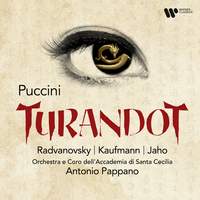
Orchestra e Coro Dell’ Accademia Di Santa Cecilia, Antonio Pappano
“A generous Tchaikovsky spectacular in masterly hands” BBC Music Magazine, October 2009
“With chorus added in the 1812 as well as the Waltz from Eugene Onegin, this is an exceptional Tchaikovsky collection, a fine start for Antonio Pappano's recordings with his Italian orchestra. What is very striking is how refreshing the 1812 is when played with such incisiveness and care for detail, with textures clearly defined. It starts with the chorus singing the opening hymn, expanding thrillingly from an extreme pianissimo to a full-throated fortissimo. A women's chorus then comes in very effectively, twice over, for one of the folk-themes, and at the end the full chorus sings the Tsar's Hymn amid the usual percussion and bells, though Pappano avoids extraneous effects, leaving everything in the hands of the orchestral instruments. It is equally refreshing to have the Waltz from Eugene Onegin in the full vocal version from the opera, again wonderfully pointed, as is the Polonaise which follows. What comes out in all the items is the way that Pappano, in his control of flexible rubato, is just as persuasive here as he is in Puccini, demonstrating what links there are between these two supreme melodists. So he builds the big melodies into richly emotional climaxes without any hint of vulgarity, strikingly so in both Francesca da Rimini and Romeo and Juliet. Pappano is impressive in bringing out the fantasy element in Francesca, and in Romeo the high dynamic contrasts add to the impact of the performance. There have been many Tchaikovsky collections like this, but with well balanced sound, outstandingly rich and ripe in the brass section, this is among the finest.” Gramophone Classical Music Guide, 2010
“Like the very best music directors, you can’t pigeon-hole Antonio Pappano. He may have made his name with Puccini but he’s got an instinctive feel for structure and for style that makes him good at most things. His Tchaikovsky doesn’t disappoint, full of vigour, of tunefulness” Gramophone Magazine
As Andrew Achenbach intimates in his review, this is a classy recital from a classy pianist. Mark Bebbington pairs
works by Sir Malcolm Arnold (for an 85th birthday tribute) and Constant Lambert to complementary effect.
But he brings out the invention that is common to both, the individuality that perhaps kept each from really joining the mainstream. - Gramophone Magazine
“Mark Bebbington's 85th-birthday tribute to the late Sir Malcolm Arnold starts with his first substantial piano composition, the Piano Sonata in B minor from 1942. After a concise opening movement, a wistful Andante con moto leads without a break into the Alla marcia finale, whose element of ironic burlesque suggests an acquaintance with Prokofiev and Shostakovich. The Piano Pieces, completed the following year, already possess that bittersweet tang characteristic of the composer. However, the meatiest Arnold offering here is the absorbing 1944 Variations on a UkrainianFolksong. Bebbington is a splendidly intrepidly communicative and an unruffled advocate. He also benefits from a superbly rounded, firmly focused sound-picture. Bebbington proves equally at home in the music of Constant Lambert. His interpretation of the magnificent 1929 Sonata that bridges the gap between The Rio Grande (1927) and the Piano Concerto (1930-31) has all the stylish aplomb, improvisatory freedom and infectious swagger one could wish for, yet with a touch more introspection and poignancy in the bluesy slow movement than either Ian Brown or John McCabe locate. The finale hurtles menacingly towards its grim apotheosis, after which the skies darken further still for the inconsolable Elegy that Lambert wrote in 1938. The three movement Suite from 1925 is full of daring, ear-tickling invention (sample the hallucinatory opening Andante) and a striking achievement for someone barely out of their teens. The sweetly touching Elegiac Blues of 1927 (written within days of the news of the early death of singer Florence Mills) rounds off another high-class collection from this intelligent and tasteful performer.” Gramophone Classical Music Guide, 2010
Robert Quinney (Westminster Cathedral organ, Henry Willis III, 1922-32)
Recorded at Westminster Cathedral, London, 18 - 21 May 2004
“It’s quite an achievement to pull off orchestral transcriptions for the organ that don’t have you missing the original, but Robert Quinney manages this on the magnificent Westminster Cathedral instrument. He utterly convinces that even Wagner’s Meistersinger overture works as an organ piece in its own right – and findstranslucent textures rather than walls of sound.” Gramophone Magazine