Editor's ChoicePrices shown exclude VAT. (UK tax is not payable for deliveries to United States.) See Terms & Conditions for p&p rates. | |  |
Karita Mattila (Katia), Oleg Bryjak (Dikoi), Miroslav Dvorsky (Boris), Dalia Schaechter (Kabanicha), Guy de Mey (Tikhon), Gordon Gietz (Koudriash), Natascha Petrinsky (Varvara), Marco Moncloa (Kouliguine), Itxaro Mentxaka (Glacha) & Maria José Suerez (Flekloucha) Coro y Orquesta del Teatro Real de Madrid, Jiří Bělohlávek Critical edition by Sir Charles Mackerras Production: Robert Carsen Costumes and sets: Patrick Kinmonth Lighting: Robert Carsen & Peter Van Praet Production shared with Vlaamse Opera d’Anvers At last, this magical production of Katia, by Robert Carsen, recorded at the Teatro Real de Madrid, in December 2008, and which was hailed unanimously by the critics as ‘almost perfect’. The Teatro Real Orchestra gives one of its best performances under maestro Jiří Bělohlávek, whose conducting emphasises the passion with delicacy and drama. All the action takes place on a huge body of water which reflects images of extraordinary grace, sculpted by sublime light. The stage is dominated by the extraordinary Karita Mattila in a performance of incredible intensity: the best Katia imaginable for this Janacek masterpiece. Running time: 1.48’ and extras: interviews with Robert Carsen and Jiri Belohlavek 23’30 “Its luminosity is reflected in Jiří Bělohlávek's conducting, undoubtedly the most airily lyrical Katya I can remember, which uses Mackerras's edition but applies less spiky gestures...[Mattila] refines her bright dramatic soprano sufficiently to sound fresh and eager, then captures an edge of hysterical guilt.” BBC Music Magazine, January 2011 ***** “Jiří Bělohlávek plainly loves this score and paces it well...Mattila is, without a doubt, an outstanding Kat'a...she gives a vocally splendid account, sensitively inflected and radiant at climactic moments...[Dalia Schaechter is] admirably bitter and twisted...[Oleg Bryjak] demonstrates a fine understanding of [his] role, singing with a kind of gruff belligerence that is just right for the part.” International Record Review, March 2011 “This is an excellent production...Mattila as Kat'a is stupendous...[her] faultless in its progression from hesitancy to impassioned resolve. In the final monologue, her hair dishevelled, her misery and longing are heartbreaking. Throughout, Mattila sings with a flood of golden tone… Bělohlávek's conducting is beautifully judged, whether in tension or release. Utterly brilliant!” Gramophone Magazine, April 2011 | | | In stock - usually despatched within 1 working day. |
|
|
| |  | Beethoven: Piano Concertos Nos. 4 & 5
After huge success with their cycle of Beethoven Symphonies on BIS, Osmo Vänskä and the Minnesota Orchestra return with the great composer’s Piano Concertos performed by the sensational young pianist Yevgeny Sudbin. Sudbin made his début on disc with a programme of sonatas by Scarlatti, but soon continued with recordings of music by later composers from his own country of birth, Russia. He has recorded the Tchaikovsky Piano Concertos No.1, Medtner’s Concertos Nos. 1&2 and Rachmaninov No.4 2010 saw Sudbin’s return to the 18th century, with a Haydn recital that confirmed his reputation as a highly versatile musician. “Few seem as fresh and necessary as this release from this wonder pianist” The Times (5 Star review) on Sudbin’s Tchaikovsky/Medtner concertos Opening with the composer’s final two works in the genre, Sudbin shares the stage with Minnesota Orchestra and Osmo Vänskä, a team whose Beethoven credentials are assured after their recent cycle of the nine symphonies which critics claimed to be one of the great Beethoven Cycles. “Vänskä's lightness of touch - a cooler Beethoven than we're accustomed to, but peppered with artfully controlled explosions - is just what's needed to get inside the enigmatic Fourth, and his 'Emperor' is refreshingly restrained.” Classic FM Magazine, April 2011 *** “Sudbin makes it clear that he has little use for Beethoven weighed down, as it were, with excess baggage...Instead, his delectably light-fingered brilliance and virtuosity shines a new light on some of the most familiar scores in the repertoire...Such mercurial pianism keeps Vänskä and the Minnesota Orchestra on their toes but they follow their soloist as to the manor born.” Gramophone Magazine, April 2011 “Sudbin brings delicacy and crystalline articulation to these concertos, creating a sense of classical grace rather than romantic scale... but his aristocratic mien and stylistic assurance...[add] a welcome degree of wit to the fourth concerto’s finale and a poise and sparkle to the Emperor...Osmo Vänskä and the Minnesota Orchestra prove equally sympathetic accompanists.” Financial Times, 18th March 2011 **** “The clarity of Yevgeny Sudbin's playing, and the range of keyboard colours he commands are qualities that serve him as well in Beethoven as they did in his fine Scriabin recital for BIS a few years back. He is particularly successful here in the more intimate and chamber-like Fourth Concerto...There's much to like about Sudbin's Emperor, too. The Adagio is admirably luminous” BBC Music Magazine, April 2011 **** “Sudbin need not fear being heard in the context of pianists who are appreciably further on in their careers...In a crowded field [he] ranks near the top and it will be fascinating to hear how his cycle evolves over the remaining two installments. Highly recommended.” International Record Review, April 2011 | | | In stock - usually despatched within 1 working day. |
|
|
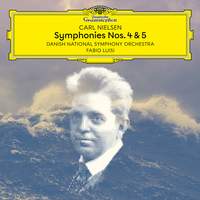
| |  | Nielsen: Symphonies Nos. 4 & 5
DSD recording, live at the Barbican October 2009 (Symphony No 5) and May 2009 (Symphony No 4). Despite having been an admirer of the music of Danish composer Carl Nielsen for many years, Sir Colin Davis has rarely conducted any of his works. Now, at the age of 83, Sir Colin embarks on a complete cycle of the composer’s symphonies. Although Carl Nielsen is frequently compared to his near contemporary Jean Sibelius, each composer’s music is equally individual. Both were celebrated symphonists but used the potential of an orchestra in different ways. Despite giving titles to the majority of his symphonies, Nielsen was often vague about the specific themes for each work. However his music is always direct, dynamic and lyrical. Sir Colin’s traversal of the symphonies began in concert in 2009. He will conduct the remaining symphonies in 2011 with two further LSO Live releases following in 2012. Concert reviews: “Nielsen’s music could have been written for the LSO: the orchestra’s robust sound and free-spirited temperament suit this symphony’s virtuoso demands and visceral dynamism. Davis, too, is attuned to Nielsen’s brand of Beethovenian conflict. Davis conducted it with the vitality of someone worthy of the symphony’s title, the ‘Inextinguishable’” Financial Times “this account of the “Inextinguishable” confirmed he and the LSO have something special to offer … he produced an account of fabulous coherence” The Guardian “Forget old dogs and new tricks, clearly it’s never too late to embark upon a new repertoire strand … this was an auspicious start. I reckon the maestro shed 40 years during this performance” The Independent “Nielsen's last two symphonies form a response to the first world war and its aftermath...Their uncompromising nature is often fearfully enhanced in this pair of hard-hitting live performances from Colin Davis and the LSO...The playing and recording are both exemplary” The Guardian, 13th January 2011 **** “Nielsen is still not part of the regular concert-hall repertoire in Britain, but if anything could persuade you that he should be, it’s these vivid and dramatic performances... The London Symphony Orchestra rises to the challenges magnificently, throwing contrasts into high relief, and punching out the rhythms on brass and percussion. Colin Davis conducts expertly.” The Telegraph, 4th February 2011 **** “[Davis] matches Herbert Blomstedt when it comes to grandeur and sense of the long evolving line, and yet the music also seems to fluid and changeable, and alive on so many levels. Full marks to Davis, too, sustaining the momentum through the finale's Adagio fugue in No. 5...Credit too for using the new critical editions of both scores.” BBC Music Magazine, March 2011 ***** “This is music in which the creative act is no longer a virtue but a necessity, and it is this unequivocal aspect Davis conveys in a performance which maintains onward drive at all costs...With forward yet sonorous SACD sound that is among the best that LSO Live has yet achieved, this disc bodes well for the rest of Davis's Nielsen cycle over the coming year.” International Record Review, March 2011 “Both these interpretations, recorded live at the Barbican, surge along with the full-throated splendour that is a London Symphony Orchestra trademark. In the magnificent Fifth Symphony...Davis's control of pace unfolds a performance of wonderful, unexaggerated drama and humanity, as fine as any I've heard.” Classic FM Magazine, April 2011 **** “At last! Nielsen's two best-known symphonies in modern performances with real fire in their belly...[Davis] brings such animal excitement to the task, such a thrilling sense of discovery and existential danger...Davis shows a remarkable instinct for the paradoxical complexity of the moment in Nielsen, as well as for the broader trajectory of his musical thinking.” Gramophone Magazine, April 2011 BBC Music Magazine
Orchestral Choice - March 2011 |
| | | In stock - usually despatched within 1 working day. |
|
|
| |  | Alkan: Complete Piano Duos & Duets
Goldstone and Clemmow (piano duo and duet) Charles-Valentin Alkan (1813–88) was one of the greatest virtuosos that ever lived – he became a student at the Paris Conservatoire at the age of six, made his public debut (on violin) the following year, and gained the first prize of the Conservatoire for piano at the age of ten, giving his first public piano recital just two years later. He was a close friend (and next-door neighbour) of Chopin and George Sand, and often shared the platform with Chopin as well as Sigismund Thalberg and Franz Liszt. It was around the time of Chopin’s death that he began to devote himself to composition and effectively withdrew from public life, acquiring a reputation as a misanthropic recluse. The circumstances of his death are obscure, although the traditional account that he was crushed by a falling bookcase while reaching for a volume of the Talmud was probably invented by his son. As a composer, Busoni considered him to stand on a par with Liszt, Chopin, Schumann and Brahms as one of the five greatest composers for the piano since Beethoven. His works for piano are among the most demanding ever written – but they can also gleam with a fierce joy and twinkle with mischievous humour, so it’s hardly surprising to find his works for piano duet bubbling with freewheeling energy. The two works for pedal piano, transcribed here for two pianos by Roger Smalley, show a more solemn side to this devoutly religious composer, though they, too, have their own charge of Alkan’s trademark eccentric originality. “Goldstone and Clemmow not only negotiate the fistfuls of notes with aplomb but convey their palpable delight in these fluent, high-spirited performances, vividly recorded, and enthusiastically recommended to Alkanophiles and lovers of bravura piano repertoire alike.” Gramophone Magazine, April 2011 “Alkan (1813-88) always seems to have something up his creative sleeve to delight the curious listener, and so it is here...Anthony Goldstone and Caroline Clemmow are technically on top of things and are unanimous to a fault.” International Record Review, March 2011 “all the performances by Anthony Goldstone and Caroline Clemmow have panache...it's the arrangements that seem closest to the better-known Alkan – the Op 54 Benedictus, with its throbbing minor-key pulsations framing the consoling main theme, the obtusely repetitive Bombardo-Carillon, originally composed for four feet at one pedal board, and especially the Impromptu on the Lutheran chorale Ein feste Burg” The Guardian, 14th April 2011 *** “Goldstone and Clemmow's complete survey is a welcome addition to the catalogue, for these pieces show a different side to Alkan's music personality, making thoughtfully genial music with friends rather than being the lone hero in epic creations...this disc is lighter in spirit than much Alkan.” BBC Music Magazine, June 2011 *** | | | In stock - usually despatched within 1 working day. |
|
|
| |  |
Karita Mattila (Katia), Oleg Bryjak (Dikoi), Miroslav Dvorsky (Boris), Dalia Schaechter (Kabanicha), Guy de Mey (Tikhon), Gordon Gietz (Koudriash), Natascha Petrinsky (Varvara), Marco Moncloa (Kouliguine), Itxaro Mentxaka (Glacha) & Maria José Suerez (Flekloucha) Coro y Orquesta del Teatro Real de Madrid, Jiří Bělohlávek Critical edition by Sir Charles Mackerras Production: Robert Carsen Costumes and sets: Patrick Kinmonth Lighting: Robert Carsen & Peter Van Praet Production shared with Vlaamse Opera d’Anvers At last, this magical production of Katia, by Robert Carsen, recorded at the Teatro Real de Madrid, in December 2008, and which was hailed unanimously by the critics as ‘almost perfect’. The Teatro Real Orchestra gives one of its best performances under maestro Jiří Bělohlávek, whose conducting emphasises the passion with delicacy and drama. All the action takes place on a huge body of water which reflects images of extraordinary grace, sculpted by sublime light. The stage is dominated by the extraordinary Karita Mattila in a performance of incredible intensity: the best Katia imaginable for this Janacek masterpiece. Running time: 1.48’ and extras: interviews with Robert Carsen and Jiri Belohlavek 23’30 “Its luminosity is reflected in Jiří Bělohlávek's conducting, undoubtedly the most airily lyrical Katya I can remember, which uses Mackerras's edition but applies less spiky gestures...[Mattila] refines her bright dramatic soprano sufficiently to sound fresh and eager, then captures an edge of hysterical guilt.” BBC Music Magazine, January 2011 ***** “Jiří Bělohlávek plainly loves this score and paces it well...Mattila is, without a doubt, an outstanding Kat'a...she gives a vocally splendid account, sensitively inflected and radiant at climactic moments...[Dalia Schaechter is] admirably bitter and twisted...[Oleg Bryjak] demonstrates a fine understanding of [his] role, singing with a kind of gruff belligerence that is just right for the part” International Record Review, March 2011 “This is an excellent production...Mattila as Kat'a is stupendous...[her] faultless in its progression from hesitancy to impassioned resolve. In the final monologue, her hair dishevelled, her misery and longing are heartbreaking. Throughout, Mattila sings with a flood of golden tone… Bělohlávek's conducting is beautifully judged, whether in tension or release. Utterly brilliant!” Gramophone Magazine, April 2011 | | | fRA - FRA503 (Blu-ray) Normally: $41.25 Special: $28.87 |
| | Usually despatched in 3 - 4 working days. |
|
|
| |  | Schubert: Symphony No. 9
This new release in the SOMM Beecham Collection series coincides with the Beecham 50th anniversary this month. Schubert’s Symphony No.9 was never recorded commercially by Beecham, so this live performance is valuable document which will have worldwide appeal. The Schubert was recorded in 1955 at the Royal Festival Hall. “The Delius...is the pearl - the finest account of this mighty work I have ever heard. Never has the music’s rhythmic force and intensity seemed so overwhelming. Yet equally remarkable is the performance’s beauty: the second movement’s F major episode is wonderfully tender. Beecham never made a studio recording of the great C major, but now we have it.” Sunday Times, 27th February 2011 ***** “a very worthwhile addition to the discographies of both Beecham and Schubert. The Rienzi Overture that opens the programme is bold, bullish and bursting with energy...this concert performance becomes a summer garden and the musically evocative phrasing is 100 per cent what Beecham was about. Wonderful!” Gramophone Magazine, April 2011 “wonderful moments in [the Schubert]…accelerating excitement…monumental effect as
a performance overall…” CD Review, April 2011 “his famous capacity for taking a mediocre piece of music and making it seem great could not be better demonstrated than it is in the Rienzi Overture...In a Summer Garden here has the magical quality of the best Beecham performances, when the players rather than the conductor seem to be leading, even inventing, the music as it unfolds.” International Record Review, April 2011 “Sir Thomas Beecham’s performances with the Royal Philharmonic Orchestra may come from another era (mono sound, old-fashioned style), but they convey an electricity and musicianship that most of today’s high-tech recordings lack.” Financial Times, 23rd April 2011 **** | | | Usually despatched in 2 - 3 working days. |
|
|
| |  | Ernst: Complete Music for Violin and Piano Vol. 1
Heinrich Wilhelm Ernst (1812–65) was one of the leading musicians of his day: a friend of Berlioz, Chopin, Liszt and Mendelssohn, and for Joseph Joachim ‘the greatest violinist I ever heard’. Born in a middle-class Jewish family from Brünn in the Austrian Empire (now Brno in the Czech Republic), he studied at the Vienna Conservatory and quickly made a name for himself as a virtuoso, astounding even Paganini with his skill and later becoming his most significant rival. He began to compose when a debilitating illness – most likely porphyria – started to affect his playing, and he spent his last years desperately seeking a cure, in increasing poverty and supported by public benefit concerts given for him by Brahms, Joachim, Wieniawski and others of his friends. His output includes numerous popular encore pieces that he played in his concerts around Europe. But these represent only a fraction of his work. This series of six CDs presents his complete violin works for the first time, revealing one of the instrument’s most accomplished and memorable composers. This first disc shows him in a range of moods, from the mystery and grandeur of the Prophet Fantasy and the Chopinesque poetry of the Two Nocturnes to the bizarre whimsy of The Carnival of Venice and infectious high spirits of the Rondo Papageno – the nineteenth-century virtuoso violin both in introspective melancholy and at its most dazzlingly flamboyant. “Lupu, deftly and flamboyantly accompanied by Ian Hobson, astonishes and bewitches in equal measure...This is a hugely entertaining disc.” Gramophone Magazine, April 2011 “in the hands of Lupu and Hobson [The Prophet Fantasy] assumes a depth and seriousness not normally expected of the genre. Lupu's technical control, secure intonation and ready assimilation of the music's romantic ethos will keep you on the edge of your seat throughout...It's good to rediscover gems like the 1837 Carnaval de Venise variations...Lupu's account is at once completely assured and fully alive to every expressive possibility this music affords” International Record Review, May 2011 | | | Usually despatched in 2 - 3 working days. |
|
|
| |  | Echoes of Paris
Augustin Hadelich (violin) & Robert Kulek (piano) Violinist Augustin Hadelich follows his sensational Avie debut, 'Flying Solo', with 'Echoes of Paris', his first chamber disc, accompanied by Robert Kulek. Augustin Hadelich’s sensational debut on Avie Records, 'Flying Solo' (AV2180), helped catapult him from a highly respected and acclaimed position in the classical music world, into an ever-widening and adoring circle of fans who helped drive the album into the Billboard Classical Chart. Alongside major debuts with the likes of the Cleveland Orchestra and the New York Philharmonic, his UK debut at the Sage Gateshead and return performances with the Los Angeles Philharmonic and Indianapolis Symphony, major feature coverage in The New Yorker, The New York Times, The Los Angeles Times and more has propelled Augustin’s media profile to an all-time high. 'Echoes of Paris' is Augustin’s first chamber recording and casts intriguing connections between Frenchmen Debussy and Poulenc and Russians Prokofiev and Stravinsky, who both flocked to Paris and were heavily influenced by the city’s electric atmosphere and cultural scene. Augustin comments, “I have chosen the four works on this album primarily because they fit so well together … the ‘echoes of Paris’ that tie them together include puppetry, percussion, marches and jazz references.” Above all it is Augustin’s riveting performance of these striking 20th century works that will captivate consumers and continue to broaden his outstanding reputation far and wide. “a rich programme superbly played by German violinist Augustin Hadelich and his pianist, Robert Kulek. All four composers were associated with Paris, but their different musical languages are perceptively accented here. No matter that Prokofiev wrote his Second Violin Sonata back in Russia: it adds another strand of colour to a winning recital.” The Telegraph, 11th February 2011 ***** “For my money, Prokofiev’s Second Sonata, transcribed by David Oistrakh from the original for flute, always sits more happily in its version for violin, particularly when played with the eloquence and sense of space exhibited here.” Sunday Times, 13th February 2011 *** “Hand in hand with the intelligence of the programme go the wondrous playing of the violinist Augustin Hadelich and his like-minded pianist Robert Kulek. These are exceptionally compelling performances, sharply defined in character, immaculately articulated, rich in interpretative acumen and blessed with extraordinary finesse.” Gramophone Magazine, April 2011 | | | Usually despatched in 4 - 5 working days. |
|
|
| |  | Oxana Shevchenko: Winner of the 2010 Scottish International Piano Competition
On the nineteenth of September 2010, a rapt audience in Glasgow’s City Halls witnessed the extraordinary emergence of a young, 23-year-old pianist from Kazakhstan, who had already won the International Music Critic Prize at the 2009 Ferruccio Busoni International Piano Competition. Oxana Shevchenko revealed an extraordinary command of structure, rhythmic dynamism and sheer pianistic exuberance in her performance. She seized the moment with unbridled musical commitment and drive and carried away the first prize with unanimous approval from the distinguished international jury. She also returned home with £10,000, the Alexander Stone Memorial Trophy, the Frederic Lamond Gold Medal and a Bluthner grand piano, presented by Herr Bluthner himself, after performing Prokofiev’s Second Piano Concerto in the finals. Just three days after her triumph in the concerto final, Shevchenko returned to the Royal Scottish Academy of Music and Drama, the setting of the first two rounds of the competition, to record a varied recital programme for Delphian as part of her first prize. Her chosen programme for the recording represents some of the highlights of her competition repertoire, and showcases the remarkable musical and pianistic qualities that she demonstrated during the competition. Works by Mozart, Liszt, Shostakovich and Ravel feature on Oxana's debut disc in a programme full of highly pictorial musical genres. “The results were announced following a tremendous, all-afternoon concert in which each pianist performed a concerto with the BBC SSO, playing in heroic form with conductor Martyn Brabbins… Shevchenko was next with Prokofiev’s Second Piano Concerto. She has been, frankly, gobsmacking since the start, and was absolutely consistent in her delivery of the Prokofiev: total power, complete clarity of articulation and a phenomenal level of musicianship that is already world class.” The Herald “This is the most exciting debut disc to come my way for some time...It will only take the opening bars of "Alborada" to convince you what a fine Ravel player she is...while Thea Musgrave's specially commissioned Snapshots is convincingly made a welcome addition to the repertoire...it is a rare gift to convey on disc also the sheer joy of performing as Miss Shevchenko does.” Gramophone Magazine, April 2011 | | | Usually despatched in 3 - 4 working days. |
|
|
| |  | Pergolesi: Stabat Mater (Prestige Edition)
1CD+1DVD Assisted by Antonio Pappano and recorded at Netrebko’s July 2010 Baden-Baden concert, here is a landmark performance of one of classical music’s most popular works. In the Stabat Mater, Anna Netrebko’s lusciously dark soprano and mezzo Marianna Pizzolato’s beautifully schooled tones are a marvellous complement to each other. For this Pergolesi tribute, Anna Netrebko has added the secular cantata, Nel chiuso centro and Questo è il piano is also a secular cantata for alto and strings. Both cantatas add a special touch to this album where Pergolesi’s sacred masterpiece is featured alongside some secular (more operatic) compositions. “Netrebko finds real depth in this deceptively simple music...Pizzolato applies her expressive powers so well to yet another shepherd/nymph gripe as to make us actually feel sympathetic...the singers blend perfectly, and time and again the attention is caught by the quality of the playing. It is a most distinguished issue.” Gramophone Magazine, April 2011 “Though she minds her words carefully and modulates her tone, [Netrebko is] still at heart the suffering diva, dazzling us with that dark voice soaked in luscious full cream...the two voice colours blend superbly in the Stabat Mater, sensuously curling round in duet like intertwined vines...Pappano springs through these pieces with loving fervour.” The Times, 18th March 2011 **** “When Anna Netrebko decided to dedicate a programme to Giovanni Battista Pergolesi, the choice of Antonio Pappano as conductor was a crucial masterstroke...so sublimely do the two voices intertwine on the duets "Stabat Mater dolorosa" and "Sancta Mater, istud agas" that one fervently hopes this is not to be a temporary alliance.” The Independent, 18th March 2011 “the Russian diva's singing certainly won't disappoint - as thrillingly passionate here as it is in Romantic opera. She's impressively partnered, too, by Marianna Pizzolato, whose full-bodied mezzo is as intense and intoxicating as the finest of Italian wines...the sensuous intertwining of two such voluptuous voices makes for a heady mix indeed.” BBC Music Magazine, April 2011 *** “The instruments may be post-industrial, the articulation unruly, but the sweaty dishevellment of the orchestra is a very pleasing fit to this Neapolitan masterpiece. [Netrebko and Pizzolato] spit and smoulder their way through heavily perfumed accounts of "Nel chiuso centro" and "Questo è il pianto". Irresistible.” The Independent on Sunday, 27th March 2011 “Neither is a Baroque specialist, though both sing it uncommonly well, and their voices blend finely together in a rather voluptuous way. The tone, as you might expect, is dramatic rather than contemplative. Antonio Pappano's conducting is intense and incisive...it's Pizzolato who steals the show here with a thrilling delivery of the bravura Questo è il Pianto [sic].” The Guardian, 7th April 2011 *** “In the cantata “Nel chiuso centro” [Netrebko] treats the coloratura expressively and brings a more full-bodied sound than we are used to hearing in early 18th-century music...Pappano, on loan from EMI, draws committed playing, especially in the Stabat Mater: The two solo voices create a rich blend and the performance captures the work’s pathos and high drama.” Financial Times, 23rd April 2011 *** “Netrebko sports a depth to her sound that blends beautifully with that of her colleague...The two voices are easily distinguishable but gel admirably. Both singers move effortlessly over the slow movements, such as that of the opening 'Stabat mater dolorosa', and also the more spirited sections.” International Record Review, May 2011 | | | Usually despatched in 2 - 3 working days. |
|
|
| |  | Pergolesi: Stabat Mater (Standard edition)
Assisted by Antonio Pappano and recorded at Netrebko’s July 2010 Baden-Baden concert, here is a landmark performance of one of classical music’s most popular works. In the Stabat Mater, Anna Netrebko’s lusciously dark soprano and mezzo Marianna Pizzolato’s beautifully schooled tones are a marvellous complement to each other. For this Pergolesi tribute, Anna Netrebko has added the secular cantata, Nel chiuso centro and Questo è il piano is also a secular cantata for alto and strings. Both cantatas add a special touch to this album where Pergolesi’s sacred masterpiece is featured alongside some secular (more operatic) compositions. “Netrebko finds real depth in this deceptively simple music...Pizzolato applies her expressive powers so well to yet another shepherd/nymph gripe as to make us actually feel sympathetic...the singers blend perfectly, and time and again the attention is caught by the quality of the playing. It is a most distinguished issue.” Gramophone Magazine, April 2011 “Though she minds her words carefully and modulates her tone, [Netrebko is] still at heart the suffering diva, dazzling us with that dark voice soaked in luscious full cream...the two voice colours blend superbly in the Stabat Mater, sensuously curling round in duet like intertwined vines...Pappano springs through these pieces with loving fervour.” The Times, 18th March 2011 “When Anna Netrebko decided to dedicate a programme to Giovanni Battista Pergolesi, the choice of Antonio Pappano as conductor was a crucial masterstroke...so sublimely do the two voices intertwine on the duets "Stabat Mater dolorosa" and "Sancta Mater, istud agas" that one fervently hopes this is not to be a temporary alliance.” The Independent, 18th March 2011 **** “the Russian diva's singing certainly won't disappoint - as thrillingly passionate here as it is in Romantic opera. She's impressively partnered, too, by Marianna Pizzolato, whose full-bodied mezzo is as intense and intoxicating as the finest of Italian wines...the sensuous intertwining of two such voluptuous voices makes for a heady mix indeed.” BBC Music Magazine, April 2011 *** “The instruments may be post-industrial, the articulation unruly, but the sweaty dishevellment of the orchestra is a very pleasing fit to this Neapolitan masterpiece. [Netrebko and Pizzolato] spit and smoulder their way through heavily perfumed accounts of "Nel chiuso centro" and "Questo è il pianto". Irresistible.” The Independent, 27th March 2011 “Netrebko steps out of her comfort zone as opera diva to fashion affecting, highly personal interpretations of repertoire that can bear her dramatic singing style...[Her] dramatic energy and emotional commitment are amply matched by the expressive eloquence and tonal warmth of her admirable partner in the Stabat Mater, Marianna Pizzolato.” Classic FM Magazine, May 2011 **** “Neither is a Baroque specialist, though both sing it uncommonly well, and their voices blend finely together in a rather voluptuous way. The tone, as you might expect, is dramatic rather than contemplative. Antonio Pappano's conducting is intense and incisive...it's Pizzolato who steals the show here with a thrilling delivery of the bravura Questo è il Pianto [sic].” The Guardian, 7th April 2011 *** “In the cantata “Nel chiuso centro” [Netrebko] treats the coloratura expressively and brings a more full-bodied sound than we are used to hearing in early 18th-century music...Pappano, on loan from EMI, draws committed playing, especially in the Stabat Mater: The two solo voices create a rich blend and the performance captures the work’s pathos and high drama.” Financial Times, 23rd April 2011 *** | | | Usually despatched in 2 - 3 working days. |
|
|
| |  | Chopin: Resonances
“The placement of the various works on this album was intended to create a seamless flow of musical ideas, a kind of tonal stream of consciousness which transcends composer, time and place. This is my personal tribute to the genius of Chopin – a composer whose unique musical sonorities have resonated across the globe over the last 200 years, inspiring and giving life to the works of countless composers” Kevin Kenner “all the performances...are of unwavering mastery and musicianship, with towering but never forced strength and a rubato and nuance both personal and telling. [Kenner] is exceptionally glittering and stylish in Chopin's Fantasie-Impromptu...This is a record to fascinate even the most blasé listener.” Gramophone Magazine, April 2011 | | | Usually despatched in 4 - 5 working days. |
|
|
| | .jpg) | The Grainger Edition Volumes 1-19Chandos's groundbreaking Grainger Edition issued to mark the fiftieth anniversary of the composer's death
Grainger: | Youthful Suite Molly on the Shore Irish Tune from County Derry 'Danny Boy' Shepherd's Hey Country Gardens, version A Early One Morning Handel in the Strand Mock Morris Dreamery The Warriors Molly on the Shore for string quartet Lord Peter's Stable-Boy for violin, cello, piano & harmonium The Shoemaker from Jerusalem for flute, trumpet, violin, viola, cello, double bass & piano (four hands) Hubby and Wifey for mezzo-soprano, baritone, cello & two guitars The Only Son for string quartet & harmonium Ye Banks and Braes o' Bonnie Doon for two violins, viola, cello & harmonium Lisbon (Dublin Bay) for wind quartet The Bridegroom Grat for mezzo-soprano, two violas, cello & double bass The Land O' the Leal for mezzo-soprano, violin, two violas, cello & double bass Walking Tune for wind quartet Willow Willow for tenor, violin, viola, two cellos & guitar Harvest Hymn for string quartet & piano The Old Woman at the Christening for mezzo-soprano, piano & harmonium The Nightingale for cello & harmonium The Two Sisters for cello & harmonium Sea Song (Sketch for the style of 'Grettir the Strong' Overture or 'Hærmændene paa Helgeland' Overture) for string quartet & harmonium Bold William Taylor for baritone, two clarinets, two violins, viola, two cellos, double bass & harmonium The Power of Love for violin, cello, piano & harmonium Lord Maxwell's Goodnight for tenor, violin, viola & two cellos Colonial Song for mezzo-soprano, tenor, violin, cello & piano Free Music for string quartet The Twa Corbies for tenor, two violins, two violas, tow cellos & double bass Died for Love for mezzo-soprano, flute, viola & cello Green Bushes (1905/6 version) Hill-Song No. 2 The Merry King Eastern Intermezzo (for percussion ensemble) Colonial Song (1919 version) Spoon River Lord Maxwell's Goodnight The Power of Rome and the Christian Heart The Immovable Do (The Cyphering C) Irish Tune from County Derry 'Danny Boy' Ye Banks and Braes o' Bonnie Doon English Dance No. 1 Preludes in G & C Gigue Andante con moto Klavierstück in D major, E major, A minor & B flat Peace Saxon Twi-Play Eastern Intermezzo English Waltz At Twilight Train Music Sailor's Song Walking Tune Three Scotch Folksongs Scotch Strathspey and Reel Seven men from all the world Preliminary Canter for piano Paraphrase on Tchaikovsky's Flower Waltz Irish Tune from County Derry 'Danny Boy' Near Woodstock Town In Dahomey 'Cakewalk Smasher' Molly on the Shore Irish Reel for Piano In a Nutshell, suite Shepherd's Hey Morris Dance Tune Country Gardens English Morris Dance Tune Mock Morris Colonial Song The Tents of the Happy Tribes section from 'The Lonely Desert Man' Handel in the Strand Clog Dance My Robin Is to the Greenwood Gone Tiger-Tiger! The Hunter in His Career The Sussex Mummers' Christmas Carol The Rival Brothers Australian Up-Country Song Harvest Hymn The Merry King English Folksong Lisbon (Dublin Bay) The Widow's Party Died for Love Horkstow Grange 'The Miser and His Man' - A Local Tragedy The Brisk Young Sailor (who returned to wed his true love) English Folksong Hard-Hearted Barb'ra (H)Ellen Bristol Town English Folksong Sea-Song Sketch My Love's in Germanie Six Dukes Went a-Fishin' O Mistress Mine Mary Thomson Early One Morning Irish Tune from County Derry 'Danny Boy' Agincourt Song Australian Up-Country Song Recessional At Twilight The Gypsy's Wedding Day Mo Nighean Dubh (My dark-haired maiden) Ye Banks and Braes o' Bonnie Doon Soldier, Soldier Jungle-Book Verses Near Woodstock Town Love at First Sight Lullaby from Tribute to Foster (2 Versions) One More Day, My John Bridal Lullaby Knight & Shepherd's Daughter Children's March 'Over the Hills and Far Away' Ramble on Love (from Der Rosenkavalier) Spoon River The Power of Love The Nightingale and The Two Sisters Jutish Medley To a Nordic Princess Blithe Bells Walking Tune The Immovable Do (The Cyphering C) Country Gardens Irish Tune from County Derry 'Danny Boy' Stalt Vesselil Rimmer & Goldcastle Bridal Lullaby Now, Oh Now I needs Must Part Beautiful Fresh Flowers Molly on the Shore My Robin is to the Greenwood Gone Shepherd's Hey Harvest Hymn Arrival Platform Humlet (from In a Nutshell) Handel in the Strand Scandinavian Suite The Nightingale and The Two Sisters The Maiden and the Frog The Shoemaker from Jerusalem Mock Morris The Sussex Mummers' Christmas Carol Theme and Variations Youthful Rapture Colonial Song C. Hughes - Daffyd Y Garreg Wen (David of the White Rock) Died For Love The Sprig of Thyme Willow Willow Near Woodstock Town Early One Morning In Bristol Town Four Settings from Songs of the North The Bridegroom Grat Lady Nairne - The Land O' the Leal Proud Vesselil Under A Bridge Hubby and Wifey The Lonely Desert-Man Sees the Tents of the Happy Tribes Colonial Song Kipling - The Only Son & The Love Song of Har Dyal A L Gordon - A Song of Autumn Five settings of Ella Grainger F Corteccia - O Glorious, Golden Era Little Ole with his Umbrella Variations on Handel's 'The Harmonious Blacksmith' Harvest Hymn Afterword Fadir og Dóttir (Father and Daughter) Kleine Variationen-Form A Song of Värmeland To a Nordic Princess The Merry Wedding Stålt Vesselil (Proud Vesselil) The Rival Brothers Dalvisa The Crew of the Long Serpent Under en Bro (Under a Bridge) Danish Folk-song Suite Green Bushes Let's Dance Gay in Green Meadow In Bristol Town English Dance Zanzibar Boat Song The Widow's Party Ye Banks and Braes o' Bonnie Doon Jutish Medley Harvest Hymn Country Gardens Random Round The Keel-Row The Warriors 'The Duke of Marlborough' Fanfare Colonial Song English Dance Shepherd's Hey There Were Three Friends Fisher's Boarding House We Were Dreamers Harvest Hymn Blithe Bells Walking Tune (symphonic wind band version) In a Nutshell, suite Green Bushes Shallow Brown Marching Tune I'm Seventeen Come Sunday Two Sea Shanties Molly on the Shore Brigg Fair Early One Morning Afterword There was a Pig went out to Dig The Lonely Desert-Man Sees the Tents of the Happy Tribes Thou Gracious Power County Derry Air Handel in the Strand Six Dukes Went a-Fishin' Anchor Song Ye Banks and Braes o' Bonnie Doon Hill-Song No. 2 Ye Banks and Braes o' Bonnie Doon Faeroe Island Dance The Lads of Wamphray March Irish Tune from County Derry 'Danny Boy' Shepherd's Hey The Merry King Molly on the Shore Country Gardens (2nd version) Colonial Song The Gum-Suckers March (from In a Nutshell) Lincolnshire Posy The Power of Rome and the Christian Heart Children's March 'Over the Hills and Far Away' Bell Piece Blithe Bells The Immovable Do (The Cyphering C) Hill-Song No. 1 Hill-Song No. 2 Irish Tune from County Derry 'Danny Boy' Marching Song of Democracy Willow Willow Six Dukes Went a-Fishin' British Waterside The Pretty Maid milkin' her Cow The Lost Lady Found Creepin' Jane Bold William Taylor Four Settings from Songs of the North Six Settings of Rudyard Kipling Hard-Hearted Barb'ra (H)Ellen Henry Wadsworth Longfellow: The Secret of the Sea Arthur Conan Doyle: Sailor's Chanty Shallow Brown The Widow's Party The Sea-Wife The running of shindand We Have Fed Our Sea for a Thousand Years Tiger-Tiger! The Love Song of Har Dyal Country Gardens The Immovable Do (The Cyphering C) Mock Morris Collean Dhas Scotch Strathspey and Reel Dreamery Colonial Song My Robin Is to the Greenwood Gone Harvest Hymn Handel in the Strand Lord Maxwell's Goodnight The Lost Lady Found Nine Settings of Rudyard Kipling Three Settings of Robert Burns Four Settings from Songs of the North The Power of Love The Twa Corbies A. C. Swinburne - A Reiver`s Neck-Verse Lord Maxwell's Goodnight Mock Morris The Power of Love Died for Love Love Verses from 'The Song of Solomon' Shepherd's Hey Early One Morning The Three Ravens Scherzo Youthful Rapture Random Round (Set version) The Merry King O Gin I Were Where Gadie Rins Skye Boat Song Danny Deever Irish Tune from County Derry 'Danny Boy' Dollar and a Half a Day Molly on the Shore |
Susan Gritton (soprano), Della Jones, Pamela Helen Stephen (mezzo-sopranos), Martyn Hill, Mark Padmore, Mark Tucker (tenors), Johan Reuter, Stephen Varcoe (baritones), Tim Hugh (cello), John Lavender, Wayne Marshall, Penelope Thwaites, Geoffrey Tozer (piano) Academy of St Martin in the Fields Chorus and Ensemble, Danish National Radio Choir, Joyful Company of Singers, RNCM Wind Orchestra, City of London Sinfonia, BBC Philharmonic, Jesper Grove Jorgensen, Timothy Reynish, Clark Rundell, Richard Hickox To mark the fiftieth anniversary of Percy Grainger’s death in 1961, we are re-issuing The Grainger Edition, Volumes 1 – 19, in a nineteen-disc box set, which will be available at a very special price: 19 CDs for the price of 4. The box set demonstrates the extraordinary range of Grainger’s compositional styles, including orchestral works, works for wind orchestra and for chorus and orchestra, solo songs, works for chamber ensemble, as well as works for solo piano, here performed by Penelope Thwaites. On Volume 16, Works for Solo Piano 1 (CHAN 9895), Fanfare wrote: ‘Rarely has the precociousness of his [Grainger’s] talent been better demonstrated than on this new disc… the rarities, like the more familiar pieces, are played with unapologetic conviction. Penelope Thwaites paints the music in bold strokes… a major contribution to the Grainger discography.’ Grainger, the Australian-born composer and pianist, was one of music’s most original voices and his compositions, especially his arrangements of folksongs, include some of the world’s most well-loved pieces. He studied piano from an early age and, by the time he reached the age of twenty, had already thought out or formulated the majority of his compositions. The following years saw him feverishly reworking and re-arranging these pieces for different forces; in fact it was Grainger who conceived the idea of ‘elastic’ scoring: a work having an almost limitless number of performable versions, all showing a wonderful sense of instrumental colouring. In his various approaches to a single work, Grainger would explore the possibilities of instrumentation from solo piano to wind band and to full orchestra, harmonic textures varying from simple support of the well-known melody to highly contrapuntal settings involving unusual harmonic progressions. An enthusiastic participant in the English folksong movement, Grainger collected more than 500 folksongs on which he drew both for his impressive original works and for his imaginative arrangements, ‘Country Gardens’ and ‘Molly on the Shore’ being among the best-known. His involvement with British folksong led Grainger to cherish the voice, which became an essential ingredient in his music, and as an arranger of folksongs he was hard to surpass, Benjamin Britten exclaiming: ‘In the art of folksong arrangements, Grainger is my master!’ Towards the end of his life, Grainger became fascinated with the idea of ‘Free Music’; music not limited by time or pitch intervals. The mechanical devices he created in partnership with the scientist Burnett Cross are today regarded as crude forerunners to the modern electronic synthesiser. Grainger’s huge collection of musical materials, instruments and musical devices were eventually housed in a building in the grounds of the University of Melbourne. The Grainger Museum, as it is now generally known, is today a veritable treasure trove, invaluable for the exploration of Grainger’s vast compositional output. “ a collection that allows us to see how much more there was to Grainger than Country Gardens and "Shepherd's Hey"...the indefatigable Penelope Thwaites is the spirited Chandos Grainger house pianist...With 127 premiere recordings, 19 CDs for the price of four has to be the bargain of the year.” Gramophone Magazine, April 2011 “Does anyone really need 19 discs of Percy Grainger’s music? Yes, they do...Barry Peter Ould’s sleeve notes are fascinating. I’ll still be exploring this music for years to come” Graham Rickson, The Arts Desk, 14th May 2011 “the most comprehensive collection of [Grainger's] music available...the two wind band collections are especially fun discs. The splendid players of the [RNCMWO] clearly enjoy Grainger's rhythmic buoyancy, while relishing his feeling for wind colour.” Penguin Guide, 2011 edition | | | Usually despatched in 2 - 3 working days. |
|
|
| |
|