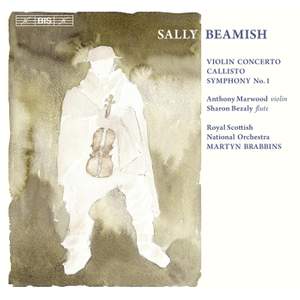


Offer,Sally Beamish: Orchestral Works
Anthony Marwood (violin), Sharon Bezaly (flute)
Royal Scottish National Orchestra, Martyn Brabbins
...the First Symphony leaves the strongest impression here...It makes no mean impression in this performance, Martyn Brabbins drawing a committed response from the Royal Scottish National players,... — More…
CD
Original price ($15.00) Reduced price $12.00Downloads
What are FLAC and MP3?Contents
Beamish: Violin Concerto
Work length41:04
Album only
$9.00
$12.25
- Anthony Marwood
- Royal Scottish National Orchestra
- Martyn Brabbins
I. Allegro
Track length23:59
Album only
$3.85
$5.25
II. Quarter note = 60
Track length10:35
$1.50
$1.30
$1.75
III. Allegretto
Track length6:30
$1.00
$3.85
$5.25
Beamish: Flute Concerto ‘Callisto’
Work length29:48
$5.05
$7.80
$10.50
- Sharon Bezaly
- Royal Scottish National Orchestra
- Martyn Brabbins
I. Callisto and Diana
Track length11:58
$2.05
$2.60
$3.50
II. Callisto and Juno
Track length8:40
$1.50
$2.60
$3.50
III. Callisto and Arcas
Track length9:10
$1.50
$2.60
$3.50
Beamish: Symphony No. 1
Work length7:40
$1.50
Album only
Album only
- Royal Scottish National Orchestra
- Martyn Brabbins