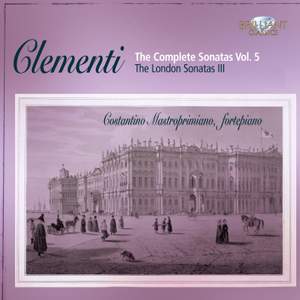


Clementi - The Complete Sonatas Volume 5
London Sonatas III
Costantino Mastroprimiano (fortepiano)
Downloads
What are FLAC and MP3?Contents
Clementi: Keyboard Sonata in C Major, Op. 34, No. 1
- Costantino Mastroprimiano (fortepiano)
- Recorded: July 2009
- Recording Venue: Rome, Italy
I. Allegro con spirito
II. Un poco andante quasi allegretto
III. Finale: Allegro
Clementi: Sonata in G minor Op. 34 No. 2
- Costantino Mastroprimiano (fortepiano)
- Recorded: July 2009
- Recording Venue: Rome, Italy
I. Largo e sostenuto - Allegro con fuoco
II. Un poco adagio
III. Finale: Molto allegro
Clementi: Capriccio in A Major, Op. 34 No. 3
- Costantino Mastroprimiano (fortepiano)
Clementi: Capriccio in F Major, Op. 34 No. 4
- Costantino Mastroprimiano (fortepiano)
Clementi: Sonatina in C Major, Op. 36 No. 1
- Costantino Mastroprimiano (fortepiano)
- Recorded: July 2009
- Recording Venue: Rome, Italy
I. Allegro
II. Allegretto
III. Vivace
Clementi: Piano Sonata in F major, Op. 36 No. 2
- Costantino Mastroprimiano (fortepiano)
- Recorded: July 2009
- Recording Venue: Rome, Italy
I. Allegretto
II. Allegretto
III. Allegro
Clementi: Sonatina in C major, Op. 36 No. 3
- Costantino Mastroprimiano (fortepiano)
- Recorded: July 2009
- Recording Venue: Rome, Italy
I. Spiritoso
II. Un poco adagio
III. Allegro
Clementi: Sonatina in F major, Op. 36, No. 4
- Costantino Mastroprimiano (fortepiano)
- Recorded: July 2009
- Recording Venue: Rome, Italy
I. Con spirito
II. Andante con espressione
III. Rondo: Allegro vivace
Clementi: Sonatina in G Major, op. 36 No. 5
- Costantino Mastroprimiano (fortepiano)
- Recorded: July 2009
- Recording Venue: Rome, Italy
I. Presto
II. Original Swiss Air: Allegro moderato
III. Rondo: Allegro di molto
Clementi: Sonatina in D, Op. 36 no. 6
- Costantino Mastroprimiano (fortepiano)
- Recorded: July 2009
- Recording Venue: Rome, Italy
I. Allegro con spirito
II. Rondo: Allegretto spiritoso
Clementi: Sonata in C Major, Op. 37 No. 1
- Costantino Mastroprimiano (fortepiano)
- Recorded: July 2009
- Recording Venue: Rome, Italy
I. Allegro di molto
II. Adagio sostenuto
III. Finale: Vivace
Clementi: Sonata in G Major, Op. 37 No. 2
- Costantino Mastroprimiano (fortepiano)
- Recorded: July 2009
- Recording Venue: Rome, Italy
I. Allegro
II. Adagio
III. Allegro con spirito
Clementi: Keyboard Sonata in D Major, Op. 37, No. 3
- Costantino Mastroprimiano (fortepiano)
- Recorded: July 2009
- Recording Venue: Rome, Italy
I. Allegro
II. Allegretto vivace
III. Finale: Presto