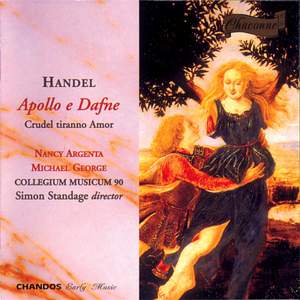


Offer,Handel: Apollo e Dafne & Crudel tiranno Amor
Nancy Argenta (soprano), Michael George (bass)
Collegium Musicum 90, Simon Standage
Handel's Apollo e Dafne is a difficult work to put in context. Completed in Hanover in 1710 but possibly begun in Italy, its purpose isn't clear, while, as secular cantatas go, it's long (40... — More…
Contents
Handel: Apollo e Dafne, HVW 122
Work length40:22
$18.90
$23.40
- Simon Standage, Collegium Musicum 90, Michael George, Nancy Argenta
I. Recitative. La terra e liberata! (The earth is freed!) (Apollo)
Track length0:44
$1.05
$1.30
II. Aria. Pende il ben dell'universo (The well-being of the universe) (Apollo)
Track length3:58
$1.05
$1.30
III. Recitative. Ch'il superbetto Amore (Let proud little Cupid) (Apollo)
Track length0:25
$1.05
$1.30
Handel: Crudel tiranno Amor, HWV97
Work length17:34
$5.80
$7.15
- Simon Standage, Collegium Musicum 90, Nancy Argenta
I. Aria. Crudel tiranno Amor (Cruel tyrannous Love)
Track length4:51
$1.05
$1.30
II. Recitative. Ma tu mandi al moi core (But you send my heart)
Track length0:28
$1.05
$1.30
III. Aria. O dolce mia speranza (O my sweet hope)
Track length7:43
$1.60
$1.95
IV. Recitative. Senza te, dolce speme (Without you, sweet hope)
Track length0:39
$1.05
$1.30
V. Aria. O cara speme del mio diletto (O dear hope of my delight)
Track length3:53
$1.05
$1.30