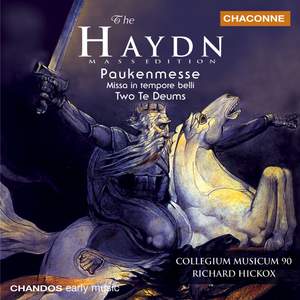


Offer,Haydn: Choral Music
Nancy Argenta (soprano), Catherine Denley (mezzo-soprano), Mark Padmore (tenor), Stephen Varcoe (baritone)
Collegium Musicum 90, Richard Hickox
Few other conductors on disc convey so happily the drama, symphonic power and spiritual exhilaration of these glorious works than Richard Hickox. He's fully alive to the ominous unease that permeates... — More…
Contents
Haydn: Te Deum, Hob. XXIIIc:1
Work length6:56
$1.05
$1.30
- Richard Hickox, Collegium Musicum 90, Nancy Argenta, Catherine Denley, Mark Padmore, Stephen Varcoe, Collegium Musicum 90 Choir
Haydn: Mass in C Major, Hob. XXII:9, "Paukenmesse"
Work length38:45
$11.55
$14.30
- Richard Hickox, Collegium Musicum 90, Nancy Argenta, Catherine Denley, Mark Padmore, Stephen Varcoe, Collegium Musicum 90 Choir
I. Kyrie
Track length4:47
$1.05
$1.30
II. Gloria. Gloria in excelsis Deo
Track length2:42
$1.05
$1.30
II. Gloria. Qui tollis peccata mundi
Track length5:29
$1.05
$1.30
Haydn: Alfred, König der Angelsachsen, Hob. XXX:5: Aria des Schutzgeistes
Work length6:14
$1.05
$1.30
- Richard Hickox, Collegium Musicum 90, Nancy Argenta, Jaqueline Fox, Collegium Musicum 90 Choir
Haydn: Alfred, König der Angelsachsen, Hob. XXX:5: Chor der Dänen
Work length3:17
$1.05
$1.30
- Richard Hickox, Collegium Musicum 90, Collegium Musicum 90 Choir
Haydn: Te Deum, Hob. XXIIIc:2
Work length8:21
$1.60
$1.95
- Richard Hickox, Collegium Musicum 90, Collegium Musicum 90 Choir