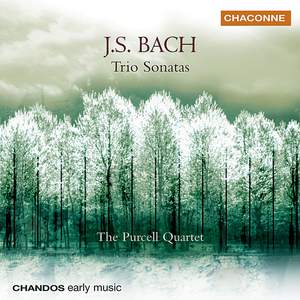


Offer,Bach - Trio Sonatas
arranged by Richard Boothby
Purcell Quartet
'Too good to be left only to organists' is how Richard Boothby cheekily describes Bach's six delightful 'organ trios', in which the organist's two hands play one of the upper lines each, while... — More…

Contents
Bach, J S: Trio Sonata No. 1 in E flat major, BWV525
Work length13:11
$3.15
$3.90
- Purcell Quartet
I. Allegro
Track length2:37
$1.05
$1.30
II. Adagio
Track length6:41
$1.05
$1.30
III. Allegro
Track length3:53
$1.05
$1.30
Bach, J S: Trio Sonata No. 2 in C minor, BWV526
Work length10:22
$3.15
$3.90
- Purcell Quartet
I. Vivace
Track length3:32
$1.05
$1.30
II. Largo
Track length2:53
$1.05
$1.30
III. Allegro
Track length3:57
$1.05
$1.30
Bach, J S: Trio Sonata No. 3 in D minor, BWV527
Work length13:20
$3.15
$3.90
- Purcell Quartet
I. Andante
Track length4:31
$1.05
$1.30
II. Adagio e dolce
Track length4:55
$1.05
$1.30
III. Vivace
Track length3:54
$1.05
$1.30
Bach, J S: Trio Sonata No. 4 in E minor, BWV528
Work length8:59
$3.15
$3.90
- Purcell Quartet
I. Adagio- Vivace
Track length2:26
$1.05
$1.30
II. Andante
Track length3:53
$1.05
$1.30
III. Un poc' allegro
Track length2:40
$1.05
$1.30
Bach, J S: Trio Sonata No. 5 in C major, BWV529
Work length13:14
$3.15
$3.90
- Purcell Quartet
I. Allegro
Track length4:52
$1.05
$1.30
II. Largo
Track length4:53
$1.05
$1.30
III. Allegro
Track length3:29
$1.05
$1.30
Bach, J S: Trio Sonata No. 6 in G major, BWV530
Work length13:26
$3.15
$3.90
- Purcell Quartet
I. Vivace
Track length3:42
$1.05
$1.30
II. Lente
Track length6:19
$1.05
$1.30
III. Allegro
Track length3:25
$1.05
$1.30