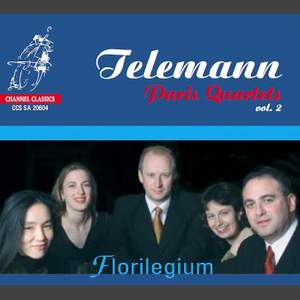


Telemann: Paris Quartets vol. 2
Florilegium
Printed in Paris by Le Clerc without Telemann's permission in 1736 but composed in Hamburg in 1730, the first six of these quartets called 'Quadri' were such a success that the composer himself... — More…
-
Gramophone MagazineSeptember 2004Editor's Choice

Downloads
What are FLAC and MP3?Contents
Telemann: Suite à 4 in D Major, TWV 43:D3
Work length18:19
$6.00
$8.40
$10.50
$12.30
- Florilegium
I. Prélude. Vivement
Track length2:11
$1.00
$1.40
$1.75
$2.05
II. Tendrement
Track length2:09
$1.00
$1.40
$1.75
$2.05
III. Vite
Track length3:20
$1.00
$1.40
$1.75
$2.05
IV. Gaiement
Track length4:45
$1.00
$1.40
$1.75
$2.05
V. Modérément
Track length2:30
$1.00
$1.40
$1.75
$2.05
VI. Vite
Track length3:24
$1.00
$1.40
$1.75
$2.05
Telemann: Suite à 4 in A Minor, TWV 43:a2
Work length19:10
$6.00
$8.40
$10.50
$12.30
- Florilegium
I. Allègrement
Track length2:56
$1.00
$1.40
$1.75
$2.05
II. Flatteusement
Track length3:31
$1.00
$1.40
$1.75
$2.05
III. Légèrement
Track length2:12
$1.00
$1.40
$1.75
$2.05
IV. Un peu vivement
Track length3:10
$1.00
$1.40
$1.75
$2.05
V. Vite
Track length1:51
$1.00
$1.40
$1.75
$2.05
VI. Coulant
Track length5:30
$1.00
$1.40
$1.75
$2.05
Telemann: Suite à 4 in G Major, TWV 43:G4
Work length22:14
$7.00
$9.80
$12.25
$14.35
- Florilegium
I. Prélude. Un peu vivement
Track length2:16
$1.00
$1.40
$1.75
$2.05
II. Légèrement
Track length5:05
$1.00
$1.40
$1.75
$2.05
III. Gracieusement
Track length2:14
$1.00
$1.40
$1.75
$2.05
Telemann: Concerto à 4 in G Major, TWV 43:G1
Work length11:03
$3.00
$4.20
$5.25
$6.15
- Florilegium
I. Grave - Allegro - II. Largo
Track length3:21
$1.00
$1.40
$1.75
$2.05
III. Presto - IV. Largo
Track length3:03
$1.00
$1.40
$1.75
$2.05
V. Allegro
Track length4:39
$1.00
$1.40
$1.75
$2.05