


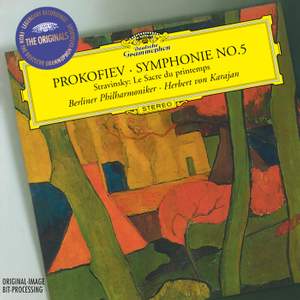


Prokofiev: Symphony No. 5 & Stravinsky: The Rite of Spring
Berliner Philharmoniker, Herbert von Karajan
Karajan's 1968 Prokofiev Fifth is a great performance.
Whenever one compares it with later versions inevitably the DG account holds its place at the top of the list. The analogue recording was... — More…

Downloads
What are FLAC and MP3?Contents
Prokofiev: Symphony No. 5 in B flat major, Op. 100
Work length43:17
$4.40
$6.00
- Berliner Philharmoniker
- Herbert von Karajan
- Recorded: 1968-09-24
- Recording Venue: Jesus-Christus-Kirche, Berlin
1. Andante
Track length13:00
$1.10
$1.50
2. Allegro marcato
Track length8:07
$1.10
$1.50
3. Adagio
Track length12:57
$1.10
$1.50
4. Allegro giocoso
Track length9:13
$1.10
$1.50
Stravinsky: The Rite of Spring: Part I: Adoration of the Earth
Work length16:00
$8.80
$12.00
- Berliner Philharmoniker
- Herbert von Karajan
- Recorded: 1977-01-31
- Recording Venue: Philharmonie, Berlin
I. Introduction
Track length3:19
$1.10
$1.50
II. The Augurs of Spring
Track length3:29
$1.10
$1.50
III. Ritual of Abduction
Track length1:13
$1.10
$1.50
Stravinsky: The Rite of Spring: Part II: Le Sacrifice
Work length18:18
$6.60
$9.00
- Berliner Philharmoniker
- Herbert von Karajan
- Recorded: 1977-01-31
- Recording Venue: Philharmonie, Berlin
IX. Introduction
Track length4:25
$1.10
$1.50
X. Mystic Circles of the Adolescents
Track length3:25
$1.10
$1.50
XI. Glorification of the Chosen One
Track length1:33
$1.10
$1.50
XII. Evocation of the Ancestors
Track length0:44
$1.10
$1.50
XIII. Ritual of the Ancestors
Track length3:34
$1.10
$1.50
XIV. Sacrificial Dance
Track length4:37
$1.10
$1.50
