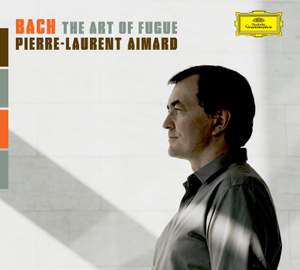


In stock - usually despatched within 1 working day.
Bach: The Art Of Fugue, BWV 1080 - Contrapunctus 1
Bach: The Art Of Fugue, BWV 1080 - Contrapunctus 2
Bach: The Art Of Fugue, BWV 1080 - Contrapunctus 3
Bach: The Art Of Fugue, BWV 1080 - Contrapunctus 4
Bach: The Art Of Fugue, BWV 1080 - Contrapunctus 5
Bach: The Art Of Fugue, BWV 1080 - Contrapunctus 6, À 4, Im Stile Francese
Bach: The Art Of Fugue, BWV 1080 - Contrapunctus 7, À 4, Per Augmentationem Et Diminutionem
Bach: The Art Of Fugue, BWV 1080 - Contrapunctus 8, À 3
Bach: The Art Of Fugue, BWV 1080 - Contrapunctus 9, À 4, Alla Duodecima
Bach: The Art Of Fugue, BWV 1080 - Contrapunctus 10, À 4, Alla Decima
Bach: The Art Of Fugue, BWV 1080 - Contrapunctus 11, À 4
Bach: The Art Of Fugue, BWV 1080 - Contrapunctus 12, À 4
Bach: The Art Of Fugue, BWV 1080 - Contrapunctus 12, Inversus À 4
Bach: The Art Of Fugue, BWV 1080 - Contrapunctus 13, À 3
Bach: The Art Of Fugue, BWV 1080 - Contrapunctus 13, Inversus À 3
Bach: The Art Of Fugue, BWV 1080 - Canon Alla Ottava
Bach: The Art Of Fugue, BWV 1080 - Canon Alla Decima In Contrapuncto Alla Terza
Bach: The Art Of Fugue, BWV 1080 - Canon Alla Duodecima In Contrapuncto Alla Quinta
Bach: The Art Of Fugue, BWV 1080 - Canon Per Augmentationem In Contrario Motu
Bach: The Art Of Fugue, BWV 1080 - Contrapunctus 14
February 2008
****
“…what Aimard offers is perhaps one of the most intellectually rigorous piano versions available. No contrapuntal density defeats his forensic brain or articulate fingers. He does find lyricism and exhilaration, but there is an evenness of purpose which is both a strength... and a weakness when set against the pronounced poetry of Koroliov or MacGregor.”
March 2008
“This is Bach-playing to listen to every day, Fresh, spry and well modulated. If spirituality is to be found in The Art of Fugue, Aimard seems to say, it will not be through slow tempi, dynamic extremes or the quasi-religious trappings… Perhaps no pianist since Charles Rosen has no persuasively demonstrated that this contrapuntal encyclopaedia is to be heard as well as read.”
New York Times
“Staggering technique, searching intellect and fantastical imagination”
2010
“This is Bach-playing to listen to every day, fresh, spry and well modulated. If spirituality is to be found in The Art of Fugue, Aimard seems to say, it will not be through slow tempi, dynamic extremes or the quasi-religious trappings arrayed by the likes of Sokolov, Kocsis, Koroliov and Nikolaieva. The tripping, French swagger of Contrapuncti 2 and 6 and the smart Italian cut of No 9 fit neatly under the fingers. Freedom is found within the interplay of voices rather than any fancy phrasing: in fact the mirror fugues and canons are so unfussily done that you'd never guess without a score to hand how much a single musician can look and sound like Mr Messy while playing them. This is not to imply dryness or inflexibility on Aimard's part. He follows Tovey in finding No 3 to be 'one of Bach's most beautiful pieces of quiet chromatic slow music', after which the extraordinary cadences of No 4 are necessarily pedalled and clipped, even chirpy: the envoi of a true Kapellmeister. The great unfinished fugue is especially fascinating, gradually accumulating kinesis until the surge of B-A-C-H pulls us towards its unattained apotheosis with colossal force. Applied with more plain-spoken authority, such emphatic strength of wrist and will rather chews up the Tenth's preludial bars and the expansive, chorale-fantasia conclusion of the Fifth, though with equal force one senses that, in this case, they had to be so. Perhaps no pianist since Charles Rosen has so persuasively demonstrated that this contrapuntal encyclopedia is to be heard as well as read.”
Click here for alternative recordings of this work.