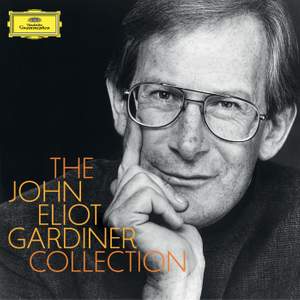
The John Eliot Gardiner Collection
Eiddwen Harrhy, Jennifer Smith, Judith Nelson, Elisabeth Priday, Timothy Penrose, Wynford Evans, Martyn Hill, David Thomas, Ashley Stafford, Anthony Rolfe Johnson (Evangelist), Andreas Schmidt (Jesus), Barbara Bonney (soprano), Ann Monoyios (soprano), Anne Sofie von Otter (contralto), Michael Chance...
- Release Date: 18th Mar 2013
- Catalogue No: 4791044
- Label: Deutsche Grammophon
- Length: 31 hours 50 minutes
Downloads
What are FLAC and MP3?Contents
Monteverdi: Vespro della beata Vergine (1610)
- Nigel Robson (tenor), Michael Chance (countertenor), Ann Monoyios (soprano), His Majestys Sagbutts & Cornetts (chamber ensemble), Marinella Pennicchi (soprano), Jakob Lindberg (chitarrone), Jakob Lindberg (lute), David Miller (chitarrone), Patrick Russill (chorus master), Ian Watson (organ), Bryn Terfel (bass (vocal)), Christopher Wilson (chitarrone), Sandro Naglia (tenor), Mark Tucker (tenor), Alastair Miles (bass (vocal))
- The London Oratory Junior Choir, Monteverdi Choir, English Baroque Soloists
- Sir John Eliot Gardiner
- Recorded: 1989-05-13
- Recording Venue: Basiliek San Marco, Venice
I. Domine ad adiuvandum a 6
II. Dixit Dominus a 6
III. Nigra sum a 1
IV. Laudate, pueri Dominum a 8
V. Pulchra es a 2
VI. Laetatus sum a 6
VII. Duo seraphim a 3
VIII. Nisi Dominus a 10
IX. Audi coelum a 8
X. Lauda Jerusalem a 7
Sonata sopra Sancta Maria a 1
Ave maris stella a 8
Magnificat I a 7
Magnificat II a 6
Purcell: The Fairy Queen, Z629
- Eiddwen Harrhy (soprano), Judith Nelson (soprano), David Thomas (bass (vocal)), Stephen Varcoe (bass (vocal)), Elisabeth Priday (soprano)
- English Baroque Soloists, Monteverdi Choir
- Sir John Eliot Gardiner
- Recorded: 1981-06-26
- Recording Venue: Stadthalle, Göttingen
Prelude (I)
Hornpipe
Air
Rondeau
Overture
Song In Two Parts: "Come, come, come, let us leave"
Scene Of The Drunken Poet: "Fill up the Bowl"
First Act Tune: Jig
Purcell: The Fairy Queen, Z629
- Wynford Evans (tenor), Judith Nelson (soprano), Jennifer Smith (soprano), Timothy Penrose (countertenor), Stephen Varcoe (bass (vocal)), Martyn Hill (tenor)
- English Baroque Soloists, Monteverdi Choir
- Sir John Eliot Gardiner
- Recorded: 1981-06-26
- Recording Venue: Stadthalle, Göttingen
Prelude...Come, All Ye Songsters Of The Sky
Prelude (II)
Trio: "May the God of Wit inspire"
Echo
Chorus: "Now Joyn your Warbling Voices all"
A Dance Of Fairies
Song And Chorus: "Sing while we trip it on the Green"
"See, even Night herself is here"
"I am come to lock all fast"
"One charming night"
"Hush, no more"
Dance For The Followers Of Night
Second Act Tune: Air
Purcell: The Fairy Queen / Act 3
- Jennifer Smith (soprano), Judith Nelson (soprano), Timothy Penrose (countertenor), Wynford Evans (tenor), David Thomas (bass (vocal)), Stephen Varcoe (bass (vocal))
- English Baroque Soloists, Monteverdi Choir
- Sir John Eliot Gardiner
- Recorded: 1981-06-26
- Recording Venue: Stadthalle, Göttingen
A Song In Two Parts And Chorus: "If Love's a Sweet Passion"
Overture: Symphony While The Swans Come Forward
Dance For The Fairies
Dance For The Green Men
Song: "Ye Gentle Spirits of the Air, appear"
Dialog: "Now the Maids and the Men"
Song: "When I have often heard"
A Dance Of Haymakers
Song And Chorus: "A Thousand Thousand ways we'll find"
Third Act Tune: Hornpipe
Purcell: The Fairy Queen, Z629
- Jennifer Smith (soprano), Stephen Varcoe (bass (vocal)), Judith Nelson (soprano), Timothy Penrose (countertenor), Martyn Hill (tenor), Ashley Stafford (countertenor)
- English Baroque Soloists, Monteverdi Choir
- Sir John Eliot Gardiner
- Recorded: 1981-06-26
- Recording Venue: Stadthalle, Göttingen
Symphony
Solo & Chorus "Now the night"
Duet: "Let the fifes, and the Clarions"
Entry Of Phoebus
Song: "When a cruel long Winter"- Chorus: "Hail! Great Parent of us all"
Song: "Thus the ever Grateful Spring"
Song: "Here's the Summer, Sprightly, Gay"
Song: "See my many Colour'd Fields"
Song And Chorus: "Now Winter comes Slowly"
Fourth Act Tune: Air
Purcell: The Fairy Queen, Z629
- Eiddwen Harrhy (soprano), Jennifer Smith (soprano), Wynford Evans (tenor), Elisabeth Priday (soprano), David Thomas (bass (vocal))
- English Baroque Soloists, Monteverdi Choir
- Sir John Eliot Gardiner
- Recorded: 1981-06-26
- Recording Venue: Stadthalle, Göttingen
Prelude (I)
Epithalamium - Thrice Happy Lovers
The Plaint
Entry Dance
Symphony
Thus The Gloomy World
Thus Happy And Free
Song: "Yes, Daphne, in your Looks I find"
Monkey's Dance
Hark! How All Things
Hark! The Ech'ing Air
Sure The Dull God
Prelude (II)
Solo: "See, see, I obey"
Duet: "Turn then thine Eyes"
Solo: "My Torch, indeed"
Trio: "They shall be as happy"
Air
Chorus: "They shall be as happy"
Chaconne: Dance For Chinese Man And Woman
Bach, J S: St. Matthew Passion, BWV 244 / Part One
- Anthony Rolfe Johnson (tenor), Ann Monoyios (soprano), Barbara Bonney (soprano), Anne Sofie von Otter (contralto), Howard Crook (tenor), Andreas Schmidt (baritone), Cornelius Hauptmann (bass (vocal)), Olaf Bär (baritone), Patrick Russill (chorus master), Michael Chance (countertenor)
- English Baroque Soloists, The London Oratory Junior Choir, Monteverdi Choir
- Sir John Eliot Gardiner
- Recorded: 1988-04-16
- Recording Venue: "The Maltings", Concert Hall, Snape
No. 1 "Kommt, ihr Töchter, helft mir klagen"
No. 2 "Da Jesus diese Rede vollendet hatte"
No. 3 "Herzliebster Jesu, was hast du verbrochen"
No. 4 "Da versammelten sich die Hohenpriester"
No. 5 "Du lieber Heiland du"
No. 6 "Buß und Reu"
No. 7 "Da ging hin der Zwölfen einer"
No. 8 "Blute nur, du liebes Herz"
No. 9 "Aber am ersten Tage der süßen Brot"
No. 10 "Ich bin's, ich sollte büßen"
No. 11 "Er antwortete und sprach"
No. 12 "Wiewohl mein Herz in Tränen schwimmt"
No. 13 "Ich will dir mein Herz schenken"
No. 14 "Und da sie den Lobgesang gesprochen hatten"
No. 15 "Erkenne mich, mein Hüter"
No. 16 "Petrus aber antwortete"
No. 17 "Ich will hier bei dir stehen"
No. 18 "Da kam Jesus mit ihnen zu einem Hofe"
No. 19 "O Schmerz! Hier zittert das gequälte Herz"
No. 20 "Ich will bei meinem Jesu wachen"
No. 21 "Und ging hin ein wenig"
No. 22 "Der Heiland fällt vor seinem Vater nieder"
No. 23 "Gerne will ich mich bequemen"
No. 24 "Und er kam zu seinen Jüngern"
No. 25 "Was mein Gott will, das g'scheh allzeit"
No. 26 "Und er kam und fand sie aber schlafend"
No. 27 "So ist mein Jesus nun gefangen" - "Sind Blitze, sind Donner"
No. 28 "Und siehe, einer aus denen"
No. 29 "O Mensch, bewein dein Sünde groß"
Bach, J S: St. Matthew Passion, BWV 244 / Part Two
- Anthony Rolfe Johnson (tenor), Ann Monoyios (soprano), Anne Sofie von Otter (contralto), Howard Crook (tenor), Andreas Schmidt (baritone), Barbara Bonney (soprano), Cornelius Hauptmann (bass (vocal)), Michael Chance (countertenor), Olaf Bär (baritone), Patrick Russill (chorus master)
- Monteverdi Choir, The London Oratory Junior Choir, English Baroque Soloists
- Sir John Eliot Gardiner
- Recorded: 1988-04-16
- Recording Venue: "The Maltings", Concert Hall, Snape
No. 30 "Ach nun ist mein Jesu hin"
No. 31 "Die aber Jesum gegriffen hatten"
No. 32 "Mir hat die Welt trüglich gericht"
No. 33 "Und wiewohl viel falsche Zeugen herzutraten"
No. 34 "Mein Jesus schweigt zu falschen Lügen stille"
No. 35 "Geduld! Wenn mich falsche Zungen stechen"
No. 36 "Und der Hohepriester antwortete"
No. 37 "Wer hat dich so geschlagen"
No. 38 "Petrus aber saß draußen im Palast"
No. 39 "Erbarme dich"
No. 40 "Bin ich gleich von dir gewichen"
No. 41 "Des Morgens aber hielten alle Hohepriester"
No. 42 "Gebt mir meinen Jesum wieder"
No. 43 "Sie hielten aber einen Rat"
No. 44 "Befiehl du deine Wege"
No. 45 "Auf das Fest aber hatte der Landpfleger Gewohnheit"
No. 46 "Wie wunderbarlich ist doch diese Strafe"
No. 47 "Der Landpfleger sagte"
No. 48 "Er hat uns allen wohlgetan"
No. 49 "Aus Liebe will mein Heiland sterben"
No. 50 "Sie schrieen aber noch mehr"
No. 51 "Erbarm es Gott"
No. 52 "Können Tränen meiner Wangen"
No. 53 "Da nahmen die Kriegsknechte"
No. 54 "O Haupt voll Blut und Wunden"
No. 55 "Und da sie ihn verspottet hatten"
No. 56 "Ja freilich will in uns das Fleisch und Blut"
No. 57 "Komm, süßes Kreuz"
No. 58 "Und da sie an die Stätte kamen"
No. 59 "Ach Golgatha"
No. 60 "Sehet, Jesus hat die Hand"
No. 61 "Und von der sechsten Stunde an" - "Der rufet dem Elias" - "Und bald lief" - "Halt!" - "Aber Jesus schriee abermal"
No. 62 "Wenn ich einmal soll scheiden"
No. 63 "Und siehe da, der Vorhang im Tempel zerriss" - "Wahrlich, dieser ist Gottes Sohn" - "Und es waren viel Weiber da"
No. 64 "Am Abend, da es kühle war"
No. 65 "Mache dich, mein Herze, rein"
No. 66 "Und Joseph nahm den Leib" - "Herr, wir haben gedacht" - "Pilatus sprach zu ihnen"
No. 67 "Nun ist der Herr zur Ruh gebracht" - "Mein Jesu, gute Nacht"
No. 68 "Wir setzen uns mit Tränen nieder"
Handel: Jephtha / Act 1
- Stephen Varcoe (baritone), Anne Sofie von Otter (contralto), Michael Chance (countertenor), Lynne Dawson (soprano), Nigel Robson (tenor)
- English Baroque Soloists, Monteverdi Choir
- Sir John Eliot Gardiner
- Recorded: 1988-06-16
- Recording Venue: Stadthalle, Göttingen
Overture - Menuet
"It must be so: or these vile Ammonites"
"Pour forth no more unheeded pray'rs"
"No more to Ammon's god and king"
"But Jephta comes"
"Virtue my soul shall still embrace"
"'Twill be a painful separation, Jephta...In gentle murmurs will I mourn"
"Happy this embassy, my charming Iphis...Dull delay, in piercing anguish"
"Ill suits the voice of love when glory calls...Take the heart you fondly gave"
"I go. My soul, inspir'd by thy command...These labours past, how happy we!"
"What mean these doubtful fancies"
"O God, behold our sore distress"
"Some dire event hangs o'er our heads...Scenes of horror, scenes of woe"
"Say, my dear mother"
"The smiling dawn of happy days"
"Such, Jephta, was the haughty king's reply"
"When his loud voice in thunder spoke"
Handel: Jephtha / Act 2
- Michael Chance (countertenor), Lynne Dawson (soprano), Nigel Robson (tenor), Anne Sofie von Otter (contralto), Stephen Varcoe (baritone)
- English Baroque Soloists, Monteverdi Choir
- Sir John Eliot Gardiner
- Recorded: 1988-06-16
- Recording Venue: Stadthalle, Göttingen
"Glad tidings of great joy to thee, dear Iphis"
"Cherub and Seraphim, unbodied forms"
"Up the dreadful steep ascending"
"'Tis well. Haste, haste, ye maidens...Tune the soft melodious lute"
"Heav'n smiles once more on his repentant people...His mighty arm, with sudden blow"
"In glory high, in might serene"
Symphony - "Hail, glorious conqueror"
"Welcome as the cheerful light"
"Horror! confusion!...Open thy marble jaws, O tomb"
"Why is my brother thus afflicted"
"First perish thou, and perish all the world"
"If such thy cruel purpose...On me let blind mistaken zeal"
"O spare your daughter"
"Such news flies swift"
"Happy they! this vital breath"
"Deeper, and deeper still"
"How dark, O Lord, are Thy decrees!"
Handel: Jephtha / Act 3
- Nigel Robson (tenor), Lynne Dawson (soprano), Ruth Holton (soprano), Stephen Varcoe (baritone), Anne Sofie von Otter (contralto), Michael Chance (countertenor)
- English Baroque Soloists, Monteverdi Choir
- Sir John Eliot Gardiner
- Recorded: 1988-06-16
- Recording Venue: Stadthalle, Göttingen
"Hide thou thy hated beams, O sun"
"Waft her, angels, through the skies"
"Ye sacred priests...Farewell, ye limpid springs and floods"
"Doubtful fear and rev'rent awe"
Symphony
"Rise, Jephta, and ye rev'rend priests"
"Happy, Iphis shalt thou live"
"For ever blessed be Thy holy name"
"Theme sublime of endless praise"
"Let me congratulate this happy turn...Laud her, all ye virgin train"
"O let me fold thee in a mother's arms...Sweet as sight
"My faithful Hamor, may that Providence...All that is in Hamor mine"
"Ye house of Gilead, with one voice"
Applause
- Nigel Robson (tenor), Lynne Dawson (soprano), Anne Sofie von Otter (contralto), Michael Chance (countertenor), Stephen Varcoe (baritone), Ruth Holton (soprano)
- Monteverdi Choir, English Baroque Soloists
- Sir John Eliot Gardiner
- Recorded: 1988-06-16
- Recording Venue: Stadthalle, Göttingen
Gluck: Iphigénie en Tauride / Act 1
- Diana Montague (mezzo-soprano), Lucinda Houghton (soprano), René Massis (bass-baritone), René Schirrer (bass-baritone), Nancy Argenta (soprano), Sophie Boulin (mezzo-soprano), Jane Armstrong (soprano), Suzanne Flowers (soprano), Carol Hall (soprano), Nicola Jenkin (soprano), Jean Knibbs (contralto), Rachel Platt (soprano), Mary Seers (soprano)
- Monteverdi Choir, Orchestre de l'Opéra de Lyon
- Sir John Eliot Gardiner
- Recorded: 1985-02
- Recording Venue: Lyon, France
Introduction et choeur. "Grands Dieux ! soyez-nous secouables"
Récitatif. "Iphigénie, ô ciel!" - Choeur. "O songe affreux!" - Récitatif. "O race de Pélops!"
Air. "O toi qui prolongeas mes jours" - Choeur. "Quand verrons-nous tarir nos pleurs?"
Scène 2. Récitatif. "Dieux! le malheur en" - Air. "De noir pressentiments"
Scène 3. Choeur. "Les Dieux apaisent" - Récitatif. "Dieux! étouffez en moi" - Scène 4. Récitatif. "Et vous, à vos Dieux" - Choeur. "Il nous fallait du sang"
Ballet - Scène 5. Choeur. "Il nous fallait du sang"
Gluck: Iphigénie en Tauride / Act 2
- Thomas Allen (baritone), Diana Montague (mezzo-soprano), John Aler (tenor), René Schirrer (bass-baritone), Nancy Argenta (soprano), Lucinda Houghton (soprano), Sophie Boulin (mezzo-soprano), Jane Armstrong (soprano), Suzanne Flowers (soprano), Carol Hall (soprano), Nicola Jenkin (soprano), Jean Knibbs (contralto), Rachel Platt (soprano), Mary Seers (soprano)
- Monteverdi Choir, Orchestre de l'Opéra de Lyon
- Sir John Eliot Gardiner
- Recorded: 1985-02
- Recording Venue: Lyon, France
Scène 1. Récitatif. "Quel silence effrayant!"
Air. "Dieux qui me poursuivez" - Récitatif. "Quel langage accablant"
Air. "Unis dès la plus tendre enfance"
Scène 2. Récitatif. "Etrangers malheureux" - Scène 3. Récitatif. "Dieux protecteurs"
Air. "Le calme rentre dans mon coeur"
Scène 4. Pantomime - Choeur et danse. "Vengeons et la nature et les Dieux"
Scène 5. Récitatif. "Je vois toute" - Scène 6. Choeur. "Patrie infortunée"
Air et choeur. "O malheureuse Iphigénie!"
Récitatif. "Honorez avec moi" - Choeur. "Contemplez ces tristes apprêts" - Air. "O mon frère"
Gluck: Iphigénie en Tauride / Act 3
- Diana Montague (mezzo-soprano), Thomas Allen (baritone), John Aler (tenor), Sophie Boulin (mezzo-soprano)
- Orchestre de l'Opéra de Lyon
- Sir John Eliot Gardiner
- Recorded: 1985-02
- Recording Venue: Lyon, France
Récitatif. "Je cède à vos" - Air. "D'une image, hélas! trop" - Scène 2. Récitatif. "Voici ces captifs" - Scène 3. Récitatif. "O joie inattendue!"
Trio. "Je pourrais du tyran tromper la" - Scène 4. Récitatif. "O moment trop heureux!"
Duo. "Et tu prétends encore que" - Récitatif. "Quoi! je ne vaincrai pas "
Air. "Ah! mon ami, j'implore ta pitié" - Duo. "Pylade! - Ah! mon ami, j'implore ta pitié"
Scène 5. Récitatif. "Malgré toi, je saurai" - "Quoi? toujours à mes voeux" - Scène 6. Récitatif. "Puisque le ciel à vos jours s'intéresse"
Scène 7. Air. "Divinité des grands âmes"
Gluck: Iphigénie en Tauride / Act 4
- Diana Montague (mezzo-soprano), Thomas Allen (baritone), Nancy Argenta (soprano), Danielle Borst (soprano), Lucinda Houghton (soprano), Sophie Boulin (mezzo-soprano), Jane Armstrong (soprano), Suzanne Flowers (soprano), Carol Hall (soprano), Nicola Jenkin (soprano), Jean Knibbs (contralto), Rachel Platt (soprano), Mary Seers (soprano), Colette Alliot-Lugaz (soprano), René Massis (bass-baritone), John Aler (tenor)
- Orchestre de l'Opéra de Lyon, Monteverdi Choir
- Sir John Eliot Gardiner
- Recorded: 1985-02
- Recording Venue: Lyon, France
Scène 1. Récitatif. "Non, cet affreux devoir" - Air. "Je t'implore et je tremble"
Scène 2. Choeur. "O Diane sois-nous" - Récitatif. "La force m'abandonne"
Hymne. "Chaste fille de Latone"
Récitatif. "Quel moment! Dieux puissants" - Scène 3. Récitatif. "Tremblez! tremblez!"
Scène 4. Air. "De tes forfaits la trame" - Récitatif. "Qu'oses-tu proposer" - Scène 5. Récitatif. "C'est à toi de mourir!" - Scène 6. Récitatif. "Arrêtez!"
Scène 7. Récitatif. "Ta soeur! qu'ai-je entendu?" - Air. "Dans cet objet touchant" - Choeur final. "Les Dieux, longtemps en courroux"
Mozart: Idomeneo, re di Creta, K.366 / Act 1
- Sylvia McNair (soprano), Anne Sofie von Otter (mezzo-soprano), Angela Kazimierczuk (soprano), Jonathan Peter Kenny (alto), Anthony Rolfe Johnson (tenor), Nigel Robson (tenor), Hillevi Martinpelto (soprano), Stephen Charlesworth (bass (vocal)), Philip Salmon (tenor)
- English Baroque Soloists, Monteverdi Choir
- Sir John Eliot Gardiner
- Recorded: 1990-06-26
- Recording Venue: Queen Elizabeth Hall, London
Ouverture
"Quando avran fine omai" - "Padre, germani, addio!" - "Ecco Idamante, ahimè!"
"Radunate i Troiani" - "Non ho colpa, e mi condanni"
"Ecco il misero resto de'Troiani" - "Scingete le catene"
"Godiam la pace" - "Prence, signor" - "Ma quel pianto" - "Estinto è Idomeneo?" - "Tutte nel cor vi sento" - "Pietà! Numi, pietà!" - "Eccoci salvi alfin" - "Oh voi"
"Vedrommi intorno" - "Cieli!che veggo?" - "Spiagge romite"
"Il padre adorato"
Intermezzo: Marcia
"Nettuno s'onori"
Mozart: Idomeneo, K.366 / Act 2
- Nigel Robson (tenor), Sylvia McNair (soprano), Anne Sofie von Otter (mezzo-soprano), Anthony Rolfe Johnson (tenor), Hillevi Martinpelto (soprano)
- English Baroque Soloists, Monteverdi Choir
- Sir John Eliot Gardiner
- Recorded: 1990-06-26
- Recording Venue: Queen Elizabeth Hall, London
"Tutto m'è noto"
"Se il tuo duol, se il mio desio"
"Se mai pomposo apparse"
"Se il padre perdei"
"Qual mi conturba i sensi"
"Fuor del mar"
"Frettolosa e giuliva Elettra vien" - "Chi mai del mio provò"
"Idol mio, se ritroso"
"Odo da lunge armonioso suono"
"Sidonie sponde!"
"Placido è il mar" - "Soavi Zeffiri" -"Vattene prence" - "Pria di partir, oh Dio!" - "Qual nuovo terrore!" - "Eccoti in me, barbaro Nume!" - "Corriamo, fuggiamo"
Mozart: Idomeneo, re di Creta, K.366 / Act 3
- Nigel Robson (tenor), Glenn Winslade (tenor), Sylvia McNair (soprano), Anne Sofie von Otter (mezzo-soprano), Anthony Rolfe Johnson (tenor), Hillevi Martinpelto (soprano)
- English Baroque Soloists, Monteverdi Choir
- Sir John Eliot Gardiner
- Recorded: 1990-06-26
- Recording Venue: Queen Elizabeth Hall, London
"Solitudini amiche"
"Zeffiretti lusinghieri" - "Ei stesso vien... oh Dei!"
"Principessa, a' tuoi sguardi" - "S'io non moro a questi accenti" - "Cieli! che vedo?"
"Dunque io me n'andrò" - "Andrò ramingo e solo"
"Sire, alla reggia tua"
"Sventurata Sidon!"
"Se colà ne' fati è scritto"
"Volgi intorno lo sguardo"
"O voto tremendo"
Marcia
"Accogli, o rè del mar"
Mozart: Idomeneo, re di Creta, K.366 / Appendix - Act 2, scena 3 (fine) - scena 4
- Anthony Rolfe Johnson (tenor), Hillevi Martinpelto (soprano)
- English Baroque Soloists
- Sir John Eliot Gardiner
- Recorded: 1990-06-26
- Recording Venue: Queen Elizabeth Hall, London
"Frettolosa e giuliva Elettra vien" - "Sire, da Arbace intesi" - "Chi mai del mio provò"
Mozart: Idomeneo, re di Creta, K.366 / Act 3
- Anne Sofie von Otter (mezzo-soprano), Sylvia McNair (soprano), Cornelius Hauptmann (bass (vocal)), Anthony Rolfe Johnson (tenor), Glenn Winslade (tenor), Hillevi Martinpelto (soprano), Nigel Robson (tenor)
- English Baroque Soloists, Monteverdi Choir
- Sir John Eliot Gardiner
- Recorded: 1990-06-26
- Recording Venue: Queen Elizabeth Hall, London
"Stupenda vittoria!" - "Qual risuona" - "Sire, il prence"
"Padre, mio caro padre"
"No, la morte io non pavento"
"Ma che più tardi"
"Ferma, oh sire, che fai?"
"Ha vinto Amore"
"Oh ciel pietoso!" - "Oh smania! oh furie!" - "D'Oreste, d'Aiace"
"Popoli, a voi l'ultima legge"
"Torna la pace al core"
"Scenda Amor, scenda Imeneo"
Mozart: Ballet Music from Idomeneo, K367
- English Baroque Soloists
- Sir John Eliot Gardiner
- Recorded: 1990-06-26
- Recording Venue: Queen Elizabeth Hall, London
Chaconne - Larghetto - La chaconne, qui reprend - Largo - Allegretto, sempre piano - Più Allegro
Mozart: Idomeneo, re di Creta, K.366 / Appendix - Act 3, scena 10
- Sylvia McNair (soprano), Cornelius Hauptmann (bass (vocal)), Anne Sofie von Otter (mezzo-soprano), Glenn Winslade (tenor), Nigel Robson (tenor), Hillevi Martinpelto (soprano), Anthony Rolfe Johnson (tenor)
- English Baroque Soloists
- Sir John Eliot Gardiner
- Recorded: 1990-06-26
- Recording Venue: Queen Elizabeth Hall, London
"Ferma, oh sire, che fai?"
"A Idomeneo perdona"
"Ha vinto amore"
"Oh ciel pietoso!" - "Oh smania! oh furie!"
Wolfgang Amadeus Mozart, Malcolm Bilson: Piano Concerto No.20 in D minor, K.466
- Malcolm Bilson (fortepiano), Malcolm Bilson (cadenzor)
- English Baroque Soloists
- Sir John Eliot Gardiner
- Recorded: 1986-04-25
- Recording Venue: St. John's Smith Square, London
I. Allegro - Cadenza: Malcolm Bilson
II. Romance - Cadenza: Malcolm Bilson
III. Rondo. Allegro assai - Cadenza: Malcolm Bilson
Wolfgang Amadeus Mozart, Malcolm Bilson: Piano Concerto No.21 in C, K.467
- Malcolm Bilson (fortepiano), Malcolm Bilson (cadenzor)
- English Baroque Soloists
- Sir John Eliot Gardiner
- Recorded: 1986-04
- Recording Venue: St. John's, Smith Square
I. Allegro - Cadenza: Malcolm Bilson
II. Andante
3. Allegro vivace assai - Cadenza: Malcolm Bilson
Haydn: The Seasons: Spring
- Andreas Schmidt (bass (vocal)), Anthony Rolfe Johnson (tenor), Barbara Bonney (soprano)
- Monteverdi Choir, English Baroque Soloists
- Sir John Eliot Gardiner
- Recorded: 1990-01
- Recording Venue: unknown, London
No. 1 Einleitung / Rez.: "Seht wie der strenge Winter..."
No. 2 Chor: "Komm, holder Lenz!"
No. 3 Rez.: "Vom Widder strahlet jetzt"
No. 4 Arie: "Schon eilet..."
No. 5 Rez.: "Der Landman hat sein Werk vollbracht"
No. 6 Terzett und chor: "Sei nun gnädig..."
No. 7 Rez.: "Erhört ist unser Flehn"
No. 8a Freudenlied: "O wie lieblich ist..."
Haydn: The Seasons: Summer
- Anthony Rolfe Johnson (tenor), Barbara Bonney (soprano), Andreas Schmidt (bass (vocal))
- English Baroque Soloists, Monteverdi Choir
- Sir John Eliot Gardiner
- Recorded: 1990-01
- Recording Venue: unknown, London
No. 9 Einleitung / Rez.: "In grauen Schleier"
No. 10 Arie / Rez.: "Der munt're Hirt"
No. 11 Terzett und Chor: "Sie steigt herauf"
No. 12 Rez.: "Nun regt und bewegt" - Rez.: "Die Mittagsonne"
No. 13 Kavatine: "Dem Druck erlieget"
No. 14 Rez.: "Willkommen jetzt"
No. 15 Arie: "Welche Labung"
No. 16 Rez.: "O seht!"
No. 17 Chor: "Ach, das Ungewitter"
No. 18 Terzett und Chor: "Die düstren Wolken"
Haydn: The Seasons: Autumn
- Barbara Bonney (soprano), Anthony Rolfe Johnson (tenor), Andreas Schmidt (bass (vocal))
- English Baroque Soloists, Monteverdi Choir
- Sir John Eliot Gardiner
- Recorded: 1990-01
- Recording Venue: unknown, London
No. 19 Einleitung / Rez.: "Was durch..." - Rez.: "Den reichen Vorrat"
No. 20 Terzett mit Chor: "So lohnet die Natur"
No. 21 Rez.: "Seht, wie zum Haselbusche"
No. 22 Duett: "Ihr schönen aus der Stadt"
No. 23 Rez.: "Nun zeiget das entblösste Feld"
No. 24 Arie: "Seht auf die breiten Wiesen hin!"
No. 25 Rez.: "Hier treibt ein dichter Kreis"
No. 26 Chor des Landvolks und der Jäger: "Hört, hört"
No. 27 Rez.: "Am Rebenstocke"
No. 28 Chor: "Juchhe! Juchhe!"
Haydn: The Seasons: Winter
- Anthony Rolfe Johnson (tenor), Andreas Schmidt (bass (vocal)), Barbara Bonney (soprano)
- English Baroque Soloists, Monteverdi Choir
- Sir John Eliot Gardiner
- Recorded: 1990-01
- Recording Venue: unknown, London
No. 29 Einleitung / Rez.: "Nun senket sich"
No. 30 Kavatine: "Licht und Leben sind Geschwächet"
No. 31 Rez.: "Gefesselt steht der breite See"
No. 32 Arie: "Hier steht der Wand'rer nun"
No. 33 Rez.: "So wie er naht"
No. 34 Lied mit Chor: "Knurre, schnurre, knurre"
No. 35 Rez.: "Abgesponnen ist der Flachs"
No. 36 Lied mit Chor: "Ein Mädchen, das auf Ehre hielt"
No. 37 Rez.: "Vom dürren Osten dringt"
No. 38 Arie / Rez.: "Erblicke hier, betörter Mensch"
No. 39 Terzett und Doppelchor: "Dann bricht der grosse Morgen an"
Haydn: Die Jahreszeiten - Hob. XXI:3 / Appendix
- Barbara Bonney (soprano), Anthony Rolfe Johnson (tenor), Andreas Schmidt (bass (vocal))
- English Baroque Soloists
- Sir John Eliot Gardiner
- Recorded: 1990-01
- Recording Venue: unknown, London
Der Herbst.Einl.:gek.Fass. / Rez."Was durch seine Blüte"
Der Winter.Einl.:gek.Fass. / Rez."Nun senket sich ..."
Beethoven: Leonore / Act 1
- Christoph Bantzer (speaker), Christiane Oelze (soprano), Michael Schade (tenor), Franz Hawlata (baritone), Hillevi Martinpelto (soprano)
- Orchestre Révolutionnaire et Romantique
- Sir John Eliot Gardiner
- Recorded: 1996-09
- Recording Venue: The Colosseum, Watford
Leonore Overture No. 2, Op. 72a
'Twas in truth
"O wär' ich schon mir dir vereint"
"Beharrlich bleibt auf dem Liebespfad"
"Jetzt, Schätzchen, jetzt sind wir allein"
"Der Kerkermeister, Rocco, der Vater"
"Ein Mann ist bald genommen"
Fidelio kam - und niemand weiss woher
"Mir ist so wunderbar"
"Gefühl ist gut, doch Geld ist besser"
"Hat man nicht auch Gold beineben"
"Unantastbar klar birgt Leonores Brust"
"Gut, Söhnchen, gut"
Beethoven: Leonore / Act 2
- Christoph Bantzer (speaker), Matthew Best (bass (vocal)), Robert Burt (tenor), Christiane Oelze (soprano), Hillevi Martinpelto (soprano), Franz Hawlata (baritone), Colin Campbell (baritone)
- Orchestre Révolutionnaire et Romantique, Monteverdi Choir
- Sir John Eliot Gardiner
- Recorded: 1996-09
- Recording Venue: The Colosseum, Watford
Introduction
"Der Gouverneur ist da"
"Ha! Welch ein Augenblick!"
"Postiert eine Trompete auf dem Wachturm!"
"Jetzt, Alter, hat es Eile!"
"Und Leonore begegnet Marzelline"
"Um in der Ehe froh zu leben"
"Die ernsten Steine des dumpfen Gemäuers"
"Ach, brich noch nicht, du mattes Herz!" - "Komm Hoffnung, lass den letzten Stern"
"O welche Lust, in freier Luft"
"Entfernt euch jetzt! Nun, könnt ihr eilen?" - "Nun sprecht, wie ging's?" - "Noch heute, noch heute?"
"Wir müssen gleich zu Werke schreiten" - "Ach Vater, eilt!"
"Auf euch nur will ich bauen"
Ludwig van Beethoven, Johann Friedrich Rochlitz: Leonore / Act 3
- Hillevi Martinpelto (soprano), Christoph Bantzer (speaker), Matthew Best (bass (vocal)), Kim Begley (tenor), Franz Hawlata (baritone), Alastair Miles (bass (vocal)), Michael Schade (tenor), Christiane Oelze (soprano)
- Orchestre Révolutionnaire et Romantique, Monteverdi Choir
- Sir John Eliot Gardiner
- Recorded: 1996-09
- Recording Venue: The Colosseum, Watford
"Florestans Not im Dunkel tauber Einsamkeit"
"Gott! Welch Dunkel hier!" - "In des Lebens Frühlingstagen"
"Wie kalt ist es in diesem unterirdischen Gewölbe!"
"Nur hurtig fort, nur frisch gegraben"
"Dort, in der Tiefe"
"Euch werde Lohn in bessern Welten"
"Und Rocco eilt"
"Er sterbe! Doch er soll erst wissen"
"Oh Leonore! Alles was dein Mut gewagt - verloren!"
"Ich kann mich noch nicht fassen" - "O namenlose Freude!"
"Zur Rache! Zur Rache!"
"O Gott! O welch ein Augenblick!"
"So müssen endlich Aufgeklärte"
"Doch höre erst, du Bösewicht"
"Dann herrscht allgemeine Freiheit und Gleichheit der Geister"
"Nein, nein, nein! Er ist noch zu gering bestraft!"
"Ein höherer Geist, vom Himmel gesandt"
"Der Koenig wird dein Richter sein!"
"Wer ein holdes Weib errungen"
No. 7a March in B-Flat Major
Beethoven: Missa Solemnis in D major, Op. 123
- Charlotte Margiono (soprano), William Kendall (tenor), Alastair Miles (bass (vocal)), Elizabeth Wilcock (leader), Alastair Ross (organ), Catherine Robbin (mezzo-soprano)
- Orchestre Révolutionnaire et Romantique, Monteverdi Choir
- Sir John Eliot Gardiner
- Recorded: 1989-11-08
- Recording Venue: All Saints' Church, Tooting, London
Kyrie
Gloria
Credo
Sanctus
Agnus Dei
Berlioz: Symphonie fantastique, Op. 14
- Orchestre Révolutionnaire et Romantique
- Sir John Eliot Gardiner
- Recorded: 1991-09
- Recording Venue: Ancien Conservatoire, Paris
1. Rêveries. Passions (Largo - Allegro agitato ed appassionato assai)
2. Un bal (Valse: Allegro non troppo)
3. Scène aux champs (Adagio)
4. Marche au supplice (Allegretto non troppo)
5. Songe d'une nuit du Sabbat (Larghetto - Allegro - Ronde du Sabbat: Poco meno mosso)
Schumann: Requiem für Mignon aus Goethes "Wilhelm Meister", Op.98b For Soloists, Chorus And Orchestra
- William Dazeley (baritone)
- Monteverdi Choir, Orchestre Révolutionnaire et Romantique, Members of the Hanover Boys' Choir
- Sir John Eliot Gardiner
- Recorded: 1997-10-13
- Recording Venue: The Colosseum, Watford
Schumann: Nachtlied "Quellende, schwellende Nacht", Op. 108 (For Chorus And Orchestra)
- Orchestre Révolutionnaire et Romantique, Monteverdi Choir
- Sir John Eliot Gardiner
- Recorded: 1997-10-13
- Recording Venue: The Colosseum, Watford
Schumann: Das Paradies und die Peri (after Thomas Moore "Lalla Rookh") / Part one
- Bernarda Fink (contralto), Barbara Bonney (soprano), Christoph Prégardien (tenor), Alexandra Coku (soprano), Cornelius Hauptmann (bass (vocal)), Neill Archer (tenor), Gerald Finley (bass (vocal))
- Monteverdi Choir, Orchestre Révolutionnaire et Romantique
- Sir John Eliot Gardiner
- Recorded: 1997-04-09
- Recording Venue: The Colosseum, Watford
No. 1 "Vor Edens Tor im Morgenprangen"
No. 2 "Wie glücklich sie wandeln, die sel'gen Geister"
No. 3 "Der hehre Engel ... Dir, Kind des Stamms"
No. 4 "Wo find' ich sie? Wo blüht, wo liegt die Gabe"
No. 5 "So sann sie nach ... O süßes Land!"
No. 6 "Doch seine Ströme sind jetzt rot"
No. 7 "Und einsam ... Komm,kühner Held ...Du schlugst"
No. 8 "Weh, weh, weh, er fehlte das Ziel"
No. 9 "Die Peri sah das Mal ...Sei dies,mein Geschenk"
Schumann: Das Paradies und die Peri (after Thomas Moore "Lalla Rookh") / Part two
- Bernarda Fink (contralto), Barbara Bonney (soprano), Alexandra Coku (soprano), Bernarda Fink (mezzo-soprano), Neill Archer (tenor), Cornelius Hauptmann (bass (vocal)), Christoph Prégardien (tenor)
- Monteverdi Choir, Orchestre Révolutionnaire et Romantique
- Sir John Eliot Gardiner
- Recorded: 1997-04-09
- Recording Venue: The Colosseum, Watford
No. 10 "Die Peri tritt mit ... Gern grüßen wir"
No. 11 "Ihr erstes Himmelshoffen ... Hervor aus den"
No. 12 "Fort streift von hier ... Für euren ersten"
No. 13 "Die Peri weint"
No. 14 "Im Waldesgrün am ... Ach, einen Tropfen nur"
No. 15 "Verlassener Jüngling...Doch sieh...Du hier?"
No. 16 "O laß mich von der Luft...Sie wankt-sie sinkt"
No. 17 "Schlaf nun und ruhe in Träumen voll Duft"
Schumann: Das Paradies und die Peri (after Thomas Moore "Lalla Rookh") / Part three
- Bernarda Fink (contralto), Barbara Bonney (soprano), Lucinda Houghton (soprano), Gerald Finley (baritone), Alexandra Coku (soprano), Katherine Fuge (soprano), Neill Archer (tenor), Cornelius Hauptmann (bass (vocal)), Constanze Backes (soprano), Christoph Prégardien (tenor), Susanna Spicer (contralto), Jacqueline Connell (contralto), Bernarda Fink (mezzo-soprano), Donna Deam (soprano)
- Monteverdi Choir, Orchestre Révolutionnaire et Romantique
- Sir John Eliot Gardiner
- Recorded: 1997-04-09
- Recording Venue: The Colosseum, Watford
No. 18 "Schmücket die...Auch der Geliebten...Seht da"
No. 19 "Dem Sang von Ferne ... Noch nicht! Treu war"
No. 20 "Verstoßen! Verschlossen aufs neu das Goldportal"
No. 21 "Jetzt sank des Abends goldner Schein"
No. 22 "Und wie sie... Peri, ist's wahr... Mit ihrer"
No. 23 "Hinab zu...Sie schwebt...Doch horch...Und was"
No. 24 "O heil'ge Tränen inn'ger Reue"
No. 25 "Es fällt ein Tropfen ... Und sieh, demütig"
No. 26 "Freud', ew'ge Freude... Willkommen,willkommen"
Schumann: Symphony No. 4 in D minor, Op. 120
- Orchestre Révolutionnaire et Romantique
- Sir John Eliot Gardiner
- Recorded: 1997-05-24
- Recording Venue: The Colosseum, Watford
1. Andante con moto - Allegro di molto
2. Romanza: Andante
3. Scherzo: Presto
4. Largo - Finale: Allegro vivace
Verdi: Requiem
- Anne Sofie von Otter (contralto), Luba Orgonasova (soprano), Luca Canonici (tenor), Alastair Miles (bass (vocal))
- Monteverdi Choir, Orchestre Révolutionnaire et Romantique
- Sir John Eliot Gardiner
- Recorded: 1992-12
- Recording Venue: All Hallows, Gospel Oak, London
1. Requiem
2. Dies irae
2. Tuba Mirum
2. Liber scriptus
2. Quid sum miser
2. Rex Tremendae
2. Recordare
2. Ingemisco
2. Confutatis
2. Lacrymosa
3. Offertorium
4. Sanctus
5. Agnus Dei
6. Lux aeterna
7. Libera me
Elgar: In The South (Alassio) - Concert Overture, Op. 50
- Wiener Philharmoniker
- Sir John Eliot Gardiner
- Recorded: 1998-10
- Recording Venue: Grosser Saal, Musikverein, Wien
Elgar: Introduction & Allegro for strings, Op. 47
- Wiener Philharmoniker, Küchl Quartet
- Sir John Eliot Gardiner
- Recorded: 1998-10
- Recording Venue: Grosser Saal, Musikverein, Wien
Elgar: Sospiri, Op. 70 - Adagio For Strings, Harp And Organ, Op. 70
- Wiener Philharmoniker
- Sir John Eliot Gardiner
- Recorded: 1998-10
- Recording Venue: Grosser Saal, Musikverein, Wien
Elgar: Enigma Variations, Op. 36
- Wiener Philharmoniker
- Sir John Eliot Gardiner
- Recorded: 1998-10
- Recording Venue: Grosser Saal, Musikverein, Wien
Theme (Andante)
1. C.A.E. (L'istesso tempo)
2. H.D.S.-P. (Allegro)
3. R.B.T. (Allegretto)
4. W.M.B. (Allegro di molto)
5. R.P.A. (Moderato)
6. Ysobel (Andantino)
7. Troyte (Presto)
8. W.N. (Allegretto)
9. Nimrod (Adagio)
10. Intermezzo: Dorabella (Allegretto)
11. G.R.S. (Allegro di molto)
12. B.G.N. (Andante)
13. Romanza *** (Moderato)
14. Finale: E.D.U. (Allegro - Presto)
Lehár: The Merry Widow (Die lustige Witwe) / Overture
- Bryn Terfel (bass-baritone), Philip Salmon (tenor), Barbara Bonney (soprano), Angela Kazimierczuk (soprano), Rainer Trost (tenor), Lynette Alcantara (alto), Heinz Zednik (tenor), Constanze Backes (soprano), Uwe Peper (tenor), Karl Magnus Fredriksson (baritone)
- Wiener Philharmoniker, Monteverdi Choir
- Sir John Eliot Gardiner
- Recorded: 1994-01
- Recording Venue: Grosser Saal, Musikverein, Wien
Overture
Lehár: The Merry Widow (Die lustige Witwe) / Act 1
- Bo Skovhus (speaker), Barbara Bonney (speaker), Barbara Bonney (soprano), Bryn Terfel (bass-baritone), Bo Skovhus (baritone), Uwe Peper (speaker), Bryn Terfel (speaker), Heinz Zednik (speaker), Cheryl Studer (soprano), Cheryl Studer (speaker), Karl Magnus Fredriksson (baritone), Rainer Trost (tenor), Uwe Peper (tenor), Rainer Trost (speaker), Heinz Zednik (tenor)
- Wiener Philharmoniker, Wiener Tschuschenkapelle, Monteverdi Choir
- Sir John Eliot Gardiner
- Recorded: 1994-01
- Recording Venue: Grosser Saal, Musikverein, Wien
"Camille, ich muß mit Ihnen sprechen"
"So kommen Sie! 's ist niemand hier!"
"Nun, Njegus, haben Sie meine Botschaft überbracht?"
"Was hat das zu bedeuten?" - "Bitte meine Herr'n" - "Hab' in Paris mich noch nicht ganz so akklimasiert"
"Camille!" - "Ja?"
"Also Njegus, hier bin ich und wo ist das Vaterland?" - "O Vaterland"
"Habe schon die vierte Nacht nicht geschlafen!"
"Ich bitte Sie.." - "Ja, was?" - Ein trautes Zimmerlein
"Also, lieber Graf.." - "Damenwahl! Hört man rufen rings im Saal!"
Lehár: The Merry Widow (Die lustige Witwe) / Act 2
- Barbara Bonney (soprano), Cheryl Studer (soprano), Heinz Zednik (speaker), Heinz Zednik (tenor), Bryn Terfel (speaker), Bo Skovhus (speaker), Uwe Peper (tenor), Cheryl Studer (speaker), Karl Magnus Fredriksson (baritone), Rainer Trost (tenor), Bo Skovhus (baritone), Philip Salmon (tenor), Richard Savage (bass (vocal)), Julian Clarkson (bass (vocal)), Bryn Terfel (bass-baritone), Angela Kazimierczuk (soprano), Constanze Backes (soprano), Lynette Alcantara (alto)
- Monteverdi Choir, Wiener Philharmoniker
- Sir John Eliot Gardiner
- Recorded: 1994-01
- Recording Venue: Grosser Saal, Musikverein, Wien
"Ich bitte, hier jetzt zu verweilen" - "Es lebt' eine Vilja"
"Gospodina, dieses vaterländische Fest..."
"Heia, Mädel, aufgeschaut"
"Wir werden uns noch schlagen um die Witwe" - "Wie die Weiber man behandelt"
"Mein tapferer Reitersmann" - "So wie die Dinge sich entwickeln"
"Nein, nein, nein" - "Mein Freund! Vernunft!" - "Wie eine Rosenknospe"
"Ah, die Baronin und der Herr Rosillon"
"Ha!Ha!" - "Wir fragen, was man von uns will!"
Lehár: Die lustige Witwe / Act III
- Bo Skovhus (speaker), Heinz Zednik (tenor), Heinz Zednik (speaker), Cheryl Studer (speaker), Bryn Terfel (bass-baritone), Barbara Bonney (speaker), Bo Skovhus (baritone), Cheryl Studer (soprano), Bryn Terfel (speaker), Philip Salmon (tenor), Richard Savage (bass (vocal)), Julian Clarkson (bass (vocal)), Nicola Jenkin (soprano), Suzanne Flowers (soprano), Donna Deam (soprano), Angela Kazimierczuk (soprano), Constanze Backes (soprano), Lucinda Houghton (soprano), Barbara Bonney (soprano)
- Wiener Philharmoniker, Monteverdi Choir
- Sir John Eliot Gardiner
- Recorded: 1994-01
- Recording Venue: Grosser Saal, Musikverein, Wien
"Also, also, also"
Tanzszene
"Graf Dailowitsch.." - "Ja, wir sind es, die Grisetten"
"Exzellenz, Exzellenz, Graf, eine Expreßdepesche!"
"Aber dort bin ich zu Hause.." Lippen schweigen
"Exzellenz! Exzellenz! Diesen Fächer hat man im Pavillon gefunden!"
"Ja, das Studium der Weiber ist schwer"
Grainger: I'm seventeen come Sunday
- Monteverdi Orchestra, Monteverdi Choir
- Sir John Eliot Gardiner
- Recorded: 1995-02
- Recording Venue: Abbey Road Studios, London
Grainger: Brigg Fair
- Monteverdi Orchestra, Monteverdi Choir
- Sir John Eliot Gardiner
- Recorded: 1994-03
- Recording Venue: Guildhall, London
Grainger: Love Verses from 'The Song of Solomon'
- Monteverdi Orchestra, Monteverdi Choir
- Sir John Eliot Gardiner
- Recorded: 1995-02
- Recording Venue: Abbey Road Studios, London
Grainger: The Merry Wedding
- Monteverdi Orchestra, Monteverdi Choir
- Sir John Eliot Gardiner
- Recorded: 1995-02
- Recording Venue: Abbey Road Studios, London
Grainger: Shallow Brown
- Monteverdi Orchestra, Monteverdi Choir
- Sir John Eliot Gardiner
- Recorded: 1995-02
- Recording Venue: Abbey Road Studios, London
Grainger: Father and Daughter
- Monteverdi Orchestra, Monteverdi Choir
- Sir John Eliot Gardiner
- Recorded: 1995-02
- Recording Venue: Abbey Road Studios, London
Grainger: Mo Nighean Dubh (My dark-haired maiden)
- Monteverdi Choir, Monteverdi Orchestra
- Sir John Eliot Gardiner
- Recorded: 1995-02
- Recording Venue: Abbey Road Studios, London
Grainger: The Bride's Tragedy
- Monteverdi Choir, Monteverdi Orchestra
- Sir John Eliot Gardiner
- Recorded: 1995-02
- Recording Venue: Abbey Road Studios, London
trad.: Londonderry Air
- Monteverdi Choir, Monteverdi Orchestra
- Sir John Eliot Gardiner
- Recorded: 1995-02
- Recording Venue: Abbey Road Studios, London
Grainger: Scotch Strathspey and Reel
- Monteverdi Orchestra, Monteverdi Choir
- Sir John Eliot Gardiner
- Recorded: 1995-02
- Recording Venue: Abbey Road Studios, London
Grainger: The Lost Lady Found
- Monteverdi Orchestra, Monteverdi Choir
- Sir John Eliot Gardiner
- Recorded: 1995-02
- Recording Venue: Abbey Road Studios, London
Grainger: The Three Ravens
- Monteverdi Orchestra, Monteverdi Choir
- Sir John Eliot Gardiner
- Recorded: 1995-02
- Recording Venue: Abbey Road Studios, London
Grainger: Danny Deever
- Monteverdi Choir, Monteverdi Orchestra
- Sir John Eliot Gardiner
- Recorded: 1995-02
- Recording Venue: Abbey Road Studios, London
Grainger: Tribute to Foster
- Monteverdi Orchestra, Monteverdi Choir
- Sir John Eliot Gardiner
- Recorded: 1995-02
- Recording Venue: Abbey Road Studios, London
Weill, K: The Seven Deadly Sins
- Anne Sofie von Otter (mezzo-soprano), James Sims (tenor), Christfried Biebrach (baritone), Frederick Martin (bass (vocal)), Karl-Heinz Lampe (tenor)
- NDR Sinfonieorchester
- Sir John Eliot Gardiner
- Recorded: 1993-09-18
- Recording Venue: Friedrich-Ebert-Halle, Hamburg
Introduktion: Andante sostenuto "Meine Schwester . . .
Faulheit: Allegro vivace "Müssiggang ist aller Laster"
Stolz: Allegretto, quasi andantino "Als wir aber"
Zorn: Molto agitato "Das geht nicht vorwärts"
Völlerei: Largo "Das ist ein Brief aus Philadelphia"
No.5 Unzucht "Und wir fanden einen Mann in Boston"
Habsucht: Allegro giusto "Wie hier in der Zeitung"
Neid: Allegro non troppo "Und die letzte Stadt"
Epilogue "Darauf kehrten wir zurück nach Lousiana"
Weill, K: Lady in the Dark
- Anne Sofie von Otter (mezzo-soprano)
- NDR Sinfonieorchester
- Sir John Eliot Gardiner
- Recorded: 1993-09-18
- Recording Venue: Friedrich-Ebert-Halle, Hamburg
3. My Ship
1. One Life To Live
Weill, K: Buddy on the Nightshift
- Anne Sofie von Otter (mezzo-soprano), Bengt Forsberg (piano)
- Recorded: 1993-09-18
- Recording Venue: Friedrich-Ebert-Halle, Hamburg
Weill, K: Nanna's lied (Text: Bertolt Brecht)
- Anne Sofie von Otter (mezzo-soprano), Bengt Forsberg (piano)
- Recorded: 1993-09-18
- Recording Venue: Friedrich-Ebert-Halle, Hamburg
Weill, K: Happy End
- Anne Sofie von Otter (mezzo-soprano)
- NDR Sinfonieorchester
- Sir John Eliot Gardiner
- Recorded: 1993-09-18
- Recording Venue: Friedrich-Ebert-Halle, Hamburg
1. Bilbao Song
2. Surabaya Johnny
6. Das Lied von der harten Nuss (Song Of The Big Shot)
Weill, K: Je ne t'aime pas (text: Maurice Magre)
- Anne Sofie von Otter (mezzo-soprano), Bengt Forsberg (piano)
- Recorded: 1993-09-18
- Recording Venue: Friedrich-Ebert-Halle, Hamburg
Weill, K: Schickelgruber
- Anne Sofie von Otter (mezzo-soprano), Bengt Forsberg (piano)
- Recorded: 1993-09-18
- Recording Venue: Friedrich-Ebert-Halle, Hamburg
Weill, K: Der Abschiedsbrief
- Anne Sofie von Otter (mezzo-soprano), Bengt Forsberg (piano)
- Recorded: 1993-09-18
- Recording Venue: Friedrich-Ebert-Halle, Hamburg
Weill, K: One Touch of Venus
- Anne Sofie von Otter (mezzo-soprano)
- NDR Sinfonieorchester
- Sir John Eliot Gardiner
- Recorded: 1993-09-18
- Recording Venue: Friedrich-Ebert-Halle, Hamburg
Foolish Heart
Speak Low
I'm A Stranger Here Myself
Boulanger, L: Psalm XXIV For Tenor, Chorus, Brass, Timpani, Harps And Organ. La terre appartient à l'Eternel
- Julian Podger (tenor)
- Monteverdi Choir, London Symphony Orchestra
- Sir John Eliot Gardiner
- Recorded: 1999-07
- Recording Venue: Abbey Road, Studio 1, London
Boulanger, L: Psalm CXXIX For Chorus And Orchestra. "Ils m'ont assez opprimé dès ma jeunesse"
- Monteverdi Choir, London Symphony Orchestra
- Sir John Eliot Gardiner
- Recorded: 1999-07
- Recording Venue: Abbey Road, Studio 1, London
Boulanger, L: Vielle prière bouddhique (Prière quotidienne pour tout l'Univers) For Tenor, Chorus And Orchestra
- Julian Podger (tenor)
- Monteverdi Choir, London Symphony Orchestra
- Sir John Eliot Gardiner
- Recorded: 1999-07
- Recording Venue: Abbey Road, Studio 1, London
Boulanger, L: Psalm CXXX For Contralto, Tenor, Chorus And Orchestra. "Du fond de l'âbime"
- Sally Bruce-Payne (mezzo-soprano), Julian Podger (tenor)
- Monteverdi Choir, London Symphony Orchestra
- Sir John Eliot Gardiner
- Recorded: 1999-07
- Recording Venue: Abbey Road, Studio 1, London
Stravinsky: Symphony of Psalms
- London Symphony Orchestra, Monteverdi Choir
- Sir John Eliot Gardiner
- Recorded: 1999-07
- Recording Venue: Abbey Road, Studio 1, London
1. "Exaudi orationem meam"
2. "Expectans expectavi Dominum"
3. "Alleluia. Laudate Dominum in sanctis Ejus"