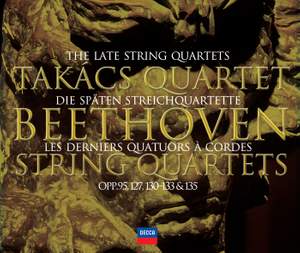


Offer,Beethoven - Late String Quartets
Takács Quartet
The Takács plough very deep furrows, emotionally and intellectually, but they also understand the paradoxical humour that’s essential to the spirituality of this music. — More…
-
BBC Music MagazineMarch 2005Chamber Choice


Contents
Beethoven: String Quartet No. 12 in E flat major, Op. 127
- Edward Dusinberre (violin), Károly Schranz (violin), Roger Tapping (viola), András Fejér (cello)
- Takács Quartet
- Recorded: 2004-05-21
- Recording Venue: St. George's, Bristol
1. Maestoso - Allegro
2. Adagio ma non troppo e molto cantabile
3. Scherzando vivace
4. Finale
Beethoven: String Quartet No. 14 in C sharp minor, Op. 131
- Edward Dusinberre (violin), Károly Schranz (violin), Roger Tapping (viola), András Fejér (cello)
- Takács Quartet
- Recorded: 2003-11-20
- Recording Venue: St. George's, Bristol
1. Adagio ma non troppo e molto espressivo
2. Allegro molto vivace
3. Allegro moderato
Beethoven: String Quartet No. 15 in A minor, Op. 132
- Edward Dusinberre (violin), Károly Schranz (violin), Roger Tapping (viola), András Fejér (cello)
- Takács Quartet
- Recorded: 2004-05-21
- Recording Venue: St. George's, Bristol
1. Assai sostenuto - Allegro
2. Allegro ma non tanto
3. Heiliger Dankgesang e.Genesenden an die Gottheit, in der lydischen Tonart.Molto adagio -. Andante - Molto adagio - Andante - Molto adagio.
4. Alla marcia, assai vivace - Più allegro - Presto
5. Allegro appassionato
Beethoven: String Quartet No. 16 in F major, Op. 135
- Edward Dusinberre (violin), Károly Schranz (violin), Roger Tapping (viola), András Fejér (cello)
- Takács Quartet
- Recorded: 2004-07-23
- Recording Venue: St. George's, Bristol
1. Allegretto
2. Vivace
3. Lento assai, cantante e tranquillo
4. Der schwer gefaßte Entschluß (Grave - Allegro - Grave ma non troppo tratto - Allegro)
Beethoven: String Quartet No. 11 in F minor Op. 95 'Serioso'
- Edward Dusinberre (violin), Károly Schranz (violin), Roger Tapping (viola), András Fejér (cello)
- Takács Quartet
- Recorded: 2003-11-20
- Recording Venue: St. George's, Bristol
1. Allegro con brio
2. Allegretto ma non troppo
3. Allegro assai vivace ma serioso
4. Larghetto espressivo - Allegretto agitato
Beethoven: String Quartet No. 13 in B flat major, Op. 130
- Edward Dusinberre (violin), Károly Schranz (violin), Roger Tapping (viola), András Fejér (cello)
- Takács Quartet
- Recorded: 2004-07-23
- Recording Venue: St. George's, Bristol
1. Adagio ma non troppo - Allegro
2. Presto
3. Andante con moto ma non troppo. Poco scherzando
4. Alla danza tedesca (Allegro assai)
5. Cavatina ( Adagio molto espressivo)
Beethoven: Grosse Fuge in B flat major, Op. 133
- Edward Dusinberre (violin), Károly Schranz (violin), Roger Tapping (viola), András Fejér (cello)
- Takács Quartet
- Recorded: 2004-07-23
- Recording Venue: St. George's, Bristol
Excerpt,
- Edward Dusinberre (violin), Károly Schranz (violin), Roger Tapping (viola), András Fejér (cello)
- Takács Quartet
- Recorded: 2004-07-23
- Recording Venue: St. George's, Bristol
6. Finale (Allegro)