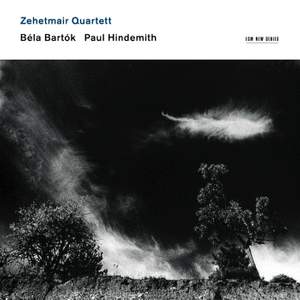


Bartok, Hindemith: String Quartets
Zehetmair Quartet
The Bartók No. 5… is almost hysterically passionate, a brilliant and exciting performance that grips from first bar to last. — More…
-
Gramophone MagazineJuly 2007Editor's Choice


Downloads
What are FLAC and MP3?Contents
Bartók: String Quartet No. 5, Sz 102
Work length28:44
$4.25
$5.75
- Thomas Zehetmair (violin), Kuba Jakowicz (violin), Ruth Killius (viola), Ursula Smith (cello)
- Zehetmair Quartett
- Recorded: 2006-06-29
- Recording Venue: Kulturbühne Am Bach, Götzis
1. Allegro
Track length6:58
$0.85
$1.15
2. Adagio molto
Track length5:32
$0.85
$1.15
3. Scherzo. Alla bulgarese
Track length4:38
$0.85
$1.15
4. Andante
Track length4:58
$0.85
$1.15
5. Finale. Allegro vivace
Track length6:38
$0.85
$1.15
Hindemith: String Quartet No. 4, Op. 22 (1921) (previously No. 3)
Work length21:45
$4.25
$5.75
- Thomas Zehetmair (violin), Kuba Jakowicz (violin), Ruth Killius (viola), Ursula Smith (cello)
- Zehetmair Quartett
- Recorded: 2006-06-29
- Recording Venue: Kulturbühne Am Bach, Götzis
1. Fugato. Sehr langsame Viertel
Track length4:49
$0.85
$1.15
2. Schnelle Achtel. Sehr energisch, Presto
Track length4:25
$0.85
$1.15
3. Ruhige Viertel. Stets fließend
Track length6:35
$0.85
$1.15
4. Mäßig schnelle Viertel
Track length1:58
$0.85
$1.15
5. Rondo. Gemächlich und mit Grazie
Track length3:58
$0.85
$1.15