


In stock - usually despatched within 1 working day.
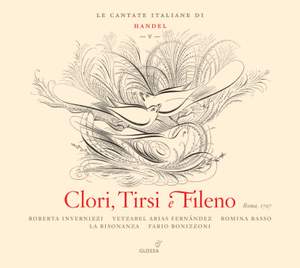
In May 1707 George Frideric Handel entered into the service of the Marquis Francesco Maria Ruspoli, and under his protection, embarked upon a tremendous career.As well as making a name for himself as a spectacular virtuoso on the harpsichord and organ, through his plentiful concerts in the Roman academies, Handel lost no time in also becoming a highly sought-after composer through his felicitous and apparently inexhaustible inspiration. In addition to a significant number of cantatas for solo voice and basso continuo, Handel also involved himself in composing cantatas for larger numbers of voices, combining these with a large supporting orchestral group. The score of Clori,Tirsi e Fileno is certainly a complex one, as much for its dramatic plotline as for its individually-chosen musical options: the result is a genuine opera in miniature, equipped with real refinement and lightness. Consequently, Clori,Tirsi e Fileno turns into an authentic laboratory in which Handel experiments with the most diverse musical and dramatic forms, obtaining by this method a capacity to elaborate that special language which was to locate it firmly within the glories of the theatre, from the past and the present. Extended interview with Fabio Bonizzoni on Glossa’s new website: glossamusic.com
“Fabio Bonizzoni ensures that the performances crackle with dramatic tension or plumb the depths of desolate melodic melancholy according to what Handel’s music demands, but the most impressive aspect of these performances is the conductor’s awareness of story-telling and judicious moulding of the musical flow. ..further testament to the marvellous subtlety and richness of Handel’s Roman music and contains Handel-singing, playing and direction of the absolute highest order…This lovingly prepared series promises to be of the utmost importance to Handel lovers.” Gramophone
George Frideric Handel: Cor fedele (Clori, Tirsi e Fileno), HWV 96
Part I: Overture
Part I: Aria: Cor fedele, in vano speri (Tirsi)
Part I: Recitative: Povero Tirsi, quanto (Tirsi)
Part I: Aria: Quell'erbetta che smalta le sponde (Tirsi)
Part I: Recitative: Se il guardo non vaneggia, ecco Clori (Tirsi)
Part I: Aria: Va col canto lusingando (Clori)
Part I: Recitative: Debbua cosi, o Fileno (Clori, Fileno)
Part I: Aria: Sai perche l'onda del fume (Fileno)
Part I: Recitative: Vezzoso pastorello (Clori)
Part I: Aria: Conosco che mi piaci (Clori)
Part I: Recitative: Dunque sperando in vano (Fileno, Clori)
Part I: Aria: Son come quel nocchiero (Fileno)
Part I: Recitative: S'altra pace non brami, altro conforto (Clori, Tirsi, Fileno)
Part I: Duet: Scherzando sul tuo volto (Clori, Fileno)
Part II: Duet: Fermati! (Clori, Tirsi)
Part II: Recitative: Creder d'un angure al sibilo fatale (Tirsi)
Part II: Aria: Tra le fere la fera piu cruda (Tirsi)
Part II: Recitative: Tirsi, mio caro Tirsi (Clori)
Part II: Aria: Barbaro, tu non credi (Clori)
Part II: Recitative: Pur cederti mi e forza (Tirsi, Clori)
Part II: Aria: Amo Tirsi (Clori)
Part II: Recitative: Va, fidati a promessa (Fileno)
Part II: Aria: Povera fedelta (Fileno)
Part II: Recitative: Non ti stupir, Fileno (Tirsi)
Part II: Aria: un sospiretto d'un labbro pallido (Tirsi)
Part II: Aria: Tirsi, amico e compagno (Fileno)
Part II: Aria: Come la rondinella (Fileno)
Part II: Recitative: Cosi, felici (Clori, Tirsi, Fileno)
Part II: Trio: Vivere e non amar, amare e jon languir, languire e non oenar (Clori, Tirsi, Fileno)
May 2009
*****
“The performance here is one of smouldering sensuality. The verve of the director's gestures generates huge excitement, while the sharp contrast of colours between each singer's voice - the translucence of Roberta Invernezzi, lustre of Yetzabel Fernández, and darkness of Romina Basso - enriches the tapestry of sound. Vocalists match passion with gorgeous ornamentation...”
2010
“Probably composed for his principal Roman patron Marquis Francesco Maria Ruspoli in autumn 1707, Handel's pastoral drama, Cor fedele,in vano speri (usually called by its nickname 'Clori, Tirsi e Fileno') tells the story of the fickle serial seductress Clori and her two rival shepherd lovers Tirsi and Fileno. Despite taking oaths of fidelity to each, her intrigue is eventually exposed, and the three members of the love triangle agree to coexist peacefully as long as all concerned get some satisfaction from the arrangement. Fabio Bonizzoni seems keen to emphasise the operatic atmosphere of this music, and the three singers are ideally cast. Roberta Invernizzi's virtuoso coloratura in Tirsi's furious denouncing of Clori in 'Tra le fere' is magnificent (the oboe solo passagework by Andrea Mion is also impressive). Yetzabel Arias Fernández is a fruitier and deeper soprano than Invernizzi but still perfectly in proportion with the articulate music-making. Leila Schayegh's solo fiddling in 'Barbaro, tu non credi' is by turns brilliant and beguiling, as the minx Clori uses contrasting passionate fast music and mock-sorrowful slower passages to wangle her way back into Tirsi's favour. Fileno's “Sai perchè l'onda” is plaintively sung by Romina Basso. Recitatives are performed with perfect poetic clarity and dramatic timing. Bonizzoni's Italian ensemble astutely diagnoses and communicates the affect of each movement in some of the youthful Handel's most freely imaginative music. The balance between instruments is consistently fine, warm and lyrical. In particular, Bonizzoni has the admirable knack of conveying the strong rhetorical elements in Handel's vivacious music, and the entire performance is beautifully executed with subtlety and charm. This is another essential disc from La Risonanza, whose project is shaping up to become the most rewarding Handelian discographic undertaking of the decade.”
June 2009
“…Bonizzoni has the admirable knack of conveying the strong rhetorical elements in Handel's vivacious music, and the entire performance is beautifully executed with subtlety and charm.”
4th March 2009
“This recording would have benefited from having three female voices more sharply differentiated in character, but the performance keeps the slender plot buoyed up.”
Click here for alternative recordings of this work.
