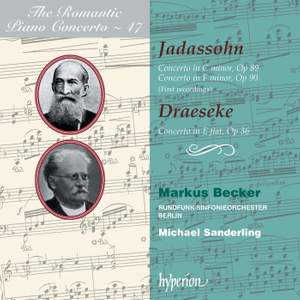


The Romantic Piano Concerto 47 - Jadassohn & Draeseke
Markus Becker (piano)
Rundfunk-Sinfonieorchester Berlin, Michael Sanderling
…an enjoyable disc for those who would explore the unfrequented byways of Romanticism. — More…
CD
$15.75Downloads
What are FLAC and MP3?Contents
Jadassohn: Piano Concerto No 1 in C minor, Op. 89
Work length15:38
$3.30
$4.50
- Markus Becker (piano)
- Berlin Radio Symphony Orchestra
- Michael Sanderling
I. Introduction quasi recitativo: Allegro appassionato – Andante
Track length2:05
$1.10
$1.50
II. Adagio sostenuto
Track length4:43
$1.10
$1.50
III. Ballade: Allegro patetico – Molto più mosso
Track length8:50
$1.10
$1.50
Jadassohn: Piano Concerto No 2 in F minor, Op. 90
Work length23:49
$3.30
$4.50
- Markus Becker (piano)
- Berlin Radio Symphony Orchestra
- Michael Sanderling
I. Allegro energico e passionato
Track length12:26
$1.10
$1.50
II. Andantino quasi allegretto – Agitato – Allegro deciso – Andantino
Track length5:10
$1.10
$1.50
III. Allegro appassionato
Track length6:13
$1.10
$1.50
Draeseke: Piano Concerto in E flat major, Op. 36
Work length30:26
$3.30
$4.50
- Markus Becker (piano)
- Berlin Radio Symphony Orchestra
- Michael Sanderling
I. Allegro moderato
Track length9:48
$1.10
$1.50
II. Adagio
Track length11:11
$1.10
$1.50
III. Allegro molto vivace
Track length9:27
$1.10
$1.50