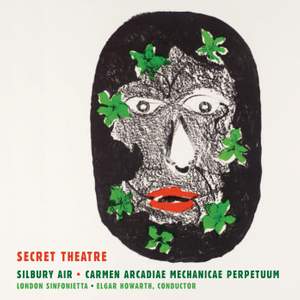


Classic recording from the London Sinfonietta, previously released on Etcetera. (NMC makes another deleted disc permenently available.)
Secret Theatre explores Birtwistle’s fascination with ritual and takes its title from a Robert Graves poem.
Silbury Air is stark, menacing, and tense and named after the prehistoric mound Silbury Hill in England.
‘No more exciting recording of contemporary music than this has appeared for many a day. It celebrates the virtues, and the virtuosity, of the London Sinfonietta and also celebrates the Sinfonietta’s long association with Harrison Birtwistle, including three of the four most substantial works he has written for them. It is Secret Theatre (1984) that makes this new recording special … it is an enthralling exploration of the interaction between what Birtwistle terms ‘cantus’ and ‘continuum’—chant-like melody and block-like, chordally-constructed harmony. These two elements are of equal importance, and serve to promote the real drama of the music: the confrontation, and achievement of equilibrium, between individual and collective. These compositions leave no doubts as to why Birtwistle is such a formidable, acclaimed presence on the contemporary scene. All that needs to be said about the performances, and the recording, is that they do the music justice.’ Gramophone
BIRTWISTLE, Harrison: Carmen Arcadiae Mechanicae Perpetuum
BIRTWISTLE, Harrison: Silbury Air
BIRTWISTLE, Harrison: Silbury Air "5"
BIRTWISTLE, Harrison: Silbury Air "16"
BIRTWISTLE, Harrison: Silbury Air "22"
BIRTWISTLE, Harrison: Silbury Air "28"
BIRTWISTLE, Harrison: Silbury Air "38"
BIRTWISTLE, Harrison: Secret Theatre
BIRTWISTLE, Harrison: Secret Theatre "6"
BIRTWISTLE, Harrison: Secret Theatre "12"
BIRTWISTLE, Harrison: Secret Theatre "15"
BIRTWISTLE, Harrison: Secret Theatre "23"
BIRTWISTLE, Harrison: Secret Theatre "26"
BIRTWISTLE, Harrison: Secret Theatre "31"
BIRTWISTLE, Harrison: Secret Theatre "38"
BIRTWISTLE, Harrison: Secret Theatre "42"
BIRTWISTLE, Harrison: Secret Theatre "43"
BIRTWISTLE, Harrison: Secret Theatre "48"
BIRTWISTLE, Harrison: Secret Theatre "59"
BIRTWISTLE, Harrison: Secret Theatre "66"
BIRTWISTLE, Harrison: Secret Theatre "78"
Harrison Birtwistle: Silbury Air
Figure 5
Figure 16
Figure 22
Figure 28
Figure 38
Harrison Birtwistle: Secret Theatre
Figure 6
Figure 12
Figure 15
Figure 23
Figure 26
Figure 31
Figure 38
Figure 42
Figure 43
Figure 48
Figure 59
Figure 66
Figure 78
Awards Issue 2008
“Written between The Mask of Orpheus and the no less epic enterprise of Earth Dances, Secret Theatre really does mark a great leap forward, and this performance… is… highly charged, eloquent account of one of the composer's most powerful and most personal scores.”
2010
“When these recordings first appeared Birtwistle enthusiasts were still absorbing the impact of three 1986 premieres, Earth Dances, The Mask ofOrpheus and Yan Tan Tethera – works which helped to catapult a highly regarded composer into something as close to superstardom as contemporary classical music can provide. SecretTheatre, the longest of the three works, was itself a mere three years old in 1987: more than two decades on, its elaboration and refinement of basic formal and textural elements present in Silbury Air and Carmen Arcadiae Mechanicae Perpetuum (both from 1977) is ever more striking. Written between The Mask of Orpheus and the no less epic enterprise of Earth Dances, SecretTheatre really does mark a great leap forward, and this performance captures the special, pioneering dedication and enthusiasm which Elgar Howarth and the London Sinfonietta were able to summon up in those days. The recording, even with sensitive remastering, can't give a full picture of the spatial processes at work, involving the tension and interaction between separated individuals and groups, but it is still a highly charged, eloquent account of one of the composer's most powerful and most personal scores. The more starkly differentiated mechanisms of the other pieces now seem like relatively unelaborated blueprints for the riches to follow, and despite the very different connotations of their titles – the Wiltshire landscape in Silbury Air, a Paul Klee canvas in Carmen Arcadiae – there are evident similarities, as well as moments which now sound unexpectedly derivative (for example, of Ligeti at the opening of Silbury Air). But that simply reinforces Birtwistle's importance as part of the European modernist mainstream, something to which his substantial and distinctive contribution remains a thing to wonder at as he approaches his 75th birthday.”
Click on any of the works listed above for alternative recordings.