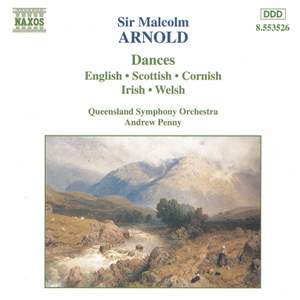


Offer,Arnold: Dances
Queensland Symphony Orchestra, Andrew Penny
This set includes the Four Welsh Dances, not otherwise available on CD. These were the last to be written, and their mood follows on naturally from the ambivalence of the IrishDances. Penny's... — More…
CD
Original price ($13.25) Reduced price $10.50Downloads
What are FLAC and MP3?Contents
Arnold: English Dances, Set 1, Op. 27
- Queensland Symphony Orchestra
- Andrew Penny
- Recorded: 11-15 December 1995
- Recording Venue: Queensland
No. 1. Andantino
No. 2. Vivace
No. 3. Mesto
No. 4. Allegro risoluto
Arnold: English Dances, Set 2, Op. 33
- Queensland Symphony Orchestra
- Andrew Penny
- Recorded: 11-15 December 1995
- Recording Venue: Queensland
No. 1. Allegro non troppo
No. 2. Con brio
No. 3. Grazioso
No. 4. Giubiloso
Arnold: Four Scottish Dances, Op. 59
- Queensland Symphony Orchestra
- Andrew Penny
- Recorded: 11-15 December 1995
- Recording Venue: Queensland
No. 1. Pesante
No. 2. Vivace
No. 3. Allegretto
No. 4. Con brio
Arnold: Four Cornish Dances, Op. 91
- Queensland Symphony Orchestra
- Andrew Penny
- Recorded: 11-15 December 1995
- Recording Venue: Queensland
No. 1. Vivace
No. 2. Andantino
No. 3. Con moto e sempre senza parodia
No. 4. Allegro ma non troppo
Arnold: Four Irish Dances Op. 126
- Queensland Symphony Orchestra
- Andrew Penny
- Recorded: 11-15 December 1995
- Recording Venue: Queensland
No. 1. Allegro con energico
No. 2. Commodo
No. 3. Piacevole
No. 4. Vivace
Arnold: Four Welsh Dances, Op. 138
- Queensland Symphony Orchestra
- Andrew Penny
- Recorded: 11-15 December 1995
- Recording Venue: Queensland
No. 1. Allegro
No. 2. Poco lento
No. 3. Vivace
No. 4. Andante con moto