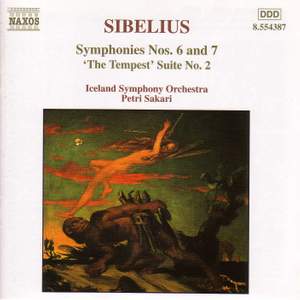


Usually despatched in 2 - 3 working days. (Available now to download.)
Jean Sibelius: Symphony No. 6 in D minor, Op. 104
I. Allegro molto moderato
II. Allegretto moderato
III. Poco vivace
IV. Allegro molto
Jean Sibelius: The Tempest Suite Nos. 1 and 2, Op. 109, Nos. 2, 3
I. Chorus of the Winds
II. Intermezzo
III. Dance of the Nymphs
IV. Prospero
V. Song I and II
VI. Miranda
VII. The Naiads
VIII. Dance Episode
Jean Sibelius: Symphony No. 7 in C major, Op. 105
Symphony No. 7 in C major, Op. 105
2010
“A most enjoyable conclusion to Petri Sakari's Sibelius symphony cycle. Sakari's Sixth impresses by dint of its unpretentious honesty and quiet cogency. As on previous instalments within this series, the Icelanders respond with a keen fervour as contagious as it's heartwarming. Their woodwind roster comprises an especially personable bunch, and if the strings inevitably lack that very last ounce of tonal clout and sheer composure provided by, say, Karajan's Berlin Philharmonic or the San Francisco Symphony under Blomstedt – to name but two of the strongest rivals – there's no missing the touching expressive warmth they bring to the work's transcendental closing pages. In Sakari's hands both outer movements develop real fire and purpose, and he uncovers plenty of happy detail along the way – the distinctive colouring of the bass clarinet being one of this performance's chief pleasures. Sakari's Seventh, too, is very good indeed, patient and imaginative in the manner of Vänskä, or Sanderling's much underrated, irresistibly sinewy 1974 recording with the Berlin Symphony Orchestra. Perhaps the Iceland Symphony's principal trombonist could have been just a touch more assertive for that heroic initial solo six bars after fig C, and the timpanist appears to enter a bar late just before fig E, but the only sizeable niggle concerns Sakari's not-quiteseamless handling of that tricky Poco a poco affrettando transition passage into the Vivacissimo section beginning at fig J, itself not entirely free of a certain breathless fluster. All this means that Sakari's conception as a whole isn't as thrillingly inevitable an experience as Koussevitzky's, Maazel's or Boult's masterly 1963 concert relay with the RPO. That said, Sakari builds the shattering Largamente climax at fig Z superbly, and the closing bars are exceptionally fine. Not a front-runner, perhaps, but no mean achievement all the same. Well worth investigating at Naxos price.”
“… the textures are clear and lively ...with the added attraction of the second Tempest suite - the opening Chorus of the Winds is ravishingly done - the Naxos disc is a strongly recommendable bargain.”
Click on any of the works listed above for alternative recordings.