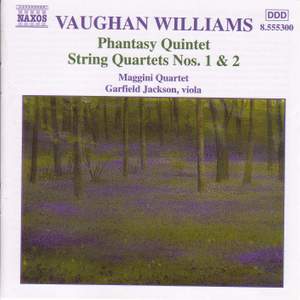


Offer,Vaughan Williams: Phantasy Quintet & String Quartets
Garfield Jackson (viola)
Maggini Quartet
Why isn't Vaughan Williams's Second Quartet part of the international chamber repertory? Played as eloquently as this it seems unarguably a masterpiece, one specifically of its time: 1942-3.... — More…
-
Penguin GuideRosette


CD
Original price ($11.50) Reduced price $9.25Downloads
What are FLAC and MP3?Contents
Vaughan Williams: Phantasy Quintet
Work length15:09
$4.00
$5.20
- Garfield Jackson (viola)
- Maggini Quartet
- Recorded: 13-15 June 2000
- Recording Venue: Potton Hall, Suffolk, UK
I. Prelude: Lento ma non troppo
Track length4:06
$1.00
$1.30
II. Scherzo: Prestissimo
Track length4:09
$1.00
$1.30
III. Alla Sarabanda: Lento
Track length2:50
$1.00
$1.30
IV. Burlesca: Allegro moderato
Track length4:04
$1.00
$1.30
Vaughan Williams: String Quartet No. 1 in G minor
Work length29:41
$7.00
$9.10
- Maggini Quartet
- Recorded: 13-15 June 2000
- Recording Venue: Potton Hall, Suffolk, UK
I. Allegro moderato
Track length9:17
$2.00
$2.60
II. Minuet and Trio: Tempo di minuetto
Track length4:48
$1.00
$1.30
III. Romance: Andante sostenuto
Track length7:33
$2.00
$2.60
IV. Finale: Rondo Capriccioso - Allegro molto
Track length8:03
$2.00
$2.60
Vaughan Williams: String Quartet No. 2 in A minor
Work length21:45
$5.00
$6.50
- Maggini Quartet
- Recorded: 13- 15 June 2000
- Recording Venue: Potton Hall, Suffolk, UK
I. Prelude: Allegro appassionato
Track length3:55
$1.00
$1.30
II. Romance: Largo
Track length9:31
$2.00
$2.60
III. Scherzo: Allegro
Track length3:34
$1.00
$1.30
IV. Epilogue: Andante sostenuto
Track length4:45
$1.00
$1.30