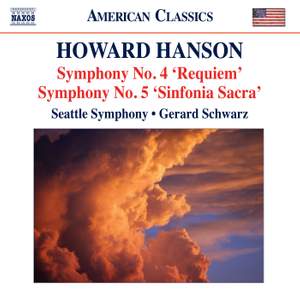


Howard Hanson: Symphonies Nos. 4 & 5
Seattle Symphony, Gerard Schwarz
This disc demonstrates how both Gregorian chant and the Lutheran chorale undergird the structure of many of Hanson’s works — More…
CD
$13.25Downloads
What are FLAC and MP3?Contents
Hanson, H: Symphony No. 4, Op. 34 'Requiem'
Work length25:24
$6.00
$7.80
- Seattle Symphony Orchestra
- Gerard Schwarz
I. Kyrie. Andante inquieto
Track length9:33
$2.00
$2.60
II. Requiescat. Largo
Track length5:35
$1.00
$1.30
III. Dies Irae. Presto
Track length2:33
$1.00
$1.30
IV. Lux Aeterna. Largo pastorale
Track length7:43
$2.00
$2.60
Hanson, H: Symphony No. 5, Op. 43 "Sinfonia sacra"
Work length15:04
$4.00
$5.15
- Seattle Symphony Orchestra
- Gerard Schwarz
Hanson, H: Elegy in Memory of Serge Koussevitzky, Op. 44
Work length12:40
$3.00
$3.85
- Seattle Symphony Orchestra
- Gerard Schwarz
Hanson, H: Dies Natalis (1967)
Work length15:54
$9.00
$11.70
- Seattle Symphony Orchestra
- Gerard Schwarz
Introduction & Chorale. Maestoso
Track length3:59
$1.00
$1.30
Var. 1, Poco più mosso
Track length1:29
$1.00
$1.30
Var. 2, Allegro
Track length0:42
$1.00
$1.30