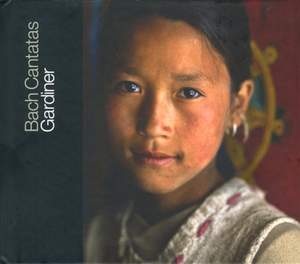


Offer,Bach Cantatas Volume 11
Cantatas for the Twentieth Sunday after Trinity (Genoa) & Cantatas for the Twenty-first Sunday after Trinity (London)
Joanne Lunn (soprano), Magdalena Kožená, Sara Mingardo (mezzos), William Towers (alto), Christoph Genz, Paul Agnew (tenors), Peter Harvey, Gotthold Schwarz (basses)
The Monteverdi Choir &The English Baroque Soloists, John Eliot Gardiner
Peter Harvey offers an evenly sustained and crisply articulated account of the opening aria [of 162] while Sara Mingardo and Christopher Genz are pleasingly matched in their beautiful C major... — More…
2 CDs
Original price ($19.75) Reduced price $15.75Downloads
What are FLAC and MP3?Contents
Bach, J S: Cantata BWV162 'Ach! ich sehe, itzt, da ich zur Hochzeit gehe'
- Sara Mingardo (alto), Christoph Genz (tenor), Magdalena Kozená (soprano), Peter Harvey (bass)
- Monteverdi Choir, English Baroque Soloists
- Sir John Eliot Gardiner
Aria: Ach, ich sehe (Bass)
Recitative: O grosses Hochzeitfest (Tenor)
Aria: Jesu, Brunnquell aller Gnaden (Soprano)
Recitative: Mein Jesu (Alto)
Aria Duet: In meinem Gott bin ich erfreut! (Alto, Tenor)
Chorale: Ach, ich habe schon erblicket (Chorus)
Bach, J S: Cantata BWV49 'Ich geh und suche mit Verlangen'
- Magdalena Kozená (soprano), Peter Harvey (bass)
- English Baroque Soloists
- Sir John Eliot Gardiner
Sinfonia
Aria: Ich geh und suche mit Verlangen (Bass)
Recitative: Mein Mahl ist zubereit (Bass, Soprano)
Aria: Ich bin herrlich, ich bin schon (Soprano)
Recitative: Mein Glaube hat mich selbst so angezogen (Soprano, Bass)
Aria and Chorale: Dich hab ich je und je geliebet (Soprano, Bass)
Bach, J S: Cantata BWV180 'Schmücke dich, o liebe Seele'
- Sara Mingardo (alto), Christoph Genz (tenor), Magdalena Kozená (soprano), Peter Harvey (bass)
- Monteverdi Choir, English Baroque Soloists
- Sir John Eliot Gardiner
Chorale: Schmucke dich, o liebe Seele (Chorus)
Aria: Ermuntre dich: dein Heiland klopft (Tenor)
Recitative and Chorale: Wie teuer sind des heilgen Mahles Gaben (Soprano)
Bach, J S: Chorale Prelude BWV1090 'Wir Christenleut'
- Paul Agnew (tenor), William Towers (alto)
- Monteverdi Choir, English Baroque Soloists
- Sir John Eliot Gardiner
Ich glaube, lieber Herr, hilf meinen Unglauben (Chorus)
Recitative: Des Herren Hand ist ja noch nicht verkurzt (Tenor)
Aria: Wie zweifelhaftig ist mein Hoffen (Tenor)
Recitative: O fasse dich, du zweifelhafter Mut (Alto)
Aria: Der Heiland kennet ja die Seinen (Alto)
Chorale: Wer hofft in Gott und dem vertraut (Chorus)
Bach, J S: Cantata BWV38 'Aus tiefer Not schrei ich zu dir'
- Paul Agnew (tenor), Gotthold Schwarz (bass), Joanne Lunn (soprano), William Towers (alto)
- Monteverdi Choir, English Baroque Soloists
- Sir John Eliot Gardiner
Aus tiefer Not schrei ich zu dir (Chorus)
Recitative: In Jesu Gnade wird allein (Alto)
Aria: Ich hore mitten in den Leiden (Tenor)
Recitative: Ach! Dass mein Glaube noch so schwach (Soprano)
Trio Aria: Wenn meine Trubsal als mit Ketten (Soprano, Alto, Bass)
Chorale: Ob bei uns ist der Sunden viel
Bach, J S: Cantata BWV98 'Was Gott tut, das ist wohlgetan'
- Paul Agnew (tenor), Gotthold Schwarz (bass), Joanne Lunn (soprano), William Towers (alto)
- Monteverdi Choir, English Baroque Soloists
- Sir John Eliot Gardiner
Was Gott tut, das ist wohlgetan (Chorus)
Recitative: Ach Gott! wenn wirst du mich einmal (Tenor)
Aria: Hort, ihr Augen, auf zu weinen! (Soprano)
Recitative: Gott hat ein Herz, das des Erbarmens Uberfluss (Alto)
Aria: Meinen Jesum lass ich nicht (Bass)
Bach, J S: Cantata BWV188 'Ich habe meine Zuversicht'
- Paul Agnew (tenor), Gotthold Schwarz (bass), Joanne Lunn (soprano), William Towers (alto)
- Monteverdi Choir, English Baroque Soloists
- Sir John Eliot Gardiner
Sinfonia
Aria: Ich habe meine Zuversicht (Tenor)
Recitative: Gott meint es gut mit jedermann (Bass)
Aria: Unerforschlich ist die Weise (Alto)
Recitative: Die Macht der Welt verlieret sich (Soprano)
Chorale: Auf meinen lieben Gott (Chorus)