Prices shown exclude VAT. (UK tax is not payable for deliveries to United States.) See Terms & Conditions for p&p rates. | |  | Bernstein conducts Gershwin & Ives
Introduction: Bernstein on Ives' Symphony No. 2 Recording Place & Date: Royal Albert Hall, London, June 1976 (American in Paris, Rhapsody in Blue, Unanswered Question) Congress Hall of the Deutsche Museum, Munich, June 1987 (Symphony no. 2) “An indispensable DVD. To watch Bernstein conduct these supreme masterpieces of American music is a joy and a privilege in itself...there is an authentically spontaneous command of idiom here; Bernstein is both a superb soloist and conductor in the Rhapsody and the New Yorkers respond in a proprietorial way.” Penguin Guide, 2011 edition | | | In stock - usually despatched within 1 working day. |
|
|
| |  | Leighton - Orchestral Works Volume 2
Richard Hickox conducts the BBC National Orchestra of Wales in the second volume of Leighton’s orchestral works. BBC Music Magazine wrote of volume 1, “Hickox directs superbly paced and eloquent performances of this fine music.” Volume 2 presents two large-scale orchestral works, Symphony No.2 ‘Sinfonia Mistica’, which receives its first recording; coupled with Te Deum Laudamus in its orchestrated version. One of the most successful British composers of the latter half of the twentieth century, Kenneth Leighton’s lifelong musical relationship with the human voice, exemplified in the two works of this recording, began as a chorister in the choir of Wakefield Cathedral as a young boy. It was to impact greatly on his writing. Over the course of his life he wrote almost continually for the voice, absorbing vocal lines in all settings. It provided an excellent vehicle for some of his most lyrical and expressive writing. Leighton wrote three numbered symphonies. Symphony No.2 was composed in 1974 as a direct response to the death of his mother, and Leighton referred to the work as a ‘meditation on the subject of death.’ Composed over six movements and approaching an hour in length Sinfonia Mistica contains some of Leighton’s most personal and reactionary music, being at various times angry and emotional, yet serene and thoughtful. While he describes the symphony as a ‘requiem’ the conventional texts for this service are not employed, instead he used texts by John Donne, George Herbert and Henry King, poets who have been a constant source of inspiration to British composers. The original setting of Te Deum was written for choir and organ, but two years after its completion, Leighton received a request from the Oxford Bach Choir for an orchestral version of the work, which was completed in 1966. Scored for chorus and full orchestra it is an imaginative setting of what is a liturgical text of praise, and written in honour of St Cecilia. This climatic work contains some of Leighton’s most enduring and significant music. Chandos has received widespread appreciation for embarking on this revelatory new orchestral series. Volume 3 will be released in spring 2009. “Sarah Fox sings with refulgent tone, commendable accuracy and shining intelligence; and Richard Hickox rallies the BBC Welsh forces to the same dizzy heights that marked out the previous volume in this series… as one of the best discs of 2008.” Gramophone Magazine, January 2009 “Despite its monumental aspect the Sinfonia mistica is essentially a personal, intimate work, and it gets a moving performance here, Richard Hickox judging to a nicety the various movements' complex succession of tempos, and their ebb and flow of intensity. Sarah Fox is a pure-voiced, poignant soloist, and the BBC National Chorus of Wales sound very confident, as if this was a repertoire standard for them.” BBC Music Magazine, January 2009 ***** “Composed during 1973-74 in direct response to the death of his mother, Leighton's Sinfoniamistica is scored for soprano, chorus and orchestra. Described by its creator as 'a requiem or a meditation on the subject of death which usually becomes so more real to us in the second half of life', the symphony has six movements and sets texts by such great metaphysical poets as John Donne, Thomas Traherne and George Herbert, while also making telling use of the 1865 American hymn tune The Shining River. The linked 'Meditation' and 'Elegy' at the work's heart manifest an especially potent beauty, serenity and compassion, but, truth to tell, inspiration soars consistently high in this cogently wrought and (above all) profoundly humane utterance. This is music which will amply repay repeated listening. The orchestral version of the glorious 1964 Te Deum laudamus makes a rewarding postscript. Both performances are beyond reproach. Sarah Fox sings with refulgent tone, commendable accuracy and shining intelligence; and Richard Hickox rallies the BBC Welsh forces to same dizzy heights. Outstandingly vivid sound, too, with a perfectly judged balance throughout. Miss at your peril.” Gramophone Classical Music Guide, 2010 “This is a hauntingly compelling recording of some of Kenneth Leighton's most inspired music...The orchestra and chorus were inspired to great heights in this recording, and the sound itself is of demonstration quality.” Penguin Guide, 2011 edition | | | (also available to download from $10.75) | In stock - usually despatched within 1 working day. |
|
|
| |  | Ives - The Three Orchestral Sets
The works on this recording focus on a singular genre created by a singular composer. The kind of piece Charles Ives called a ‘set’ is usually a larger work made by putting together independently-written smaller pieces. The First Orchestral Set, variously titled Three Places in New England and A New England Symphony, is one of Ives’s great tributes to his roots. Put together around 1913-14 from material going back years, it is typically Ivesian in that each movement has an underlying program. Like the other sets, the Second has a slow-fast-slow pattern and a visionary hymn-based finale. The unfinished Third Orchestral Set was the only set Ives planned as a whole from the beginning. It may stand as the most profound discovery of the many and ongoing efforts to reconstruct Ives’s incomplete works. This is its first complete performance and recording “Well recorded, idiomatic performances all round - a real Ives discovery.” Gramophone Magazine, October 2008 “James Sinclair leads excellent performances. The Malmo Symphony sounds comfortable in the American idiom, and the recording is spacious, sweet sounding in the strings…You should have the Naxos regardless of what other Ives recordings you have.” American Record Guide “This is a fascinating release that offers Ives's three Orchestral Sets for the first time. The curtain is raised with the first of them, ThreePlaces in New England, in its original version – this stands somewhere between the CountryBand March and the later, more familiar ThreePlaces. At this stage there's no piano part and the conflicting march rhythm in 'Putnam's Camp' is missing as well as its dissonant opening. Both the First and Second Sets are vintage Ives, with his unforgettable reaction to the sinking of the Lusitania that brought the US into the First World War at the end of the Second Set. But the novelty here is the Third Set. The first two movements come from sketches edited by David Gray Porter. The opening Andante has a structure similar to Central Parkin the Dark with typical Ives chords and a texture building to a crisis with something left hanging softly at the end. The second movement is called 'During Camp Meetin' Week: One Secular Afternoon'. This again is Ives's idiosyncratic territory with lots of quotations including 'Columbia the Gem of the Ocean' twice and a four-part hymn about the Day of Judgement – not so secular after all? Completing works by Ives has become an industry that the composer would have welcomed. The perhaps over-extended last movement of this Third Set, realised by Nors Josephson, at times sounds like Varèse, although it begins and ends softly. Well recorded, idiomatic performances all round – a real Ives discovery.” Gramophone Classical Music Guide, 2010 | | | (also available to download from $6.00) | In stock - usually despatched within 1 working day. |
|
|
| |  | Mozart - Piano Concertos Nos. 17 & 20
“In Leif Ove Andsnes's hands the D minor Concerto K466 is every bit as demonic as it ought to be, and he's greatly helped by fine playing from the Norwegian Chamber Orchestra, with its trumpets cutting through the texture to thrilling effect.” BBC Music Magazine, March 2008 ***** “…his enviably natural, unforced clarity and musicianship shine through every bar and subtle ambiguity. Very much primus inter pares, Andsnes's sense of give and take as both soloist and director of the Norwegian Chamer Orchestra is as remarkable as his unfailing musical grace.” Gramophone Magazine, April 2008 “After this first foray, Mr. Andsnes may get pressure from Mozart lovers to record them all…his stylish accounts of these concertos are among the most revelatory Mozart records of the year.” New York Times | | | In stock - usually despatched within 1 working day. |
|
|
| |  | Ives - Romanzo di Central Park
“Gerald Finley has everything and more in his darkly full-bodied voice to match the often formidable technical and expressive requirements of Ives’s songbook—reinforced by Drake’s elastic, expressive piano … this is a must-buy album” The Times “This is a highly successful follow-up to Gerald Finley and Julius Drake’s first Ives recital from 2005. Here there is the same sort of mix, from familiar songs such as The Circus Band and Watchman! To an early requiem for the family cat and the intriguing title song, Romanzo (di
Central Park), with its obbligato violin part atmospherically played by Magnus Johnston. Finley is his usual charismatic self, at home as much in the hymnody as the parody, and he is careful not to over-sentimentalise the more homely numbers while injecting pathos into the war songs. Drake
projects Ives’s often complex accompaniments with clarity and style” The Telegraph “…outstandingly well sung and played, equally well recorded, and highly recommendable to all lovers of fine songs and fine singing.” BBC Music Magazine, March 2008 ***** “…some of the early songs in a conventional style are treated with the same seriousness that Finley would apply to Lieder. The contemplative ones are delivered with an impressive serenity and Finley has his own way of attacking the razzle-dazzle of something like "The Circus Band" or "They Are There!".” Gramophone Magazine, April 2008 “This is the second volume of Ives songs from this accomplished team; their first Ives volume (reviewed above) contained some of the blockbusters like Charlie Rutlage and General WilliamBooth but the mood of this volume is fairly sedate. In particular some of the early songs in a conventional style are treated with the same seriousness that Finley would apply to Lieder. An unusual but effective feature here is the provision of violin obbligato both for the jingoistic wartime song They Are There! and the mawkish take-off Romanzo (di Central Park). Sentimentality is a Victorian characteristic but in Songs MyMother Taught Me, as elsewhere in Ives, the emotion is genuine so it invariably convinces. Many of the songs are transposed down – hard work for the pianist and it makes some of the textures rather dense. The contemplative ones are delivered with an impressive serenity and Finley has his own way of attacking the razzledazzle of something like The Circus Band or TheyAre There! He's close-miked, which works best in the intimacy of the quieter songs.” Gramophone Classical Music Guide, 2010 BBC Music Magazine
Choral & Song Choice - March 2008 |
| | | In stock - usually despatched within 1 working day. |
|
|
| |  |
“Listen to the start of the great Sinfonia Concertante, here replete with an energy which doesn't preclude sensitivity of phrasing or detail of instrumental colour. …Fischer and Nikolic emerge from the opening tutti with a sense of wonder, marking this is one of Mozart's most deeply felt inspirations. ...their interplay in the Adagio is a profound delight.” BBC Music Magazine, January 2008 ***** “In the Sinfonia – one of Mozart’s first masterpieces, written in 1779, on the threshold of his entrance into the
pantheon of genius – soloists, orchestra and conductor emphasise the majestic, symphonic dimensions of the
opening movement, and they duet rapturously like operatic lovers in the sublime Andante. If you have the solo
concerto discs, you won’t want to miss this” Sunday Times, November 2007 | | | (also available to download from $10.75) | In stock - usually despatched within 1 working day. |
|
|
| |  | Under the Sign of the Sun
| | | (also available to download from $10.75) | In stock - usually despatched within 1 working day. |
|
|
| |  |
Elisabeth Söderström (Jenufa), Wieslav Ochman (Laca), Eva Randová (Kostelnicka), Petr Dvorsky (Steva), Lucia Popp (Karolka), Marie Mrázová (Stařenka Buryjovka), Václav Zitek (Mill Foreman), Dalibor Jedlicka (Mayor), Ivana Mixová (Mayor's Wife), Vera Soukupová (Herdswoman), Jindra Pokorná (Barena), Jana Jonásová (Jano) Wiener Philharmoniker & Wiener Staatsopernchor, Sir Charles Mackerras Recorded: Sofiensaal, Vienna, April 1982 “Despite stiff competition this vividly dramatic reading of the original score, the superb playing and Söderström's heart-breaking heroine confirm this is still the finest incarnation of Janácek's pastoral tragedy.” BBC Music Magazine, May 2007 ***** “Janácek's first operatic masterpiece is a towering work, blending searing intensity with heart-stopping lyricism. It tells of Jenufa and the appalling treatment she receives as she's caught between the man she loves and another who finally comes to love her. But dominating the story is the Kostelnicka, a figure of enormous strength, pride and inner resource who rules Jenufa's life and ultimately kills her baby. Randová's characterisation of the role of the Kostelnicka is frightening in its intensity yet has a very human core. The two men are well cast and act as fine foils to Söderström's deeply impressive Jenufa. The Vienna Philharmonic plays beautifully and Mackerras directs magnificently. The recording is all one could wish for and the booklet is a mine of informed scholarship.” Gramophone Classical Music Guide, 2010 | | | In stock - usually despatched within 1 working day. |
|
|
| |  |
“An indispensable and self-recommending disc. The lovely Miaskovsky could not be played with greater eloquence and the first Western recording of the Prokofiev (also from the 1950s) sounds as if it was made yesterday.” Gramophone Magazine | | | In stock - usually despatched within 1 working day. |
|
|
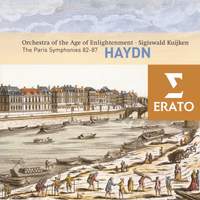
| |  | Haydn - Symphonies
| | | (Sorry, download not available in your country) | In stock - usually despatched within 1 working day. |
|
|
| |
|