Prices shown exclude VAT. (UK tax is not payable for deliveries to United States.) See Terms & Conditions for p&p rates. | |  | Beethoven - Symphony No. 4
The concert which Karajan and the Berlin Philharmonic gave in London’s Royal Festival Hall on the evening of Saturday 27 April 1985 was their first in England for four years. In May 1981 they had played Bruckner’s Fifth Symphony in the Royal Festival Hall and given an unforgettable concert of music by Bach, Mozart and Richard Strauss in Oxford’s Sheldonian Theatre. London had not been included in the orchestra’s itinerary in its centenary year in 1982 and for much of 1983-84 Karajan and the orchestra had barely been on speaking terms. Since the centenary year had been something of a high water mark in this hitherto sensationally successful 27-year partnership, the breakdown in relations came as something of a shock to the musical world. There were times in 1984 when it looked as if the two parties would go their separate ways; finally, a reconciliation was effected in the late summer of that year ahead of a scheduled tour of Japan and South Korea. The Krach was ostensibly over the appointment of a new clarinettist but there were other factors too, not least Karajan’s advancing years and stirrings among a contingent of mainly younger players keen to assert their independence and exploit the financial strength which the orchestra’s sky-high reputation now conferred on them. Throughout his life, Karajan had been noted for his extraordinary mental and physical prowess. Now in his mid-70s, he was troubled by a painful and ultimately irreversible spinal condition that had nearly cost him his life in the winter of 1975-76. He had soldiered on but even his energies were finite. In April 1985, he had invited Klaus Tennstedt to share the conducting burden at the Salzburg Easter Festival. ‘It was good to have Karajan and the Berlin Philharmonic, happily reunited after a prolonged disagreement, pay their first visit to the Festival Hall – an event said to have caused prices of black market tickets to reach astronomical heights,’ wrote Peter Stadlen in the Daily Telegraph. The audience was clearly shocked to see how frail Karajan had become as he edged towards the rostrum. (He himself likened his experience of walking unaided in his later years to stepping on sheet ice.) The Times reported a slight stumble in the advance, at which point ‘the applause hiccupped in a breathless unison’. Yet once settled on the podium, Karajan was, as ever, fully in control, master of all he surveyed. Extract from the booklet note © Richard Osborne, 2008 “For anyone lucky enough to have secured a ticket few orchestral concerts have remained so vividly in the memory as the one given by Karajan's incomparable Berlin Philharmonic in London's Royal Festival Hall on April 27, 1985. The surprises began with the conductor's own physical frailty. Edging unsteadily towards the rostrum and propping himself up against the railing, he adopted the peculiar posture that enabled him to remain upright and in command notwithstanding a debilitating spinal condition. In truth the Beethoven was and is a gift to his many detractors. With the maestro unwilling or unable to lift his arms, the band turns in its patented imitation of a gramophone record. Surfaces are immaculate but it's like being trapped in a pudding without air in the texture. Phrases, even whole sections glide by with no intake of breath and the first two movements in particular may induce feelings of claustrophobia in younger listeners. They should persevere. No superlatives can convey the inevitability, conviction and sweep of Karajan's Heldenleben which makes even this notoriously shrill-sounding venue resound in glory. The original BBC sound team of producer Misha Donat and balance engineer John McCulloch capture a paradoxical sonority, rich yet transparent, 'lambent in its beauty, never cloying or opaque' as described by Richard Osborne in his characteristically generous booklet-notes. The battle scene may be slow but was it ever more incisively chronicled? The Strauss at least is indispensable.” Gramophone Classical Music Guide, 2010 “Karajan's Beethoven Fourth was recorded when the Berlin Philharmonic came to London in 1985. Its excellent speaks for itself and the coupling is equally memorable.” Penguin Guide, 2011 edition | | | In stock - usually despatched within 1 working day. |
|
|
| |  | Stage Director: Laurent Pelly
Subtitles: English, French, German, Spanish, Italian Live from Covent Garden, Royal Opera House, London – January 2007 “Reactions to Dawn French’s non-singing appearance as an ample and obdurate Duchess of Crackentorp will be, more than usual, a matter of taste...But there can surely be no argument about Dessay. As the regiment’s tomboy handmaiden Marie, pigtail curving, fist punching the air à la Nigel Kennedy, she shows incredible comic verve even when Donizetti’s music sends her voice skyrocketing. Singer, actress, clown: she’s all three.
Theatrically, Flórez isn’t even near the same league...[but] the Peruvian star’s grin, sparkle and ringing tenor keep us happy enough. When the nine high Cs of Ah, mes amis! are hit dead in the centre with the ease of a shrug, you know you’re in safe hands. And Tonio suits exactly the singer’s still-boyish charm... It all makes you want to be in the stalls, seeing and breathing every moment.” The Times, 25th April 2008 **** “Dessay… is such a natural clown, and it is wonderful to behold the way she used little bits of the coloratura to illustrate comic points. Bruno Campanella conducts the Royal Opera forces with a delicate understanding of all the requirements of Donizetti's often exquisite instrumental detail.” Gramophone Magazine, May 2008 “Laurent Pelly's production of Donizetti's opéra comique was one of the highlights of the Royal Opera's 2006-7 season, and viewing this well-produced DVD of the show it's perfectly obvious why. Natalie Dessay's skinny tomboy of a Marie combines a 110 per cent commitment to the physicality of her acting with a coloratura facility that is beyond criticism.” BBC Music Magazine, June 2008 ***** “Dessay establishes her star quality from her very first entry and vivaciously dominates Donizetti's delightful opera throughout...In short she is an unforgettably enchanting Marie, unlikely to be surpassed...[Florez] also sings and acts superbly.” Penguin Guide, 2011 edition BBC Music Magazine
DVD Choice - June 2008 |
| | | In stock - usually despatched within 1 working day. |
|
|
| |  | Herbert von Karajan - 100th Anniversary Collection
Herbert von Karajan’s first cycle of Beethoven’s symphonies with the Philharmonia Orchestra on EMI has always been something of an ugly duckling when compared to the various Berlin Philharmonic incarnations on Deutsche Grammophon. Now reissued in a bargain 5 CD box, this is part of the truckload of Karajan 100th anniversary releases, which will no doubt raise controversy in some quarters and be welcomed in others. For me, if it’s nicely produced and cheaper than a box of quasi half-decent cigars then ‘bring it on’ as they say, and this box is certainly no slouch when it comes to presentation. | | | In stock - usually despatched within 1 working day. |
|
|
| |  | Mozart - Piano Concertos Nos. 17 & 20
“In Leif Ove Andsnes's hands the D minor Concerto K466 is every bit as demonic as it ought to be, and he's greatly helped by fine playing from the Norwegian Chamber Orchestra, with its trumpets cutting through the texture to thrilling effect.” BBC Music Magazine, March 2008 ***** “…his enviably natural, unforced clarity and musicianship shine through every bar and subtle ambiguity. Very much primus inter pares, Andsnes's sense of give and take as both soloist and director of the Norwegian Chamer Orchestra is as remarkable as his unfailing musical grace.” Gramophone Magazine, April 2008 “After this first foray, Mr. Andsnes may get pressure from Mozart lovers to record them all…his stylish accounts of these concertos are among the most revelatory Mozart records of the year.” New York Times | | | In stock - usually despatched within 1 working day. |
|
|
| |  |
“Listen to the start of the great Sinfonia Concertante, here replete with an energy which doesn't preclude sensitivity of phrasing or detail of instrumental colour. …Fischer and Nikolic emerge from the opening tutti with a sense of wonder, marking this is one of Mozart's most deeply felt inspirations. ...their interplay in the Adagio is a profound delight.” BBC Music Magazine, January 2008 ***** “In the Sinfonia – one of Mozart’s first masterpieces, written in 1779, on the threshold of his entrance into the
pantheon of genius – soloists, orchestra and conductor emphasise the majestic, symphonic dimensions of the
opening movement, and they duet rapturously like operatic lovers in the sublime Andante. If you have the solo
concerto discs, you won’t want to miss this” Sunday Times, November 2007 | | | (also available to download from $10.75) | In stock - usually despatched within 1 working day. |
|
|
| |  | Schubert: Piano Sonata No. 21 in B flat major
“it is the most searching and penetrating account of the work to have appeared in recent year and, given the excellence and truthfulness of the recording, must carry the strongest and most enthusiastic recommendation.” Penguin Guide, 2011 edition | | | In stock - usually despatched within 1 working day. |
|
|
| |  | Tchaikovsky: 1812 Overture & Capriccio Italian
Cannon and musket fire directed by Gerard C. Stowe Recorded - 1955-60 “it sounds even more spectacular than it did in its vinyl format, vividly catching Beethoven's musical picture of armies clashing.” Penguin Guide, 2011 edition | | | In stock - usually despatched within 1 working day. |
|
|
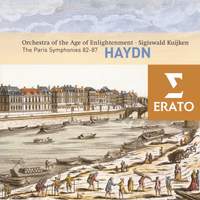
| |  | Haydn - Symphonies
| | | (Sorry, download not available in your country) | In stock - usually despatched within 1 working day. |
|
|
| |  |
René Pape (Sarastro), Erika Miklósa (Königin der Nacht), Dorothea Röschmann (Pamina), Christoph Strehl (Tamino), Hanno Müller-Brachmann (Papageno), Julia Kleiter (Papagena), Georg Zeppenfeld (Sprecher), Kurt Azesberger (Monostatos), Caroline Stein (Erste Dame), Heidi Zehnder (Zweite Dame), Anne-Carolyn Schlüter (Dritte Dame), Alexander Lischke (Drei Knaben), Frederic Jost, Niklas Mallmann (Soloists From Tölzer Knabenchor), Danilo Formaggia (Erster Geharnischter Mann), Sascha Borris (Zweiter Geharnischter Mann), Andreas Bauer (Erster Priester), Danilo Formaggia (Zweiter Priester), Tobias Beyer (Dritter Priester), Matthias Bernhold (Drei Sklaven), Martin Olbertz & Tobias Beyer Mahler Chamber Orchestra & Arnold Schoenberg Chor, Claudio Abbado “This is certainly the most desirable version using modern instruments to appear since Solti's second recording in 1990. That said, its characteristics are rather nearer William Christie's 1995 period-performance (reviewed above). Abbado undertook the opera for the first time in performances in Italy in 2005, directed by his son (the production was seen at the 2006 Edinburgh Festival). On this occasion, he conducts a direct, keenly articulated, inspiriting account of the score, obviously aware of what has been achieved in recent times by the authenticists, yet when he reaches the work at its most Masonic – the Act 2 trio and the scene with the Armed Men, Tamino and Pamina – Abbado, directing his beloved Mahler Chamber Orchestra, gives the music its true and wondrous import. The playing throughout is alert and scrupulously articulated. Casts varied between performances; here Abbado assembled one predominantly chosen from a youngish generation of German-speaking singers, each of whom approaches his or her role with fresh sound and interprets it in impeccably Mozartian style. The Tamino and Pamina are well nigh faultless. Tamino has been taken by many outstanding tenors on disc but Christoph Strehl sings with a Wunderlich-like strength and beauty, and rather more light and shade than his famous predecessor brought to the role. His is a wonderfully virile, vital reading that gives pleasure to the ear, as much in ensemble as in aria. He is partnered by Dorothea Röschmann, who has already appeared as Pamina at Covent Garden, and in many other houses. Her full-throated, positive singing, finely shaped, cleanly articulated, is a true match for Strehl's. Hanno Müller-Brachmann is a properly lively and amusing Papageno, and delivers the role in a richer bass-baritone than many interpreters provide. He doesn't attempt a Viennese accent in the dialogue (a fairly full version), but brings plenty of simple humour to the part. The high and low roles are well catered for. The Hungarian coloratura Erika Miklósa has been making a speciality of Queen of Night over the past few years and shows just why in a technically secure and fiery account of her two arias. René Pape sings Sarastro: now at the peak of his career, he conveys all the role's gravity and dignity in a gloriously sung performance. Kurt Azesberger is a suitably nasty Monostatos. Abbado allows a few neatly executed decorations. The extensive dialogue, spoken in a manner suitable for the theatre, sometimes sounds over-emphatic in the home, with the Papagena as an old woman the worst culprit. The recording is reasonably well balanced. As a whole the performance conveys a welcome immediacy and spontaneity and the daring of Abbado's way with the score is very alluring.” Gramophone Classical Music Guide, 2010 “...a triumphant success. René Pape's magnificent Sarastro dominates the opera, just as intended...But most magical of all are the little vocal ensembles, wonderfully warm and refined...this is above all an affectionately relaxed performance, with Abbado continually revelling in the lyrical beauty of Mozart's wonderful score.” Penguin Guide, 2010 **** “Abbado… conducts a direct, keenly articulated, inspiriting account of the score… The playing throughout is alert and scrupulously articulated. The Tamino and Pamina are well nigh faultless. …Christoph Strehl… sings with a Wunderlich-like strength and beauty... He is partnered by Dorothea Röschmann... Her full-throated, positive singing, finely shaped, cleanly articulated, is a true match for Strehl's. Hanno Müller-Brachmann is a properly lively and amusing Papageno... René Pape sings Sarastro: now at the peak of his career, he conveys all the role's gravity and dignity in a gloriously sung performance.” Gramophone Magazine, June 2006 CD Review
Critics Disc of the Year - December 2006 |
BBC Music Magazine
Disc of the month - June 2006 |
| | | In stock - usually despatched within 1 working day. |
|
|
| |  | Haydn - String Quartets
“These are altogether fine performances, with all the Lindsay's characteristic warmth and affection.” BBC Music Magazine, July 2006 **** “The two Op 77 quartets are among Haydn's greatest works and The Lindsays produce an unflagging energy to match their inventive vigour. They always seem to hit just the right tempo and so give every movement a persuasive character. In Op 77 No 1, we immediately appreciate the spry march rhythms of the first movement, the majesty of the Adagio, and the presto Minuet's whirling motion, with a particularly fine account of the wild trio section.” Gramophone Magazine, July 2006 | | | In stock - usually despatched within 1 working day. |
|
|
| |
|