Browse: Search results for: 'andrew foster-williams'
-
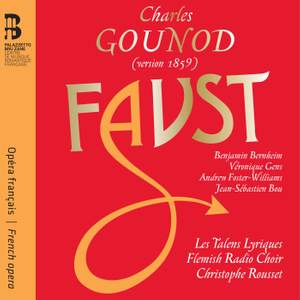
Gounod: Faust
Recommended1859 version
Benjamin Bernheim (Faust), Véronique Gens (Marguerite), Andrew Foster-Williams (Méphistophélès), Jean-Sébastien Bou (Valentin), Juliette Mars (Siebel), Ingrid Perruche (Marthe), Anas Séguin (Wagner/Un mendiant)
Les Talens Lyriques, Flemish Radio Choir, Christophe Rousset
Tenor Benjamin Bernheim is a superb Faust, with a bright and lovely lyric voice that is also comfortable in the lower tessitura of act I. As Marguerite, soprano Véronique Gens is an ideal romantic... — More…
Awards:
-
Gramophone Magazine, November 2019, Editor's Choice

-
Presto Recordings of the Year, Finalist 2019

-
International Classical Music Awards, 2019, Nominee - Opera

-
The Times Records of the Year, 2019

-
BBC Music Magazine Awards, 2020, Finalist - Opera

-
International Opera Awards, 2020, Nominated - Complete Opera Recording

-
Opus Klassik Awards, 2020, Nominee - Female Singer of the Year (Gens)

-
Opus Klassik Awards, 2020, Winner - Opera (19th-century)
-
Gramophone Awards, 2020, Finalist - Opera

3 CDs + Book
$39.50Downloads
What are FLAC and MP3? -
-
Haydn: The Seasons, Hob.XXI:3
RecommendedCarolyn Sampson (soprano), Jeremy Ovenden (tenor), Andrew Foster-Williams (bass)
Wrocław Baroque Orchestra, Wrocław Philharmonic Choir, Gabrieli Consort & Players, Paul McCreesh
the performance matches the high standards of McCreesh's previous grand choral projects...McCreesh revels in Haydn's masterly skills in writing for orchestra, choir and soloists...The choir's... — More…
Awards:
-
Presto Recording of the Week, 24th March 2017

-
Gramophone Magazine, May 2017, Editor's Choice
-
BBC Music Magazine, June 2017, Choral & Song Choice

-
Gramophone Awards, 2017, Finalist - Choral
-
Presto Recordings of the Year, Winner 2017

-
Record Review, 29th April 2017, Recording of the Week

2 CDs
$22.50Downloads
What are FLAC and MP3? -
-
Pre-order,
Offer, Elgar: The Dream of Gerontius Nicky Spence (Gerontius), Anna Stéphany (The Angel), Andrew Foster-Williams (The Priest/Angel of the Agony), Polish National Youth Choir, Gabrieli, Paul McCreesh
2 CDs
Original price ($22.50) Reduced price $20.50Downloads
What are FLAC and MP3? -
Berlioz: Benvenuto Cellini
Gregory Kunde (Cellini), Laura Claycomb (Teresa), Darren Jeffery (Balducci), Andrew Kennedy (Francesco), Isabelle Cals (Ascanio), John Relyea (Pope Clement VII), Peter Coleman-Wright (Fieramosca), Jacques Imbrailo (Pompeo)
London Symphony Chorus & London Symphony Orchestra, Sir Colin Davis
The combination of technology and the conductor's unimpaired élanmakes for glowing textures and shattering climaxes. — More…
Awards:
-
Gramophone Magazine, August 2008, Editor's Choice
Downloads
What are FLAC and MP3? -
-
Offer,
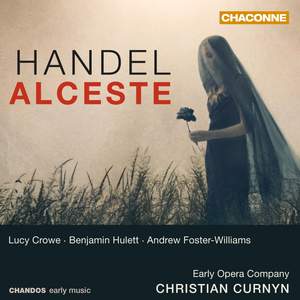
Handel: Alceste RecommendedLucy Crowe (soprano), Benjamin Hulett (tenor) & Andrew Foster-Williams (bass-baritone)
Early Opera Company, Christian Curnyn
Curnyn's delicious recording of the surviving score is amplified with a sinfonia from Admeto and a passacaglia from Radamisto. These fizzily, sexily swung orchestral additions emphasise the parallels... — More…
Awards:
-
Presto Recording of the Week, 14th May 2012
-
BBC Music Magazine, July 2012, Opera Choice
-
Gramophone Magazine, August 2012, Editor's Choice
-
BBC Music Magazine Awards, 2013, Opera Award Winner
CD
$16.25Downloads
What are FLAC and MP3? -
-
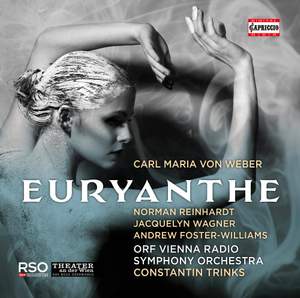
Weber: Euryanthe
Stefan Cerny, Norman Reinhardt, Jacquelyn Wagner, Andrew Foster-Williams
ORF Vienna Radio Symphony Orchestra, Constantin Trinks
The Arnold Schoenberg Choir is excellent: precise and accurate, the women sweet-toned, the men full and solid. Jacquelyn Wagner is an appealing, fresh-voiced Euryanthe; not as smooth or elegant... — More…
Awards:
-
International Classical Music Awards, 2019, Nominee - Opera
2 CDs
$28.00Downloads
What are FLAC and MP3? -
-
Offer,
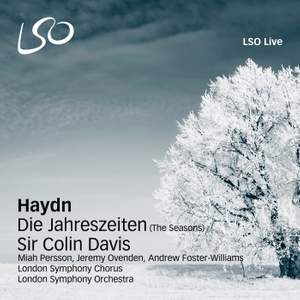
Haydn: The Seasons, Hob.XXI:3 (sung in German)
Miah Persson (soprano), Jeremy Ovenden (tenor), Andrew Foster-Williams (bass-baritone)
London Symphony Chorus & London Symphony Orchestra, Sir Colin Davis
Sir Colin Davis's live account is founded on purposive modern-instrument playing and the conductor's own irrepressible dynamism; in this early eighties, he continues to show a sharp-eared appreciation... — More…
Downloads
What are FLAC and MP3? -
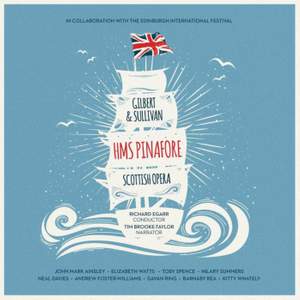
Sullivan, A: HMS Pinafore
RecommendedElizabeth Watts (Josephine), Toby Spence (Ralph Rackstraw), John Mark Ainsley (Sir Joseph Porter KCB), Andrew Foster-Williams (Captain Corcoran), Hilary Summers (Buttercup), Neal Davies (Dick Deadeye), Gavan Ring (Bill Bobstay), Barnaby Rea (Bob Becket), Kitty Whately (Hebe), Tim Brooke-Taylor (narrator)
Scottish...
Richard Egarr brings springy energy to the score...Elizabeth Watts's Josephine has a mischievous touch. — More…
Awards:
-
Presto Recording of the Week, 20th May 2016
-
BBC Music Magazine, August 2016, Opera Choice
-
Presto Recordings of the Year, Finalist 2016
Downloads
What are FLAC and MP3? -
-
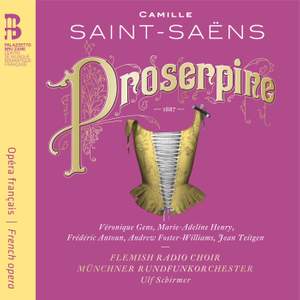
Saint-Saëns: Proserpine
Véronique Gens (Proserpine), Marie-Adeline Henry (Angiola), Frédéric Antoun (Sabatino), Andrew Foster-Williams (Squarocca), Jean Teitgen (Renzo)
Munchner Rundfunkorchester, Flemish Radio Choir, Ulf Schirmer
Frédéric Antoun is a bright, not exactly nuanced Sabatino and Jean Teitgen a warm and sympathetic Renzo, but the main prize goes to Véronique Gens for her utterly superb singing of the title... — More…
Awards:
-
International Classical Music Awards, 2018, Winner - Opera
2 CDs + Book
$37.75Downloads
What are FLAC and MP3? -
-
Offer,
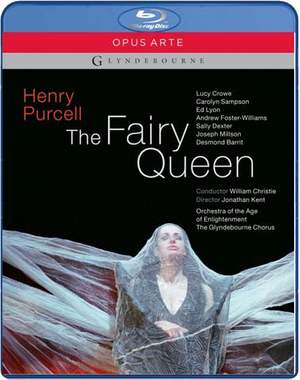
Purcell: The Fairy Queen, Z629 RecommendedLucy Crowe (Juno/Mystery), Claire Debono (Spring/First Fairy), Anna Devin (Second Fairy), Helen-Jane Howells (Eve), Carolyn Sampson (Night), Robert Burt (Mopsa), Sean Clayton (Summer), Ed Lyon (Secrecy/Adam), Adrian Ward (Autumn), Lukas Kargl (Phœbus), Desmond Barrit (Drunken Poet), Andrew Foster-Williams...
Jonathan Kent's joyous Glyndebourne production burst[s] with opulent stagecraft...Kent is abetted by William Christie in the pit, a man of the theatre down to his gainfully-employed fingertips...Altogether... — More…
Awards:
-
Building a Library, September 2011, First Choice (Blu-ray)
-
BBC Music Magazine, November 2010, DVD Choice
-
Gramophone Magazine, October 2010, DVD of the Month
-
Gramophone Awards, 2010, Winner - DVD Performance
-
BBC Music Magazine Awards, 2011, DVD of the Year
-