All recordingsPrices shown exclude VAT. (UK tax is not payable for deliveries to United States.) See Terms & Conditions for p&p rates. | |  | The Very Best of Sviatoslav Richter
and movements from concertos by Brahms, Mozart and Prokofiev; Schubert's Trout Quintet, Beethoven's Tempest Sonata and Schumann's Faschingschwank aus Wien
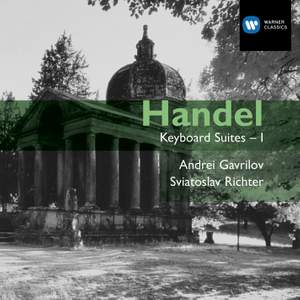
Sviatoslav Richter is universally acknowledged to be one of the greatest pianists of the 20th century, renowned for his virtuoso technique and the depth of his interpretations. He was born in Zhitomir, Russia, in 1915 but grew up in Odessa. Unusually, he was largely self-taught, although his organist father provided him with a basic education in music. He started to work at the Odessa Conservatory where he accompanied the opera rehearsals. He gave his first recital in 1934 at the engineer club of Odessa but did not formally study piano until three years later, when he enrolled in the Moscow Conservatory. He studied with Heinrich Neuhaus who also taught Emil Gilels, and who claimed Richter to be ‘the genius pupil, for whom he had been waiting all his life’. In 1945 he won the USSR Music Competition and the Stalin Prize in 1949, which led to extensive concert tours in Russia, Eastern Europe and China, but he did not appear in the West until he performed in Finland in May 1960. Appearances in Chicago and New York followed later that year and he then gave concerts in Italy, Germany, France and Britain, confirming his reputation for having a mystic communication with the music he played, and a technique that seemed almost super-human. Richter disliked recording in the studio and some of his finest recordings originate from live performances at concerts. The first CD begins with a live recording from the 1979 Tours Festival of Handel’s Keyboard Suite No.5 in E, whose finale is known as ‘The Harmonious Blacksmith. After this comes another live recording, this time it is a delightful short piece by Mozart – Andante and Allegretto in C for violin and piano, believed to be intended as movements of an unfinished sonata – in which Richter is joined by the Russian violinist Oleg Kagan, whose career was tragically cut short by cancer. Staying with Mozart, Richter next performs the opening movement of the Piano Concerto No.22 in E flat K482, followed by the third movement of Beethoven’s Piano Sonata No.17 in D minor known as ‘The Tempest’. This was the first recording that the Soviet authorities allowed Richter to make in the West. Next we hear two works by Schumann: the finale from Faschingsschwank aus Wien (‘Carnival Joke from Vienna’) and the whole of his Piano Concerto in A minor, which has been described as ‘one of the most brilliant jewels in the diadem of Romantic piano literature.’ CD 2 begins with another great masterwork for piano from the Romantic period: Schubert’s Wanderer Fantasy, which is followed by the delightful Theme and Variations from Schubert’s ‘Trout’ Quintet, in which Richter is joined by the double bass player Georg Hörtnagel and members of the Borodin Quartet. Next we hear the romantic third movement of Brahms’s Second Piano Concerto followed in complete contrast by the first movement of Prokofiev’s Piano Concerto No.5. In 1940, while still a student, Richter had given the world premiere of the Sonata No. 6 by Sergei Prokofiev, a composer with whose works Richter was ever after associated. The programme ends with a complete performance of one of the most popular concertos in the entire piano repertoire: Grieg’s Piano Concerto in A minor. | | | In stock - usually despatched within 1 working day. |
|
|
| |  | Handel: Die Acht Grossen Suiten (Eight Great Suites)
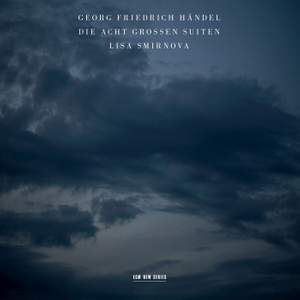
ECM New Series debut for the exceptional Russian-born pianist Lisa Smirnova, playing Handel’s Eight Great Suites (1720), also known as “The Eight London Suites” or “Suites de Pièces pour le Clavecin” – by any name, major pieces in the keyboard literature. Outstanding artists from Glenn Gould to Keith Jarrett have been drawn to these suites, but there are very few recordings of all eight, either on piano or harpsichord, currently on the market. Smirnova opts for the modern piano. She had been working rigorously on the Suites for five years prior to undertaking this recording, making many discoveries. The 1720 edition of Suites – HWV 426-433 – is considered by many the most important collection of Handel’s early works. Published by the composer himself, it includes works from both his Hamburg and English periods, all extensively revised by the composer, right through the printing process. Educated at Moscow’s Tchaikovsky Conservatory, the Salzburg Mozarteum, and with Maria Curcio and Robert Levin, Smirnova (born in Moscow, currently living in Austria) burst onto the classical scene in 1992 with a well-received debut at Carnegie Hall when she was only 20. In 1993, she received the Brahms Prize at the Schleswig-Holstein Music Festival, the first pianist ever to be honoured with this award, and her concert activities have extended to international concert podia in Europe, Asia and the USA. She has a long relationship with the Far East – since 2007 she has been Artistic Director of the Nagasaki-Ojika International Music Festival. Smirnova’s repertoire extends across the centuries – she has collaborated with contemporary composers including Kancheli, Silvestrov and Rihm, and won international awards for her recordings of Bach on MDG. Other widely-praised recordings include her account of Bloch’s works for viola and piano with Daniel Raiskin, on BMG/Arte Nova. “Smirnova here performs the so-called "Eight London Suites" with great sensitivity and poise - the first movement of the Suite No. 2 opens with the most startlingly delicate of trills - and subtle differentiation between the various Gigues, Allemandes, Courantes and Sarabandes whose abundance reflects the suites' origins in contemporary dance forms.” The Independent, 1st December 2011 “as Lisa Smirnova's vivacious account of the Eight Great Suites reminds us, they're a treasure-trove of Handelian wit and humanity. Purists will certainly need to take them on Smirnova's terms, too. Although she engages with period practice...she's no slave to it, producing something unapologetically pianistic and sometimes anachronistic here...Handel with care? Undeniably. And with captivating flair in spades.” BBC Music Magazine, January 2011 ***** “this is a truly delightful couple of discs...for the sound picture not only allows the illusion of a harpsichord when appropriate (try the Prelude to Suite No. 1) but serves the clarity of rapid passagework extremely well...Smirnova's limpid touch and lucid tone are perfect partners for Handel and, with an excellent booklet, one can only look forward to Vol. 2.” Gramophone Magazine, March 2012 “Handel's first set of London suites played on the piano, in the hands of Lisa Smirnova, are a resounding success. This is a performance of real artistry and is unspeakably beautiful at moments. If I had to pick out highlights - a difficult task - the E minor and F# minor suites are, for me, some of the best Handel playing I've heard.” bbc.co.uk, 25th February 2012 ***** BBC Music Magazine
Instrumental Choice - January 2012 |
| | | In stock - usually despatched within 1 working day. |
|
|
| |  | Baroque Masterpieces for Harpsichord
Trevor Pinnock, a global figure in the early music movement for more than thirty years, gives critically acclaimed performances of keyboard music by Scarlatti, Rameau, Greene, Arne and Handel. ‘The playing is first rate and the recording outstanding in its presence and clarity. There are few better anthologies of Scarlatti in the catalogue.’ Penguin Guide of Scarlatti ‘Pinnock chose a mellow instrument here, making his stylish, crisply rhythmic performances even more attractive. Excellent recording.’ Penguin Guide of Rameau | | | In stock - usually despatched within 1 working day. |
|
|
| |  | Handel: Suites for Piano Vol. 1
The Russian pianist Dina Ugorskaja has studied singing, specialising in early music, and has also composed. Her family left Russia in 1990 and Urgorskaja is now based in Munich. She has performed at many festivals and has collaborated with conductors such as Jurowski. Her piano repertoire spans a wide range from the Baroque to contemporary and chamber music. | | | In stock - usually despatched within 1 working day. |
|
|
| |  | Handel: The Great Harpsichord Works
| | | In stock - usually despatched within 1 working day. |
|
|
| |  | Handel - Keyboard Suites I
| | | In stock - usually despatched within 1 working day. |
|
|
| |  | The Eight Harpsichord Suites
Paul Nicholson (harpsichord) | | | In stock - usually despatched within 1 working day. |
|
|
| |  | Handel: Italian Cantatas
Marie-Nicole Lemieux (Alto), Luc Beauséjour (Harpsichord), Marie-Céline Labbé (Flute), Amanda Keesmaat (Cello) | | | In stock - usually despatched within 1 working day. |
|
|
| |  | Piers Adams plays Vivaldi & Handel
Handel: | Sonata in G major, Op. 1, No. 5 Sonata in G minor for recorder and continuo, HWV360, Op. 1 No. 2 Sonata in C major for recorder and continuo, HWV365, Op. 1 No. 7 Keyboard Suite, HWV 430 in E major 'The Harmonious Blacksmith' Flute Sonata in D major, HWV 378 Sonata in F major for recorder and continuo, HWV369, Op. 1 No. 11 Sonata in D minor for recorder and continuo, HWV367a, Op. 1 No. 9a 'Fitzwilliam III' | Vivaldi: | Flute Concerto, Op. 10 No. 1 in F major, RV 433 'La tempesta di mare' Concerto in A minor RV 445 Recorder Concerto in C minor, RV441 Flute Concerto, Op. 10 No. 3 in D major, RV 428 'Il gardellino' Flute Concerto, Op. 10 No. 2 in G minor, RV 439 'La notte' Flautino Concerto in C major, RV443 |
Piers Adams is widely regarded as one of the greatest recorder players of our time. He has been heralded as ‘a dazzling virtuoso star’ (BBC Music Magazine), ‘staggering’ (Gramophone), ‘intensely musical and astonishingly colorful’ (Pittsburg Tribune Review), and ‘the reigning recorder virtuoso in the world today’ (Washington Post). Piers has worked tirelessly to develop the recorder’s repertoire and reputation as a serious solo instrument, in particular through his researches into forgotten corners of the instrument’s repertoire, and his numerous arrangements and transcriptions from a wide range of genres. In 1997 Piers founded his now world-renowned baroque quartet Red Priest, with whom he has toured the globe several times, performing over 1000 concerts on four continents in some of the most prestigious music festivals. The group has appeared frequently on TV and radio – including hour long televised features on LWT’s The South Bank Show (UK) – and recorded several acclaimed discs on Red Priest Recordings. The Vivaldi CD is a 1988 recording previously released on Collins Classics and Cala United. The Handel CD is a 1989 recording previously released on Factory Records. | | | Usually despatched in 4 - 5 working days. |
|
|
| |  | Handel: Harpsichord Suites Volume 1
Handel’s solo keyboard music has for too long been overshadowed by his operas, oratorios, and orchestral music. This comparative neglect seems unjust in view of the considerably large quantity of keyboard music which exists amongst his massive output. Handel was one of the first composers to free the keyboard suite from the formal constraints of Allemande, Courante, Sarabande, Gigue frequently used by German composers of the seventeenth and early eighteenth century, such as Froberger. Gilbert Rowland first studied the harpsichord with Millicent Silver. Whilst still a student at the Royal College of Music, he made his debut at Fenton House 1970 and first appeared at the Wigmore Hall in 1973. His mentors have included Kenneth Gilbert and Fernando Valenti. Recitals at the Wigmore Hall and Purcell Room, appearances at major festivals in this country and abroad, together with broadcasts for Capital Radio and Radio 3 have helped to establish his reputation as one of Britain's leading harpsichordists. His numerous records of works by Scarlatti, Soler, Rameau and Fischer have received considerable acclaim from the national press. The recording of the 13-CD set of Soler sonatas with Naxos was completed in 2006. He also recorded a CD of Sonatas by Albero for London Independent Records two years ago, which was released in 2009. This is his first recording for Divine Art. “His tempi tend to be slow, as in the Allemande of the G major Suite from 1733. He compensates for the rather deliberate unfolding of the music by loading it, at times, with quite florid ornamentation...If Rowland's repeat sections are filled with his characteristically crackling ornaments, they are also more likely than not played on [the] upper manual and the effect is appealingly more intimate.” Gramophone Magazine, July 2011 “He's at his sparkling best in the sets of variations and his clear-sighted and purposeful delivery maintain a strong feeling of cohesion.” International Record Review, September 2011 | | | (also available to download from $21.75) | Usually despatched in 4 - 5 working days. (Available now to download.) |
|
|
| |
|