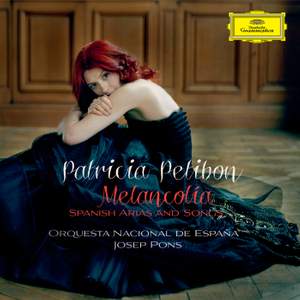
All recordingsPrices shown exclude VAT. (UK tax is not payable for deliveries to United States.) See Terms & Conditions for p&p rates. | |  | Patricia Petibon: MelancoliaSpanish Arias and Songs
| | Adiós Granada Rafael Calleja Gómez & Tomas Barrera Saavedra with Daniel Manzanas, Joël Grare | Bacri: | Melodias de la Melancholia, Op.119b | Falla: | La vida breve: ‘Vivan los que rien!' | Giménez: | La tempránica: Zapateado 'La tarántula é un bicho mú malo' | Granados: | Ay majo de mi vida!: No. 1, La maja dolorosa orchestrated by Rafael Ferrer Tonadillas: No. 8, El mirar de la maja orchestrated by Rafael Ferrer | Montsalvatge: | Canción negra No. 4, Cancion de cuna para dormir a un negrito Canción negra No. 5, Canto negro | Nin: | El Vito (from Cantos populares españoles) with Daniel Manzanas, Joël Grare | Simeon: | Cancíon de Marinela | Torroba: | Peterna | trad.: | Ogundé - uaréré adapted by Wieland Reissmann with Susan Manoff, Joël Grare | Turina: | Poema en forma de canciones, Op. 19: No. 3, 'Cantares' | Villa-Lobos: | Bachianas Brasileiras No. 5: Aria (Cantilena) |
Unique for her dramatic flair, expert musicality, and interpretive powers, soprano Patricia Petibon indulges in her love of Luso-Iberian music. From zarzuela to art song, folk song, the Aria Cantilena of Brazil’s Villa-Lobos, and the traditional Afro-Brazilian Ogundé uareré, Patricia Petibon also samples the new. She includes the world-premiere recording of Nicolas Bacri’s song cycle, which was written in dedication to her. Patricia Petibon adds spice by teaming up with flamenco musicians for one-of-a-kind performances of the zarzuela hit Adios, Granada and the folk tune El vito. Beloved favorites are not neglected: Petibon’s take on La tarántula, Marinela, Canto negro, and La petenera sparkle with light and life. “A remarkable achievement: a fan letter to Spanish music (not excluding South America or an excursion to Villa-Lobos's Brazil) including a new commission from Nicolas Bacri. It's carried out with aplomb...Petibon is especially effective in the zarzuela numbers...Throughout, Petibon's acting and character skills evidently lift each interpretation...Hugely recommended.” Gramophone Magazine, January 2012 “a more apt title is would be hard to imagine...This is in every respect a superlative disc and demonstrates yet again that in Patricia Petibon we have a singer with a real gift for vivid and colourful performances supported by an impeccable technique and real all-round artistry. This is not the best thing she has ever done, simply because just about everything she does is exceptional.” International Record Review, January 2012 “There's a pleasingly rich core to Petibon's voice besides the coloratura heights she's renowned for. She performs with total commitment and without fear and this injects everything she sings with tremendous character.” Classic FM Magazine, February 2012 **** | | | Usually despatched in 2 - 3 working days. |
|
|
| |  | Spanish Love Songs
Spanish Love Songs takes a whirlwind tour of Iberian culture, from the mystically introspective to the opulently romantic. Decades before Spain had its own repertoire of classical songs, French and German musicians mined Spanish themes and folklore for their newly burgeoning canon of art songs. On Spanish Love Songs we hear the great masters Robert Schumann, Hugo Wolf and Maurice Ravel, fascinated by the beauty of Spanish culture, along side the music of Spain's greatest composers of song. “The Bridge CD is a live performance from the 2004 Caramoor Festival. Its star, without a doubt, is the great mezzo Lorraine Hunt Lieberson, who died less than two years later. ...Hunt Lieberson is utterly memorable.” BBC Music Magazine, March 2008 **** “Lieberson's continually finding that extra gear of emotion that makes a song a three-dimensional staging rather than a platform recital. Her partner, is the fresh, versatile tenor of Joseph Kaiser… Tight, well works accompaniments… complete a little gem of an issue.” Gramophone Magazine, March 2008 | | | Usually despatched in 2 - 3 working days. |
|
|
| |  | Victoria de los AngelesSpanish Songs
“Recorded near the start of her career, the Spanish soprano here sings art songs and folk songs in her own language, with impeccable technique, style and expressive power. Her piano accompanist is the marvellous Gerald Moore.” BBC Music Magazine, March 2008 ***** | | | Usually despatched in 4 - 5 working days. |
|
|
| |  | AsturianaHighly melodic and atmospheric ‘songs without words’ by Spanish and Argentinean composers De Falla, Granados, Ginastera, Guastavino, Montsalvatge and Buchardo, transcribed by Kashkashian and Levin
“It looks like a standard song recital, yet it's played on the viola. …the opening excerpt from Falla's Seven Popular Songs… turns up later in its usual context to hypnotic effect: slower than would be singable, and so contemplative that it sounds like Arvo Pärt. The sense of concentration, with minute inflections of line and timbre in which the pianist is caught up too, continues into the ensuing Granados set.” BBC Music Magazine, December 2007 ***** “The performances deceive the ear into thinking these idiomatic arrangements are instrumental originals.” Gramophone Magazine, November 2007 | | | Usually despatched in 4 - 5 working days. |
|
|
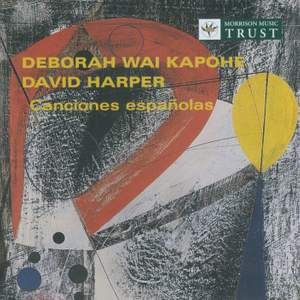
| |  | Canciones españolas
Deborah Wai Kapohe (soprano), David Harper (piano) | |
|
| |  | A Spanish Song Recital
Granados: | Tonadillas: No. 1, Amor y odio Tonadillas: No. 2, Callejeo Tonadillas: No. 3, La maja dolorosa Tonadillas: No. 4, El majo discreto Tonadillas: No. 6, El majo timido Tonadillas: No. 7, La maja de Goya Tonadillas: No. 8, El mirar de la maja Tonadillas: No. 11, El tra la la y el punteado Tonadillas: No. 12, Elegia Eterna | Guridi Bidaola: | Llámale con el pañuelo - ¡Como quieres que adivine! | Montsalvatge: | Canciones negras (5) | Obradors: | La mi sola, Laureola - ¿Corazón por qué pasáis...? - Con amores, la mi madre - Del cabello más sutil - El Vito | Rodrigo: | Pastorcito santo - ¿Con qué la lavaré? - Vos me matasteis | Turina: | Farruca (from Triptico, Op. 45) Saeta en forme de Salve a la Virgen de la Esperanza, Op. 60 |
| | | Usually despatched in 2 - 3 working days. |
|
|
| |  | Mosaic d'EspañaSpanish and Sephardic songs for soprano and guitar
| | Five Sephardic songs arranged by David Sutton-Anderson & Avril Anderson | Gerhard: | Cantares (Seven Spanish songs for high voice and guitar) | Granados: | Tonadillas: No. 6, El majo timido Tonadillas: No. 7, La maja de Goya Tonadillas: No. 3, La maja dolorosa Tonadillas: No. 11, El tra la la y el punteado Tonadillas: No. 8, El mirar de la maja Tonadillas: No. 4, El majo discreto | Moretti, F: | La Reflexión, Op. 24 No. 2 La Explicación, Op. 24 No. 4 La Irresolución, Op. 24 No. 1 La Curiosidad, Op. 24 No. 5 El Consejo, Op. 24 No. 11 | Sor: | Cesa de Atormentarme De Amor en las Prisiones Cómo ha de resolverse Si dices que mis ojos El Que Quisiera Amando Muchacha, y la vergüenza |
| | | Usually despatched in 8 - 10 working days. |
|
|
| |  | The Catalan Piano Tradition
Albéniz: | Improvisations (3) for piano | Chopin: | Waltz No. 7 in C sharp minor, Op. 64 No. 2 Nocturne No. 9 in B major, Op. 32 No. 1 Waltz No. 2 in A flat major 'Grande Valse Brillante', Op. 34 No. 1 | Granados: | Danza española, Op. 37 No. 7 'Valenciana' Danza española, Op. 37 No. 10 'Melancólica' El Pelele Tonadillas: No. 9, Las Currutacas modestas Tonadillas: No. 2, Callejeo Tonadillas: No. 3, La maja dolorosa: III 'De aquel majo amante' Tonadillas: No. 1, Amor y odio Tonadillas: No. 11, El tra la la y el punteado Tonadillas: No. 4, El majo discreto Tonadillas: No. 6, El majo timido Tonadillas: No. 8, El mirar de la maja Tonadillas: No. 7, La maja de Goya Tonadillas: No. 5, El majo olvidado | Liszt: | Hungarian Rhapsody, S244 No. 13 in A minor Isolde's Liebestod (after Wagner), S447 | Malats: | Serenata espanola | Scarlatti, D: | Keyboard Sonata K190 in B flat major (trans. Granados) |
Alicia de Larrocha (piano), Conchita Badia (soprano), Conchita Supervia (mezzo-soprano), Enrique Granados (piano), Isaac Albéniz (piano), Joaquin Malats (piano) Includes composers' own recordings from early 20th century. | | | Usually despatched in 4 - 5 working days. |
|
|
| |  | Victoria de los Angeles: The Early Recordings 1942-1953
Brahms: | Von ewiger Liebe, Op. 43 No. 1 | Falla: | El pano moruna (No. 1 from Siete canciones populares españolas) Seguidilla murciana (No. 2 from Siete canciones populares españolas) Jota (No. 4 from Siete canciones populares españolas) | Fuste: | Háblame de amores | Granados: | Tonadillas: No. 3, La maja dolorosa Tonadillas: No. 4, El majo discreto Tonadillas: No. 8, El mirar de la maja | Guridi Bidaola: | Jota (from Six canciones castellanas) No quiero tus avellanas (from Six canciones castellanas) | Handel: | Joshua: Oh! had I Jubal's lyre | Nin: | El paño murciano (from Cantos populares españoles) El Vito (from Cantos populares españoles) | Respighi: | Stornellatrice E se un giorno tornasse, P. 96 | Schumann: | Widmung, Op. 25 No. 1 Der Nussbaum, Op. 25 No. 3 Ich grolle nicht (No. 7 from Dichterliebe, Op. 48) | Toldrá: | Madre, unos ojuelos ví | trad.: | Hungarian folksongs & Csárdás | Turina: | Farruca (from Triptico, Op. 45) Saeta en forme de Salve a la Virgen de la Esperanza, Op. 60 Poema en forma de canciones, Op. 19: No. 3, 'Cantares' | Valverde: | Clavelitos | Vives: | El retrato de Isabela El amor y los ojos |
“The two Respighi songs are magical performances – Stornellatrice, with the golden voice at its richest and E se un giorno tornasse, a study in subtle shading of tone, a dialogue between a mother and her dying, jilted daughter. For those two brief items alone, superbly transferred, this collection is an essential for all admirers of this singer, but there's much more. Handel's 'O had I Jubal's lyre' in German rather than English may be odd, but the performance sparkles and among the Lieder it's good to have not just 'Der Nussbaum' – the Schumann song which was always special to her – but two previously unpublished, 'Widmung' from the Myrthe songs and 'Ich grolle nicht' from Dichterliebe. Through the whole collection the superb transfers capture the full–throated glory of los Angeles's voice at the beginning of her career. The 1942 recordings of two Hungarian folk– songs, previously unpublished, may be rough and limited – made when the singer was only 18 – but they amply demonstrate that already the voice was fully developed in its beauty. No fewer than 18 of the 27 items are of Spanish songs, and though in one or two instances los Angeles was destined to make even more idiomatic readings later with a Spanish accompanist, these ones with Gerald Moore as her partner have a freshness and brilliance that has rarely been matched in this repertory. In particular it's good to have her first recording of the encore number which she made her own, Clavelitos.” Gramophone Classical Music Guide, 2010 | | | Usually despatched in 4 - 5 working days. |
|
|
| |  | Great Singers - Rosa PonselleAmerican Recordings 1939 and 1954
| | Star vicino attr. Rosa Interview with Ruby Mercer | Alvarez, A: | La partida | anon.: | Jeune fillette Carmen-Carmela | Arensky: | On Wings of Dreams | Beethoven: | In questa tomba oscura, WoO.133 | Bizet: | Agnus Dei | Brahms: | Von ewiger Liebe, Op. 43 No. 1 | Buzzi-Peccia: | Colombetta | Charles, A: | When I have sung my songs two versions | Chausson: | Poème de l'amour et de la mer, Op. 19 Le temps des lilas | Chopin: | Tristesse éternelle | Ciampi: | Tre giorni son che Nina Gli tre cicisbei ridicoli | Debussy: | Beau Soir La chevelure | Delibes: | Bonjour, Suzon! | Denza: | Se | Donaudy: | O del mio amato ben | Duparc: | L'Invitation au voyage | Falvo: | Dicitencello vuie | Farley: | The Night Wind | Fontenailles: | Al’aimé | Granados: | Tonadillas: No. 8, El mirar de la maja | Lockhart: | In the Luxembourg Gardens | Lully: | Bois épais (from Amadis) | Luzzi: | Ave Maria | Martini, G B: | Plaisir d'amour | Millard: | Ave Maria | Mozart: | Voi che sapete (from Le nozze di Figaro) | Paisiello: | Nel cor più non mi sento | Paladilhe: | Psyché | Persico: | Rosemonde | Riego: | Homing | Rimsky Korsakov: | The Nightingale and the Rose | Sadero: | Fa la nana, bambin' Amuri, amuri I battitori di grano | Saint-Saëns: | Guitares et Mandolines (St-Saëns) | Sandoval: | Ave Maria | Schubert: | Ave Maria, D839 two versions Erlkönig, D328 An die Musik D547 Der Tod und das Mädchen, D531 | Strauss, R: | Morgen, Op. 27 No. 4 | Tchaikovsky: | None but the lonely heart, Op. 6 No. 6 | Tosti: | Si tu le voulais A vucchella Ideale Marechiare Could I Aprile Ave Maria | trad.: | Drink to me only with thine eyes | Trunk: | Mir träumte von einem Königskind, Op. 4, No. 5 | Wagner: | Träume (No. 5 from Wesendonck-Lieder) | Wolf-Ferrari: | Rispetto |
This 3 CD set includes her last studio recordings from 1939 as well as the historical sessions she made 15 years later at her home, ‘Villa Pace’, in Baltimore, when the great diva was persuaded to come out of retirement. New restorations by Ward Marston | | | (also available to download from $12.50) | Usually despatched in 2 - 3 working days. (Available now to download.) |
|
|
| |
|