Rossini: Dolci silvestri... Perché mai le luci apprimo Arsace (from Aureliano in Palmira)

This page lists all recordings of Dolci silvestri... Perché mai le luci apprimo Arsace (from Aureliano in Palmira), by Gioacchino Antonio Rossini (1792-1868) on CD.

Prices shown exclude VAT. (UK tax is not payable for deliveries to United States.)
See Terms & Conditions for p&p rates.

The World of Castrati: The Voices of Angels

The World of Castrati: The Voices of Angels


Bach, J C:

Ebben si vada...lo ti lascio: Ebben si vada

Adriano in Siria: Cara, la dolce fiamma

Broschi, R:

Qual guerriero in campo armato (from Idaspe)

Caldara:

Giacché mi tremi in seno (from La Passione di Gesù Cristo Signor Nostro)

Gluck:

Se mai senti spirarti sul volto (from La clemenza di Tito)

Handel:

Crude furie degli orridi abissi (from Serse)

Scherza, infida (from Ariodante)

Frondi tenere e belle ... Ombra mai fù (from Serse)

Mi lusinga il dolce affetto (from Alcina)

Dall'ondoso periglio (from Giulio Cesare)

Dolci chiodi, amate spine (from La Resurrezione)

Ho un non so che nel cor (from La resurrezione)

Se l'arco avessi (from Admeto)

Quivi, tra questi soltari orr

In mille dolci modi (from Sosarme)

Ritorna pur, ritorna...Voglio che sia l'indegno (from Faramondo)

Lunga serie d'alti eroi (from Parnasso in festa)

Hasse, J A:

Spesso tra vaghe rose (from Il Siroe Re di Persia)

Monteverdi:

Hor mentre i canti alterno (from L'Orfeo)

Mozart:

Deh, per questo istante solo (from La Clemenza di Tito)

Venga pur, minacci e frema (from Mitridate, rè di Ponto)

Rossini:

Dolci silvestri... Perché mai le luci apprimo Arsace (from Aureliano in Palmira)

Vivaldi:

Sposa son disprezzata (from Bajazet)

Il Bajazet (Il Tamerlano) : Anch'il mar par che sommerga

Destin nemico...Destin avaro (from La fida ninfa)


In this double album, the greatest vocal artists of the present day offer their own vision of the singing of their legendary predecessors.

The extraordinary adulation accorded to castrati during the seventeenth and eighteenth centuries is still today one of the most fascinating phenomena in the history of music. During this golden age of the castrato, these male singers endowed with high voices that combined incredible refinement, amazing power and superhuman virtuosity took the musical world by storm. The whole of Europe was overcome by infatuation for these vocal prodigies. In the absence of the castrati themselves, the singers of today face the formidable challenge of reviving their repertoire. Both male and female singers now undertake the task of bringing back to life the wondrous voices of their androgynous forebears, in music that is by turns unsettling, deeply moving and of a dizzying virtuosity.

A 2CD-Compilation for the Price of 1 + 1 Bonus DVD - Digipack Format

Virgin - 6487912

(CD - 2 discs)

$26.00

In stock - usually despatched within 1 working day.

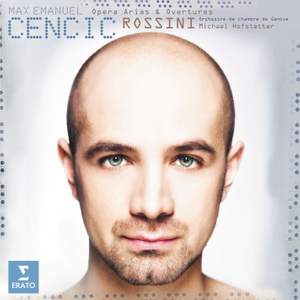
Max Emmanuel Cencic - Rossini: Opera Arias & Overtures

Max Emmanuel Cencic - Rossini: Opera Arias & Overtures


Rossini:

Oh patria! Dolce e ingrate patria Tancredi (from Tancredi)

Dolci silvestri... Perché mai le luci apprimo Arsace (from Aureliano in Palmira)

Aureliano in Palmira - Overture

Tancredi Overture

Mura felici (from La donna del lago)

Ah si pera...ormai la morte (from La donna del lago)

Semiramide Overture

Eccomi alfine in Babilonia (from Semiramide)

In si barbara sciagura (from Semiramide)


Max Emanuel Cencic (counter-tenor)

Orchestre de Chambre de Genève, Michael Hofstetter

“If countertenors can sing Handel, why not Rossini? Among the many fine singers Rossini heard during his student days in Bologna, two were especially important: the castrato Giovan Battista Velluti and the young Spanish soprano Isabella Colbran. Hearing both on the same stage must have been an astonishing experience: the old order of the castrati, doomed to extinction, side by side with the new order of singing actresses whose brilliantly developed coloratura techniques were in some sense a bequest from the castrati. Purity of tone, flexibility of technique and a 'profoundly penetrating accent' were what most impressed Rossini about the castrati. It was a different sound from that of the modern countertenor but the stylistic principles are not a hundred miles removed.
The singing of Viennese countertenor Max Emmanuel Cencic is distinguished by good rhythm, crisp divisions and clear, expressive word use. The range these roles require sits comfortably on his voice. The G below the stave is rounded and full, the two octaves beyond are clear and bright, albeit with a marked vibrato in places. Cencic's musicianship is generally impeccable: a tribute to the values instilled in him during his time in the Vienna Boys' Choir which he left in 1992, nine years before his decision to 're-create' himself as a countertenor.
Rossini created one operatic role for Velluti, in Aureliano in Palmira. Having antagonised the company with his self-regarding antics, Velluti is said to have made next to no impact onstage.
Cencic does not disappoint in the opera's celebrated pastoral plaint or in Tancredi's cabaletta 'Di tanti palpiti'. However, it is the scene from Act 2 of Semiramide which provides the recital's high-point. Hamlet-like, Arsace recognises his mother's guilt (in an expressive transition finely realised by Cencic) alongside his duty to avenge his father's death, as music familiar from the overture anticipates the crises to come.
With three overtures, Cencic's contributions add up to just 49 minutes. Short measure, you might think, but more than enough to give one a sense of what a talented countertenor can bring to Rossini.”
Gramophone Classical Music Guide, 2010

Virgin - 3857882

(CD)

$12.50

In stock - usually despatched within 1 working day.

Copyright © 2002-13 Presto Classical Limited, all rights reserved.