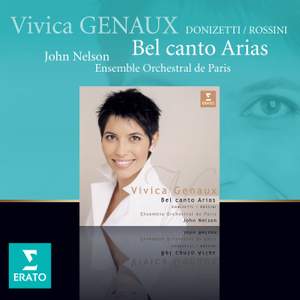
Prices shown exclude VAT. (UK tax is not payable for deliveries to United States.) See Terms & Conditions for p&p rates. | |  | Vivica Genaux: Bel Canto Arias
Rossini, Bellini, Donizetti: these three men alone sufficed to popularise the art of Italian opera during the first half of the nineteenth century, a century so propitious to the spread of romanticism in all its manifestations. If we set aside Bellini, who flashed across the sky like a meteor, this leaves Rossini and Donizetti, and the differences between them are patent. Rossini was born in Pesaro in 1792 and died in Paris in 1868. His stage career began in 1810 in Venice with a ‘farsa’, Il cambiale di matrimonio, establishing immediately the high standard which he maintained without faltering until he suddenly stopped writing operas in 1839. His last opera was Guillaume Tell which failed to convince the regular audience at the Paris Opéra, unresponsive as they were to its ground-breaking aspects. Rossini’s decision to stop has given rise to endless speculation, but the most likely explanation is that he had grown weary of seeing audiences’ tastes changing and forsaking the ideal of vocal beauty for which he always strove. Donizetti’s life was shorter, and more full of drama – though we should no longer see Rossini, who suffered from depression, as a jovial fun-lover, a popular but misleading view. Donizetti was born in Bergamo in 1797 and died there in April 1848. A pupil of Giovanni Simone Mayr, he had a very full professional life which was nevertheless marred by sorrow and illness. He produced over seventy-five operas of all kinds from comic to tragic and, like Rossini, his career took him to Paris. Surprisingly, much of Rossini’s output is not well known. The image of him which mainly springs to mind is linked to the comedies La Cenerentola, L’italiana in Algeri and above all Il barbiere di Siviglia, an undisputed masterpiece and in a way his emblematic work. But this is to leave out a large number of significant works, his opere serie, which are rarely performed today despite their outstanding qualities. The type of female voice Rossini preferred was the contralto (a term to be understood in the context of its time, when vocal nomenclature was far less precise than today), with a sumptuous, opulent low register, tawny amber colours and a full, rich sound. Although the contralto’s high register was at first only rarely called upon, she was not confined to viragos or trouser roles; for certain parts she had to be capable of moderating and lightening her naturally full-bodied instrument. When the writing moves into the upper range it takes on similarities with the mezzo-soprano, as well as slightly more femininity. The disappearance of the castrati at the start of the nineteenth century encouraged the fashion for the contralto. Rossini was probably harking back to the golden age of the castrato when he wrote some of his finest serious roles, such as Arsace in Semiramide. This was written for Rosa Mariani, who performed it for the first time in Venice in 1823 opposite the composer’s wife Isabella Colbran as the Queen of Babylon. It is a magnificent role, that of a courageous young man of whom the queen is enamoured and who, by the most unhappy mischance, turns out to be her son, and, even more unfortunately, the involuntary cause of her death. ‘Eccomi alfine in Babilonia… Ah! quel giorno’ is his entrance aria, classically structured in three parts, recitative, slow section, quick section: certainly a bravura piece, but one in which the singer has to give expression to feelings as varied as ardent love and fear of the future. Even finer, and more intensely poetic, is Malcolm’s ‘Mura felici’ from La donna del lago, a Scottish tale over which hovers the shade of Sir Walter Scott, so dear to nineteenth-century opera. In 1819, at the San Carlo in Naples, Rosmunda Pisaroni captured the dream-like essence of this aria so perfectly that the smallpox blemishing her face was entirely forgotten. But the contralto can also play the woman – especially of the strong-willed, courageous type, like Isabella in L’italiana in Algeri, a difficult part which, in Venice in 1813, gave Marietta Marcolini the chance to shine. The role exhibits throughout a blend of charm and virtuosity, unabated energy and unshakable good humour, whether at Isabella’s entrance in Act I, cursing her fate before sharpening her weapons of seduction (‘Cruda sorte’) or exhorting her beloved, before the finale, to behave like a true Italian (‘Pensa alla patria’). For the final rondo of La Cenerentola, the voice lightens, using less of its lower register; Angelina’s goodness and joie de vivre shine through. At the world premiere in Rome in 1817, Geltrude Giorgi-Righetti took the part. A year earlier, also in Rome, she lent her personality to the exuberant Rosina in Il barbiere di Siviglia, who displays her determination to marry Lindoro in ‘Una voce poco fa’. Donizetti followed a different path both musically and theatrically. The idea of opera as simply a feast of singing begins to fade before dramatic urgency; the power of song alone is no longer enough, and words come into their own. Can we still speak of ‘bel canto’? The same devices are used, the same ornamentation, the role of colour, nuance, dynamics and contrast, but they are regarded more as a means than as an end in themselves. At the Teatro Carcano in Milan in 1830, Anna Bolena was enthusiastically received. This time the contralto (Amalia Laroche) again had a trouser role, the page Smeton; we can perhaps see something of Cherubino in this adolescent boy who is far from indifferent to Anna’s charms (‘È sgombro il loco’, from Act I, Scene 1). The Victor Hugo-inspired Lucrezia Borgia was not to the liking of either the poet or the censor. Its hero Orsini is yet again a trouser role (one of Marietta Brambilla’s parts at La Scala, Milan, in 1833); he launches the plot in the prologue by telling his friend Gennaro that they will both be killed by Lucrezia Borgia – ‘Nella fatal di Rimini’. Later, during the fateful banquet of the final act he sings a brindisi, a drinking-song with a catchy rhythm which was immensely popular at the time (‘Il segreto per esser felici’); its second verse lends itself to brilliant ornamentation. Alahor in Granata was first staged by the Teatro Carolino in Palermo in January 1826, but the work was forgotten throughout the twentieth century until the Teatro de la Maestranza in Seville revived it for the opening of its 1998 season. It is a youthful work, though it came after some remarkably accomplished efforts such as the delightful L’ajo nell’imbarazzo (1824), itself preceded, in 1822, by Zoraide di Granata, another picturesque piece drawn from Spanish history. The trouser role here is that of King Muley-Hassem (first performed by Marietta Gioia-Tamburini), who is in love with Zobeida, a member of an enemy tribe, the Abencerrages. Here, the king appears in the role of peace-maker; his efforts put an end to the war and win him his beloved. There could be no better way to round off this gallery of portraits devoted to a voice distinguished, among other qualities, by its rarity. | | | In stock - usually despatched within 1 working day. |
|
|
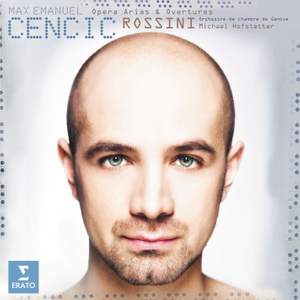
| |  | Max Emmanuel Cencic - Rossini: Opera Arias & Overtures
“If countertenors can sing Handel, why not Rossini? Among the many fine singers Rossini heard during his student days in Bologna, two were especially important: the castrato Giovan Battista Velluti and the young Spanish soprano Isabella Colbran. Hearing both on the same stage must have been an astonishing experience: the old order of the castrati, doomed to extinction, side by side with the new order of singing actresses whose brilliantly developed coloratura techniques were in some sense a bequest from the castrati. Purity of tone, flexibility of technique and a 'profoundly penetrating accent' were what most impressed Rossini about the castrati. It was a different sound from that of the modern countertenor but the stylistic principles are not a hundred miles removed. The singing of Viennese countertenor Max Emmanuel Cencic is distinguished by good rhythm, crisp divisions and clear, expressive word use. The range these roles require sits comfortably on his voice. The G below the stave is rounded and full, the two octaves beyond are clear and bright, albeit with a marked vibrato in places. Cencic's musicianship is generally impeccable: a tribute to the values instilled in him during his time in the Vienna Boys' Choir which he left in 1992, nine years before his decision to 're-create' himself as a countertenor. Rossini created one operatic role for Velluti, in Aureliano in Palmira. Having antagonised the company with his self-regarding antics, Velluti is said to have made next to no impact onstage. Cencic does not disappoint in the opera's celebrated pastoral plaint or in Tancredi's cabaletta 'Di tanti palpiti'. However, it is the scene from Act 2 of Semiramide which provides the recital's high-point. Hamlet-like, Arsace recognises his mother's guilt (in an expressive transition finely realised by Cencic) alongside his duty to avenge his father's death, as music familiar from the overture anticipates the crises to come. With three overtures, Cencic's contributions add up to just 49 minutes. Short measure, you might think, but more than enough to give one a sense of what a talented countertenor can bring to Rossini.” Gramophone Classical Music Guide, 2010 | | | In stock - usually despatched within 1 working day. |
|
|
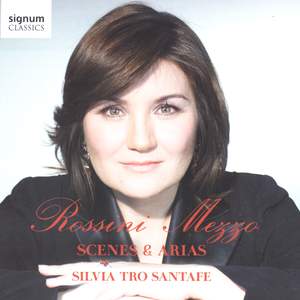
| |  | Rossini Mezzo - Scenes & Arias
Silvia Tro Santafé (mezzo) Orquesta Sinfónica de Navarra & Lluís Vich Vocalis, Julian Reynolds If it were not for the operas of Gioachino Rossini, the operatic repertory of the mezzo soprano would lack many of its most fascinating characters and music. Silvia Tro Santafé, a fast-rising star on the international stage, proves herself a true 'Rossini Mezzo' in this collection of Rossini's scenes and arias, accompanied by the excellent Orquesta Sinfónica de Navarra and Lluís Vich Vocalis. “An impressive mezzo takes on some of Rossini's most demanding characters. This is a most impressive recital.” Gramophone Magazine, January 2010 | | | Usually despatched in 3 - 4 working days. |
|
|
| |  | Opera Stars in Concert
Madrid Symphony Orchestra, Gian Paolo Sanzogno | | | Usually despatched in 2 - 3 working days. |
|
|
| |  | Jennifer Larmore: In Performance!Live 2001
| | | Usually despatched in 4 - 5 working days. |
|
|
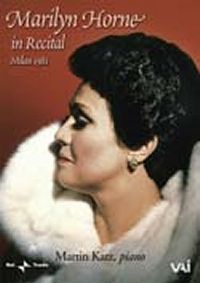
| |  | Marilyn Horne in Recital: Milan, 1981
Alvarez, F M: | La Partida | Beethoven: | In questa tomba oscura, WoO.133 Zärtliche Liebe 'Ich liebe dich', WoO 123 Busslied (No. 5 from 6 Lieder von Gellert, Op. 48) | Copland: | Ching-a-ring Chaw Simple Gifts (from Old American Songs, Set I) Long Time Ago At the River | Donizetti: | Il segreto per esser felici (from Lucrezia Borgia) | Duparc: | L'Invitation au voyage Extase Le Manoir de Rosemonde | Foster, S: | Beautiful Dreamer I Dream of Jeanie with the Light Brown Hair | Granados: | Tonadillas: No. 3, La maja dolorosa | Handel: | Semele: Hence, Iris, hence away | Montsalvatge: | Canción negra No. 4, Cancion de cuna para dormir a un negrito | Obradors: | El Vito (from Canciones clásicas españolas) | Rossini: | Eccomi alfine in Babilonia (from Semiramide) Se il vuol, la molinara |
Though Marilyn Horne is known mostly for her virtuosic operatic roles, she is a superb recitalist who can scale her powerful voice down to the more intimate requirements of the recital stage. In 1981, she appeared at Milan’s La Scala opera house in a recital consisting of music by Italian, German, Spanish, French and American composers. Horne was in particularly superb form that evening, partnered brilliantly by Martin Katz at the piano. 93 minutes, color, mono. Live performance: 2nd June, 1981 | | | Usually despatched in 4 - 5 working days. |
|
|
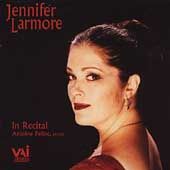
| |  | Jennifer Larmore in Recital
Taped live on 5th January, 2001, at the Performing Arts Center, Purchase College, New York. Approx. 82 minutes, USA, 2001, Color, Stereo | | | Usually despatched in 4 - 5 working days. |
|
|
| |  | Marilyn Horne - The Complete Decca Recitals
Bach, J S: | Magnificat in D major, BWV243: Et exsultavit Magnificat in D major, BWV243: Esurientes implevit bonis Christmas Oratorio, BWV248: Schlafe, mein Liebster St Matthew Passion, BWV244: Erbarme dich Bist du bei mir, BWV508 | Beethoven: | Abscheulicher! Wo eilst du hin? (from Fidelio) | Bellini: | Lieto del dolce incarco…Se Romeo t'uccise un figlio (from I Capuleti e i Montecchi) | Bizet: | L'amour est un oiseau rebelle 'Habanera' (from Carmen) Près des remparts de Séville (Séguedille) (from Carmen) Adieux de l'hotesse Arabe Chanson d'Avril Vieille chanson Absence | Copland: | Old American Songs: excerpts | Debussy: | Trois chansons de Bilitis | Donizetti: | Deciso è dunque...le richezze (from La Figlia del Reggimento) | Falla: | Siete Canciones populares españolas | Gluck: | J'ai perdu mon Eurydice (from Orphée et Eurydice) Divinités du Styx (from Alceste) | Gounod: | Ô ma lyre immortelle (from Sapho) | Handel: | Messiah: O thou that tellest good tidings to Zion Messiah: I know that my Redeemer liveth Scacciata dal suo nido (from Rodelina) Dove sei, amato bene? (from Rodelinda) Vivi, tiranno, io t'ho scampato (from Rodelinda) | Mahler: | Rückert-Lieder (5 songs, complete) Lieder eines fahrenden Gesellen (4 songs, complete) Kindertotenlieder | Massenet: | Ces lettres! (from Werther) Va! Laisse couler mes larmes (from Werther) | Meyerbeer: | Ah, mon fils! (from Le Prophète) O prêtres de Baal (from Le Prophète) Nobles seigneurs, salut! (from Les Huguenots) | Mozart: | Parto, parto, ma tu ben mio (from La Clemenza di Tito) | Nin: | Villancico Castellano (from Villancicos Españolas) Jesus de Nazareth (from Villancicos Españolas) Villancico Asturiano (from Villancicos Españolas) Villancico Andaluz (from Villancicos Españolas) | Rossini: | Una voce poco fa (from Il barbiere di Siviglia) Assisa a' piè d'un salice (from Otello) Di tanti palpiti (from Tancredi) Bel raggio lusinghier (from Semiramide) Pronti abbiamo...Amici in ogni evento...Pensa alla patria (from L'Italiana in Algeri) Eccomi alfine in Babilonia (from Semiramide) Cruda sorte! Amor tiranno! (from L'Italiana in Algeri) Nacqui all'affanno, al pianto...Non più mesta (from La Cenerentola) L'ora fatal s'appressa ... Giusto ciel! (from L'Assedio di Corinto) Mura felici (from La donna del lago) Tanti affetti in tal momento (from La donna del lago) Non temer, d' un basso affetto (from Maometto II) | Saint-Saëns: | Printemps qui commence (from Samson et Dalila) Mon cœur s'ouvre à ta voix (from Samson et Dalila) | Schubert: | Im Frühling, D882 Nacht und Träume, D827 Die junge Nonne, D828 Fischerweise, D881 (Schlechta) | Schumann: | Die Lotosblume, Op. 25 No. 7 Aus den hebräischen Gesängen, Op. 25 No. 15 Die Kartenlegerin, Op. 31 No. 2 Abendlied, Op. 85 No. 12 | Strauss, R: | Schön sind, doch kalt die Himmelssterne, Op. 19, No. 3 Für fünfzehn Pfennige Op. 36 No. 2 Befreit, Op. 39 No. 4 | Thomas, Ambroise: | Connais-tu le pays (from Mignon) Me voici dans son boudoir 'Gavotte' (from Mignon) Elle est là! Près de lui! (from Mignon) | Verdi: | Stride la vampa (from Il Trovatore) Condotta ell’era in ceppi (from Il Trovatore) | Wagner: | Wesendonck-Lieder (5) | Wolf, H: | Auf einer Wanderung (No. 15 from Mörike-Lieder) Der Genesene an die Hoffnung (No. 1 from Mörike-Lieder) Mein Liebster hat zu Tische mich geladen (No. 25 from Italienisches Liederbuch) |
and traditional American folk songs
The great American mezzo-soprano Marilyn Horne celebrated her her 70th birthday in January 2004 and that year also marked 50 years since her professional debut. Horne’s debut in 1954 was in in Los Angeles. That same year her name and voice was brought to many more people than could ever hear her in the opera house through the 1954 film Carmen Jones in which she sang the dubbed voice of Dorothy Dandridge. Her Covent Garden debut was as Marie in Wozzeck (sung in English at that time) in 1964 – she had made her San Francisco debut in 1960 with the same role. It was with Joan Sutherland that Marilyn Horne found the perfect vocal partner and their performances in the great bel canto operas by Rossini, Bellini and Donizetti took the opera world by storm in the 1960s and early 1970s. By the time she retired in 1998, Marilyn Horne’s long and distinguished career embraced an enormous variety of operatic roles, as well as a wide variety of solo song ranging from Schubert, Schumann and Mahler through to modern American songs. Such a wide repertory was due to the sheer range of her voice and its remarkable flexibility, a voice that could sustain long lines of melody as well as negotiate the most florid vocal pyrotechnics. Marilyn Horne participated in a number of complete opera recordings (among them classic recordings of Norma and Semiramide with Joan Sutherland) for Decca and also made ten recital programmes. The complete recitals are now reissued in their entirety as a Collector Edition on 11 CDs and preserve the original sequence of music as presented on vinyl; the original LP cover art is reproduced for the CD sleeves. “When every single item brings wonderment it is impossible to single out one above the rest, and the recording is outstandingly vivid...her Rossini recital is one of the most cherishable among all Rossini records ever issued. The voice is in glorious condition, rich and firm throughout its spectacular range, and is consistently used with artistry and imagination, as well as brilliant virtuosity in coloratura. By any reckoning, this is thrilling singing.” Penguin Guide, 2011 edition | | | Usually despatched in 2 - 3 working days. |
|
|
| |
|