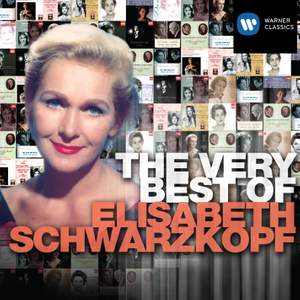
Prices shown exclude VAT. (UK tax is not payable for deliveries to United States.) See Terms & Conditions for p&p rates. | |  | The Very Best of Elisabeth Schwarzkopf
Bach, J S: | Cantata BWV51 'Jauchzet Gott in allen Landen': Aria Bist du bei mir, BWV508 | Beethoven: | O wär' ich schon mit dir vereint (Marzelline) | Heuberger: | Gehen wir ins Chambre séparée) from The Opera Ball | Humperdinck: | Brüderchen, komm tanz mit mir (Dance Duet from Hänsel und Gretel) | Lehár: | Viljalied (from Die lustige Witwe) | Mozart: | Non so più cosa son, cosa faccio (from Le nozze di Figaro) Porgi amor (from Le nozze di Figaro) E Susanna non vien! … Dove sono i bei momenti (from Le nozze di Figaro) In quali eccessi ... Mi tradì quell'alma ingrate (from Don Giovanni) Come scoglio (from Così fan tutte) Ridente la calma, K152 | Schubert: | An die Musik D547 Das Lied im Grünen, D917 Nachtviolen D752 (Mayrhofer) Der Musensohn, D764 (Goethe) | Siecynski: | Wien, du Stadt meiner Traüm | Smetana: | Endlich allein (from Die verkaufte Braut) | Strauss, J, II: | Klänge der Heimat (from Die Fledermaus) | Strauss, R: | Da geht er hin (from Der Rosenkavalier, Op. 59) Es gibt ein Reich (from Ariadne auf Naxos) Das war sehr gut, Mandryka (from Arabella) Frühling (from Vier Letzte Lieder) Im Abendrot (from Vier Letzte Lieder) Muttertändelei, Op. 43 No. 2 Zueignung, Op. 10 No. 1 | trad.: | Gsätzli | Wagner: | Einsam in trüben Tagen (from Lohengrin) | Weber: | Wie nahte mir der Schlummer … Leise, leise, fromme Weise (from Der Freischütz) | Wolf, H: | Auch kleine Dinge (No. 1 from Italienisches Liederbuch) Mein Liebster hat zu Tische mich geladen (No. 25 from Italienisches Liederbuch) Ich hab in Penna einen Liebsten (No. 46 from Italienisches Liederbuch) Verschling der Abgrund meines Liebsten Hütte Wiegenlied im Sommer (from Sechs Lieder für eine Frauenstimme) In dem Schatten meiner Locken (No. 2 from Spanisches Liederbuch: Weltliche Lieder) Mignon IV 'Kennst du das Land' (No. 9 from Goethe-Lieder) Mausfallen-Sprüchlein (from Lieder für eine Frauenstimme) |
Multi-award winning opera singer Elisabeth Schwarzkopf, praised for the ‘pristine beauty of her lyric soprano’ (The Guardian), was revered in opera houses worldwide and is perhaps most famous for her Mozart roles. However, she was also at home on the concert stage and this collection combines her acclaimed portrayals of Donna Elvira, Countess Almaviva and Richard Strauss’s Marschallin, among others, with her affecting interpretations of lieder and song-cycles. | 
| | | In stock - usually despatched within 1 working day. |
|
|
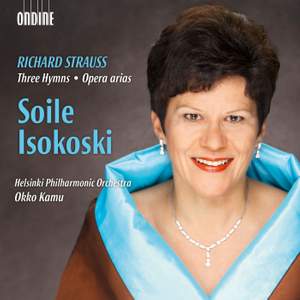
| |  | R. Strauss: 3 Hymns & Opera arias
Ondine is pleased to announce the new release from legendary Straussian soprano Soile Isokoski. A multiple award-winner, her recording of the Four Last Songs won a Gramophone Award in 2002. The rarely recorded Three Hymns are coupled with arias from Ariadne auf Naxos, Der Rosenkavalier and Capriccio. Soile Isokoski performs those (and other) operas regularly at opera houses across the world including Vienna State Opera, Royal Opera House, Milan’s La Scala, the Semperoper in Dresden, Paris and at festivals including Salzburg, Edinburgh, Orange and Savonlinna. Three Hymns is a major work, and places considerable vocal demands on the soloist. These atmospheric concert pieces show Strauss’ orchestration in full bloom. “Isokoski can match her great predecessors in her breath control. It’s good to have a souvenir of her distinguished Marschallin and her Madeleine...With Kamu’s Helsinki orchestra providing a lush underlay, Isokoski soars in the ecstatic Hölderlin settings.” Sunday Times, 30th September 2012 “The beauty of Isokoski's singing, with its even, lustrous tone and quiet stylishness, almost goes without saying, and those qualities are at their most beguiling in the Three Hymns. The technical quality is just as high in the opera extracts, but those performances seem to lack a vital dimension.” The Guardian, 20th December 2012 **** “The main attraction of the programme is the Drei Hymnen, which do not come round in recordings very often...As each of her three Straussian heroines, she embodies a very touching, human vulnerability.” Gramophone Magazine, January 2013 | | | (also available to download from $10.50) | In stock - usually despatched within 1 working day. |
|
|
| |  | The Best of Elisabeth Schwarzkopf
anon.: | S'Schatzli Gerald Moore (piano) | Dvorak: | Songs My Mother Taught Me, Op. 55 No. 4 Gerald Moore (piano) | Humperdinck: | Abendsegen 'Abends will ich schlafen gehn' (Hänsel und Gretel) Elisabeth Grummer (Hansel) Philharmonia Orchestra, Herbert von Karajan | Lehár: | Meine Lippen sie Kussen so heiss (from Giuditta) Philharmonia Orchestra, Otto Ackermann Viljalied (from Die lustige Witwe) Philharmonia Orchestra, Otto Ackermann | Mozart: | Porgi amor (from Le nozze di Figaro) Vienna Philharmonic Orchestra, Herbert von Karajan Dove sono i bei momenti (from Le nozze di Figaro) Vienna Philharmonic Orchestra, Herbert von Karajan Come scoglio (from Così fan tutte) Philharmonia Orchestra, Herbert von Karajan In quali eccessi ... Mi tradì quell'alma ingrate (from Don Giovanni) Philharmonia Orchestra, Carlo Maria Giulini | Quilter: | Drink to me only Gerald Moore (piano) | Schubert: | Der Musensohn, D764 (Goethe) Edwin Fischer (piano) Gretchen am Spinnrade, D118 Edwin Fischer (piano) Die Forelle, D550 Edwin Fischer (piano) | Schumann: | Der Nussbaum, Op. 25 No. 3 Gerald Moore (piano) | Strauss, J, II: | Klänge der Heimat (from Die Fledermaus) Philharmonia Orchestra, Herbert von Karajan | Strauss, R: | Wiegenlied, Op. 41 No. 1 Gerald Moore (piano)
12. Viljalied (Die Lustige Witwe:Lehár) 5:13 Da geht er hin (from Der Rosenkavalier, Op. 59) Philharmonia Orchestra, Herbert von Karajan | Zeller: | Der Obersteiger: Sei nicht bös’ from Der Vogelhändler Philharmonia Orchestra, Otto Ackermann |
| | | In stock - usually despatched within 1 working day. |
|
|
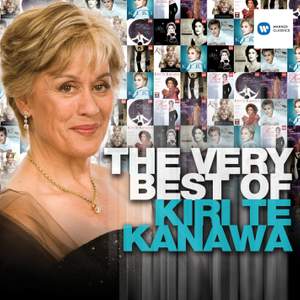
| |  | The Very Best of Kiri Te Kanawa
Bizet: | Me voilà seule…Comme autrefois (from Les Pêcheurs de Perles) | Charpentier, G: | Depuis le jour (from Louise) | Cilea: | Ecco: respiro appena. Io son l'umile ancella (from Adriana Lecouvreur) | Duparc: | L'Invitation au voyage Le Manoir de Rosemonde | Giordano, U: | La mamma morta (from Andrea Chénier) | Korngold: | Glück, das mir verbleib 'Marietta's Lied' (from Die Tote Stadt) | Massenet: | Je marche sur tous les chemins (from Manon) | Mozart: | Ach, ich fühl's (from Die Zauberflöte, K620) | Offenbach: | Elle a fui, la tourterelle (from Les Contes d' Hoffmann) | Puccini: | Signore, ascolta! (from Turandot) | Ravel: | La Flûte enchantée (Shéhérazade No. 2) | Strauss, R: | Da geht er hin (from Der Rosenkavalier, Op. 59) | Verdi: | Attendo,attendo.. Addio del passato (from La Traviata) | Wagner: | Dich, teure Halle (from Tannhauser) | Weber: | Wie nahte mir der Schlummer … Leise, leise, fromme Weise (from Der Freischütz) |
The glamorous soprano Kiri Te Kanawa was born in 1944 in Gisborne, on the east coast of the North Island of New Zealand. After winning a number of major vocal competitions in Australia, she came to London in 1966 to study singing at the London Opera Centre, where she trained for three years. Then in 1970 she was accepted by the Royal Opera at Covent Garden as a junior member of the company. Her big break came in 1971, when she was chosen to sing the Countess in a new production of Le nozze di Figaro.. It was something of a gamble for the Covent Garden management to cast an inexperienced singer in such an important role, but on the opening night Kiri’s performance stole the show. After the Covent Garden Nozze di Figaro, an international career was assured. With a carefully chosen repertoire that included the principal soprano roles of Mozart, as well as a number of Verdi, Puccini and Richard Strauss heroines, Kiri went on to triumph in the major opera houses of the world. She first appeared at the Salzburg Festival in 1979 and became a regular and much-loved performer at Glyndebourne, a venue for which she has a particularly strong affection, and in 1981 Kiri was chosen to sing at the wedding of Prince Charles and Lady Diana Spencer in St Paul's Cathedral, an event seen by a world-wide television audience estimated at more than 600 million people Not surprisingly, her vibrant but creamy voice, together with her attractive stage presence, made her an ideal interpreter of the main Richard Strauss roles, and it was not long before she was singing the Marschallin in Der Rosenkavalier, a part with which she scored a particular success. After a number of popular Italian and French arias, Kiriis heard in this programme in the Marschallin's Act I monologue, 'Da geht er hin', as well as in arias from several other German operas, including Wagner's Tannhäuser, Der Freischutz by Weber and Korngold's unjustly neglected romantic masterpiece Die tote Stadt. As a brief reminder of Kiri's achievements on the concert stage, the first CD closes with three orchestral songs by the French composers Ravel and Duparc, all of which show off the lustrous beauty of her voice to full advantage. In addition to opera and so-called serious music however, Kiri is also a great enthusiast for the lighter repertoire, including folk music and the songs of Broadway and Tin Pan Alley. When performing this material, she uses the warm, lower part of her rich voice to give idiomatic performances of songs by some of America's greatest composers of popular music, such as George Gershwin, Jerome Kern, Irving Berlin and Cole Porter. Also heard here are Franz Gruber's familiar Christmas carol 'Silent Night' and a number of traditional British folk songs. These are followed by two Maori songs, in which Kiri is joined by a group of Maori singers and a number of specialist musicians who together capture the authentic style of these fascinating pieces. | | | In stock - usually despatched within 1 working day. |
|
|
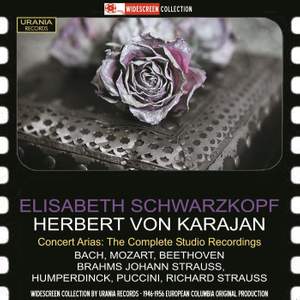
| |  | Concert Arias: The Complete Studio Recordings
Bach, J S: | Mass in B minor, BWV232: Laudamus Te | Beethoven: | Ah! Perfido, Op. 65 Abscheulicher! Wo eilst du hin? (from Fidelio) | Brahms: | Ihr habt nun Traurigkeit (Ein Deutsches Requiem, Op. 45) | Humperdinck: | Der kleine Sandmann bin ich (from Hänsel und Gretel) Wo bin ich? (from Hänsel und Gretel) | Mozart: | Martern aller Arten (from Die Entführung aus dem Serail) Porgi amor (from Le nozze di Figaro) E Susanna non vien! … Dove sono i bei momenti (from Le nozze di Figaro) Come scoglio (from Così fan tutte) Per pietà (from Così fan tutte) | Puccini: | Si, mi chiamano Mimi (from La Bohème) O mio babbino caro (from Gianni Schicchi) | Strauss, J, II: | Klänge der Heimat (from Die Fledermaus) | Strauss, R: | Herr Gott in Himmel! (from Der Rosenkavalier) Four Last Songs Es gibt ein Reich (from Ariadne auf Naxos) Da geht er hin (from Der Rosenkavalier, Op. 59) Ach, du bist wieder da! (from Der Rosenkavalier, Op. 59) Die Zeit, die ist ein sonderbar Ding from Der Rosenkavalier,Op. 59 Mein schöner Schatz (from Der Rosenkavalier) Ich werd' jetzt in die Kirchen (from Der Rosenkavalier) |
| | | Usually despatched in 8 - 10 working days. |
|
|
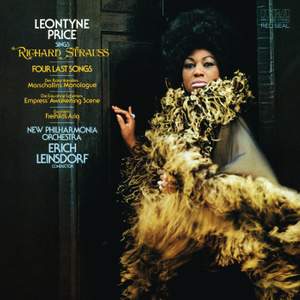
| |  | Strauss: Four Last Songsand excerpts from Der Rosenkavalier
| | | Usually despatched in 2 - 3 working days. |
|
|
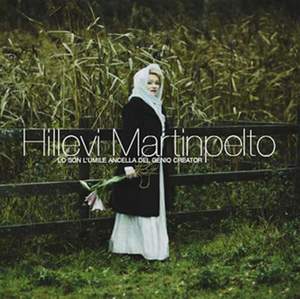
| |  | Io son l'umile ancella del genio Creator
Hillevi Martinpelto sings ten arias by a variety of composers from Verdi to Wagner. All of the arias have been performed by the soprano on various opera stages in Sweden, and here she showcases her favourites in a new disc for Swedish Society. | | | (also available to download from $10.50) | Usually despatched in 2 - 3 working days. (Available now to download.) |
|
|
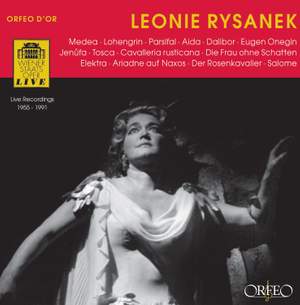
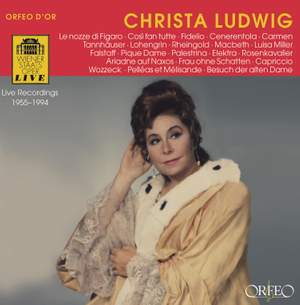
| |  | Leonie Rysanek
Vienna State Opera 1955-1991 | | | Usually despatched in 3 - 4 working days. |
|
|
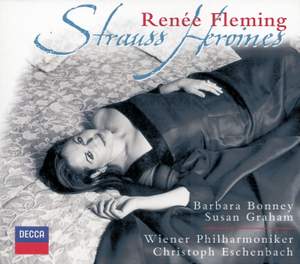
| |  | Strauss Heroines
“Eschenbach's conducting is superbly detailed.” BBC Music Magazine, July 2006 “This is a happily chosen Strauss showcase for Fleming. Her creamy, full-toned, vibrant voice is about the ideal instrument not only for the Marschallin but also for the other parts she attempts here. She has mastered the phraseology and verbal inflexions needed for all three roles, and imparts to them a quick intelligence to second the vocal glories. Sometimes her performance as the Marschallin or Countess Madeleine recalls, almost uncannily, those of Schwarzkopf, leaving one in no doubt that she has studied the readings of her distinguished predecessor. If Schwarzkopf with a slightly slimmer tone has the finer line and quicker responses, her successor provides the richer tone. Fleming need fear no comparisons with more recent interpreters such as Te Kanawa, Tomowa-Sintow and, as Madeleine only, Janowitz. Indeed, Fleming's account of the closing scene of Capriccio is just about ideal. Her deluxe team of co-stars includes Susan Graham, who makes an ardent suitor in Rosenkavalier's Act 1 duets; her timbre is so similar to Fleming's that it's hard to tell them apart, though she isn't as verbally acute as her partner. And Barbara Bonney finally commits an extract of her enchanting Sophie, the best since Lucia Popp's; she also joins Fleming in the Arabella-Zdenka duet. Even the cameo appearances of a lackey at the close of Act 1 of DerRosenkavalier, of Faninal after the Act 3 trio, and the major-domo in the closing scene from Capriccio, are filled by the veteran Walter Berry. Under Eschenbach, the VPO plays immaculately – the horn solo in the Moonlight music is pure magic – and the sound quality is outstandingly life-like. A treat for Straussians.” Gramophone Classical Music Guide, 2010 “this ravishing disc offers a generous collection of the most seductive scenes in the Strauss operas...Opulent sound to match.” Penguin Guide, 2010 edition *** | | | (Sorry, download not available in your country) | Usually despatched in 2 - 3 working days. |
|
|
| | | |
|