Prices shown exclude VAT. (UK tax is not payable for deliveries to United States.) See Terms & Conditions for p&p rates. | |  | Daniel Barenboim - New Year’s Concert 2009
Haydn: | Symphony No. 45 in F sharp minor 'Farewell': 4th movement first performance at a New Year’s Concert | Hellmesberger: | Valse espagnole first performance at a New Year’s Concert | Strauss, J, I: | Zampa-Galopp, Op. 62a first performance at a New Year’s Concert Radetsky March, Op. 228 Encore | Strauss, J, II: | Eine Nacht in Venedig Overture first performance at a New Year’s Concert Märchen aus dem Orient. Walzer, Op. 444 Annen-Polka, Op. 117 Saat und Ernte Schnell-Polka, Op. 159 first performance at a New Year’s Concert Rosen aus dem Süden, Op. 388 Freikugeln-Polka, Op. 326 Der Zigeunerbaron Overture Der Zigeunerbaron: Einzugsmarsch Schatz-Walzer, Op. 418 Alexandrine-Polka francaise, Op. 198 first performance at a New Year’s Concert Unter Donner und Blitz, Op. 324 Eljen a Magyar Schnell-Polka, Op. 332 So ängstlich sind wir nicht! - Polka, Op. 413 Encore An der schönen, blauen Donau, Op. 314 Encore So ängstlich sind wir nicht! - Polka, Op. 413 Ballet Extra Unter Donner und Blitz, Op. 324 Ballet Extra | Strauss, Josef: | Sphärenklänge, Op. 235 Sphärenklänge, Op. 235 Ballet Extra |
The New Year's Concert in Vienna has been a glorious tradition for over six decades. A best-selling classical event year on year, the concert has unique global appeal. It is broadcast on TV and radio to over 50 countries, and is viewed by tens of millions of people all over the world. The 2009 New Year's Day Concert will be conducted by the Argentinean-Israeli pianist and conductor Daniel Barenboim for the first time. From 1991-2006 Barenboim was the principal conductor of the Chicago Symphony Orchestra and since 1992 has been the General Music Director of the State Opera Unter den Linden in Berlin. Barenboim's debut with the Vienna Philharmonic took place in 1989, and he has since been a regular guest. In 1999, Barenboim and the late Palestinian academic Edward Säid founded the West-Eastern Divan Orchestra, in which young musicians from the Middle East and Israel perform together. Among the many awards Barenboim has received, was the Ernst von Siemens Music Prize in Vienna in 2006. In September 2007 Barenboim was named as United Nations Peace Envoy. The concert programme for 1st January 2009 will be the customary collection of Viennese delights, with six first time performances. The first part of the concert is inspired by the conductor’s biography. For example, the waltz Märchen aus dem Orient (Tales from the Orient), alludes to a modern “fairy tale” – the founding of the West-Eastern Divan Orchestra, a symbol of inter-cultural tolerance. Other first performances in the first half include J. Strauss II’s Schnellpost-Polka (Express Mail Polka) and J. Hellmesberger’s Valse Espagnole (Spanish Waltz). The second part of the concert makes constant allusions to the life and work of Joseph Haydn, culminating with the final movement of Haydn’s Symphony No.45 - 'Farewell Symphony'. This is the first time a work by Haydn has featured in the New Year’s Concert programme, and it will launch a year of events marking the bicentenary of the death of this great Austrian composerwho died in Vienna in May 1809. Other first appearances in the second half of the concert include J. Strauss I's Zampa-Galopp and J. Strauss II’s Alexandrine's Polka. | | | Usually despatched in 2 - 3 working days. |
|
|
| |  | Daniel Barenboim - New Year’s Concert 2009
Haydn: | Symphony No. 45 in F sharp minor 'Farewell': 4th movement first performance at a New Year’s Concert | Hellmesberger: | Valse espagnole first performance at a New Year’s Concert | Strauss, J, I: | Zampa-Galopp, Op. 62a first performance at a New Year’s Concert Radetsky March, Op. 228 Encore | Strauss, J, II: | Eine Nacht in Venedig Overture first performance at a New Year’s Concert Märchen aus dem Orient. Walzer, Op. 444 Annen-Polka, Op. 117 Saat und Ernte Schnell-Polka, Op. 159 first performance at a New Year’s Concert Rosen aus dem Süden, Op. 388 Freikugeln-Polka, Op. 326 Der Zigeunerbaron Overture Der Zigeunerbaron: Einzugsmarsch Schatz-Walzer, Op. 418 Alexandrine-Polka francaise, Op. 198 first performance at a New Year’s Concert Unter Donner und Blitz, Op. 324 Eljen a Magyar Schnell-Polka, Op. 332 So ängstlich sind wir nicht! - Polka, Op. 413 Encore An der schönen, blauen Donau, Op. 314 Encore So ängstlich sind wir nicht! - Polka, Op. 413 Ballet Extra Unter Donner und Blitz, Op. 324 Ballet Extra | Strauss, Josef: | Sphärenklänge, Op. 235 Sphärenklänge, Op. 235 Ballet Extra |
The New Year's Concert in Vienna has been a glorious tradition for over six decades. A best-selling classical event year on year, the concert has unique global appeal. It is broadcast on TV and radio to over 50 countries, and is viewed by tens of millions of people all over the world. The 2009 New Year's Day Concert will be conducted by the Argentinean-Israeli pianist and conductor Daniel Barenboim for the first time. From 1991-2006 Barenboim was the principal conductor of the Chicago Symphony Orchestra and since 1992 has been the General Music Director of the State Opera Unter den Linden in Berlin. Barenboim's debut with the Vienna Philharmonic took place in 1989, and he has since been a regular guest. In 1999, Barenboim and the late Palestinian academic Edward Säid founded the West-Eastern Divan Orchestra, in which young musicians from the Middle East and Israel perform together. Among the many awards Barenboim has received, was the Ernst von Siemens Music Prize in Vienna in 2006. In September 2007 Barenboim was named as United Nations Peace Envoy. The concert programme for 1st January 2009 will be the customary collection of Viennese delights, with six first time performances. The first part of the concert is inspired by the conductor’s biography. For example, the waltz Märchen aus dem Orient (Tales from the Orient), alludes to a modern “fairy tale” – the founding of the West-Eastern Divan Orchestra, a symbol of inter-cultural tolerance. Other first performances in the first half include J. Strauss II’s Schnellpost-Polka (Express Mail Polka) and J. Hellmesberger’s Valse Espagnole (Spanish Waltz). The second part of the concert makes constant allusions to the life and work of Joseph Haydn, culminating with the final movement of Haydn’s Symphony No.45 - 'Farewell Symphony'. This is the first time a work by Haydn has featured in the New Year’s Concert programme, and it will launch a year of events marking the bicentenary of the death of this great Austrian composerwho died in Vienna in May 1809. Other first appearances in the second half of the concert include J. Strauss I's Zampa-Galopp and J. Strauss II’s Alexandrine's Polka. | | | Usually despatched in 2 - 3 working days. |
|
|
| |  | Daniel Barenboim - New Year's Concert 2009
Haydn: | Symphony No. 45 in F sharp minor 'Farewell': 4th movement | Hellmesberger: | Valse espagnole | Strauss, J, I: | Zampa-Galopp, Op. 62a Radetsky March, Op. 228 | Strauss, J, II: | Eine Nacht in Venedig Overture Märchen aus dem Orient. Walzer, Op. 444 Annen-Polka, Op. 117 Saat und Ernte Schnell-Polka, Op. 159 Rosen aus dem Süden, Op. 388 Freikugeln-Polka, Op. 326 Der Zigeunerbaron Overture Der Zigeunerbaron: Einzugsmarsch Schatz-Walzer, Op. 418 Alexandrine-Polka francaise, Op. 198 Unter Donner und Blitz, Op. 324 Eljen a Magyar Schnell-Polka, Op. 332 So ängstlich sind wir nicht! - Polka, Op. 413 An der schönen, blauen Donau, Op. 314 | Strauss, Josef: | Sphärenklänge, Op. 235 |
The New Year's Concert in Vienna has been a glorious tradition for over six decades. A best-selling classical event year on year, the concert has unique global appeal. It is broadcast on TV and radio to over 50 countries, and is viewed by tens of millions of people all over the world. The 2009 New Year's Day Concert will be conducted by the Argentinean-Israeli pianist and conductor Daniel Barenboim for the first time. From 1991-2006 Barenboim was the principal conductor of the Chicago Symphony Orchestra and since 1992 has been the General Music Director of the State Opera Unter den Linden in Berlin. Barenboim's debut with the Vienna Philharmonic took place in 1989, and he has since been a regular guest. The concert programme for 1st January 2009 will be the customary collection of Viennese delights, with six first time performances. The first part of the concert is inspired by the conductor's biography. For example, the waltz Märchen aus dem Orient (Tales from the Orient), alludes to a modern "fairy tale" - the founding of the West-Eastern Divan Orchestra, a symbol of inter-cultural tolerance. Other first performances in the first half include J. Strauss II's Schnellpost-Polka (Express Mail Polka) and J. Hellmesberger's Valse Espagnole (Spanish Waltz). The second part of the concert makes constant allusions to the life and work of Joseph Haydn, culminating with the final movement of Haydn's Symphony No.45 - 'Farewell Symphony'. This is the first time a work by Haydn has featured in the New Year's Concert programme, and it will launch a year of events marking the bicentenary of the death of this great Austrian composerwho died in Vienna in May 1809. Other first appearances in the second half of the concert include J. Strauss I's Zampa-Galopp and J. Strauss II's Alexandrine's Polka. “This year, Daniel Barenboim took his first Vienna New Year assignment in 20 years, conducting the city's venerably Philharmonic. It throws up interesting music-making, the conductor's strong romantic streak making him more than usually liable to weave poetic magic from the many lingeringly expressive episodes in the Strauss family's music. Witness, for example, the heady surges of glorious string tone punctuating 'Rosen aus dem Süden'.” BBC Music Magazine, April 2009 **** | | | Usually despatched in 2 - 3 working days. |
|
|
| |  | Johann Strauss II Edition, Volume 30
Strauss, J, II: | Fest-Marsch, Op. 49 arr. Babinski) Luisen Sympathie-Klange - Walzer, Op. 81 Alexandrine-Polka francaise, Op. 198 Kammerball-Polka, Op. 230 Attaque-Quadrille, Op. 76 Reiseabenteue-Walzer, Op. 227 Par force! - Polka schnell, Op. 308 Erinnerung an Covent-Garden, Op. 329 Kriegsabenteuer - Polka schnell, Op. 419 Perpetuum Mobile, Op. 257 Klug Gretelein - Walzer, Op. 462 |
| |
|
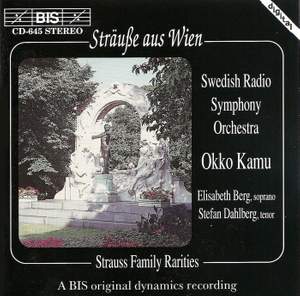
| |  | Strauss aus WienStrauss Family Rarities
Strauss, E: | Souvenir de Bade. Polka schnell, Op. 146 Myrthen-Sträusschen. Walzer, Op. 87 Mit der Strömung. Polka francaise, Op. 174 | Strauss, J, I: | Concordia-Tänze - Walzer, Op. 184 Versailler Galopp, Op. 107 | Strauss, J, II: | Die Göttin der Vernuft Ouvertüre Also, du bist ein Freiersmann? Duet from Simplicius, Act II. No. 13 Alexandrine-Polka francaise, Op. 198 Euch schlägt mein ganzes Herz entgegen. Duet from Ritter Pasman, Act III Carnevals-Spektakel-Quadrille, Op. 152 Ha, welch' ein reizendes Gesicht! Duet from Cagliostro in Wien, Act II. No. 13 | Strauss, Josef: | Deutsche Grüsse, Walzer, Op. 191 |
| | | (also available to download from $10.50) | Usually despatched in 2 - 3 working days. (Available now to download.) |
|
|
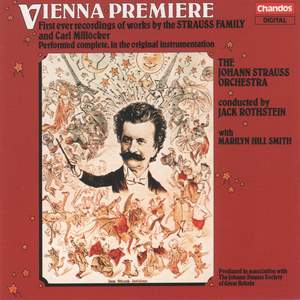
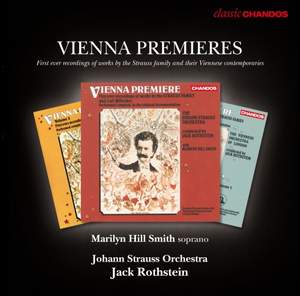
| | x.jpg) | Vienna Premieres, Vols 1-3
Fahrbach: | Storchschnabel - galop, Op. 149 | Millöcker: | Die sieben Schwaben - Marsch arr. by Carl Wilhelm Drescher Jonathan-Marsch Klopf' an! - Polka française from Die sieben Schwaben | Strauss, E: | Knall und Fall - Polka schnell, Op. 132 Leuchtkaferln, Op. 161 Hectograph. Schnell-Polka, Op. 186 Bluthenkranz - Johann Strauss'scher Walzer, Op. 292 Saat und Ernte, Op. 159 Weyprecht-Payer-Marsch, Op. 120 Madchenlaune - Polka-Mazurka, Op. 99 Die Abonnenten - Waltz, Op. 116 Osterreichs Volker-Treue - Marsch, Op. 211 Blauauglein - Polka française, Op. 254 Schleier und Krone - Walzer, Op. 200 | Strauss, J, I: | Freiheits-Marsch, Op. 226 Der Carneval in Paris, Galopp, Op. 100 (The Carnival in Paris) | Strauss, J, II: | Concurrenzen, Op. 267 L'Inconnue - Polka francaise, Op. 182 Die Fledermaus: Neuer Czardas Marilyn Hill Smith (soprano) Hoch Osterreich, Marsch, Op. 371 Alexandrine-Polka francaise, Op. 198 Pappacoda - Polka francaise, Op. 412 Der lustige Krieg, Quadrille, Op. 402 Nur nicht mucken - Polka francaise, Op. 472 | Strauss, J, III: | Schlau-Schlau - Polka schnell, Op. 6 Unter den Linden - Walzer, Op. 30 | Strauss, Josef: | Frohes Leben, Walzer, Op. 272 Vorwärts! - Polka schnell, Op. 127 Nachtschatten - Polka-mazurka, Op. 229 Elfen-Polka, Op. 74 Forever - polka schnell, Op. 193 Defilir-Marsch, Op. 53 Farewell! - Polka-schnell, Op. 211 Wallonen-Marsch, Op. 41 Zeitbilder, Walzer, Op. 51 | Ziehrer: | Casimir-Walzer, Op. 551 Die Lustigmacherin |
Johan Strauss Orchestra, Jack Rothstein Perhaps no composer is more associated with a city than Johann Strauss II with Vienna. Indeed it is hard to consider Vienna without thinking of the waltz, and the waltz empire is dominated by the Strauss family. Johann Strauss I & II, Josef Strauss, and Eduard Strauss produced a seemingly inexhaustible supply of melodies which have entranced not only the dancers of the world, but also its musicians and music-lovers from the 1840s to the present. Whilst much of their music has never been out of the recorded repertoire, so prolific was their output that a quantity of top-rate music was forgotten over the years. Jack Rothstein recorded three volumes of such rarities in the 1980s and ’90s, which comprised music by the Strauss family and their contemporaries. So enjoyable and tuneful are these ‘Vienna Premieres’ that it is impossible to understand just why they had been neglected. Time and time again one is amazed at the un-flagging inspiration which seemed to come so easily to composers of this period, who produced consistently high-quality light, entertaining music, beautifully crafted and orchestrated. Jack Rothstein was a master of this music. Appointed Musical Director of the Johann Strauss Orchestra in 1976, he was steeped in the distinctive performing style associated with this repertoire for years before making the pioneering digital recordings collected here. It is the first time that these three unique CDs have been gathered together in one convenient and inexpensive box. | | | Usually despatched in 2 - 3 working days. |
|
|
| |
|