This page lists all recordings of Sonata for Solo Violin, by Erwin Schulhoff (1894-1942) on CD, SACD & download (MP3 & FLAC). Generally, more recent releases are listed first, but with priority given to those that are in stock. |
All recordingsPrices shown exclude VAT. (UK tax is not payable for deliveries to United States.) See Terms & Conditions for p&p rates. | |  | 135 Years of Czech Composers
Yvonne Smeulers (violin), Sander Sittig (piano) | | | (also available to download from $21.25) | Usually despatched in 2 - 3 working days. (Available now to download.) |
|
|
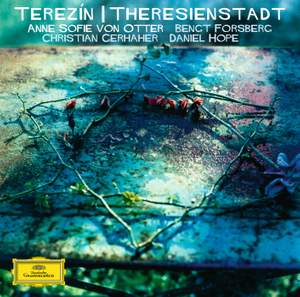
| |  | Terezín / Theresienstadt
Haas, P: | Four Songs to the Text of Chinese Poetry (Theresienstadt-Series) | Kalman: | Terezín-Lied | Krasa: | Ctyrversi (Vierzeilengedicht) Vzruseni (Empfindung) Pratele (Die Freunde) | Roman, M: | Karussell | Schulhoff: | Sonata for Solo Violin | Strauss, A: | Ich weiß bestimmt, ich werd Dich wiedersehn | Svenk: | Vsechno jde! (Anything Goes!) 'Terezin March' Pod destnikem (Under an Umbrella) | Taube, C S: | Ein jüdisches Kind | Ullmann, V: | Berjoskele from Drei jiddische Lieder (Brezulinka), Op. 53 Claire Vénus... (Sonnet V) from Six Sonnets de Louize Labané, Op. 34 On voit mourir... (Sonnet VII) from Six Sonnets de Louize Labané, Op. 34 Je vis, je meurs... (Sonnet VIII) from Six Sonnets de Louize Labané, Op. 34 | Weber, I: | Ich wandre durch Theresienstadt Ade, Kamerad! Und der Regen rinnt Wiegala |
On this CD, von Otter has chosen a project with a serious and historically significant background. She interprets pieces written in the Theresienstadt concentration camp by a group of Jewish composers who were imprisoned there and yet managed to foster a rich cultural life even under the most extreme conditions. Most composers were later murdered in Auschwitz. “…despite all their suffering, the music that was written and performed there expresses a strong will to live and attests to the power of the creative spirit… Such feelings are omnipresent in this beautifully recorded recital performed with wonderful sensitivity and immediacy by singers Anne Sofie von Otter and Christian Gerhaher and their highly responsive instrumental partners.” BBC Music Magazine, October 2007 ***** “The music on this CD is beautiful, some of it comic, some of it elegiac, all of it almost unbearingly touching. All these composers were incarcerated in the concentration camp at Terezín in what is now the Czech Republic. One survivor, the pianist Alice Herz-Sommer has written: "Music allowed many inmates to bare their hearts...even in the darkest corners of the earth...it was, at least for the moment, a liberation." The songs by Ilse Weber and Karel Svenk are in the cabaret style, deceptively jolly tunes, overlaid with bitter irony in the words. Anne Sofie von Otter sings them with exquisite tenderness; Bengt Forsberg at the piano and Bebe Risenfors on guitar accompany lovingly. The three best-known composers whose works have survived from Terezín are Pavel Haas, Hans Krása and Viktor Ullmann. Krása's Three Songs on texts by Rimbaud, Ullman's Six Sonnets and Haas's Four Songs on Chinese Poetry are all major works that change the perspective of the history of the German Lied. Christian Gerhaher sings the Krása and Ullmann with noble spirit.” Gramophone Magazine, October 2007 CD Review
Critics Disc of the Year - December 2007 |
BBC Music Magazine
Disc of the month - October 2007 |
| | | Usually despatched in 2 - 3 working days. |
|
|
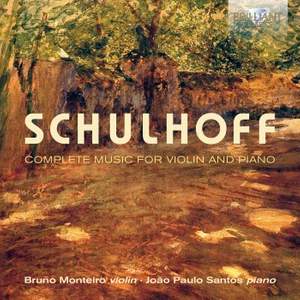
| |  | Erwin Schulhoff - Chamber Music
| | | (also available to download from $10.50) | Usually despatched in 2 - 3 working days. (Available now to download.) |
|
|
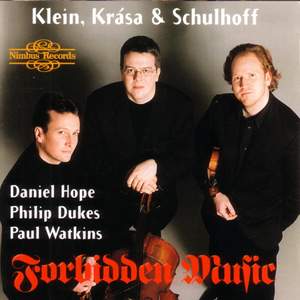
| |  | Forbidden Music
| | | Usually despatched in 4 - 5 working days. |
|
|
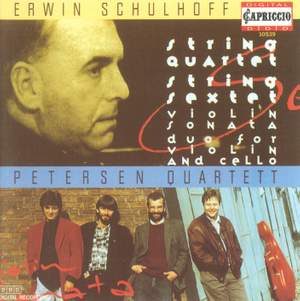
| |  | Schulhoff: Chamber Music
“As Schulhoff enthusiasts will have come to expect, the works represented aren't at all uniform in style. The early quartet is prematurely neo-classical. It was conceived in 1918 when the composer was still serving in the Austrian Army. The German group certainly gives it their all. Taut and tough, they seem intent on radicalising the discourse whether through a heightened response to its finer points or a profound understanding of the Beethovenian models that lurk beneath the surface invention. As a result, the Quartet emerges as a witty, substantial piece. The string Sextet was completed six years later but sounds quite different, its Schoenbergian first movement well integrated with the more eclectic idiom of the rest. Whatever the outward manner, Schulhoff's rhythmic phraseology is metrically conceived. Even if you already know the Sextet the Petersen makes a plausible first choice. The aggressive communication of their playing is emphasised by the bright, not quite top-heavy sound balance. The Janácek-Bartók-Ravel axis of the Duo is equally well served. The Sonata for solo violin (1927) is at least as interesting as similar works by Hindemith. A thoroughly distinguished issue by an ensemble seemingly incapable of giving a dull performance.” Gramophone Classical Music Guide, 2010 | |
|
| |
|