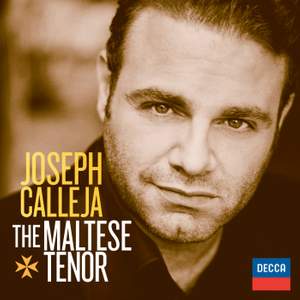
All recordingsPrices shown exclude VAT. (UK tax is not payable for deliveries to United States.) See Terms & Conditions for p&p rates. | |  | Joseph Calleja: The Maltese Tenor
The career of Maltese tenor Joseph Calleja seems to have no limits, with performances at the world's greatest opera houses and acclaim for the lyrical warmth of his singing from the press and public alike. In Summer 2010 he triumphed in London performances of Verdi’s Simon Boccanegra alongside Plácido Domingo, after which The Independent observed that Calleja “almost steals the show”. Joseph Calleja is an enthusiastic ambassador for Malta, where he still lives - an island with a proud operatic tradition. In addition to his international appearances, Joseph Calleja has established an annual open-air event in Malta's historic capital Valetta, which has become a focus for the musical life of the island. Joseph Calleja's opera and concert successes are now crowned by a new recording. His third Decca album captures the development of his art and presents him in some of the roles he is currently performing to ecstatic critical responses: “All the ardor and beauty of tone one could wish for...one of the finest lyric tenors before the public today” (Houston Chronicle on recent performances of Puccini's Madama Butterfly) “Calleja can still get down to a pianissimo in a way that few can, such as in the Luisa Miller scene, which is one of the best items thanks to the way he gives the vocal line a flattering lilt. After his Covent Garden success in Simon Boccanegra, the inclusion of the Act 2 scena "O inferno" - another high-point - will be a welcome souvenir.” Gramophone Magazine, August 2011 “his is a bright, warm, unmistakably Mediterranean timbre, with a distinctive quick vibrato that recalls great tenors of the wind-up-gramophone era. Yet he is a thoroughly modern musician...His Che gelida manina is surely the most glamorous and thrilling on disc since Pavarotti’s famous complete recording, but it is no carbon copy...In short, a golden-age voice in its prime.” Sunday Times, 17th July 2011 **** “He's an artist who has developed in leaps and bounds over the last few years, and who sings with freedom, passion and elegance. His narrow, fast vibrato has a pleasantly old-fashioned sepia-tinted feel about it, and links him to an earlier generation of tenors...It's a recital which shows off Calleja's rich, rounded and ringing sound at its best.” Classic FM Magazine, August 2011 **** “The two Mefistofele arias receive near-ideal performances, the Pearl Fishers romance (one of two items in which soprano duties are nicely undertaken by Aleksandra Kurzak) is enchanting, and the cavatina from Gounod's Faust is appealingly shaped and crowned with a refined top C...Calleja continues to persuade with a good sense of style.” BBC Music Magazine, August 2011 **** “[in the French roles] he shows no cramping of his natural bel canto style by the French line, finding plenty of room to manoeuvre. And when he and the soprano Aleksandra Kurzak begin their dalliance, the chemistry is sublime. Elsewhere, the various Puccini arias from Tosca and Manon Lescaut present Calleja at his best: robust and resonant.” The Independent, 28th July 2011 **** “Calleja despatches [the programme] with bags of elegance, passion and charm...it's the French arias here that leave you wanting more: his is a beautifully characterised Légende de Kleinzach from Offenbach's The Tales of Hoffmann, and a sexy Ah! Fuyez, Douce Image” The Guardian, 11th August 2011 **** “Calleja commands resinous, vibrant tone with a rich top register and generous, open-hearted style. This is technically sturdy singing with guts and heart.” The Telegraph, 18th August 2011 “The solidity of his technique is evident in this calorific recital: it takes muscle to support such delicate messa di voce. There's a rare, old-fashioned sweetness of timbre” The Independent on Sunday, 21st August 2011 “Calleja's timbre, brilliant, caressing, keenly focused, is entirely individual...All in all, this is a fine calling-card for a tenor, still only in his early thirties, on the threshold of greatness, during a transition phase of his career. The portents are exciting indeed.” International Record Review, October 2011 | | | In stock - usually despatched within 1 working day. |
|
|
| |  | The Very Best of Placido Domingo
Boito: | Dai campi, dai prati (Mefistofele) Vergini muse ... Quando al soave anelito (from Nerone) | Gounod: | Quel trouble inconnu me pénètre… Salut! Demeure chaste et pure (from Faust) | Handel: | Svegliatevi nel core (from Giulio Cesare) | Lehár: | Gern hab' ich die Frau'n geküßt (from Paganini) Da geh' ich zu Maxim (from Die Lustige Witwe) Dein ist mein ganzes Herz (from Das Land des Lächelns) | Massenet: | Ah! Tout est bien fini... O souverain (from Le Cid) | Meyerbeer: | Pays merveilleux... Ô paradis (from L'Africaine) | Mozart: | Il mio tesoro intanto (from Don Giovanni) Un'aura amorosa del nostro tesoro (from Così fan tutte) Dies Bildnis ist bezaubernd schön (from Die Zauberflöte) La ci darem la mano (from Don Giovanni) Susan Graham (Zerlina) | Puccini: | Donna non vidi mai (from Manon Lescaut) Ah, Manon mi tradisce (from Manon Lescaut) Recondita armonia (from Tosca) E lucevan le stelle (from Tosca) Ch'ella mi creda libero e lontano (from La Fanciulla del West) | Rodrigo: | En Aranjuez con tu amor | Strauss, J, II: | Ach, wie so herrlich zu schau'n (from Die Fledermaus) | Tchaikovsky: | None but the lonely heart, Op. 6 No. 6 Kuda, Kuda 'Lensky's Aria' (from Eugene Onegin) | Verdi: | Se quel guerrier io fossi!…Celeste Aida (from Aida) Di' tu se fedele (from Un ballo in maschera) Ma se m'è forza perderti (from Un ballo in maschera) O tu che in seno agli angeli (from La Forza del Destino) Io la vidi e al suo sorriso (from Don Carlo) Niun mi tema (from Otello) | Wagner: | O sink hernieder, Nacht der Liebe (from Tristan und Isolde) Violeta Urmana (Isolde) Hoho! Hoho! Hohei! Schmiede, mein Hammer, ein hartes Schwert! (from Siegfried) David Cangelosi (Mime) | Zeller: | Schenkt man sich Rosen in Tirol (from Der Vogelhändler) |
and zarzuela arias from Los Gavilanes, La Rosa Del Azafrán, La Tabernera del Puerto, Coplas De Ronda, Copillas de Belen, Coplas del Pasto, Jealousy Tango, La Golondrina
“Mozart to zarzuela, Handel to Wagner - this generous collection confirms that our greatest tenor is also our most versatile and musically rewarding whatever style.” BBC Music Magazine, November 2011 ***** | | | In stock - usually despatched within 1 working day. |
|
|
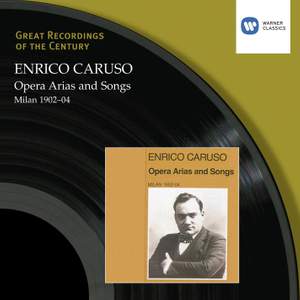
| |  | Enrico Caruso - Opera Arias and Songs Milan 1902-04
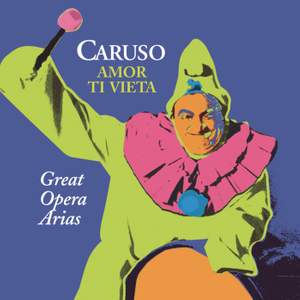
The ten sides the Italian tenor Enrico Caruso cut at the Grand Hotel, Milan, on 11 April 1902 are among the most historic of historical recordings. As John Steane notes in a wide-ranging essay that ideally complements this collection, these are legendary recordings by a legendary tenor. Indeed, Caruso’s fame, according to the old HMV catalogue, was perhaps the greatest ever attained by a singer. Steane sifts fact from fiction in the story of the producer Fred Gaisberg, wowed by Caruso at La Scala and determined to secure him for his company, agreeing the then huge fee of £100 for the ten arias and then receiving a cable from London that said ‘Fee exorbitant, forbid you to record’. Whatever the truth of that, the recording went ahead. Caruso came to the Grand Hotel that Friday afternoon ‘dressed like a dandy, twirling a cane’ with his accompanist Salvatore Cottone, and all was completed within two hours in the improvised studio Gaisberg had rigged up. Again, the new remastering by Abbey Road 78 expert Andrew Walter improves greatly on the recordings’ previous appearance on Références. Awards: Diapason d’Or, Timbre de Platine d’Opéra International, FFFF de Télérama | | | In stock - usually despatched within 1 working day. |
|
|
| |  | Rolando Villazón - Cielo E MarHardback CD size book
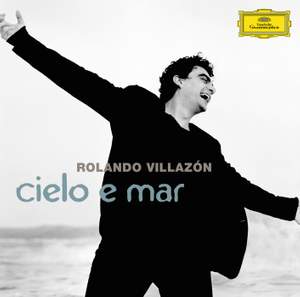
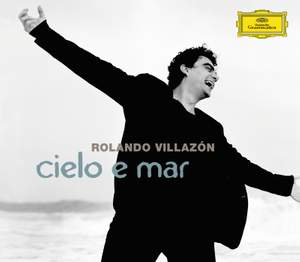
Exuberant and charismatic, Rolando Villazón is the tenor of today. Here he releases his first solo album on Deutsche Grammophon. The soaring title track from Ponchielli’s La Gioconda inspired Villazón to become a singer. Here it is the starting point for an intriguing album which moves far beyond the usual “greatest tenor hits”. Less familiar masterpieces by Boito, Cilea and Verdi feature alongside little-known Donizetti arias and rarities by Gomes, Mercadante and Pietri. The album is Villazón’s personal homage to his illustrious predecessors in the lyric-dramatic repertoire – great tenors such as Bergonzi, Caruso and Domingo. Cielo e mar offers something special for connoisseurs of opera, Villazón’s many fans and mainstream listeners who will be gripped by the beauty of both his voice and the music. | | | In stock - usually despatched within 1 working day. |
|
|
| |  | Jonas Kaufmann: Verismo Arias
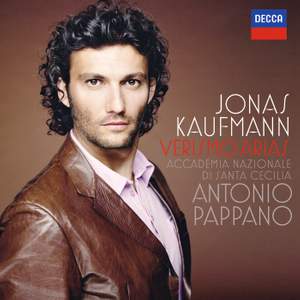
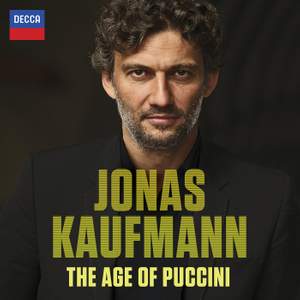
Jonas Kaufmann returns to the Italian verismo tradition to sing arias that define opera’s most passionate and vulnerable leading men. Kaufmann’s international reputation is soaring as, going from strength to strength, he delivers consistently thrilling performances. The onyx-dark beauty of his tone and the refinement and unexpected insights of his delivery mark Jonas Kaufmann a poet of tenors. Timed for release when he makes his anticipated role debut as Maurizio in Adriana Lecouvreur at Covent Garden opposite Angela Gheorghiu, this disc includes excerpts from the Cilea work that helped put Caruso on the map. This album also entices with rarities from Zandonai’s dramatic Giulietta e Romeo and Puccini’s Le Villi. Supporting Jonas Kaufmann is Italy’s leading symphonic orchestra, the Accademia Nazionale di Santa Cecilia, under its dynamic music director Antonio Pappano. Both maestro and orchestra are utterly at home in this repertoire. “One might think the musicianship of the tenor Jonas Kaufmann would be wasted on the frankly third-rate music of the verismo composers. But given his emotional commitment and powerful middle register, this recital proves an irresistible outpouring of melodrama” The Telegraph, 22nd October 2010 **** “Italian repertoire now, is it? Given the prodigious gifts of the German tenor Jonas Kaufmann we shouldn’t be too surprised. But there’s still considerable novelty as that darkly lustrous voice plunges headlong into anguish...Fluent in Italian, Kaufmann is equally at ease navigating the arias’ vocal and emotional tempests.” The Times, 8th October 2010 “Kaufmann sings Giordano (“Come un bel dì di maggio”), Leoncavallo (“Vesti la giubba”), Mascagni (“Mamma!”) and others with lusty good taste” Financial Times, 23rd October 2010 *** “...there is rare sensitivity to the words in his Lamento di Federico (Cilea’s L’Arlesiana) and Turiddu’s Mamma, quel vino è generoso (Mascagni’s Cavalleria Rusticana). The best news is Kaufmann’s thrilling Andrea Chénier (Giordano): a gripping Improviso is followed by a soaring Come un bel dì di maggio” Sunday Times, 24th October 2010 **** “The accompaniments are special..[Pappano] is hugely alert to detail, weighting and what's happening on the imaginary stage around the singer...Kaufmann has entered this world most completely. His Italian is good, as are his desire and ability to project clearly differentiated characters. He is never afraid to sing softly...and there is plenty of power when needed.” Gramophone Magazine, December 2010 “Not only does Kaufmann have a fine voice but he knows how to use it: admirable technique, interpretative ability and much intelligence when it comes to changes of colour, gradations of tone and weight and the willingness to sing softly. There is nothing monochromatic about his performances” International Record Review, November 2010 “This is a wonderful disc, the most exciting and enterprising operatic recital I have heard for a very long time...Kaufmann has everything, and at the age of 40 his voice may well be in its finest shape. He brings a Classical training to these arias, and yet he doesn't in any degree stint on the passion.” BBC Music Magazine, Christmas 2010 ***** “The only really well-known pieces are those from Mascagni's Cavalleria Rusticana and Leoncavallo's Pagliacci, which Kaufmann delivers with the same directness and perfectly judged musicality that he uses for the far less familiar ones. The colour, the elegance and the sheer beauty of tone in his singing are truly exceptional” The Guardian, 16th December 2010 ***** “It seems he really is able to do anything: his rich, dark-hued tenor lends itself to dramatic singing (a raging, heartbroken 'Vesti la giubba'), yet he can also caress a pianissimo vocal line and float exquisite top notes (Cilea's Lamento di Federico)...The other stars of the disc are Pappano and his Santa Cecilia orchestra who perfectly capture the music's passionate, glowing ebb and flow.” Classic FM Magazine, February 2011 ***** “a brave, dedicated and altogether arresting piece of work...a series of steps in unfamiliar directions, taken boldly and with complete confidence and conviction... the sheer originality, versatility and freshness-the excellence-of what Kaufmann creates in every piece demands from the listener a comparable willingness to bring fresh ears to the listening.” Opera BBC Music Magazine
Opera Choice - December 2010 |
| | | Usually despatched in 2 - 3 working days. |
|
|
| |  | Giovanni Malipiero
Berlioz: | La Damnation de Faust, Op. 24: Nature immense, impénétrable et fière La Damnation de Faust, Op. 24: Merci, doux crépuscule! | Boito: | Giunto sul passo estremo (from Mefistofele) (two recordings) Dai campi, dai prati (Mefistofele) | Donizetti: | Una furtiva lagrima (from L'elisir d'amore) Spirto gentil ne' sogni miei (from La Favorita) | Massenet: | Instant charmant … En fermant les yeux (from Manon) Sung in Italian O Nature, pleine de grace (from Werther) Sung in Italian Ah! fuyez douce image (from Manon) | Puccini: | Che gelida manina (from La Bohème) E lucevan le stelle (from Tosca) | Thomas, Ambroise: | Mignon: Ah, non credevi tu; Addio, Mignon, fa core (two recordings) | Verdi: | Questa o quella (from Rigoletto) (two recordings) La donna è mobile (from Rigoletto) Parmi veder le lagrime (from Rigoletto) |
Giovanni Malipiero (tenor) Despite having a voice of reputedly high quality, which could have made him a highly paid global star, Giovanni Malipiero (1906-70) restricted his career almost exclusively to Italy, turning down international engagements. These wonderful recordings were made for the Cetra and Parlophone labels between 1937 and 1941. “Malipiero restricted his repertoire to lyric roles, which he essayed with an unusual timbre and exceptional artistic gifts as captured in these recordings from 1930 to '41.” BBC Music Magazine, June 2009 ***** | | | Usually despatched in 2 - 3 working days. |
|
|
| |  | Rolando Villazón - Cielo E MarJewel Case
Exuberant and charismatic, Rolando Villazón is the tenor of today. Here he releases his first solo album on Deutsche Grammophon. The soaring title track from Ponchielli’s La Gioconda inspired Villazón to become a singer. Here it is the starting point for an intriguing album which moves far beyond the usual “greatest tenor hits”. Less familiar masterpieces by Boito, Cilea and Verdi feature alongside little-known Donizetti arias and rarities by Gomes, Mercadante and Pietri. The album is Villazón’s personal homage to his illustrious predecessors in the lyric-dramatic repertoire – great tenors such as Bergonzi, Caruso and Domingo. Cielo e mar offers something special for connoisseurs of opera, Villazón’s many fans and mainstream listeners who will be gripped by the beauty of both his voice and the music. “This anthology's title track, 'Cielo e mar!', comes from Ponchielli's La Gioconda, the opera that first inspired this thrilling tenor to become a singer. It gets Villazon's first solo album for DG off to a sizzling start, continued with standard fare from Verdi, Boito and Cilea. But there are also rarities, from composers such as Mercadante and Pietri.” The Observer, 22nd June 2008 “Villazon needs no special pleading for the glory of his voice (a dark, baritonal timbre that opens out thrillingly at the top) and his intensity as a performer is captured here as never before. An odd hint of strain in the Boccanegra and Poliuto items suggest he should think carefully before tackling the tenor parts from these operas in the theatre, but the rest is pure gold.” Sunday Times, 8th June 2008 **** “In glorious voice, Villazón identifies ardently with each of these dreamy or distraught Romantic heroes. His familiar no-holds-barred intensity can occasionally misfire, as in a rather relentless account of a once-popular serenade from Pietri's Maristella. But far more often he compels with his thrilling, darkly burnished tone, generous phrasing and care for legato and shading.” The Telegraph, 31st May 2008 “Villazón sings with admirable intensity, his diction is excellent, and he can float a pianissimo when necessary. The aria from Boccanegra is one of the best things Villazón has done so far on the disc.” Gramophone Magazine, July 2008 “This is a well chosen selection of tenor arias with a few comparative rarities to offset the more obvious favourites. In its way it is a mini-history of a century of Italian opera, from Donizetti's Poliuto (1838) to Pietri's Maristella (1934). The Donizetti is the longest item and well though Villazón copes with this, it's hard to imagine him in this part, beloved of tenore di forza of the past including Tamagno and Corelli. In fact he has not sung any of these roles on stage yet; in a note he explains that the repertory here is something 'with more spontaneity…without the burden of history'. Be that as it may, the parts for which he would seem to be destined are Gabriele Adorno in Simon Boccanegra, Rodolfo in Luisa Miller and Viscardo in Il giuramento. Mercadante's opera is based on the same Victor Hugo play as Ponchielli's La Gioconda, so it is a good idea to contrast these two very different interpretations of the same character. The little romanza from Pietri's opera is the only piece by him that we ever get to hear. It was a favourite with Gigli, and several other tenors have recorded it. The aria from Brazilian composer Carlos Gomes's 1873 opera Fosca is a highvoltage outpouring of emotion, as is the aria for Azael in Ponchielli's Il figliuol prodigo. Villazón sings them all with admirable intensity, his diction is excellent, and he can float a pianissimo when necessary, as in the opening 'Cielo e mar' from La Gioconda that gives the disc its title. Recording quality is first–rate, and the accompaniment is always sympathetic.” Gramophone Classical Music Guide, 2010 | | | Usually despatched in 2 - 3 working days. |
|
|
| |  | John McCormack
John McCormack (1884 – 1945) is regarded as one of the greatest lyric tenors of the century.
These Opera arias were recorded on the Victor label between 1910/17. | | | Usually despatched in 2 - 3 working days. |
|
|
| |  | Piero Pauli - Historical Recital
The recordings on this CD are taken from the HMV recordings made between 1930 and 1933 | | | Usually despatched in 2 - 3 working days. |
|
|
| |  | Gedda, Nicolai: Live in Budapest 1984 - Goethe Songs
Beethoven: | Wonne der Wehmut, Op. 83 No. 1 Mit einem gemalten Band Op. 83, No. 3 Aus Goethes Faust | Boito: | Dai campi, dai prati (Mefistofele) Giunto sul passo estremo (from Mefistofele) | Massenet: | O Nature, pleine de grace (from Werther) Oui ce qu'elle m'ordonne... Lorsque l'enfant (from Werther) | Mozart: | Das Veilchen, K476 | Mussorgsky: | Mephistopheles' Song of the Flea | Schubert: | Wandrers Nachtlied I 'Der du von dem Himmel bist', D224 Rastlose Liebe, D138 Schäfers Klagelied, D121 (Goethe) Erster Verlust, D226 (Goethe) | Tchaikovsky: | None but the lonely heart, Op. 6 No. 6 | Thomas, Ambroise: | Elle ne croyait pas, dans sa candeur naïve (from Mignon) Adieu, Mignon! Courage! (Mignon) | Wolf, H: | Frühling übers Jahr (No. 28 from Goethe-Lieder) Anakreons Grab (No. 29 from Goethe-Lieder) Der Schäfer (No. 22 from Goethe-Lieder) |
| |
|
| |
|