Prices shown exclude VAT. (UK tax is not payable for deliveries to United States.) See Terms & Conditions for p&p rates. | |  | The Art of the Verdi Baritone
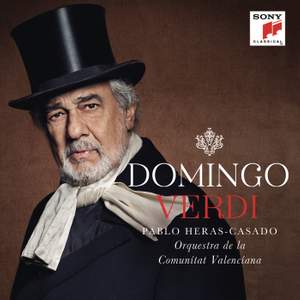
The privileged position of the baritone-voice in Verdi´s operas was something new at the time and developed into a vocal category of its own: the "Verdi-baritone". Verdi's baritone-roles can roughly be divided into two categories: the fathers and rulers, who are in moral conflict between the love for their children and moral and/or political duties (Rigoletto, Amonasro, Simon Boccanegra, Nabucco, Jacopo Foscari, Guido di Montfort or father Germont), and youthful men of honour and/or villains, who usually turn out to be the tenor's rival (CarIo in "Forza", Renato, Carlo V, lago. Cote di Luna). Forming part of Presier’s celebration of the 200th anniversary of Verdi, this collection is a unique and fascinating account of the performances over the years 1904-1950. | 
| | | Usually despatched in 2 - 3 working days. |
|
|
| |  | Verdi: Arias and Duets from Verdi OperasSung in German
Helge Rosvaenge (tenor), Heinrich Schlusnus (baritone) Rosvaenge recorded exclusively for Electrola and Schlusnus for Grammophon. They had made just one duet record for Grammophon in 1933. These broadcast recordings are among the finest these two artists ever made, when both were at the height of their careers. | | | Usually despatched in 2 - 3 working days. |
|
|
| |  | Mattia Battistini II
Mattia Battistini (baritone) Part of the Legendary Singers series, Mattia Battistini made his debut in 1878 in Donizetti’s La Favorita which was an immediate success. His career lasted almost 50 years, his last performance being given only one year before his death where his voice was apparently still in top condition. | | | Usually despatched in 2 - 3 working days. |
|
|
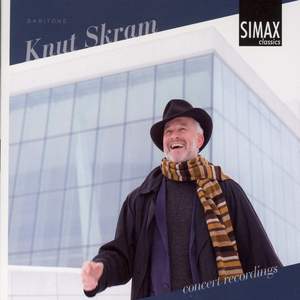
| |  | Knut Skram - Concert Recordings
Knut Skram is Norway’s foremost baritone. During a distinguished career since his breakthrough at Glyndebourne in 1969 as Guglielmo in Così, he has performed all the major baritone roles, including Germont in “La Traviata”, Ford in “Falstaff”, the title role in “Macbeth”, and Don Carlos in “La forza del destino”. He has appeared at major opera houses throughout the world, alongside the greatest artists of the day. | | | Usually despatched in 4 - 5 working days. |
|
|
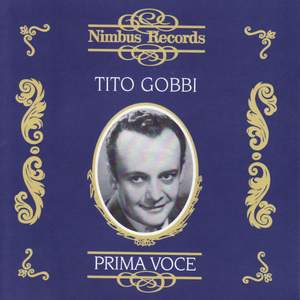
| |  | Tito Gobbi
“The Italian baritone was arguable a great singing actor rather than a great singer per se, but as these recordings from central and rarer roles in his repertoire demonstrate all of his performances are memorable.” BBC Music Magazine, March 2008 **** | | | Usually despatched in 4 - 5 working days. |
|
|
| |  | Voce Verdiane al Regio di Parma
Adriana Guerrini, Amelita Galli-Curci, Aurora Rettore, Beniamino Gigli, Benvenuto Franci, Carlo Castellani, Gina Cigna | | | Usually despatched in 8 - 10 working days. |
|
|
| |  | Mr. Rigoletto: My Life in Music
| | | Usually despatched in 2 - 3 working days. |
|
|
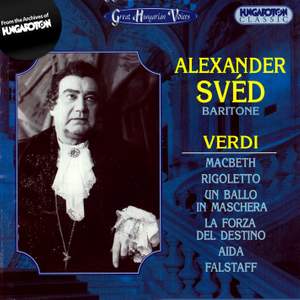
| |  | Great Hungarian Voices: Alexander Svéd sings Verdi Arias
Verdi: | Perfidi!…Pietà, rispetto, amore (from Macbeth) Hungarian State Opera Orchestra, Victor Vaszy Pari siamo! (from Rigoletto) Hungarian State Opera Orchestra, Andras Korodi Figlia! Mio padre! A te dappresso (from Rigoletto) Maria Gyurkovics (soprano), Olga Szonyi (mezzo-soprano), Robert Ilosfalvy (tenor) Hungarian State Opera Orchestra, Francesco Molinari-Pradelli Cortigiani, vil razza dannata (from Rigoletto) Hungarian State Opera Orchestra, Andras Korodi Tutte le feste (from Rigoletto) Maria Gyurkovics (soprano), Janos Fodor (baritone), Jozsef Body (bass) Hungarian State Opera Orchestra, Francesco Molinari-Pradelli Chi e mai (from Rigoletto) Maria Gyurkovics (soprano), Hungarian State Opera Orchestra, Francesco Molinari-Pradelli Alla vita che t'arride (from Un ballo in maschera) Hungarian State Opera Orchestra, Vilmos Komor Alzati…Eri tu che macchiavi quell'anima (from Un Ballo in Maschera) Hungarian State Opera Orchestra, Vilmos Komor Solenne in quest'ora (from La Forza del Destino) Robert Ilosfalvy (tenor) Hungarian State Opera Orchestra, Vilmos Rubanyi Urna fatale (from La Forza del Destino) Hungarian State Opera Orchestra, Francesco Molinari-Pradelli Ciel, mio padre! (from Aida) Maria Gyurkovics (soprano) Hungarian State Opera Orchestra, Francesco Molinari-Pradelli |
Alexander Svéd (baritone) | | | Usually despatched in 4 - 5 working days. |
|
|
| |  | Jan Derksen sings Verdi Volume 3
Verdi: | I Due Foscari Jan Derksen (Francesco Foscari), Luigi Lega (Jacopo Foscari), Angeles Gulin (Lucrezia Contarini), Ugo Trama (Jacopo Loredano), Cor Niessen (Barbarigo), Adriana Hali (Pisana) Fulvio Vernizzi La Traviata (excerpts) Marilyn Tyler (Violetta), Michele Molese (Alfredo), Jan Derksen (Germont/Marchese d'Obigny) Bernard Haitink Don Carlo (excerpts) Jan Derksen (Rodrigo), Neil Shicoff (Don Carlo), Antoinette Tiemessen (Elisabetta di Valois), Elizabeth Connell (Eboli), Williard White (Filippo II) Hans Vonk Urna fatale (from La Forza del Destino) Jan Derksen (Don Carlo) Charles Mackerras |
| | | This item is currently out of stock at the UK distributor. You may order it now but please be aware that it may be six weeks or more before it can be despatched. |
|
|
| |  | Tito Gobbi: The Complete Solo Recordings
Anzi: | O mia bella Madonnina Mattinata fiorentina | Berlioz: | Une puce gentille 'Flea Song' (from La damnation de Faust) | Brogi: | Visione Veneziana | Capua: | O sole mio | Carissimi: | Vittoria, mio core! | Cavalli: | Beato chi può (from Xerse) | Cilea: | Come due tizzi accesi (from L'Arlesiana) Ecco il monologo (from Adriana Lecouvreur) (two recordings) | Cottrau: | Santa Lucia (two recordings) | Denza: | Occhi di fata Occhi di fata | Donizetti: | Come Paride vezzoso (from L'elisir d'amore) Cruda, funesta smania (from Lucia di Lammermoor) La pietade in suo favore (from Lucia di Lammermoor) Che fia?...Se tradirmi tu potrai (from Lucia di Lammermoor) La donna è originale...Venti scudi (from L'elisir d'amore) | Durante: | Vergin, tutto amor preghiera | Falvo: | Dicitencello vuie | Gastaldon: | Musica proibita | Giordani, G: | Caro mio ben | Giordano, U: | Nemico della patria (from Andrea Chénier) La donna russa (from Fedora) (two recordings) | Lama, G: | Silenzio cantatore | Leoncavallo: | Buona Zazà del mio buon tempo from Zazà Zazà, piccolo zingara from Zazà Si può? (from I Pagliacci) (two recordings) | Mascagni: | Serenata | Mayer: | Biondina in gondoletta | Monteverdi: | Air d'Orphee Rosa del ciel | Mozart: | Deh! vieni alla finestra (from Don Giovanni) Non piu andrai, farfallone amoroso (from Le Nozze di Figaro) Aprite un po'quegli occhi (from Le Nozze di Figaro) | Olivieri: | Nenia d’amore | Paisiello: | Nel cor più non mi sento | Pigarelli: | La montanara (from the film The Glass Mountain) (two recordings) | Puccini: | Minnie, della mia casa son partito (from La Fanciulla del West) (two recordings) Tosca: Act Two (excerpt) Maria Callas (Tosca), Luigi Alva (Cavaradossi) Ladro!...Via! via!...Lauretta mia...Ditemi voi, signori (from Gianni Schicchi) Victoria de los Angeles (Lauretta), Carlo del Monte (Rinuccio) | Respighi: | Nebbie | Rossini: | Largo al factotum (from Il barbiere di Siviglia) Guglielmo, sol per te...La valanga (from Guglielmo Tell) Resta immobile (from Guglielmo Tell) (two recordings) | Ruccione: | Famme sunn’a cu’tte | Sadero: | Amuri, amuri (two recordings) Gondoliera veneziana (two recordings) | Scarlatti, A: | O cessate di piagarmi (from Il Pompeo) | Tagliaferri: | Piscatore 'e pusilleco | Tosti: | A vucchella Marechiare Malià Donna, vorrei morir Ideale A vucchella | trad.: | Fenesta che lucive (two recordings) Tre giorni son che Nina (two recordings) Se gli alberi | Valente, N: | Torna! | Verdi: | Per me giunto è il di (from Don Carlo) O Carlo, ascolta (from Don Carlo) Era la notte (from Otello) Urna fatale (from La Forza del Destino) Vanne, la tua meta gia vedo…Credo in un Dio crudel (from Otello) Di provenza il mar (from La Traviata) Pari siamo! (from Rigoletto) Perfidi!…Pietà, rispetto, amore (from Macbeth) Alzati…Eri tu che macchiavi quell'anima (from Un Ballo in Maschera) Vanne, la tua meta gia vedo…Credo in un Dio crudel (from Otello) (two recordings) Ah, prigioniero io sono...Dio di Giuda! (from Nabucco) Quando ero paggio (from Falstaff) (two recordings) Plebe! Patrizi! Popolo! (from Simon Boccanegra) Rigoletto (excerpts) Maria Callas (Gilda), Giuseppe di Stefano (Il Duca) Dinne...alcun lá non vedesti? (from Simon Boccanegra) Victoria de los Angeles (Amelia) Ciel, mio padre! (from Aida) Maria Callas (Aida) Don Carlo (excerpts) Mario Filippeschi (Carlo), Plinio Clabassi (Filippo) L'onore! Ladri! (from Falstaff) | Vivaldi: | Cantata RV675 'Piango, gemo, sospiro' | Wolf-Ferrari: | Aprile o bella - Serenata (from I gioielli della Madonna) Commiato |
This 5 CD set, devoted to the outstanding Italian baritone Tito Gobbi, is a further release in the EMI Classics ICON series. The bulk of this set is devoted to all the solo recordings that Gobbi made during his entire career, brought together for the first time. The first CD begins with seven operatic arias (by Cilea, Leoncavallo, Mozart, Verdi and Puccini), and two songs (‘Musica proibita’ by Gastaldon and ‘Famme sunn’a cu’tte’ by Ruccione) that Gobbi made for the Italian branch of EMI in 1942. The songs were released only in Italy on a 78rpm record that had extremely limited circulation because of the Second World War, and are re-issued here by EMI for the first time. The programme continues on CD 1 with further recordings that Gobbi made for EMI from 1948 onwards of operatic arias and songs, including two songs (‘La montanara’ and ‘Take the Sun’) that were featured in the 1949 film The Glass Mountain that brought the baritone to a wide cinema audience. He eventually appeared in more than 20 films. CD 2 contains the rest of the songs and arias made up to the end of the 78rpm era, and finishes with the song ‘Nenia d’amore’ recorded in Italy in 1953 for the film Canzoni a due voci. In 1955, Gobbi made his first LP recital album (with the forces of the Rome Opera), but it was not released at the time due to concerns about the technical quality of the recording. With the advance of technology the problems were subsequently able to be corrected and Gobbi later gave permission for material from the album to be released in various LP collections. The whole album is now heard here complete for the first time. In 1964, EMI made a two-LP set called The Art of Tito Gobbi in which each of the four LP sides was devoted to a different genre, namely Operatic Arias, Classical Songs and Arias, Italian and Neapolitan Popular Songs, and Romantic Songs. The programme repeated some of the repertoire on the as yet unpublished 1955 album but ranged much more widely, especially in the field of song. The operatic arias were made with the Philharmonia Orchestra under Alberto Erede; the classical songs with a small chamber ensemble consisting of harpsichord, cello and guitar; the popular songs with members of the Orchestra of the Rome Opera, and the romantic songs with the distinguished pianist Gerald Moore. This project marked the end of Gobbi’s recording career in solo repertoire. The rest of the set covers extracts from some of the acclaimed complete opera recordings that Gobbi made for EMI, including Lucia di Lammermoor, Tosca, Aida and Rigoletto with the legendary soprano Maria Callas. Other operas featured are L’elisir d’amore, Simon Boccanegra, Don Carlo, Aida, Il tabarro, Il barbiere di Siviglia, Pagliacci and Gianni Schicchi. The programme ends with a memorable reminder of one of Gobbi’s finest assumptions, the title role in Verdi’s sublime Falstaff. | | | In stock - usually despatched within 1 working day. |
|
|
| |
|