In stock - usually despatched within 1 working day.
Stanford: La Belle Dame Sans Merci
Gurney: 5 Elizabethan Songs - Sleep
Gurney: I Will Go With My Father A-Ploughing
Dunhill: The Cloths Of Heaven, Op. 30/3
Browne: To Gratiana Dancing & Singing
Somervell: To Lucasta, On Going To The Wars
Delius: 7 Songs From The Norwegian - Twilight Fancies
German: Henry VIII - Orpheus With His Lute
Warlock: Jilian Of Berry
Warlock: Cradle Song
Finzi: A Young Man's Exhortation, Op. 14 - The Dance Continued
Vaughan Williams: Linden Lea
Vaughan Williams: Silent Noon
Stanford: 50 Songs Of Old Ireland - My Love's An Arbutus
Anon: The Death Of Queen Jane
Parry: English Lyrics, Op. 176 - No Longer Mourn For Me
Finzi: Since We Loved
Britten: The Salley Gardens
Warlock: Rest, Sweet Nymphs
Quilter: 3 Shakespeare Songs, Op. 6 - Come Away, Death
Quilter: Now Sleeps The Crimson Petal, Op. 3/2
Grainger: Bold William Taylor
Grainger: Brigg Fair
Trad: The Little Turtle Dove
2010
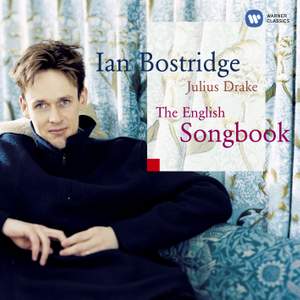
“The recital begins with Keats and ends with Shakespeare: that can't be bad. But it also begins with Stanford and ends with Parry; what would the modernists of their time have thought about that? They would probably not have believed that those two pillars of the old musical establishment would still be standing by in 1999. And in fact how well very nearly all these composers stand! Quilter's mild drawing–room manners might have been expected to doom him, but the three songs here – the affectionate, easy grace of his Tennyson setting, the restrained passion of his 'Come away, death' and the infectious zest of 'I will go with my father a–ploughing' – endear him afresh and demonstrate once again the wisdom of artists who recognise their own small area of 'personal truth' and refuse to betray it in exchange for a more fashionable 'originality'. Likewise Finzi, whose feeling for Hardy's poems is so modestly affirmed in 'The dance continued'. Does that song, incidentally, make deliberate reference, at 'those songs we sang when we went gipsying', to Jillian of Berry by Warlock (whose originality speaks for itself)? Jillian of Berry itself perhaps calls for more full–bodied, less refined tones than Bostridge's. One could do with a ruddier glow and more rotund fruitiness in the voice. Yet for most of the programme he isn't merely a well–suited singer but an artist who brings complete responsiveness to words and music. The haunted desolation of Delius's Twilight Fancies is perfectly caught in the pale hue of the voice which can nevertheless give body and intensity to the frank cry of desire, calming then to pianissimo for the last phrase amid the dim echoes of hunting horns in the piano part. Julius Drake plays with strength of imagination and technical control to match Bostridge's own.”
Click on any of the works listed above for alternative recordings.