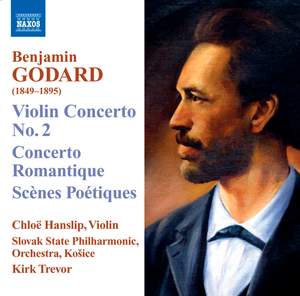
In stock - usually despatched within 1 working day.
Benjamin Godard: Violin Concerto No. 2 in G minor, Op. 131
I. Allegro moderato
II. Adagio quasi andante
III. Allegro non troppo
Benjamin Godard: Concerto romantique, Op. 35
I. Allegro moderato
II. Adagio non troppo
III. Canzonetta: Allegretto moderato
IV. Allegro molto
Benjamin Godard: Scenes poetiques, Op. 46
No. 1. Dans les bois
No. 2. Dans les champs
No. 3. Sur la montagne
No. 4. Au village
“It's to Hanslip's credit that… she is unafraid to risk the unfamiliar. She makes a triumphant success of this concerto, not least because her playing is as forceful and muscular as it is assured, and one hears in every entry how well thought-through are her approach and her grasp of the work's subtle musical nuance.”
“Hanslip…makes a good advocate of these pieces… Just what the music needs. And all her solo sprints are exhilarating. Glissando dashes, double, triple and quadruple stopping – nothing gives her pause.”
April 2008
***
“Acceptable background listening, but not really much more.”
2010
“Benjamin Godard (1849-95) was a prolific, fluent composer in many genres, but little of his output is familiar today. A string-player (he'd been a pupil of Henri Vieuxtemps), he writes for the violin with great panache, and Chloë Hanslip is in her element, making the most of the showy passagework, enjoying finding the right tone of voice for the different styles of melody – elegiac, sensuous or graceful – and attacking with passion the dramatic recitatives that join the movements of the Concerto romantique. The orchestral writing in both concertos is full of colour, if occasionally rather brash, and is performed here with considerable dash and spirit. There are some delightful solo contributions from oboe, clarinet and viola, in dialogue with the violin, during the little Canzonetta that separates the slow movement and finale of the Concerto romantique. Neither concerto comes near to rivalling Bruch or Tchaikovsky, but Godard is a skilful composer; it's music that's formally satisfying, consistently entertaining and sometimes memorable and touching. Hanslip, who's to be congratulated for taking on such unfamiliar repertoire, seizes on these high-spots – the second theme in Op 131's first movement, the moment in Op 35's sombre Adagio when the first turn to the major is made – and finds just the right colour to emphasise Godard's happy thought. The Scènes poétiques are really salon music transposed to the concert hall. Kirk Trevor and the orchestra relish the imaginative instrumental colouring, though the performance sounds a little like music learnt in the studio, rather than familiar from many concert outings.”
Click on any of the works listed above for alternative recordings.