All recordingsPrices shown exclude VAT. (UK tax is not payable for deliveries to United States.) See Terms & Conditions for p&p rates. | |  | Music of Christopher Tye
Christopher Tye (1505-1572) was an important figure in the English renaissance. His career was based around the centres of Cambridge and Ely and spanned the English Reformation. He wrote both in Latin and its vernacular successor. Few albums of Tye’s music are available and the superb Cambridge University Chamber Choir, formed from elite singers taken from various colleges, gives a perfect introduction to Tye’s output. The choir is conducted by the world-renowned choral director, Timothy Brown. | | | Usually despatched in 8 - 10 working days. |
|
|
| |  | New York Polyphony - Tudor City
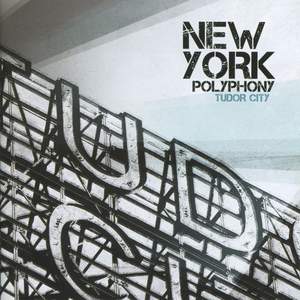
New York Polyphony’s second release for Avie is a compelling fusion of Tudor masterpieces from Byrd, Tallis, Taverner and others and contemporary works by Oslo-based English composer Andrew Smith. Classical vocal quartet New York Polyphony struck a chord with their 2007 Avie debut, ‘I Sing the Birth’ (AV2141). An intimate meditation on the Christmas season, it garnered unanimous praise on both sides of the pond. For Gramophone Magazine it was “one of the season's best”, and it was an Editor's Christmas Choice in BBC Music Magazine. For their second release, the all-male foursome delivers their signature fusion of historically informed performances in a range of styles. Interspersed between sacred masterpieces of Tudor England are four new works by British-Norwegian composer Andrew Smith, adding a modern harmonic richness and complexity to the album. The result is a compelling synthesis of ancient and contemporary vocal music. New York Polyphony extends the mix of old world and new in the album’s title, named for the distinctive 19th-century neighbourhood on Manhattan’s East Side which is pictured in the striking cover design. “The transitions between the ages are seemlessly effected, particularly impressive during back-to-back old and new performances of "Magnificat À Quatre". Recorded in New York's Cathedral of St John the Divine, these are beautifully blended voices of individual distinction” The Independent, 21st May 2010 **** | | | Usually despatched in 4 - 5 working days. |
|
|
| |  | English Renaissance MusicA recital which contrasts the inspirational work of Thomas Tallis, Christopher Tye and John Sheppard
After the enormous success last year of their recording of Bach Motets (476 5776), the Hilliard Ensemble turn their attention to music of the English Renaissance and specifically, works by three 16th century composers, Tallis, Tye and Sheppard. While Christopher Tye might be branded one of the lesser-known figures of the English Renaissance, and John Sheppard perhaps the more esoteric, Thomas Tallis stands as the most important and accomplished musician of the Tudor period. All three, however, were masters of polyphony, associated with the Chapel Royal. The music here is not a sampling of the (much-recorded) music for the new Prayer Book but a survey of the earliest examples of the impact of reform on musical composition, namely from the last decades of Henry VIII’s reign. The works of Tallis, Tye and Sheppard are alternated and contrasted throughout this beautifully constructed recital, recorded, like many of the Hilliard Ensemble’s CDs, in the splendid, crystal-clear acoustics of the Sankt Gerold monastery in the Austrian Alps. Tallis has long been an inspirational figure for the Hilliards, who had a huge success with their recording of his Lamentations of Jeremiah (833 3082) in 1986 - one of their first ECM New Series discs - and also brought his music into their collaboration with Jan Garbarek on Mnemosyne (465 1222). “The ensemble is flawless and the sound reproduction crystalline.” BBC Music Magazine, Proms 2008 *** “The Hilliards here return to familiar territory with a programme of Tallis, Tye and Sheppard. While the territory may be familiar, however, not all of its landmarks are, and neither is their disposition – this is an extremely well organised disc, surveying the impact that the musical aspects of the Reformation had in the first instance on English composers (what David Skinner aptly describes as 'that musicologically grey period in the last decades of Henry VIII's reign'). Thus, while all the works by Tallis (Inieiunio et fletu, Te lucis ante terminum, Audivivocem and Salvator mundi, the latter given a particularly beautiful performance) are well known, they are set in the context of much more recondite material. The rarities from Sheppard include the early Gaudete celicole omnes, whose constant flow almost suggests at times a kind of English Gombert, and later, clearly Henrician works, such as the marvellously luminous hymn Eternerex, altissime. The music by Tye includes Omnesgentes plaudite, which may perhaps be considered relatively known, but the four sections of the Missa sine nomine from the Peterhouse partbooks will probably be unknown even to most connoisseurs of this period, precisely on account of the missing voice. Hopefully these beautifully blended performances will help to change this state of affairs, for it is an extremely impressive work, heralding the new, compact and more declamatory style with consummate skill. An outstanding release.” Gramophone Classical Music Guide, 2010 “…beautifully blended performances…” Gramophone Magazine, October 2008 | | | Usually despatched in 4 - 5 working days. |
|
|
| |  | Taverner & Tudor Music I - The Western Wind
“Hillier turns the choir into a true theatre of voices, with some startling results.” BBC Music Magazine **** “Few understand such music better than Paul Hillier, who has directed the 16-voiced Scandinavian choir Ars Nova since 2002. His approach to the Mass is brisk but flexible, with an admirable sense of the alternation of intensity and dissipation that inhabits this music.” BBC Music Magazine, November 2006 **** “Taverner's Western Wynde Mass is often held up as one of the composer's masterpieces. Tempi are brisk, the projection of the lines energetic… In some of the fiercely demanding sections for reduced voices (the Benedictus, for example), the Danish singers are heard to strain but in the full sections they are as dynamic and outgoing as the music itself. As to the brief settings of the Kyrie (Leroy) and In pace with which the disc opens and closes, they show a more contemplative side to Taverner, to which Ars Nova respond most movingly.” Gramophone Magazine, November 2006 | | | Usually despatched in 2 - 3 working days. |
|
|
| |  | Music of Christopher Tye
| | | Usually despatched in 8 - 10 working days. |
|
|
| |
|