All recordingsPrices shown exclude VAT. (UK tax is not payable for deliveries to United States.) See Terms & Conditions for p&p rates. | |  | Miah Persson sings Songs by Schubert, Sibelius & Grieg
Grieg: | Seks Sange, Op. 48 Hjertets Melodier af H. C.Andersen, Op. 5 No. 3 'Jeg elsker Dig' encore | Schubert: | Suleika I, D720 Ganymed, D544 (Goethe) Nur wer die Sehnsucht kennt, D877/4 Rastlose Liebe, D138 Du bist die Ruh D776 (Rückert) Auf dem Wasser zu singen, D774 Gretchen am Spinnrade, D118 Der Hirt auf dem Felsen, D965 (Von Chezy / Muller) Richard Hosford (clarinet) | Sibelius: | Våren flyktar hastigt, Op. 13 No. 4 (Text: Runeberg) Den första kyssen, Op. 37 No. 1 (Text: J.L. Runeberg) Var det en dröm? Op. 37 No. 4 (J.J. Wecksell) Säf, säf, susa, Op. 36 No. 4 (Text: Gustav Fröding) Flickan kom från sin älsklings möte, Op. 37, No. 5 |
Famed for her highly intelligent performances and deep engagement with music, Swedish soprano Miah Persson is in great demand throughout the world. She returned to Wigmore Hall last February with internationally renowned accompanist Roger Vignoles to perform a wonderfully emotive and dramatic programme. Opening with some of the most celebrated Schubert Lieder, Persson revealed a refined interpretation of each song, searching deep within the texts to convey emotions from agony to ecstasy. With great passion, Persson then entered the Scandinavian sound world to complete her programme with Grieg’s stormy Six Songs and a beautiful collection of Sibelius’s most evocative settings. “'Gretchen am Spinnrade' is a model of how a middle-weight voice can scale the song's peaks thanks to an inner conviction and trusting how the notes and words can shoulder the dramatic weight...So beautiful is her enunciation in the Swedish-language Sibelius songs that you could take phonetic dictation...The Grieg songs show signs of vocal tiring...In 'Die verschwiegene Nachtigall', though, one can hardly imagine a more alluring nightingale song.” Gramophone Magazine, August 2012 “a lovely, beautifully balanced recital...In an opening Schubert set, Persson, for all the natural brightness of her voice, achieves the right aching heaviness in Lied der Mignon, and a beguiling sense of gentle repose in Du bist die Ruh.” Sunday Times, 15th July 2012 “Persson is beautiful and so is her voice, so she starts with a big advantage. But that is only the start...I did find...that there was a danger of monotony, undercharacterisation and reliance on sheer undeniable vocal beauty. Roger Vignoles is an ideal accompanist, setting the mood with a few notes or chords” BBC Music Magazine, September 2012 *** “Persson clearly relishes the possibility of characterization particular songs...The voice is light and lyric throughout but there's power too when required, so the final lines of Du bist die Ruh are radiant...However - and this is possibly a subjective caveat - what Persson lacks is the kind of rounded warm tone and inner conviction that makes the best Schubert recitals so warmly satisfying...Hosford is the perfect partner up on the rock” International Record Review, September 2012 | | | In stock - usually despatched within 1 working day. |
|
|
| |  | Tine Thing Helseth: Storyteller
Cano, J M: | Luna: Epílogo | Canteloube: | La pastoura als camps Malurous qu’o uno fenno (3rd series, no.5) from Chants d’Auvergne | Delibes: | Chanson Espagnole | Dvorak: | Songs My Mother Taught Me, Op. 55 No. 4 | Grieg: | Haugtussa, Op. 67 | Korngold: | Glück, das mir verbleib 'Marietta's Lied' (from Die Tote Stadt) | Mahler: | Wer hat dies' Liedlein Erdacht? (Des Knaben Wunderhorn) | Rachmaninov: | How fair this spot, Op. 21 No. 7 | Saint-Saëns: | Mon cœur s'ouvre à ta voix (from Samson et Dalila) | Sibelius: | Var det en dröm? Op. 37 No. 4 (J.J. Wecksell) Soluppgång, Op. 37 No. 3 (Text: Tor Hedberg) Våren flyktar hastigt, Op. 13 No. 4 (Text: Runeberg) | Strauss, R: | Wiegenlied, Op. 41 No. 1 | Weill, K: | Je ne t'aime pas (text: Maurice Magre) |
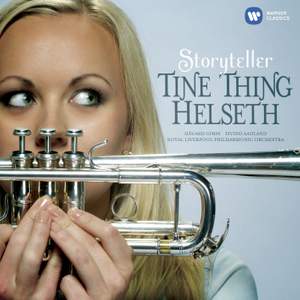
An innovative debut recording from EMI’s new signing, Tine Thing Helseth, in which Tine takes on the mantle of story teller through her interpretation and repertoire curation. This collection of songs transcribed for trumpet includes music by Strauss, Sibelius, Ravel, Canteloube and Weill, and is anchored by Grieg’s Haugtussa song-cycle. The recording is with orchestra and piano accompaniment. Tine is 23 with a refreshingly focused and straightforward approach to making music. She is a unique artist with several facets - classical soloist, ensemble leader and jazz musician – and equally at home with each. Tine Thing Helseth, born in 1987, started to play trumpet at the age of 7, and is already one of the leading trumpet soloists of her generation. Already in her solo career, Helseth has appeared with the Vienna Symphony Orchestra, Vienna Chamber Orchestra, the Zurich Chamber Orchestra, Stuttgart Chamber Orchestra, Ulster Orchestra, Philharmonie Baden-Baden, all the major Norwegian orchestras and further afield with the Shanghai Symphony Orchestra, amongst others. “Tine Thing Helseth is blessed with a combination of great wind-playing attributes: a soulful - dare one say brooding, Nordic - approach to phrasing, quite astonishingly outstanding intonation and a sound which is open and honest, even and focused in all registers...Helseth can do the ultimate in good trumpet-playing: smith a tune with seeming effortlessness.” Gramophone Magazine, July 2012 | | | In stock - usually despatched within 1 working day. |
|
|
| |  | The Flagstad Recitals Volume 2Scandinavian Songs
Alnaes: | De hundrede violiner Varlaengsler Nu brister alle de klofter Februarmorgen ved Golfen | Eggen: | Aere det evige forar i livet | Grieg: | Haugtussa, Op. 67 Hjertets Melodier af H. C.Andersen, Op. 5 No. 3 'Jeg elsker Dig' Eros (from 5 Songs Op. 70) Millom Rosor, Op. 39, No. 4 Der gynger en baad paa bflge, Op. 69, No. 1 Hytten, Op. 18, No. 2 Det første møde, Op. 21 No. 1 Jeg giver mit digt våren, Op. 21, No. 3 Med en Primula veris, Op. 26 No. 4 Med en vandlije, Op. 25 No. 4 Seks Sange, Op. 48 No. 6 'Ein Traum' I Liden hojt deroppe, Op. 39 No. 3 Fra Monte Pincio, Op. 39 No. 1 Liden Kirsten (Little Kirsten), Op. 60 No. 1 Den Aergjerridge, Op. 26, No. 3 Efterårsstormen, Op. 18, No. 4 Og jeg vil ha mig hjertenskjaer (And I would like a sweetheart true), Op. 60 No. 5 Arr. Valdar Jeg giver mit digt våren, Op. 21, No. 3 Arr. Valdar Til én, Op. 59, No. 3 Arr. Valdar Til en II, Op. 59 No. 4 Arr. Valdar | Lie, H: | Nykelen Skindvengbrev | Sibelius: | Illalle, Op. 17 No. 6 (Forsman-Koskimies) Orch. Jalas Var det en dröm? Op. 37 No. 4 (J.J. Wecksell) Orch. Jalas Höstkväll, Op. 38:1 (Text: Viktor Rydberg) Orch. Sibelius Demanten på marssnön, Op. 36 No. 6 (Wecksell) Orch. Sibelius Flickan kom från sin älsklings möte, Op. 37, No. 5 Orch. Pingoud Arioso, Op. 3 (Text: J.L. Runeberg) Orch. Sibelius Våren flyktar hastigt, Op. 13 No. 4 (Text: Runeberg) Orch. Sibelius Se'n har jag ej frågat mera, Op. 17 No. 1 (Text: J.L. Runeberg) Orch. Sibelius Men min fågel märks dock icke, Op. 36, No. 2 Orch. Pingoud På verandan på vid havet, Op. 38 No. 2 (Viktor Runeberg) Orch. Sibelius Den första kyssen, Op. 37 No. 1 (Text: J.L. Runeberg) Orch. Fougstedt Svarta rosor, Op. 36 No. 1 (Ernst Josephson) Orch. Fougstedt Säf, säf, susa, Op. 36 No. 4 (Text: Gustav Fröding) Orch. Hellmann Kom nu hit, Död, Op. 60 No. 1 (Bertel Gripenberg after Shakespeare) Orch. Sibelius |
In her autobiography (The Flagstad Manuscript, 1952) Kirsten Flagstad tells of the joy she experienced on finding, when she began to give concerts in the United States, that the Americans so took to the songs of her native country, and particularly of Grieg. She herself had been brought up with them, and even included some in the program of one of her first professional engagements, at an Oslo jail in 1913. She was told that one prisoner due for release had asked to stay on till Easter so that he could hear ‘that girl’ again. The cycle Haugtussa (The Mountain Maid, 1895) was almost entirely unknown to listeners outside Scandinavia till Flagstad issued her first recording of it in 1940. Even then it failed to achieve the popularity its melodies and poignancy should have eared for it, and only since the 150th anniversary of the composer’s birth has it won due recognition. Yet Flagstad had a great love for it and put heart and soul into the songs. This second volume of “The Flagstad Recitals” focuses on Grieg as well as other Scandinavian composers, offering songs with both piano as well as orchestral accompaniment. [Grieg Songs] “Listening to Mme Flagstad's recital makes one regret that she did not record more of her great countryman. The songs are varied and rewarding and her account of From Monte Pincio, one of the finest, is beautifully characterised as indeed are nearly all the songs on this record. I only regret that the quality of the recording was not better. The voice remains undimmed…" Gramophone "…what a marvellously fresh and original work Haugtussa is and how glorious is Flagstad's tone and characterisation! I do urge readers who do not know this song-cycle to invest in this record." Gramophone | | | In stock - usually despatched within 1 working day. |
|
|
| |  | Sibelius & Strauss: Songs
Sibelius: | Flickan kom från sin älsklings möte, Op. 37, No. 5 Hennes budskap, Op. 90 No. 2 (Runeberg) Jägargossen, Op. 13 No. 7 (Text: J.L. Runeberg) Langtan heter min arfvedel, Op. 86 No. 2 (Karlfeldt) På verandan på vid havet, Op. 38 No. 2 (Viktor Runeberg) Romeo, Op. 61 No. 4 (Text: K.A. Tavaststjerna) Marssnön (Wecksell) Kullervon valitus from Op. 7 Höstkväll, Op. 38:1 (Text: Viktor Rydberg) Den första kyssen, Op. 37 No. 1 (Text: J.L. Runeberg) I systrar, I bröder, I alskande par, Op. 86 No. 6 (Lybeck) Våren flyktar hastigt, Op. 13 No. 4 (Text: Runeberg) Necken (The Watersprite, or The Elf-King) Op. 57 No. 8 (Josephson) Långsamt som qvällskyn, Op. 61 No. 1 (Tavaststjerna) Jag är ett träd (I am a tree) Op. 57 No. 5 (Josephson) Norden, Op. 90 No. 1 (Runeberg) Narciss (Narcissus) (B. Gripenberg) Illalle, Op. 17 No. 6 (Forsman-Koskimies) Säf, säf, susa, Op. 36 No. 4 (Text: Gustav Fröding) Kom nu hit, Död, Op. 60 No. 1 (Bertel Gripenberg after Shakespeare) Lastu lainehilla, Op. 17, No. 7 Demanten på marssnön, Op. 36 No. 6 (Wecksell) Vilse, Op. 17 No. 4 (Text: K.A. Tavaststjerna) Svarta rosor, Op. 36 No. 1 (Ernst Josephson) Var det en dröm? Op. 37 No. 4 (J.J. Wecksell) | Strauss, R: | Zueignung, Op. 10 No. 1 Traum durch die Dämmerung, Op. 29 No. 1 Ständchen, Op. 17 No. 2 Breit' über mein Haupt Op. 19 No. 2 Ach weh mir unglückhaftem Mann, Op. 21 No. 4 Heimliche Aufforderung, Op. 27 No. 3 Ruhe, meine Seele!, Op. 27 No. 1 Cäcilie, Op. 27 No. 2 |
| | | In stock - usually despatched within 1 working day. |
|
|
| |  | Jussi Björling in Concert in Finland and USA 1940-1957
Bartlett, J C: | A Dream | Bizet: | La fleur que tu m'avais jetée (from Carmen) | Denza: | Funiculì-Funiculà | Geehl: | For You Alone | Giordano, U: | Amor ti vieta (from Fedora) Come un bel dì di maggio (from Andrea Chénier) | Gounod: | De grâce demeurez… Ange adorable (Roméo et Juliette) | Grieg: | En svane (No. 2 from Seks Digte af Henrik Ibsen, Op. 25) Seks Sange, Op. 48 No. 6 'Ein Traum' Seks Sange, Op. 48 No. 6 'Ein Traum' | Handel: | Frondi tenere e belle ... Ombra mai fù (from Serse) | Hardelot: | Because | Mascagni: | Mamma, quel vino (from Cavalleria Rusticana) | Morgan, O: | Clorinda | Nordqvist: | Till havs (Towards the Sea) | Puccini: | Che gelida manina (from La Bohème) E lucevan le stelle (from Tosca) | Rachmaninov: | Lilacs, Op. 21 No. 5 V molchanii nochi taynoy, Op. 4 No. 3 | Rimsky Korsakov: | Song of the Hindu Guest (from Sadko) | Rossini: | Soirées musicales: La Danza | Schubert: | Frühlingsglaube, D686 Die Forelle, D550 Ständchen 'Leise flehen meine Lieder', D957 No. 4 | Sibelius: | Flickan kom från sin älsklings möte, Op. 37, No. 5 Säf, säf, susa, Op. 36 No. 4 (Text: Gustav Fröding) Var det en dröm? Op. 37 No. 4 (J.J. Wecksell) Demanten på marssnön, Op. 36 No. 6 (Wecksell) Demanten på marssnön, Op. 36 No. 6 (Wecksell) Svarta rosor, Op. 36 No. 1 (Ernst Josephson) | Sjöberg: | Tonerna (text: Erik Gustaf Geijer) Tonerna (text: Erik Gustaf Geijer) | Strauss, R: | Traum durch die Dämmerung, Op. 29 No. 1 Zueignung, Op. 10 No. 1 | Tosti: | L'alba separa dalla luce l'ombra Ideale | Verdi: | La donna è mobile (from Rigoletto) Giovanna, ho dei rimorsi (from Rigoletto) È il sol dell'anima (from Rigoletto) | Wagner: | In fernem Land (from Lohengrin) |
“More inveterate collectors will want this latest issue - which also is
reported to be the last issue from Bluebell, who have done a sterling job
over the years to put on disc innumerable previously unavailable Jussi
titles. The team behind this set and all the previous issues of Jussi
Björling recordings have done sterling service to his memory and their
best reward would be that even more people would invest in all the riches
that this and the previous issues contain. A cultural achievement of the
utmost importance”.” MusicWeb International | 
| | | Usually despatched in 4 - 5 working days. |
|
|
| |  | Live in Helsinki & Sibelius SongsContains ODE9682 and ODE8562
Dvorak: | Mesícku na nebi hlubokém 'Song to the Moon' (from Rusalka) | Gershwin: | Summertime (from Porgy and Bess) | Holländer: | Ich bin von Kopf bis Fuss auf Liebe eingestellt (text: Friedrich Holländer) | Madetoja: | Luulit, ma katselin sua ... Op. 68 No. 3 (You Thought I was Watching You ...) (Text: L. Onerva) | Merikanto, O: | Miksi laulan | Puccini: | Vissi d'arte (from Tosca) | Sibelius: | Flickan kom från sin älsklings möte, Op. 37, No. 5 Illalle, Op. 17 No. 6 (Forsman-Koskimies) Var det en dröm? Op. 37 No. 4 (J.J. Wecksell) Demanten på marssnön, Op. 36 No. 6 (Wecksell) Fågellek, Op. 17, No. 3 Lastu lainehilla, Op. 17, No. 7 Souda, souda, sinisorsa (Swim, duck, swim) (A.V. Forsman-Koskimies) Våren flyktar hastigt, Op. 13 No. 4 (Text: Runeberg) Den första kyssen, Op. 37 No. 1 (Text: J.L. Runeberg) Men min fågel märks dock icke, Op. 36, No. 2 Flickan kom från sin älsklings möte, Op. 37, No. 5 Arioso, Op. 3 (Text: J.L. Runeberg) Fåfäng önskan, Op. 61, No. 7 Six Songs, Op. 88 'Flower Songs' Norden, Op. 90 No. 1 (Runeberg) Kaiutar, Op. 72, No. 4 En slända, Op. 17, No. 5 Svarta rosor, Op. 36 No. 1 (Ernst Josephson) Maj, Op. 57, No. 4 Jubal, Op. 35, No. 1 Ilmo Ranta (piano) | Siegel, R: | Ich hab' noch einen Koffer in Berlin | Strauss, J, II: | Ich lade gern mir Gäste ein (from Die Fledermaus) Mein Herr Marquis (from Die Fledermaus) Klänge der Heimat (from Die Fledermaus) | Styne: | Diamonds Are a Girl's Best Friend | Verdi: | Ritorna vincitor! (from Aida) Pace, pace mio Dio! (from La forza del destino) | Wagner: | Dich, teure Halle (from Tannhauser) |
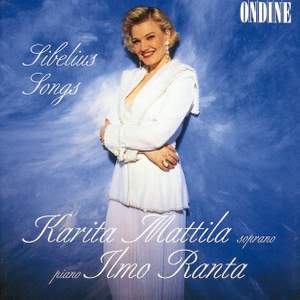
On the occasion of its 25th anniversary in 2010, Ondine releases a series of five twofers, containing best-selling titles from the back catalogue. The focus is on five of Ondine’s star artists: sopranos Soile Isokoski and Karita Mattila, baritone Jorman Hynninen, violinist Pella Kuusisto and clarinettist Kari Kriikku. These releases are specially priced (2 CDs for the price of 1) and are limited edition, running through 2010 only. | | | (also available to download from $20.75) | Usually despatched in 2 - 3 working days. (Available now to download.) |
|
|
| |  | Sibelius: Original Works and Arrangements for Cello & Piano
Sibelius: | Finlandia, Op. 26 Nocturne, Op. 24 Romance in D flat major, Op. 24, No. 9 Malinconia, Op. 20 Rondino (from Five Pieces, Op. 81) Five Pieces, Op. 75 'The Trees' Svarta rosor, Op. 36 No. 1 (Ernst Josephson) The Spruce Tree Op. 75 No. 5 Flickan kom från sin älsklings möte, Op. 37, No. 5 Var det en dröm? Op. 37 No. 4 (J.J. Wecksell) Den första kyssen, Op. 37 No. 1 (Text: J.L. Runeberg) Valse Triste, Op. 44 No. 1 Eight Piano Pieces, Op. 99: Souvenir |
Jussi Makkonen (cello), Rait Karm (piano) All tracks arranged for cello and piano | | | (also available to download from $5.75) | Usually despatched in 2 - 3 working days. (Available now to download.) |
|
|
| |  | Sibelius - Orchestral Songs
Sibelius: | Svarta rosor, Op. 36 No. 1 (Ernst Josephson) Säf, säf, susa, Op. 36 No. 4 (Text: Gustav Fröding) Demanten på marssnön, Op. 36 No. 6 (Wecksell) På verandan på vid havet, Op. 38 No. 2 (Viktor Runeberg) Under strandens granar (Under the fir-trees) Op. 13 No. 1 (Runeberg) Våren flyktar hastigt, Op. 13 No. 4 (Text: Runeberg) Kom nu hit, Död, Op. 60 No. 1 (Bertel Gripenberg after Shakespeare) Var det en dröm? Op. 37 No. 4 (J.J. Wecksell) Flickan kom från sin älsklings möte, Op. 37, No. 5 Im Feld ein Mädchen singt, Op. 50 Nr.3 (Margarete Susman) Die stille Stadt Aus banger Brust, Op. 50 No. 4 Koskenlaskijan morsiamet (The Rapids-Rider’s Brides), Op. 33 Lastu lainehilla, Op. 17, No. 7 Illalle, Op. 17 No. 6 (Forsman-Koskimies) Kaiutar, Op. 72, No. 4 Souda, souda, sinisorsa (Swim, duck, swim) (A.V. Forsman-Koskimies) Laulu ristilukista Op. 27 No. 4 |
| |
|
| |  | Sibelius - Songs Volume 1
Sibelius: | Illalle, Op. 17 No. 6 (Forsman-Koskimies) Våren flyktar hastigt, Op. 13 No. 4 (Text: Runeberg) Den första kyssen, Op. 37 No. 1 (Text: J.L. Runeberg) Svarta rosor, Op. 36 No. 1 (Ernst Josephson) Flickan kom från sin älsklings möte, Op. 37, No. 5 Säf, säf, susa, Op. 36 No. 4 (Text: Gustav Fröding) World Première Recording Demanten på marssnön, Op. 36 No. 6 (Wecksell) Lastu lainehilla, Op. 17, No. 7 Souda, souda, sinisorsa (Swim, duck, swim) (A.V. Forsman-Koskimies) Kaiutar, Op. 72, No. 4 Segelfahrt Im Feld ein Mädchen singt, Op. 50 Nr.3 (Margarete Susman) Sehnsucht Die stille Stadt Serenade En visa Den första kyssen, Op. 37 No. 1 (Text: J.L. Runeberg) World Première Recording Orgier World Première Recording Var det en dröm? Op. 37 No. 4 (J.J. Wecksell) Soluppgång, Op. 37 No. 3 (Text: Tor Hedberg) World Première Recording Vänskapens blomma World Première Recording Six Songs, Op. 88 'Flower Songs' Narciss (Narcissus) (B. Gripenberg) Hymn to Thaïs (Text: Arthur H. Borgström) |
Hannu Jurmu (tenor) & Jouni Somero (piano) | | | (also available to download from $5.75) | Usually despatched in 2 - 3 working days. (Available now to download.) |
|
|
| |  | Sibelius - Orchestral Songs
Sibelius: | Kaiutar, Op. 72, No. 4 Luonnotar, Op. 70 (Text: Kalevala) Men min fågel märks dock icke, Op. 36, No. 2 Säf, säf, susa, Op. 36 No. 4 (Text: Gustav Fröding) Våren flyktar hastigt, Op. 13 No. 4 (Text: Runeberg) Under strandens granar (Under the fir-trees) Op. 13 No. 1 (Runeberg) Den första kyssen, Op. 37 No. 1 (Text: J.L. Runeberg) Soluppgång, Op. 37 No. 3 (Text: Tor Hedberg) Var det en dröm? Op. 37 No. 4 (J.J. Wecksell) Höstkväll, Op. 38:1 (Text: Viktor Rydberg) På verandan på vid havet, Op. 38 No. 2 (Viktor Runeberg) Arioso, Op. 3 (Text: J.L. Runeberg) Lastu lainehilla, Op. 17, No. 7 Souda, souda, sinisorsa (Swim, duck, swim) (A.V. Forsman-Koskimies) Se'n har jag ej frågat mera, Op. 17 No. 1 (Text: J.L. Runeberg) En slända, Op. 17, No. 5 Hertig Magnus, Op. 57 No. 6 |
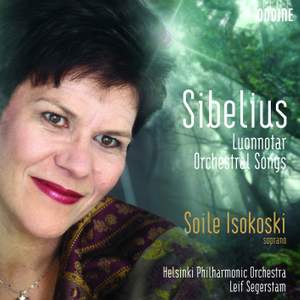
"A thrilling performance of Luonnotar in which Isokoski’s sonorous soprano is matched by atmospheric playing from the Finnish orchestra. The rest of the disc makes you wonder why Sibelius’s orchestral songs occupy one of the most unjustly neglected corners of his output." Erik Levi BBC Music Magazine “Soile Isokoski's voice has matured into a powerful instrument without losing its distinctively plangent expressiveness and intense way with words… Segerstam… provides spacious yet vividly dramatic support, with superb orchestral playing.” BBC Music Magazine, July 2006 ***** “Sibelius wrote his songs originally for voice and piano and in that form they are most often recorded. Some he later orchestrated, while others were arranged by Jussi Jalas (his son-in-law), Ernest Pingourd, Ivan Hellman and Nils-Eric Forgstadt. All produce good results and none of the songs appear over-dressed. On the contrary, they are, as it were, fulfilled: orchestral textures are so strongly implicit that the full range of instruments brings out their coloration and renders them complete. Soile Isokoski has recorded a number of the songs previously with piano, part of a fine recital on Finlandia in 1989, which was about the time we first learned of the radiant Finnish soprano who five or six years later would receive the international acclaim she deserved…” Gramophone Classical Music Guide, 2010 “The voice… lovely, firm and ample in range. Above all, she has a rare command of the legato style which makes her singing a delight to the ears… the recital always gives pleasure, and the challenge of Luonnotar itself is joyfully met. The orchestra play with full appreciation of the richly coloured scores, and since Flagstad in the 1950s there have been few recordings which provide these genuinely enhancing accompaniments as an alternative to the piano.” Gramophone Magazine, July 2006 CD Review
Critics Disc of the Year - December 2006 |
| | | (also available to download from $10.50) | Usually despatched in 2 - 3 working days. (Available now to download.) |
|
|
| |
|