Chopin: Waltz No. 20 in F sharp minor, Op. posth., KK Ib/7 'Mélancolique'

This page lists all recordings of Waltz No. 20 in F sharp minor, Op. posth., KK Ib/7 'Mélancolique', by Frédéric François Chopin (1810-49) on CD & download (MP3 & FLAC). Generally, more recent releases are listed first, but with priority given to those that are in stock.

Prices shown exclude VAT. (UK tax is not payable for deliveries to United States.)
See Terms & Conditions for p&p rates.

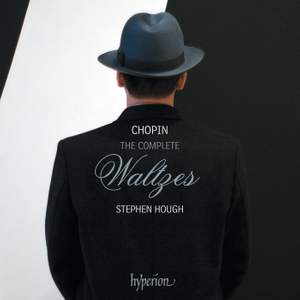
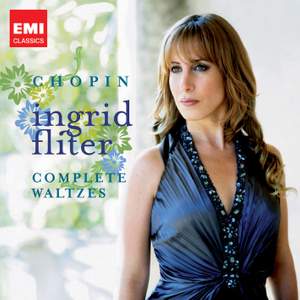
Chopin - The Complete Waltzes

Chopin - The Complete Waltzes


Chopin:

Waltzes Nos. 1-19

Waltz No. 20 in F sharp minor, Op. posth., KK Ib/7 'Mélancolique'


“Clearly born for Chopin, her playing is a marvel of the most refined fluency and affection …. Fliter will make lesser pianists wonder at her effortless musical grace and unfaltering command,” (Gramophone on Ingrid Fliter’s debut album for EMI Classics)

Following universal praise for her EMI Classics debut album of Chopin piano works, Gilmore Artist Award winner Ingrid Fliter has recorded the composer’s complete waltzes for release as the music world prepares to celebrate his 200th birthday in 2010.

Ms. Fliter, the silver medal winner at the Frederic Chopin Competition in Warsaw in 2000, names Chopin as the composer who speaks most clearly to her: “[His music] is like looking into a kaleidoscope of human life. He concentrates all his ideas, all his creative energy, in a very short space of time. He creates a whole world in each little piece.”

“It wouldn't be an overstatement,” continues Ms. Fliter, “to say that if it had not been for Chopin's music I would not have been born. My mother noticed my father for the first time while he was playing some Chopin waltzes during a party! I have a vivid memory of being a child and of Chopin’s music, performed by Arthur Rubinstein, playing everywhere - in the living room, in the kitchen, in the car. So I grew up loving Chopin's music and accepting it as part of my everyday life.

“One of the most difficult things to achieve while playing Chopin’s music is a good balance between his romantic soul and his classical expression. Through years of study, I have been touched to discover his darker side, his sense of the tragic, which plays a fundamental role in his music, as much as the ‘joie de vivre’ does. When I play Chopin, I have the feeling that the public reacts with a breath of satisfaction, saying ‘Ah, Chopin!’ What I hope every time I play this music is that I can keep the freshness.”

Today Ingrid Fliter performs Chopin regularly, both in recital and with orchestra: “[Her] Chopin group was simply spellbinding. The music seemed to flow from her with an utterly natural lyrical impulse, graced with power, luminous delicacy and a spectrum of tonal coloring that combined to mark her out as one of the most instinctive and eloquent Chopin interpreters playing today.” (Daily Telegraph); “Yes, there was a rich sweetness to Fliter's playing … but plenty of fibre and muscle as well. Not for nothing has Fliter been compared to her great compatriot Martha Argerich: there's a similar vitality, an engaging restlessness that imbued some of Chopin's most dreamy sub-plots with enough snappiness and tang to keep us on our toes.” (The Times)

Ingrid Fliter was born in Buenos Aires in 1973 and began her piano studies there. She gave her first public recitals at the age of eleven and made her professional debut with orchestra at the Teatro Colón at the age of 16. In 1992, she moved to Europe, where she continued her studies in Freiburg, Rome and Imola. Already the winner of several competitions in Argentina, she went on to win prizes at the Cantu International Competition and the Ferruccio Busoni Competition in Italy and at the Frederic Chopin Competition in Warsaw.

The international spotlight focused on Ingrid Fliter when she was named the recipient of the prestigious 2006 Gilmore Artist Award, made every four years by an anonymous panel of judges who assess a number of pianists over a period of time without their knowledge. The Gilmore Artist Award is made to an exceptional pianist who, regardless of age or nationality, possesses broad and profound musicianship and charisma and who desires and can sustain a career as a major international concert artist. The four previous Gilmore Award winners have included EMI Classics artist Leif Ove Andsnes (2002) and Virgin Classics’ Piotr Anderszewski (1998).

Ingrid Fliter performs extensively with major orchestras and in recital in North and South America, Europe Asia and the Middle East. Her autumn 2009 recitals in, among others, Boston, Milan and London’s Wigmore Hall, feature an all-Chopin second half, including a group of waltzes. Her winter/spring 2010 recital programme for performance in, among others, New York, Michigan and Chicago’s Orchestra Hall, has an all-Chopin first half, including waltzes. Ms. Fliter appears with orchestras on both sides of the Atlantic in 2009-2010 in concertos by Chopin, Beethoven, Ravel, Mozart and Haydn. She performs Chopin’s Piano Concerto No. 1 with the Cincinnati Symphony and the Royal Liverpool Philharmonic Orchestra/Vassily Petrenko and his Piano Concerto No. 2 with the Cleveland Orchestra/Vladimir Ashkenazy and the Austin, Nashville and Toronto symphonies.

In September 2007, Ingrid Fliter joined the roster of BBC Radio 3’s New Generation Artists scheme for a period of two years during which she appeared with many of the BBC’s orchestras and participated in some of the UK’s most prominent festivals, including the City of London Festival and the BBC Proms. This CD is produced in collaboration with BBC Radio 3's New Generation Artists scheme.

Ingrid Fliter is an exclusive EMI recording artist. On the release of her first CD in 2008, The Telegraph wrote, “The warmth of her playing and the lyrical impulse of her interpretations are combined with discretion in matters of dynamics, pianistic decoration and tonal colour to make these pieces flow from her fingers with the spontaneity of someone deeply immersed in the music's idiom.”

“An exciting technique and keen intelligence animated by an impetuous temperament…

a remarkable talent.” (The New York Times)

"[Ingrid Fliter] made the music sound as though it were being born under her fingers" (Washington Post)

“…her playing magically combines a personalised poetic impulse with an exhilaratingly choreographed virtuosity. She is dazzling and imaginative in the brilliante waltzes… yet she is equally attuned to the more reflective pieces.” BBC Music Magazine, Christmas 2009 *****

“a recital that seduces and surprises in equal measure, the search for hidden shadows stripping away the patina of glossy and superficial accretions to hint at a more pronounced and pertinent strain of melancholia within...the young Argentinean stamps her authority with a finesse far beyond her years.” Michael Quinn, bbc.co.uk, 6th November 2009

“…Ingrid Fliter sets a new benchmark for the complete waltzes. From beginning to end, this is among the finest Chopin recordings of recent years. Fliter's "timing", by which I mean her phrasing and rubato, is judged to perfection; her tempi are near ideal; she never loses sight of Chopin the poet or reinvents him as a red-blooded virtuoso.” Gramophone Magazine, December 2009

EMI - 6983512

(CD)

$12.25

In stock - usually despatched within 1 working day.

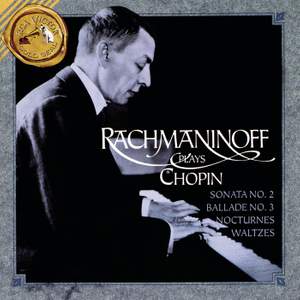
Rachmaninoff plays Chopin

Rachmaninoff plays Chopin


Includes

Chopin:

Piano Sonata No. 2 in B flat minor, Op. 35 'Marche funèbre'

Ballade No. 3 in A flat major, Op. 47

Nocturne No. 2 in E flat major, Op. 9 No. 2

Nocturne No. 5 in F sharp major, Op. 15 No. 2

Waltz No. 7 in C sharp minor, Op. 64 No. 2

Waltz No. 8 in A flat major, Op. 64 No. 3

Waltz No. 20 in F sharp minor, Op. posth., KK Ib/7 'Mélancolique'

Waltz No. 1 in E flat major 'Grande Valse Brillante', Op. 18

Waltz No. 4 in F major 'Grande Valse Brillante', Op. 34 No. 3

Waltz No. 6 in D flat major, Op. 64 No. 1 'Minute Waltz'

Waltz No. 9 in A flat major, Op. 69 No. 1 'Farewell Waltz'

Waltz No. 5 in A flat major, Op. 42

Waltz No. 8 in A flat major, Op. 64 No. 3

Scherzo No. 3 in C sharp minor, Op. 39


Sergej Rachmaninoff (piano)

RCA - 09026625332

(CD)

$10.75

In stock - usually despatched within 1 working day.

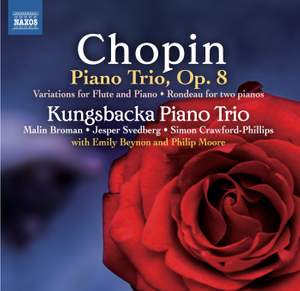
Chopin: Piano Trio, Op. 8

Chopin: Piano Trio, Op. 8


Chopin:

Rondo in C major for two pianos, Op. 73

Variations for flute and piano in E major, B 9

Emily Beynon (flute) & Philip Moore (piano)

Waltz No. 20 in F sharp minor, Op. posth., KK Ib/7 'Mélancolique'

Mazurka in D major (1832)

Piano Trio in G minor Op. 8


Kungsbacka Piano Trio

Exploring the byways of Chopin’s work reveals gems such as the elegant Rondeau for two pianos, and the Variations for flute and piano on a theme by Rossini then at the height of his popularity. The substantial Piano Trio Op. 8, dedicated to the cello-playing Prince Antoni Radziwill of Poznañ, is a work in which Chopin allowed his Polish patriotism to be heard. Of the Kungsbacka Piano Trio The Strad asked “is there a better Trio ensemble in Western Europe?”

“This CD opens with an enchanting, 1828 Rondo...it proves a fresh and joyous discovery, treated with plenty of TLC by the engaging duo of Simon Crawford-Phillips and Philip Moore...The Kungsbacka Trio balance the three instruments with care [in Op. 8], and they apply a good sense of early Romantic-period ethos, involving gentle string tone and plenty of portamentos.” BBC Music Magazine, February 2012 ***

20% off Naxos

Naxos - 8572585

(CD)

Normally: $8.25

Special: $6.60

(also available to download from $6.00)

Usually despatched in 2 - 3 working days. (Available now to download.)

Jean Dubé plays Chopin

Jean Dubé plays Chopin


Chopin:

Variations on a March from Bellini's I Puritani

Nocturne No. 2 in E flat major, Op. 9 No. 2

Waltz No. 20 in F sharp minor, Op. posth., KK Ib/7 'Mélancolique'

Prelude in E flat minor 'Trille du Diable' (incomplete - realised Kallberg)

Mazurka No. 6 in A minor, Op. 7 No. 2

(first version)

Allegretto in F sharp major

Mazurka in G major, WN26

Mazurka 'Dabrowski'

Mazurka No. 49 in F minor, Op. 68 No. 4

arr. Magin

Dwojaki koniec (The Double End), Op. 74 No. 11

Nie ma czego trzeba (I Want What I Have Not), Op. 74 No. 13

Piosnka litewska (Lithuanian Song), Op. 74 No. 16

Allegro de Concert in A major Op. 46

Tarantella in A flat major, Op. 43

Libera me, Domine (authorship doubtful)

Largo in E flat major, BI 109

Waltz No. 6 in D flat major, Op. 64 No. 1 'Minute Waltz'

Galop in A flat major 'Marquis', WN 59

Piano Concerto No. 1 in E minor Op. 11: Romance

Liszt:

Chants Polonais after Chopin (6), S480


Jean Dubé (piano)

Jean Dubé is internationally recognized as one of the most important young pianists of our day. He has been playing all over the world since the age of only four. He gives master classes and performs as soloist, with chamber groups and orchestras throughout the world. His Chopin recital includes a selection of Mazurkas, Nocturne Op.9, Galop Marquis and Tarantella Op.43.

Syrius - SYR141438

(CD)

$17.00

Usually despatched in 2 - 3 working days.

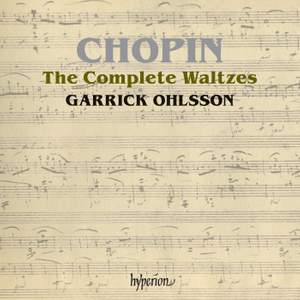
Chopin - The Complete Waltzes

Chopin - The Complete Waltzes


Chopin:

Waltzes Nos. 1-19

Waltz No. 20 in F sharp minor, Op. posth., KK Ib/7 'Mélancolique'

Contredanse in G flat major, KKAnh.Ia/4

Écossaises (3), Op. 72 No. 3


The lilting waltz form we know today is derived from the Drehtanz and the Ländler, two lusty peasant dances from Germany and Austria. By the late 1770s classical composers had begun to write refined versions of the form with the three strong beats to the bar giving way to a strong downbeat and two faint afterbeats. Schubert brought the waltz to its first high point in the early 1800s. Its structure—a chain of uncomplicated melodies over a simple accompaniment—and this new lightness of rhythm led to a dance craze that swept the ballrooms of Europe.

The waltz reached Warsaw in the early years of the nineteenth century. As a teenager, Chopin would have known the piano waltzes of Polish composers like Maria Szymanowska, Kurpinski, Dobrzynski and Stefani. As far as the piano was concerned, the most important reference point was Weber’s ground-breaking Invitation to the Dance (1819). Chopin’s earliest waltzes were not written until 1829 (he had already composed some thirteen mazurkas and polonaises), by which time the waltzes of Joseph Lanner and Johann Strauss the Elder were all the rage. A year later, Chopin left Poland and arrived in Vienna, the Waltz City, before making his permanent home in Paris. Paradoxically, almost all of the twenty waltzes he would eventually compose are more Gallic in character than Viennese, far removed from those of Lanner and Strauss.

Only eight were published in Chopin’s lifetime. The two Waltzes Op 69, three Waltzes Op 70 and six of the seven early waltzes without opus numbers were all published posthumously. Outstanding among these are the poetic Op 69 No 2 in B minor and Op 70 No 3 in D flat major, inspired by his youthful love for the singer Konstancja Gladkowska and composed, according to Chopin, ‘early this morning’ (3 October 1829). Of all the posthumous waltzes rescued for posterity, we must be most grateful for the dazzling waltz in E minor (1830). As with the Fantaisie-Impromptu Op 66 it is a mystery why Chopin overlooked it; with its bravura introduction and coda and its spirited motifs this waltz has all the hallmarks of a mature work.

The first waltz that Chopin authorized to be published, the Grande valse brillante in E flat major Op 18, was written in Vienna in 1830. It differs from most of the others in that it can actually be danced to, reflected by its inclusion in the ballet Les Sylphides (the only others are Op 64 No 2 and Op 70 No 1); the mature waltzes are, generally, more like ‘dance poems’. It also presages the consistently high standard of the seven subsequent waltzes—unlike most contemporary examples, these are no mere pot-boilers churned out to please publishers and amateur pianists alike (though most of Chopin’s are not beyond the reach of good amateurs).

In welcoming the three Waltzes Op 34 in 1838 Schumann wrote, ‘[They] will delight above all things, so different are they from the ordinary ones, and of such a kind as only Chopin dare venture on or even invent, while gazing inspired among the dancers … Such a wave of life flows through them that they seem to have been improvised in the ballroom.’ No 1 in A flat major revisits many of the rhythmic and motific ideas of Op 18; No 2 in A minor opens with a haunting, melancholic, cello-like melody and was Chopin’s own favourite; No 3 in F major is memorable for the moto perpetuo passagework and cross-rhythms of its outer sections and the sequence of acciaccaturas in the middle.

Wilhelm von Lenz reported that, according to Chopin himself, the Waltz in A flat major Op 42, ‘springing from the eight-bar trill, should evoke a musical clock. In his own performances it embodied his rubato style to the fullest; he would play it as a continued stretto pianissimo with the bass maintaining a steady beat. A garland of flowers winding amidst the dancing couples!’

The final group of three Waltzes Op 64, published in 1847, opens with the waltz in D flat otherwise known as the ‘Minute Waltz’, one of the best-known works in the entire literature of the piano. Its hackneyed status should not detract from the miracle of its economy and invention. (Despite its nickname, it is impossible to play the waltz in a minute, at least not musically.) No 2 of the set in C sharp minor alternates between a lovesick opening theme, a rapid quaver passage with echoes of Op 42 and a tender nocturne-like theme in D flat. These two contrasted miniature masterpieces are followed by a further Waltz in A flat, less well known but with a graceful, insinuating theme of wistful regret.

To complete this disc, Garrick Ohlsson plays four short and relatively unimportant dance miniatures, all published posthumously: the Contredanse in G flat major was composed in 1827 but did not appear in print until 1943, while the three Ecossaises Op 72 No 3 (D major, G major, D flat major) date from 1826. The écossaise was originally a Scottish dance in 2/4 time, a form that had earlier attracted Beethoven and Schubert.

“He is… captivating in the Waltzes, delivering the bel canto musical line with great tenderness and affection and applying rubato in a spontaneous and entirely unmannered fashion.” BBC Music Magazine, February 2010 *****

Helios - CDH55381

(CD)

$8.50

Usually despatched in 2 - 3 working days.

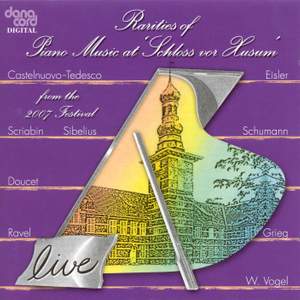
Rarities of Piano Music at the Husum Festival 2007

Rarities of Piano Music at the Husum Festival 2007


Castelnuovo-Tedesco:

Piedigrotta: Voce lontana

Mark Bebbington (piano)

Chopin:

Waltz No. 20 in F sharp minor, Op. posth., KK Ib/7 'Mélancolique'

Piers Lane (piano)

Doucet:

Isoldina

Alex Hassan (piano)

Eisler:

Klavierstück, Op. 3 No. 1

Ekaterina Derzhavina (piano)

Grieg:

Ich liebe Dich, piano transcription, Op. 41 No. 3

Evgeny Soifertis (piano)

The Princess, EG133

Evgeny Soifertis (piano)

Du fatter ei Bolgernes evige Gang, Op. 5 No. 2

Evgeny Soifertis (piano)

Jurmann:

Adieu

Alex Hassan (piano)

Medtner:

Allegro con grazia (quasi valse)

Ekaterina Derzhavina (piano)

Ravel:

La parade

François-Joël Thiollier (piano)

Schumann:

Du bist wie eine Blume, Op. 25 No. 24

trans. Clara Schumann

Kolja Lessing (piano)

Exercises

Piers Lane (piano)

Scriabin:

Nocturne in D flat major Op. 9 No. 2

François-Joël Thiollier (piano)

Piano Sonata No. 8, Op. 66

Jonathan Powell (piano)

Sibelius:

Esquisses (5), Op. 114: Waldsee

Jonathan Powell (piano)

Stanchinsky:

Sketch, Op. 1 No. 2

Ekaterina Derzhavina (piano)

Vogel, W:

Trepak

Kolja Lessing (piano)


Ekaterina Derzhavina (piano), Kolja Lessing (piano), Evgeny Soifertis (piano), Piers Lane (piano), Francois-Joel Thiollier (piano), Jonathan Powell (piano), Mark Bebbington (piano), Alex Hassan (piano)

Danacord Husum Festival Rarities - DACOCD679

(CD)

$17.50

(also available to download from $10.50)

This item is currently out of stock at the UK distributor. You may order it now but please be aware that it may be six weeks or more before it can be despatched. (Available now to download.)

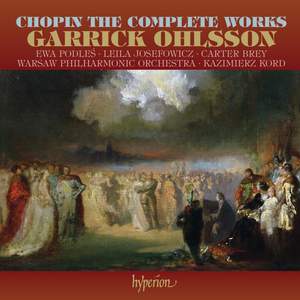
Chopin - The Complete Works

Chopin - The Complete Works


Chopin:

Piano Sonata No. 1 in C minor, Op. 4

Piano Sonata No. 2 in B flat minor, Op. 35 'Marche funèbre'

Piano Sonata No. 3 in B minor, Op. 58

Preludes (24), Op. 28

Prelude Op. posth. in A flat major (No. 26)

Prelude Op. 45 in C sharp minor (No. 25)

Marche Funebre, Op. 72 No. 2

Fugue in A minor

Rondo in C minor Op. 1

Rondo a la Mazurka, Op. 5

Études (12), Op. 10

Études (12), Op. 25

Trois Nouvelles Études

Fantasia in F minor, Op. 49

Ballades Nos. 1-4

Rondo in E flat major, Op. 16

Rondo in C major, Op. 73

Scherzi Nos. 1-4

Hexaméron KKIIb/2

Introduction & Variations ‘Der Schweizerbub’ KKIVa/4

Variations brilliantes in B flat major on 'Je Vends des Scapulaires', Op. 12

Allegro de Concert in A major Op. 46

Polonaise No. 3 in A major, Op. 40 No. 1 'Military'

Polonaise No. 4 in C minor, Op. 40, No. 2

Polonaise No. 5 in F sharp minor, Op. 44

Polonaise No. 6 in A flat major, Op. 53 'Héroïque'

Polonaise No. 7 in A flat major, Op. 61 'Polonaise-fantaisie'

Bolero, Op. 19

Tarantella in A flat major, Op. 43

Impromptus Nos. 1-4

Nocturnes Nos. 1-21 (complete)

Cantabile in B Flat Major (Andantino)

Moderato in E, KKIVb/12

Largo in E flat major, BI 109

Variations in A - Souvenír de paganini

Berceuse in D flat major, Op. 57

Barcarolle in F sharp major, Op. 60

Waltzes Nos. 1-19

Waltz No. 20 in F sharp minor, Op. posth., KK Ib/7 'Mélancolique'

Contredanse in G flat major, KKAnh.Ia/4

Écossaises (3), Op. 72 No. 3

Mazurkas Nos. 1-51

Mazurka No. 54 in D major

Mazurka No. 55 in G major, K.IIa/2

Mazurka No. 56 in B flat major, K.IIa/3

Mazurka No. 58 in A flat major

Mazurka No. 59 in B flat major, K.IVb/1

Mazurka No. 61 in C major, K.IVb/3

Mazurka No. 63 in A flat major, Op. 7, No. 4 (first version)

Mazurka No. 64 in D major, K.IVa/7

Variations on Mozart's 'La ci darem la mano' in B flat major, Op. 2

Piano Concerto No. 2 in F minor, Op. 21

Piano Concerto No. 1 in E minor, Op. 11

Fantasia in A major on Polish Airs, Op. 13

Krakowiak - Concert Rondo in F, Op. 14

Andante spianato & Grande Polonaise, Op. 22

Grand Duo in E KKIIb/1

Piano Trio in G minor Op. 8

Pieóni i piosnki (17) (Seventeen Polish Songs), Op. 74

Czary (Charms), KK.IVa/11

Dumka (Reverie), KK.IVb/9

Variations on Rossini's 'Non piu mesta' in E major

for flute & piano


“This monumental recording project first came about when the American record company Arabesque approached me with an irresistible offer to record the complete works of Chopin. I accepted with enthusiasm and an awareness of the magnitude of the task. My total immersion in the Chopin project was enhanced by a concurrent series of recitals of the complete solo works in the US and several European capitals from 1995 to 1997. I am delighted that these recordings are now available again as a boxed set on Hyperion.” GARRICK OHLSSON

Since his triumph as winner of the 1970 Chopin International Piano Competition, pianist Garrick Ohlsson has established himself worldwide as a musician of magisterial interpretive and technical prowess.

“This is an oustanding achievement, which any genuine Chopin lover and student of Romantic music should own … A landmark in the recording of Chopin’s music … Garrick Ohlsson and Hyperion deserve the greatest success in bringing this important undertaking to such a consistently impressive conclusion” International Record Review

“An attractively priced box set … Ohlsson is in a class of his own” Pianist Magazine

Hyperion - CDS44351/66

(CD - 16 discs)

$90.25

Usually despatched in 2 - 3 working days.

Copyright © 2002-13 Presto Classical Limited, all rights reserved.