Prices shown exclude VAT. (UK tax is not payable for deliveries to United States.) See Terms & Conditions for p&p rates. | |  | Russian Piano Encores
Borodin: | Scherzo in A flat | Liadov: | A Musical Snuffbox, Op. 32 | Prokofiev: | Romeo & Juliet before parting Masks from ‘Romeo and Juliet' | Rachmaninov: | Prelude Op. 3 No. 2 in C sharp minor Étude-Tableau, Op. 39 No. 1 in C minor Étude-Tableau, Op. 39 No. 2 in A minor Étude-Tableau, Op. 39 No. 5 in E flat minor Lilacs, Op. 21 No. 5 Daisies, Op. 38 No. 3 Vocalise, Op. 34 No. 14 arr. Kocsis | Shostakovich: | Lyric Waltz (from Dances of the Dolls) Short Piece from The Gadfly, Op. 97 Spanish Dance from The Gadfly, Op. 97 Nocturne (The Limpid Stream) Polka from The Golden Age, Op. 22 | Taneyev: | Prelude and Fugue in G sharp minor, Op. 29 | Tchaikovsky: | The Seasons, Op. 37b: June (Barcarolle) Dumka (Russian Rustic Scene), Op. 59 |
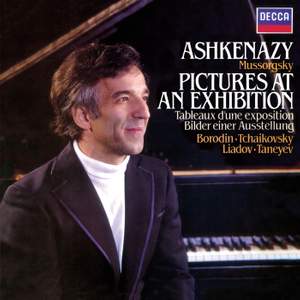
Many European countries have vied with one another in claiming the largest number of piano virtuosos. No one would dispute, though, that Russia has generated more than its share. The so-called ‘Russian piano school’, which originated in the 1800s with brilliant performers such as Alexander Siloti and brothers Anton and Nikolai Rubinstein, continues to produce first-class pianists, and to influence performance styles and keyboard virtuosity all around the world. Given Russia’s richness in superstar pianists, it is not surprising that Russian composers have composed extensively for the piano. Some of the composers represented in this collection were impressive pianists in their own right, and they composed music designed to display their own technique and artistry. Others were more modestly gifted as performers, but still composed idiomatically for the piano. This collection brings together recordings by Vladimir Ashkenazy spanning some 40 years, from November 1963 (the three Rachmaninov Études-Tableaux) to March 2004 (the Kocsis transcription of Vocalise). Some of them appeared as fillers for bigger works – for instance, the Études-Tableaux were coupled with the 1964 recording of Rachmaninov’s Piano Concerto No. 2 with Kyril Kondrashin, one of Ashkenazy’s earliest recording for Decca, and his first solo recording for the label. Tchaikovsky’s Dumka and the pieces by Taneyev, Liadov and Borodin were recorded in January 1983 and issued on LP as a coupling for his digital recording of Mussorgsky’s Pictures at an Exhibition. The two pieces from Prokofiev’s Romeo and Juliet were taped in 1968 as couplings for the composer’s Eighth Piano Sonata. “This wide-ranging conspectus of Russian piano miniatures spans Ashkenazy's career from 1963 to 2004. Fine playing, occasionally short on charm.” BBC Music Magazine, December 2012 **** | | | (Sorry, download not available in your country) | In stock - usually despatched within 1 working day. |
|
|
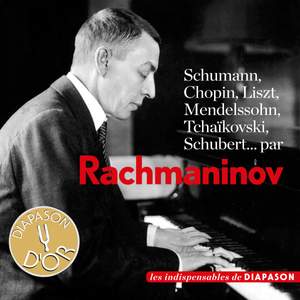
| |  | Voyage en Russie
Borodin: | Scherzo in A flat | Mussorgsky: | Jeux d’enfants: Les quatre coins Une Larme (A Tear) | Rachmaninov: | Étude-Tableau, Op. 39 No. 5 in E flat minor Daisies, Op. 38 No. 3 Prelude Op. 3 No. 2 in C sharp minor Prelude Op. 23 No. 5 in G minor | Rimsky Korsakov: | Flight of the Bumble Bee | Scriabin: | Prelude, Op. 9 No. 1 in C sharp minor for the left hand Prelude, Op. 15 No. 4 in E sharp minor Étude Op. 2 No. 1 in C sharp minor Etude in D Sharp Minor, Op. 12, No. 8 Mazurka in D Sharp Minor, Op. 3 No. 5 Prelude, Op. 16 No. 4 in E flat minor Vers la flamme, Op. 72 | Tchaikovsky: | Chant sans paroles, Op. 40 No. 6 Song Without Words in F major, Op. 2, No. 3 Valse-scherzo in A major for piano, Op. 7 |
From nostalgic memories, the sound of bells, the winds of the steppes, to visions of a flickering future; Russian piano music, from Mussorgsky to Scriabin, finds its perilous equilibrium in a romantic past, beyond the immense, icy landscapes, with intimate confessions from heartbroken souls, with a virtuosity vying with the opera and the orchestra yet which retains the gentleness of a lullaby, of a child's laughter, of a disenchanted poem scribbled down one evening of drunken melancholy. From Tchaikovsky to Rachmaninov, by way of Rimsky-Korsakov, Borodin and Mussorgsky, it is a journey that takes us from St Petersburg to Moscow, across that vast country with its universal emotions. The piano is the instrument of kings, in the nineteenth century above all. Rachmaninoff, as we know from his recordings, was probably the greatest of them all: virtuosic and inspired, a visionary and a poet. Scriabin, before he injured his right hand (whence the Prelude for left hand op.9), also planned a solo career. Mussorgsky, too, was an excellent pianist. Only Rimsky-Korsakov, Borodin and Tchaikovsky were no more than competent amateurs on the piano, but that did not prompt them to give up composing for the instrument - far from it, in fact. “although she brings out their poetry and reveals witty dexterity in Flight of the Bumblebee, Le Guay is no match for the great interpreters in certain cornerstones of the repertory.” BBC Music Magazine, August 2012 *** “Personal and eloquent, warm and affectionate, nothing is heavily personalised or idiosyncratic. For the most part her manner is gentle and caressing, almost as if played before a small circle of intimate friends...In larger-scale Scriabin and Rachmaninov her unerring balance of sense and sensibility provides a fine alternative to, say, Horowitz's searing intensity” Gramophone Magazine, October 2012 | | | Usually despatched in 3 - 4 working days. |
|
|
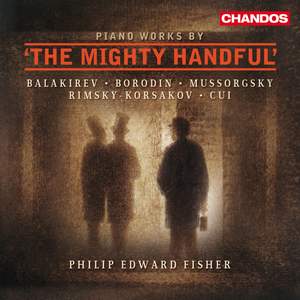
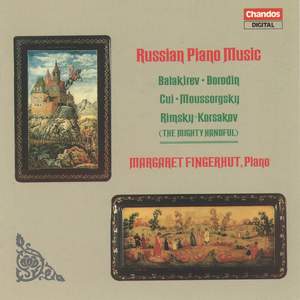
| |  | Piano Works by ‘The Mighty Handful’
Philip Edward Fisher (piano) On his first solo recital disc for Chandos, Philip Edward Fisher performs piano works by members of the so-called ‘Mighty Handful’, a group of five Russian composers – César Cui, Alexander Borodin, Mily Balakirev, Modest Mussorgsky, and Nikolay Rimsky-Korsakov – who in the 1860s banded together in an attempt to create a truly national school of Russian music, free of the perceived stiffling influences of Italian opera, German lieder, and other western European forms. The Mighty Handful were all self-trained amateurs. Borodin combined composing with a career in chemistry; Rimsky-Korsakov was a naval offier; and Mussorgsky had been in the Guards, then in the civil service, before taking up music. They tried to incorporate in their music what they heard in village songs, in Cossack dances, in church chants, and the tolling of church bells; in short, the music of the Mighty Handful was brimming with sounds that echoed Russian life. From the more traditional, Chopin-esque Nocturne by Cui through to the technical innovations and strong Caucasus folk elements of Balakirev’s Islamey, the works here all show the composers’ strong connections with the past and the compositional innovations that would come to influence the likes of Prokofiev and Stravinsky, and help change the course of Russian music for years to come. A graduate of the Royal Academy of Music and The Juilliard School, the pianist Philip Edward Fisher is widely recognised as a unique performer of refined style and exceptional versatility. He has performed across Europe, Africa, and North America where he made his New York debut at Alice Tully Hall in 2002, performing Rachmaninoff’s Third Piano Concerto, and has also appeared at the Merkin Concert Hall and the Avery Fisher Hall at Lincoln Center. At home he has given performances at the Purcell Room, Wigmore Hall, Barbican Centre, and Royal Festival Hall in London, Usher Hall in Edinburgh, Glasgow Royal Concert Hall, and Symphony Hall in Birmingham. He has appeared as a soloist with the Royal Scottish National Orchestra, Copenhagen Philharmonic Orchestra, Toledo Symphony Orchestra, and Juilliard Symphony Orchestra, and worked with performers such as exclusive Chandos artist bassoonist Karen Geoghegan, the tenor Robert White, pianist Sara Buechner, and violinists Elmar Oliveira, Philippe Graffin, and Augustin Hadelich. In 2001, Philip Edward Fisher received the Julius Isserlis Award from The Royal Philharmonic Society in London. “Fisher's decision to fashion a recital from the works of all five has considerable appeal.Their piano music varies in quality, however...Borodin's Petite Suite comes over as a work of exquisite grace and melodic charm that deserves to be much better known. It suits Fisher's refined style rather well, too. As with the music, so his playing tends to variability. Islamey is dazzling. Pictures is very reined in and meditative” The Guardian, 12th May 2011 **** “It was a good idea to group the piano works of five composers who played a vital role in the evolution of Russian music, for they offer variety aplenty.
In “Pictures at an Exhibition” Fisher’s easy-on-the-ear musicality more than compensates for his lack of temperamental swagger and thunderous tone.” Financial Times, 14th May 2011 *** “Pictures is given a fine, muscular performance without being outstanding; Islamey boasts transparently clear textures at the expense of spine-tingling bravura...An interesting concept to have keyboard works from each of 'The Five' ranged alongside one another on the same disc” Classic FM Magazine, July 2011 *** “Fisher gives thoroughly compelling performances of both Pictures and Islamey, finding apt characterisation and colour in the Mussorgsky without falling into the trap, as some pianists have done, of trying to reinvent the music...[Islamey] comes across with a winning mix of allure and brilliance. the disc reveals an intriguing facet of a coterie of composers generally remembered for their orchestral music and operas.” The Telegraph, 9th June 2011 ***** “[Pictures and Islamey] give him a chance to show off his virtuosity and assured technique...Still, the real interest here resides in the more modest works that come in between...This music may be light, but it still stands up to repeated listening.” BBC Music Magazine, July 2011 **** | | | (also available to download from $10.50) | Usually despatched in 2 - 3 working days. (Available now to download.) |
|
|
| |  | Borodin - Complete Piano Works
Alexander Borodin was a part-time composer whose primary career was in science. Borodin was a member of the ‘Mighty Handful’, the group of five Russian composers which included Balakirev, Cui, Rimsky Korsakov and Mussorgsky, who established a Russian school of composition building on the legacy of Mikhail Glinka. Borodin liked to joke, ‘I compose only when I am ill’, and he left a small body of work, much of it in a fragmentary state at his death, which was later edited and completed by Rimsky and Glazunov. However, such is the quality of these works that his place among the greatest of Russian composers is assured. The three symphonies, In the Steppes of central Asia, the opera Prince Igor and the two string quartets are masterpieces. Borodin studied the piano as a small child, and the earliest work on this survey of his complete output for piano is the Polka Helene, composed when he was just 9 years old. Paraphrases on a Simple Theme was a venture with Lyadov, Rimsky-Korsakov and Cui, with Liszt providing the prelude. Written for fun, they are delightfully witty. The Petite Suite is a collection of short works Borodin composed over a number of years, an example of high class salon music – Borodin knew his Kalkbrenner, Field and Hummel well. The Scherzo in A flat from 1885 is a wonderful work, often played as an encore by Rachmaninov. Ravel admired Borodin, and had studied his music as a teenager, and his affectionate tribute to Borodin is included in the little Waltz in the manner of Borodin. Contains the premiere recordings of ‘In the Steppes of central Asia’ in the composers arrangement for 4 hands, plus premier recordings for the Scherzo in E, Allegretto in D flat, Polka Helene, and Adagio Patetico in A flat Comprehensive booklet note Marco Rapetti has recorded the piano music of Lyapunov, as well as the sonata by Dukas and works for two pianos by Malipiero Recording made in 2008 | | | Usually despatched in 4 - 5 working days. |
|
|
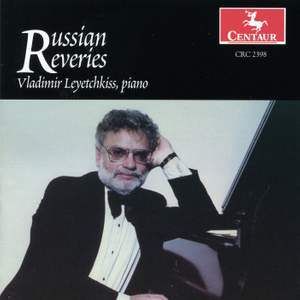
| |  | Russian Reveries
Vladimir Leyetchkiss (piano) | |
|
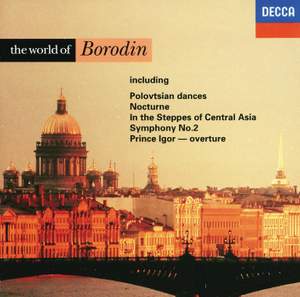
| |  | The World of Borodin
| | | (Sorry, download not available in your country) | Usually despatched in 2 - 3 working days. |
|
|
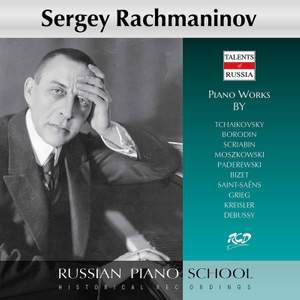
| |  | The Art of Rachmaninov, Vol. 8
Borodin: | Scherzo in A flat | Rachmaninov: | Hopak Étude-Tableau, Op. 33 No. 2 in C major La Foire, Op. 33, No. 7 Étude-Tableau, Op. 39 No. 6 in A minor Daisies, Op. 38 No. 3 Polka de V.R. Oriental Sketch (1917) Lilacs, Op. 21 No. 5 Humoresque in G major, Op. 10 No. 5 Moment musical No. 2 in E flat minor, Op. 16 No. 2 Barcarolle in G minor. Op. 10 No. 3 Prelude Op. 23 No. 5 in G minor Prelude Op. 23 No. 10 in G flat major Prelude Op. 32 No. 3 in E major Prelude Op. 32 No. 5 in G major Prelude Op. 32 No. 6 in F minor Prelude Op. 32 No. 7 in F major Prelude Op. 32 No. 12 in G sharp minor | Rimsky Korsakov: | Flight of the Bumble Bee | Scriabin: | Prelude, Op. 11 No. 8 in F sharp minor | Tchaikovsky: | Waltz in A flat, Op. 40 No. 8 Humoresque, Op. 10 No. 2 The Seasons, Op. 37b: November (Troika) Lullaby |
ADD | | | Usually despatched in 8 - 10 working days. |
|
|
| |  | Borodin Edition
Borodin: | Prince Igor Sofia National Opera Chorus, Sofia Festival Orchestra, Emil Tchakarov String Sextet in D minor Alexander Detisov, Alexander Polonsky (violins), Igor Suliga, Alexander Bobrovsky (violas), Alexander Osokin, Alexander Gotthelf (cellos) String Quartet No. 1 in A major Moscow String Quartet String Quartet No. 2 in D major Moscow String Quartet Symphonies Nos. 1-3 (complete) Bolshoi Theatre Symphony Orchestra, Mark Ermler In the Steppes of Central Asia Armenian Philharmonic Orchestra, Loris Tjeknavorianich Trio in G major (unfinished) Alexander Detisov, Alexander Polonsky (violins), Alexander Osokin (cello) Trio in G minor for two violins and cello on a Russian song ‘What have I done to hurt you?’ Alexander Detisov, Alexander Polonsky (violins), Alexander Osokin (cello) Piano Trio in D major Moscow Trio Piano Quintet in C minor Alexander Mndoiantz (piano) Moscow String Quartet String Quintet in F minor Moscow String Quartet with Alexander Gotthelf (cello) Serenata alla Spagnola Moscow String Quartet Petite Suite Marco Rapetti (piano) Scherzo in A flat Marco Rapetti (piano) In the Steppes of Central Asia (transcription for piano 4 hands by the composer) Marco Rapetti, Giampaolo Nuti (piano) Paraphrases (24 variations & 15 little pieces based on a simple theme, for piano, by Borodin, Liszt, Cui, Liadov & Rimsky-Korsakov) excerpts Marco Rapetti (piano) Razlyubila krasna devitsa (The Pretty Girl No Longer Loves Me) Nikolai Okhotnikov (bass), Yuri Serov (piano) Slushayte, podruzhen'ki, pesenku moyu (Listen to My Song, Little Friend) Marianna Tarassova (mezzo-soprano), Yuri Serov (piano) Krasavitsa-ribachka (The Beautiful Fisher Maiden) Konstantin Pluzhnikov (tenor), Yuri Serov (piano) Chto ti rano, zoren'ka (Why Art Thou So Early, Dawn?) Andrey Slavny (baritone), Yuri Serov (piano) Spyashchaya knyazhna (The Sleeping Princess) Marianna Tarassova (mezzo-soprano), Yuri Serov (piano) Otravoy polni moi pesni (My Songs Are Filled with Poison) Nikolai Okhotnikov (bass), Yuri Serov (piano) Morskaya tsaryevna (The Princess Of the Sea) Marianna Tarassova (mezzo-soprano), Yuri Serov (piano) Fal'shivaya nota (The False Note) Konstantin Pluzhnikov (tenor), Yuri Serov (piano) Pesnya tyomnogo lesa (Song of the Dark Forest) Nikolai Okhotnikov (bass), Yuri Serov (piano) Iz slyoz moikh (From My Tears) Nikolai Okhotnikov (bass), Yuri Serov (piano) More (The Sea) Konstantin Pluzhnikov (tenor), Yuri Serov (piano) Spes' (Pride) Nikolai Okhotnikov (bass), Yuri Serov (piano) Dlya beregov otchizni dal'noy (For the Shores of thy Far Native Land) Nikolai Okhotnikov (bass), Yuri Serov (piano) U lyudey-to v domu (At Some Folks' Houses) Andrey Slavny (baritone), Yuri Serov (piano) Chudniy sad (The Magic Garden) Marianna Tarassova (mezzo-soprano), Yuri Serov (piano) Arabskaya melodiya (Arabian Melody) Nikolai Okhotnikov (bass), Yuri Serov (piano) |
The only serious Borodin Collection in the market. Borodin, a member of the “Mighty Handful” (a group of Russian composers with the same creative goals), was a scientist by profession (chemistry), and composed in his spare time. No “amateurish” quality however can be traced in his (relatively small) oeuvre, which abounds in sophisticated, romantic harmonies and melodies, a firm feeling for structure, and a keen sense for “couleur locale”, without too overtly references to Russian folklore. The set (near complete) presents the 3 symphonies, the complete chamber music, songs, the complete piano music and the famous opera Prince Igor. Mostly Russian performers: the Moscow Trio, soprano Marianna Tarassova and the great Nikolai Ghiaurov in Prince Igor. Alexander Porfireyevich Borodin was the illegitimate son of a prince and his mistress, educated at home in St Petersburg by his mother. Although music was an early passion, he discovered his avocation once he matriculated at the city's Medical Surgical Academy. A chemist he became, and a good one, though not without his extracurricular enthusiasms: the head of department once admonished him thus, mid lecture: 'Mr Borodin, busy yourself a little less with songs. We have left to us a small, eccentrically proportioned body of work which acknowledges the learnt influence of Wagner and Chopin in their respective fields while nonetheless cultivating a personal and nationally inflected voice that was principally nurtured by his fellow member of 'The Mighty Handful', Mily Balakirev. That voice was first cultivated in abstract orchestral works, which met with mixed acclaim, but the Second Symphony is one of the most popular Russian works of its kind; perhaps less well known these days than half a century ago, but full of Borodin's trademark, lyrical melodies, bending towards a wistfulness and melancholy that never threatens to break into outright hysteria unlike the work of his contemporary Tchaikovsky. Songs and chamber music are barely known outside his home country, but they are worth discovering, as this unique edition will quickly reveal. And then there's his sprawling, unfinished masterpiece: Prince Igor, work of almost two decades, completed and partly orchestrated by RimskyKorsakov and Glazunov, the brainchild of the Mighty Handful's christener, Vladimir Stasov. This chronicle of a bloody but exuberant period in Russian history makes the most of Borodin's fascination with Russia's outposts, in music of 'oriental' flavour that survives in popular recognition through the bounding energy of the Polovtsian Dances. “uniquely valuable for letting us hear so much of the composer’s music that is otherwise scarce or simply unobtainable. For that reason, and at Brilliant’s price, these recordings are an essential acquisition for anyone interested in the Russian repertory of the nineteenth century.” MusicWeb International, March 2013 | | | Usually despatched in 4 - 5 working days. |
|
|
| |
|