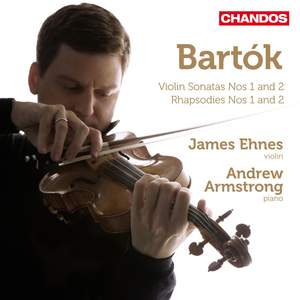
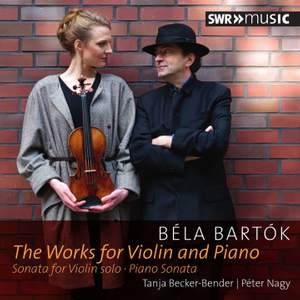
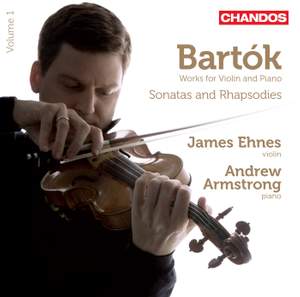
Prices shown exclude VAT. (UK tax is not payable for deliveries to United States.) See Terms & Conditions for p&p rates. | |  | Bartók: Violin Sonatas Nos. 1 & 2
Bartók: | Violin Sonata No. 1, BB 84, Sz. 75 Violin Sonata No. 2, BB 85, Sz. 76 Rhapsody for Violin & Piano No. 1, BB 94a, Sz. 86 Rhapsody for Violin & Piano No. 2, BB 96a, Sz. 89 Andante in A major, DD 70, BB 26 |
This is the second volume in a series devoted to the works for strings by Béla Bartók, with James Ehnes the featured soloist. Earlier this year, Ehnes recorded the Violin and Viola Concertos (CHAN10690), which was made Disc of the Month in Gramophone magazine. On this new recording, he turns to the Violin Sonatas and Rhapsodies, complemented by the earliest surviving work by Bartók for violin and piano, an Andante. He is accompanied by the pianist Andrew Armstrong. Dedicated to the Hungarian violinist Adila d’Arányi, the sonatas for violin and piano were composed in 1921 – 22, around the same time as the highly successful ballet score The Miraculous Mandarin. Of the two works, the Sonata in C sharp minor is the more traditional in terms of its structure, and characterised by a mood that is sometimes exhilarated, sometimes turbulent – but always virtuosic. The finale builds from a series of increasingly wild dances, folk-like in style but entirely expressionistic. In the Sonata in C major, Bartók removes himself from classical form and traditional tonal practice, calling on the violinist to distance himself from the romantic manner of playing. At several points, for example, the violin is played without vibrato, producing an ethereally cool and distant sound. The improvisatory character is strong throughout, as the work repeatedly alternates between the quiet and thoughtful, and the stormy and strident. The ending, in contrast to the earlier sonata, is understated, emotional, and expressive. Bartók’s two rhapsodies for piano and violin, dedicated respectively to Joseph Szigeti and Zoltán Székely, are steeped in the tradition of Hungarian folk music. Exuberant and infectious, the works are heavily inspired by the csárdás, the national dance of Hungary, and display the traditional pairing of lassú (slow) and friss (lively) movements. “The performances are assertive but never excessively forceful, tonally sweet (useful in this often acerbic music) and, from Andrew Armstrong's standpoint, almost impressionist in their projection of nuance and tonal shading...an exceedingly generous programme (80'30''), expertly engineered, well planned, beautifully executed.” Gramophone Magazine, March 2012 “They are performances of outstanding musical insight and technical brilliance...James Ehnes and Andrew Armstrong perfectly encapsulate the anxieties projecting in both works...But they also find room for repose and reflection...As with Ehnes's recording of the Concertos, the present collection sweeps the board in terms of performance and generosity alike.” BBC Music Magazine, March 2012 ***** “Ehnes has the measure of the fractured sonata design of the Allegro appassionato [in No. 1]...[He] gives a tellingly understated account of the preludial Molto moderato [in No. 2], dovetailing into a main Allegretto which open out its thematic and expressive potential so the work as a whole seems to unfold seamlessly towards a rapt and unifying postlude.” International Record Review, February 2012 “This is a magnificent disc, wonderful playing captured in fantastic sound, and a fine way to begin an exploration of Bartók’s work in this genre. Roll on Volume Two.” MusicWeb International, June 2012 | | | (also available to download from $10.50) | In stock - usually despatched within 1 working day. |
|
|
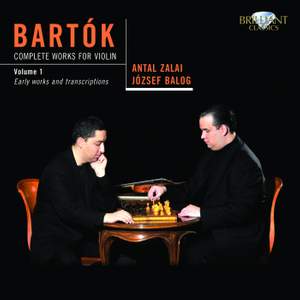
| |  | Bartók: Complete Works for Violin Volume 1Early Works and Transcriptions
Antal Zalai (violin) & Jozsef Balog (piano) The first volume of an exciting 4 CD project: the complete works for violin of the great Hungarian 20-th century composer Béla Bartók. The first volume offers early works and transcriptions, most of them with strong Hungarian folk music influence. Later volumes will include the violin sonatas, the solo sonata and the violin concertos. Excellent performances by Hungarian violinist Antal Zalai (formerly names Szalai) and Jozsef Balog, who already proved their superb skills in their recording of the Enescu violin sonatas on Brilliant Classics 9165. In the early 1900s the young composer had studied many of Strauss’s scores, attempting a symphony in E flat. Gradually the music of his native Hungary began influence his musical voice as can be heard in the E minor violin sonata. The Austro-German musical hold on him was slipping. He took to wearing Hungarian national clothes, and rebelled at speaking German at home. Shortly after completing the violin sonata in 1903 he left for the countryside where he became interested in the folk music and songs of his countrymen. His research with fellow composer Zoltan Kodaly of Hungarian folk music is famous, but Bartók went beyond national boundaries for inspiration, as can be heard in the Transylvanian, Romanian and Slovak folk material featured on this disc of his early works for violin and piano. | | | Usually despatched in 4 - 5 working days. |
|
|
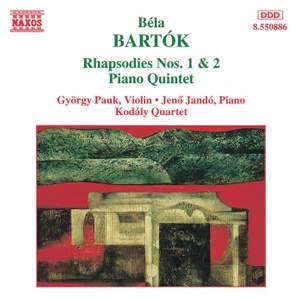
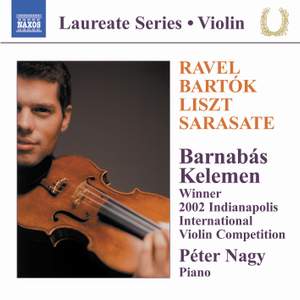
| |  | Rhapsodies For Violin & Piano
Bartók: | Andante in A major, DD 70, BB 26 Romanian Folk Dances, Sz.56 (arr. Székely for violin & piano) Rhapsody for Violin & Orchestra No. 1, BB 94b, Sz. 87 Rhapsody for Violin & Piano No. 2, BB 96a, Sz. 89 | Liszt: | Die Zelle in Nonnenwerth, S382 Romance oubliée, for viola/cello/violin & piano, S. 132 La Lugubre Gondola for cello & piano, S134 arr. for violin & piano | Ravel: | Tzigane | Sarasate: | Zigeunerweisen, Op. 20 |
Barnabás Kelemen, Gold Medallist of the 2002 International Violin Competition of Indianapolis, has established himself as one of the leading violinists of his generation, appearing regularly as a concerto soloist, recitalist, and chamber musician at many of the world’s major musical venues and festivals. He has toured extensively throughout Europe, North and South America, South Africa, Japan and Taiwan. In September 2005 he was appointed Professor of Violin at the Franz Liszt Music Academy in Budapest. | |
|
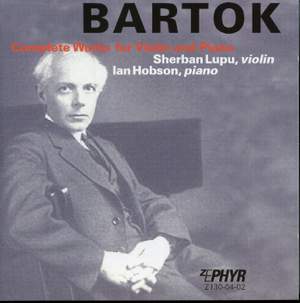
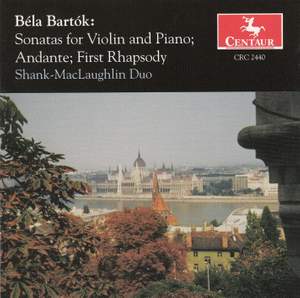
| |  | Bartók: Sonatas for Violin and Piano etc
recorded at Sundin Hall, Hamline University, St Paul, Minnesota, USA, 24-26 May 1998 | |
|
| |
|