All recordingsPrices shown exclude VAT. (UK tax is not payable for deliveries to United States.) See Terms & Conditions for p&p rates. | |  | Tchaikovsky: Rare Transcriptions and Paraphrases Volume 1Orchestral and Opera
Anthony Goldstone (piano) This recording is the first in a two-volume series of transcriptions and paraphrases for solo piano of music by Tchaikovsky, most of which are receiving their first recordings. Volume one concerns orchestral concert works and operatic music; the second is of his ballets. He himself has long been recognised as a master of piano writing, the most famous example being his Piano Concerto No. 1 in B flat minor, Op. 23, famously pronounced unplayable (and worthless) by the great pianist Nikolai Rubinstein but which has become one of the best loved and most performed of all piano concertos. Tchaikovsky himself made piano versions of his own works, mostly for four hands, and approved paraphrases of his works by an admired piano virtuoso such as Paul Pabst (see volume 2 – Divine Art DDA25106 due for release in late 2012). “This first of two volumes of Tchaikovsky transcriptions...has the exhilaration not just of the music itself...but of defiant medium-crossing. The glorious Serenade for Strings could not be better calculated for such forces, but creating stringiness on an essentially percussive instrument...brings an added zest.” Sunday Times, 17th June 2012 “Goldstone plays them all with great fluency and panache, if without quite the range of keyboard colour that such virtuoso vehicles really need.” The Guardian, 14th June 2012 ** | | | In stock - usually despatched within 1 working day. |
|
|
| |  | Tchaikovsky: 1812 Overture, Capriccio italien & Swan Lake
By 1958, Decca has been recording in stereo for four years, regularly sending out two production teams, one to make the stereo master, the other the mono master. Each team of producer and engineer worked independently of the other to produce the optimum sound for their system. In 1958, to launch their new stereo series (with an SXL prefix for the catalogue number) it was decided that a new and spectacular recording was required for the very first record (SXL 2001). Tchaikovsky’s 1812 Overture, a popular orchestral showpiece that could show off the stereo imagery, was a natural choice. The cannon shots made a particularly strong impression at the time; the well-kept secret at the time is that they were, in fact, over-dubbed, speeded-down gun shots! As the Gramophone reviewer in October 1958 pointed out, ‘In every respect, in fact, this is a first-class record’. Kenneth Alwyn was a principal conductor of the Royal Ballet at Covent Garden where he shared the rostrum with such luminaries working with the company at that time as Malcolm Sargent, Ernest Ansermet, Arthur Bliss, William Walton, Hans Werner Henze and Benjamin Britten the latter nominated him as conductor of the original production of The Prince of the Pagodas. In the notes for this CD – to which his 1959 recording of a suite from Swan Lake has been added to the items on the original record – he recounts his experience at the recording sessions for Tchaikovsky’s 1812 Overture, which, issued in 1958, was to become the first stereo recording of this work and Decca’s first official stereo recording. “Kenneth Alwyn has secured exceptionally good playing from the London Symphony Orchestra ; the woodwind, in particular, shape their phrases most beautifully, and with first-class ensemble... The shaping of the music as a whole is very good, too, with a broad introduction to the Capriccio (making the triplets doubly difficult!), and effective dovetailing of the various tempos both in this piece and in the overture. In every respect, in fact, this is a first-class record.” Gramophone Magazine “As I expected, the Tchaikovsky still comes up to demonstration standard with the final canons and carillon of 1812 as exciting and brash as anything since. The performances under Kenneth Alwyn are very good indeed, particularly 1812 (why has he been so neglected by the companies?) and at the new price the bargain is excellent.” Gramophone Magazine | | | (Sorry, download not available in your country) | In stock - usually despatched within 1 working day. |
|
|
| |  | Tchaikovsky: Symphony No. 1
This CD continues PentaTone’s very successful Tchaikovsky cycle, which has received critical acclaim. Symphony No.5 (PTC5186385) was CD Choice of the Month in the BBC Music Magazine. Symphonies Nos. 2 and 3 will follow later in the year, completing the series. “He starts at a surprisingly low voltage, although what his slower tempi lose energy they gain in detail and almost Nutcracker-like atmosphere. And, by contrast, the last movement has tremendous elan and features playing of demonstration quality. Excellent recording” Classical Music, 24th March 2012 **** | | | (also available to download from $10.50) | In stock - usually despatched within 1 working day. |
|
|
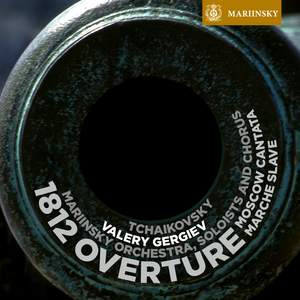
| |  | Tchaikovsky - 1812 Overture, Moscow Cantata, etc.Mariinsky Concert Hall, St Petersburg, 15-20 February 2009
Following acclaimed recordings of Shostakovich, the third release on the Mariinsky Theatre's new label features a selection of popular and rarely-heard works by Tchaikovsky. Unlike the majority of his Russian predecessors, Tchaikovsky’s fame meant he received regular commissions for new work – he was the first ‘professional’ Russian composer. A new generation followed in his footsteps including Stravinsky and Prokofiev; for them, commissions were the norm. Many of the works for which Tchaikovsky was commissioned were required to celebrate great state and political events. The Danish Overture was written to mark the marriage of the future Tsar Alexander III to the Danish Princess Dagmar. He was later commissioned to to produce the Moscow Cantata and Coronation March as part of the celebrations to mark Alexander’s coronation. The patriotic Marche Slave was written for a charitable concert staged to raise funds for Russian volunteers in the Serbo-Turkish War. Although the 1812 Overture depicts Russia’s earlier war with Napoleonic France, the piece was actually commissioned for the opening of the Christ The Saviour Cathedral in Moscow. The cathedral itself was built to celebrate the 70th anniversary of Russia’s victory in the 1812 campaign of the wars. “…perhaps the most notable feature of these performances is their refusal to undermine the characterful in pursuit of the sensational. The Marche slave, for instance, is resonant and resolute but what you really come away humming are the fife and drum effects and brilliant trumpetings of the orchestration. The 1812 catches one off-guard straight away with its unusually "vocal" phrasing of the old Russian prayer at the outset and throughout the performance the song quotations sound "sung". Tempo (blistering) rather than trenchancy defines the main Allegro with the Marseillaise sounding unusually corny (deliberate?) in the trumpets. Tchaikovsky, though, is most evidently (and gloriously) Tchaikovsky in the Moscow Cantata. A vintage melody turns the first page of Russian history, illuminating it in that inimitable Tchaikovskian way.” Gramophone Magazine, December 2009 “Slavonic March, the most individual of all the pieces, gets the liveliest, quirkiest performance and the best sound.” BBC Music Magazine, Christmas 2009 ***** | | | In stock - usually despatched within 1 working day. |
|
|
| |  |
"A first-class ...recording of Tchaikovsky's Fourth Symphony...a very striking performance, Russian in feeling yet ..never going over the top ...holds back his big guns till just before the big unison horn entry.... It really is an epic moment with the fff of the four horns coming through as it seldom does .....slow movement is phrased very evenly....scherzo is like an arabesque, the string pizzicatos light and gentle.... Then the finale bursts on the listener.. with its power to shock at that first fortissimo—the sound hugely expansive." Gramophone | | | In stock - usually despatched within 1 working day. |
|
|
| |  | Tchaikovsky - 1812
“Vanska and the Lahti orchestra are authoritative interpreters who convey the atmosphere and mystery of these extraordinary scores. They are magnificently recorded too” Penguin Guide, 2011 edition | | | (also available to download from $10.50) | In stock - usually despatched within 1 working day. |
|
|
| |  |
| | | In stock - usually despatched within 1 working day. |
|
|
| |  |
“There's no denying that Russian orchestras bring a special intensity to Tchaikovsky, and to this Symphony in particular. But, in the past, we have had to contend with lethal, vibrato-laden brass and variable Soviet engineering. Not any more. Pianist Mikhail Pletnev formed this orchestra in 1990 from the front ranks of the major Soviet orchestras, and the result here is now regarded as a classic. The brass still retain their penetrating power, and an extraordinary richness and solemnity before the Symphony's coda; the woodwind make a very melancholy choir; and the strings possess not only the agility to cope with Pletnev's aptly death-defying speed for the third movement march, but beauty of tone for Tchaikovsky's yearning cantabiles. Pletnev exerts the same control over his players as he does over his fingers, to superb effect. The dynamic range is huge and comfortably reproduced with clarity, natural perspectives, a sense of instruments playing in a believable acoustic space, and a necessarily higher volume setting than usual. Marche slave's final blaze of triumph, in the circumstances, seems apt. Pletnev finds colours and depths in The Seasons that few others have found even intermittently. Schumann is revealed as a major influence, not only on the outward features of the style but on the whole expressive mood and manner. And as a display of pianism the whole set is outstanding, all the more so because his brilliance isn't purely egoistic. Even when he does something unmarked – like attaching the hunting fanfares of 'September' to the final unison of 'August' – he's so persuasive that you could believe that this is somehow inherent in the material. This is all exceptional playing, and the recording is ideally attuned to all its moods and colours.” Gramophone Classical Music Guide, 2010 | | | In stock - usually despatched within 1 working day. |
|
|
| |  |
“roof-raising... powerful... insistent forward mementum” Classics Today | | | In stock - usually despatched within 1 working day. |
|
|
| |  | Tchaikovsky: Symphony No. 5 & Slavonic March
This disc continues Poppen’s Tchaikovsky cycle with the German Radio Philharmonic on Oehms. Even though Tchaikovsky believed that he had ‘written himself out’ after his Fourth Symphony, he composed the fifth within a few weeks. The premiere was only moderately successful, but today, Symphony No. 5 is one of Tchaikovsky’s most popular works. | 
| | | (also available to download from $10.50) | Usually despatched in 2 - 3 working days. (Available now to download.) |
|
|
| |
|